outbound investment curbs China
Track it live: live global markets tracker
BEIJING — China’s commerce ministry on Saturday urged the United States to halt its expansion of the outbound investment curbs China faces under a proposed Treasury Department rule on sensitive technologies, saying the plan would disrupt trade ties between the world’s two largest economies and warning that Beijing reserves the right to take countermeasures in response, Reuters reported. The statement, issued two days after the Treasury published its proposals in Washington, is the strongest of two Chinese responses in two days — and its language was chosen carefully: the ministry said the proposal had “discriminatorily” widened China-related investment restrictions and intensified the curbs, that Beijing firmly opposed it, and that it ran counter to the consensus reached by the two countries’ presidents, who have met twice in the past six months.
The rule at issue is, for now, only a proposal. Nothing in it has taken effect, and the Treasury will hear public comments before issuing a final version. But proposals of this kind rarely die quietly, and this one matters because of what it reveals about the direction of the U.S.–China contest: having spent years restricting what American technology companies may sell to China, Washington is now widening its controls on what American money may build there. Beijing, which agreed just last month to extend a fragile trade and technology truce into January, reads the move as that truce being hollowed out from inside. Washington reads it as overdue hygiene for capital flows that can end up inside weapons programs. Both readings were on the record within 48 hours of the proposal’s release.
What Treasury proposed on Thursday
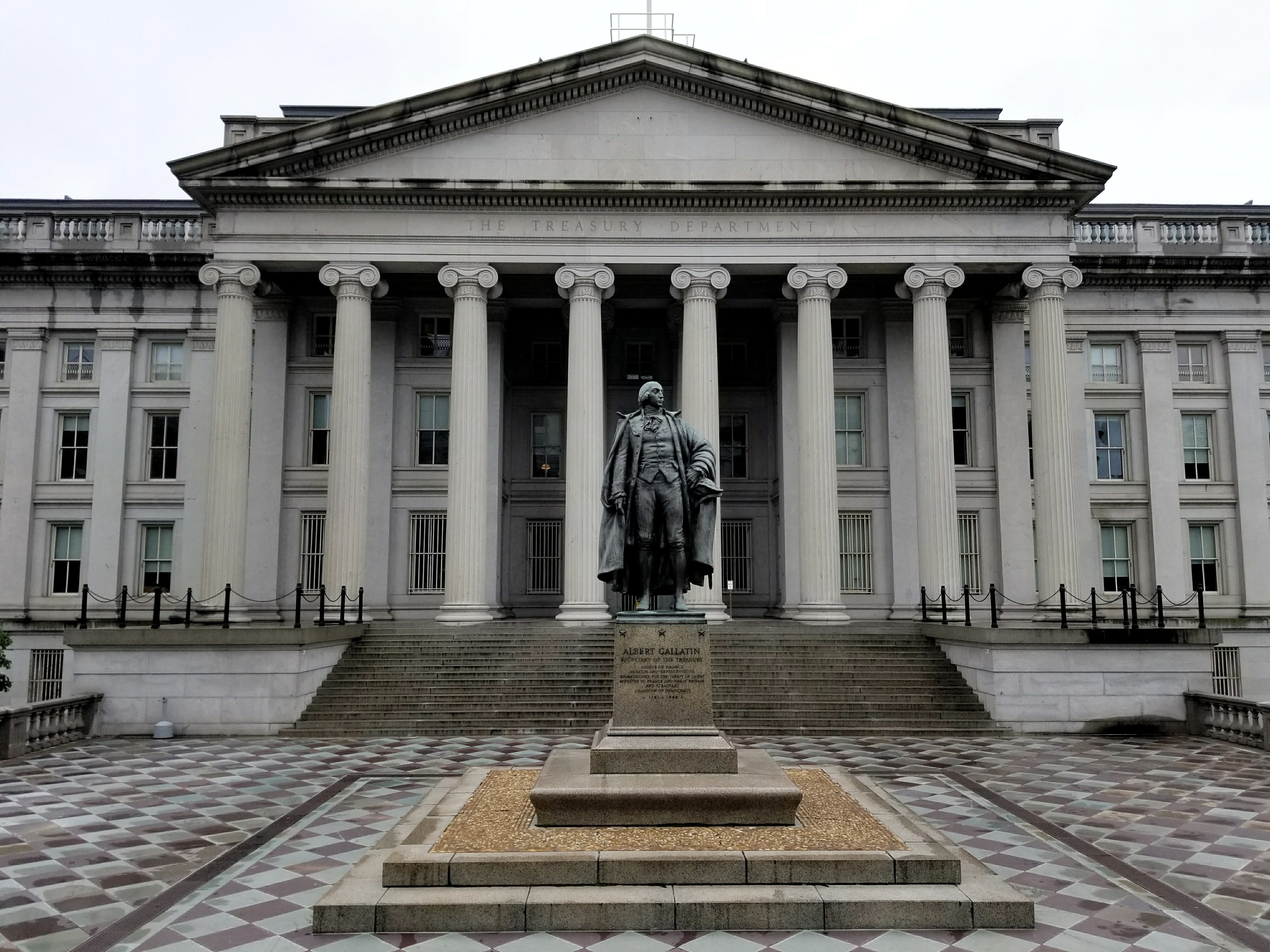
The Treasury Department issued the proposals on Thursday to update its Outbound Investment Security Program, the screening regime that polices certain American investments in countries Washington designates as adversaries. The headline change is the addition of biotechnology to the restricted sectors — the first time the program would reach into the life sciences. Alongside it, the proposals expand coverage of high-performance computing — supercomputing — and of hypersonic systems, the class of weapons and vehicles capable of travelling at five times the speed of sound or faster. Artificial intelligence remains covered, under terminology the Treasury rendered as “superintelligence,” or SI. According to the Associated Press, the rule would apply to China, Russia, North Korea and other “countries of concern”; the Treasury itself stresses that the measures do not cover China alone.
Treasury’s stated purpose, as Reuters reported it, is to stop U.S. capital from supporting foreign adversaries’ development of dual-use strategic technologies — technologies with civilian applications that can also serve military ends — in ways that could threaten U.S. national security. That framing is the administration’s, and it is the heart of the disagreement: what Washington calls a national-security screen, Beijing calls discrimination aimed at China’s development. Neither characterisation is neutral, and the gap between them is precisely what the next round of the two governments’ argument will be fought over.
A $50,000 line — and what it leaves out
The mechanics matter as much as the sector list. As the AP reported, the proposed rule would apply only to investments exceeding $50,000, and it would exclude many financial investments, including stock purchases — buying shares in a listed Chinese company on an exchange is not the target. The target is the quieter, earlier, more consequential money: the venture round, the joint venture, the strategic stake in a company whose laboratory work has no ticker symbol. Before any of it can become final, the Treasury will take public comments — the stage at which affected firms, funds and trade groups traditionally try to narrow definitions, raise thresholds and carve out exemptions. What emerges from that process will decide whether Thursday’s document is remembered as a modest update or as the moment the screening state reached the biotech lab.
How we got here: from an executive order to a statute
The old map: chips, quantum, AI
The existing program already restricted certain U.S. investments involving China in three technology families — semiconductors, quantum technologies and artificial intelligence. It began in 2023, when President Joe Biden signed an executive order restricting outbound U.S. investment in semiconductors, quantum computing and AI going into China; the Treasury then stood up the Outbound Investment Security Program to administer it. The logic, from the start, was that export controls alone leak: a rival does not need to buy an American chip if American capital, expertise and networks can help it learn to make its own. Money, in this doctrine, is a technology transfer by other means.
The December 2025 law — and Thursday’s expansion
In December 2025, Congress passed the Comprehensive Outbound Investment National Security Act, which codified the program — converting an executive-branch creation into statute — and expanded it to more technologies and more countries, including Cuba, Iran, North Korea and Russia. That legislative history is why Thursday’s proposal, though issued by the Treasury, is not easily dismissed as one administration’s whim: the screening architecture now has bipartisan statutory foundations, and each update has moved in one direction only — wider. Thursday’s expansion follows the pattern, pushing the boundary from the digital triad of chips, quantum and AI into the physical and biological frontier: hypersonic flight, the supercomputers that model it, and the biotechnology that Washington increasingly treats as strategic infrastructure.

Beijing’s answer, in two steps
China’s response came in two registers, on two consecutive days, from two ministries — a choreography that itself carries information. The first, on Friday, was the foreign ministry’s. Spokesperson Mao Ning said that overstretching the concept of national security, taking discriminatory measures against specific countries and artificially restricting trade, economic and investment activities serve no one’s interests, according to the AP’s account. The United States, she said, should abide by the principles of a market economy and stop interfering in normal business cooperation; China would closely monitor developments and take necessary measures to protect its interests.
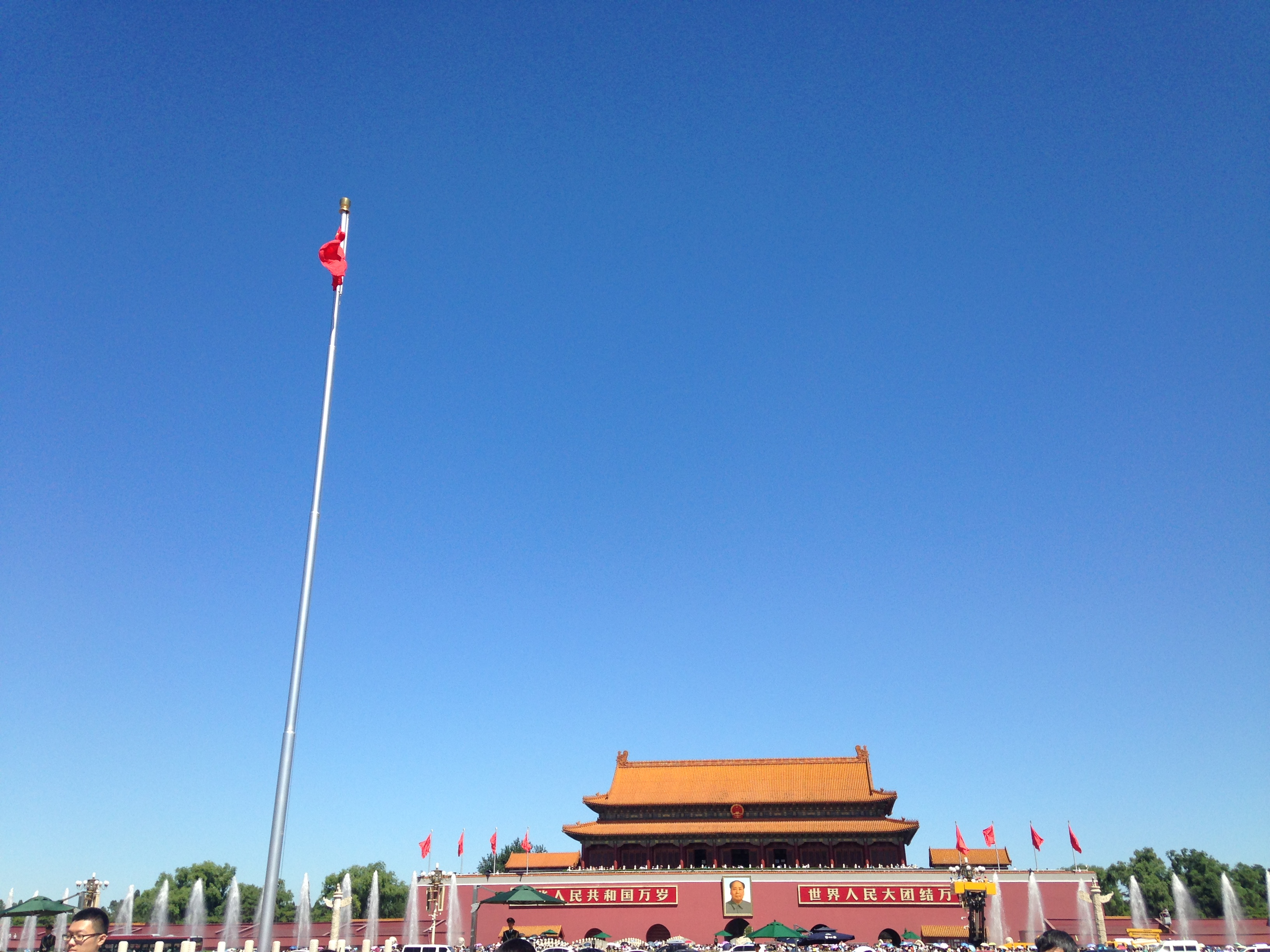
The second step, on Saturday, belonged to the commerce ministry — the ministry that owns the economic relationship and will own any economic response. Its statement went further than the foreign ministry’s in three ways, Reuters reported. It named the proposal’s treatment of China as discriminatory and said the expansion intensified the curbs. It said Beijing firmly opposed the move and reserved the right to take countermeasures — a formulation that commits China to nothing specific, and deliberately so: no measure, sector or timeline was announced, and none should be read into the statement. And it reached above the bureaucracies to the two presidents, arguing that the proposal would damage bilateral economic ties and ran counter to the consensus Presidents Donald Trump and Xi Jinping reached in their meetings — two encounters in the past six months. Invoking the leaders’ consensus is Beijing’s way of saying the dispute is not really about a regulatory filing; it is about whether Washington’s own machinery is honouring what its president agreed.
The context gives that argument its sting. Trump and Xi agreed last year to ease tensions in their technology and trade rivalry — a contest fought over export restrictions on rare earths and advanced chips and tariffs in both directions — and last month the two sides extended that temporary truce into January. From Beijing’s vantage point, Thursday’s proposal landed inside the truce window, on a new front. From Washington’s, investment screening was never part of the truce’s subject matter, and security controls were always going to continue on their own track. The truce, in other words, froze the fight where it stood in September; it did not define where the fight could move next. The proposed rule is Washington’s answer, and Saturday’s statement is Beijing’s objection to the question even being asked.
The Russia wrinkle
One element of the proposal sits awkwardly with the week’s other news. The rule covers Russia as a country of concern — yet Moscow’s inclusion arrived, as the AP noted, just days after President Trump waived sanctions on Russia following a diesel deal with President Vladimir Putin. A government simultaneously easing one set of economic restrictions on Russia while tightening investment screening that includes Russia is not necessarily contradicting itself — sanctions relief and outbound-investment control are different instruments aimed at different flows — but the juxtaposition hands critics in both capitals a ready-made argument: Beijing can present the rule as selectively enforced politics rather than principle, and sceptics in Washington can ask what a screening regime is worth against a country whose sanctions were just traded away over diesel. The proposal’s credibility, like the truce’s, will be judged partly on whether its rules appear to bind friends and adversaries by the same logic.
Enforcement already has teeth
It would be a mistake to read Thursday’s document as the opening of an entirely new front in which nothing yet happens on the ground. The existing program has already produced enforcement. In July, the Treasury fined a U.S.-based company $200,000 for failing to report a $92,500 investment by a subsidiary in a Chinese AI and robotics company, the AP reported. The numbers in that case are worth pausing on: the fine was more than twice the size of the investment itself, and the violation was not making a forbidden investment but failing to report one. That is the regime’s character in miniature — less a wall than a tripwire, designed so that the cost of non-compliance lands on transactions small enough that many firms might once have assumed nobody in Washington would ever notice them. Under the proposed rule’s $50,000 threshold, a great many more transactions would sit above the tripwire.
Why this matters
The deepest shift in Thursday’s proposal is conceptual, and the experts quoted by the AP named it plainly. “Capital can accelerate military-relevant capabilities just as surely as technology transfer can,” said Craig Singleton, a senior fellow at the Foundation for Defense of Democracies, adding that the proposal “sends an important signal to markets that Washington is tracking where US capital is flowing and what capabilities it is helping build.” For most of the post-Cold War era, the United States treated outbound investment as presumptively benign — the engine of globalisation, not a vector of strategic risk. The screening regime inverts that presumption sector by sector: money leaving for the wrong laboratory in the wrong country is now treated the way an exported lithography machine is treated, as capability in transit.
Biotechnology’s arrival on the list is the proposal’s most consequential novelty. Chips and quantum computers have obvious military pedigrees; a biotech laboratory’s dual-use potential is broader and blurrier — the same platform science that produces a vaccine can inform a weapons program, the same genomic database that guides drug discovery has intelligence value, and the same bio-manufacturing capacity that makes medicines can be repurposed. Drawing a regulatory line through that terrain is genuinely hard, which is one reason the compliance industry is already pricing the problem. The rule “will require more substantial compliance programs to manage risk,” said Jason Chipman, a partner at WilmerHale and a former Justice Department lawyer — a dry sentence that translates, in practice, into law firms, screening software, deal delays and a new category of transactions that simply do not get attempted because the clearance risk is not worth underwriting.
The threshold arithmetic sharpens the point. A rule that begins at $50,000 does not merely govern sovereign funds and mega-deals; it reaches down into angel rounds, small venture checks, university-adjacent spinout financing and the personal-scale investments through which much early-stage technology actually gets funded. Set against a $200,000 fine for failing to report a $92,500 investment, the message to that whole ecosystem is unmissable: the era in which a small check into a sensitive sector was beneath notice is ending. Whether that is prudent security policy or an overbroad chill on legitimate science finance is the argument the comment period will now host — with Beijing’s discrimination charge on one side and Washington’s dual-use doctrine on the other, and with the burden of proof, unusually, being carried by a filing deadline.
Who benefits, who loses — and what the critics say
The clearest beneficiaries are the constituencies the policy is designed to serve: U.S. and allied firms competing against Chinese rivals in supercomputing and hypersonics, which gain a measure of protection from American-financed catch-up; the national-security bureaucracy, whose screening remit keeps expanding with statutory backing; and the compliance sector, for whom every widened definition is billable work. The clearest losers are American investors and funds with China-facing strategies in the affected sectors, Chinese startups and laboratories that have relied on U.S. capital and the credibility it confers, and — Beijing would add — the bilateral relationship itself, which its commerce ministry says the proposal will damage. Critics of the rule in the United States tend to argue that capital is fungible: money refused in New York will be supplied from elsewhere, at the price of American visibility into the very sectors Washington wants to watch. Critics of China’s position reply that Beijing operates its own extensive controls on foreign investment and technology, and that a state which screens inbound capital on security grounds is poorly placed to call outbound screening illegitimate in principle. Both critiques can be true at once, and the space between them is where the January truce deadline now sits.
What happens next
The immediate path is procedural. The Treasury will hear public comments before issuing a final rule, and the fight over definitions — what counts as biotechnology, which supercomputing investments are covered, how the $50,000 threshold is applied — will be waged in comment letters long before it is waged in enforcement actions. Ryan Majerus, a former U.S. trade official now a partner at King & Spalding, cautioned that the proposal is “just the first step in a fairly long process” toward changes that are more enforcement-minded and carry “more teeth” — a timeline that pushes any final rule toward, and possibly past, the truce’s January expiry. Three scenarios follow. In the mildest, comments narrow the rule, the final version lands after January, and the truce is renegotiated with investment screening quietly grandfathered as settled American law. In the middle scenario, the final rule proceeds roughly as proposed, and Beijing answers with countermeasures of its own choosing — unspecified in Saturday’s statement, and all the more flexible for it — calibrated to hurt without collapsing the truce. In the hardest, the rule becomes one front too many: stacked on rare-earth and chip export controls and the tariff file, it convinces Beijing that the truce constrains only China, and the January deadline passes without renewal. Which scenario materialises depends less on the rule’s text than on the channel above it — the two presidents have met twice in six months, and every previous escalation in this rivalry has ultimately been settled, paused or postponed at that level.
For now, the positions are stated and the clock is running on two tracks at once: a comment period in Washington, and a truce that expires in January. China has told the United States, in terms, to stop — and has declined, in equally deliberate terms, to say what happens if it does not. The proposed rule is not yet law, the countermeasures are not yet named, and the argument is not yet over. But the direction of travel, on the evidence of Thursday and Saturday alike, is not in doubt: the U.S.–China contest is moving from what the two countries sell each other to what they are allowed to build for each other — and money, quietly, has become one of the weapons.
Related coverage: Trump Hosts Xi at White House as U.S.-China Trade Truce Extended to January 2027 · Nvidia China AI Chip Share Falls to 34% as Huawei Surges to 28% · Taiwan Plans to Criminalize AI Chip Smuggling to China With New Export Controls
Sources
Sources: Reuters — “China urges US to halt proposed expansion of outbound investment curbs” (October 24, 2026) — source for the commerce ministry’s Saturday statement urging the U.S. to stop expanding restrictions on American investments in China, its characterisation of the proposal as discriminatorily widening China-related restrictions, Beijing’s firm opposition and reserved right to countermeasures, the warning of damage to bilateral economic ties and conflict with the two presidents’ consensus, the Treasury’s Thursday proposals adding biotechnology and expanding high-performance computing and hypersonic coverage under the Outbound Investment Security Program, Treasury’s national-security rationale, and the existing program’s coverage of semiconductors, quantum technologies and AI. Associated Press, via The Hindu BusinessLine — “US Treasury proposes a rule to crack down on high-tech investments in China, other adversaries” (October 23, 2026) — source for the program’s 2023 executive-order origins, the December 2025 Comprehensive Outbound Investment National Security Act, the coverage of China, Russia, North Korea and other countries of concern, the hypersonic, supercomputing, biotechnology and “superintelligence” provisions, the $50,000 threshold and stock-purchase exclusions, the public-comment process, Russia’s inclusion days after the diesel-deal sanctions waiver, the July $200,000 fine over an unreported $92,500 investment, the expert assessments of Craig Singleton, Jason Chipman and Ryan Majerus, Foreign Ministry spokesperson Mao Ning’s Friday response, and the Trump–Xi truce context. The Treasury rule is a proposal and is not in force; China’s reserved countermeasures were not specified in its statement, and Signal Post News does not present either side’s characterisation of the other’s motives as established fact.