Volodymyr Zelenskyy's visit to a command post near Lyman put a spotlight on Ukraine's rare counteroffensive success story: an operation that has clawed back Donbas territory, disrupted Russia's encirclement plans — and convinced Kyiv the war's future is robotic.
What happened
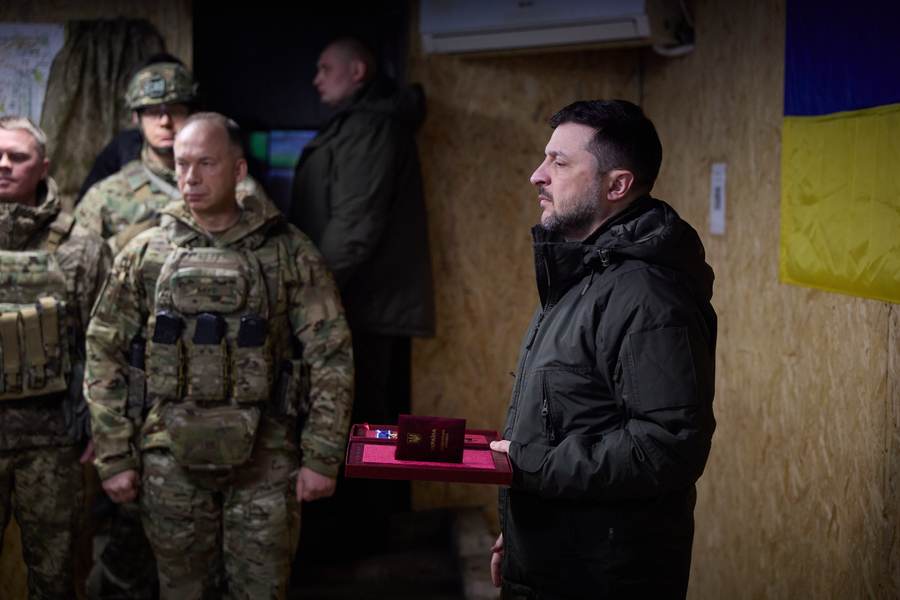
On Wednesday, September 30, Ukrainian President Volodymyr Zelenskyy visited a military command post near the eastern frontline, in the area of the town of Lyman in the Donetsk region. In a video posted to his official Telegram channel, Zelenskyy is shown conferring with commanders, studying regional maps, and presenting decorations to servicemen. "A serious operation, important in many ways for our defence overall and in Donbas in particular," he wrote in the accompanying post.
The operation in question is codenamed "Vivaldi." Zelenskyy said it had prevented Russian forces from breaking through behind the defensive lines around Sloviansk and Kramatorsk — the so-called "fortress cities" that anchor Ukraine's position in the Donbas — and that Ukrainian forces had recaptured 176 square kilometers of territory in the area since the operation began earlier this year. He also said the military was weighing an expansion of ground robotic systems and a further scaling-up of drone capabilities.
Reuters, which reported the visit from Kyiv, notes that Russia says it intends to capture the Donbas in its entirety, and that negotiations to end the war have stalled while the United States pushes to restart them. The Institute for the Study of War, a Washington-based think tank, assessed this week that Vivaldi had achieved an "operationally-significant" goal: disrupting Moscow's attempt to mount a wide encirclement of the fortress belt of Ukrainian cities.
Why this matters
A presidential frontline visit is part ritual, part signal — and this one carries both registers at once.
First, the timing is a statement. Zelenskyy made the trip hours after Russia launched one of its heaviest overnight strikes of the year on Kyiv — nearly 190 drones plus ballistic missiles, with energy infrastructure as the main target and at least five dead. Visiting a frontline command post on the same day the capital was being bombed is deliberate choreography: it tells a domestic audience under air-raid alert that the military chain of command is functioning and, in one sector at least, advancing. Presidents do not make these trips casually; the security footprint is enormous. That Kyiv judges the Lyman sector worth the risk is itself a claim about the sector's importance.
Second, Vivaldi is Ukraine's best battlefield narrative of 2026. For most of the past two years, the story of the eastern front has been incremental Russian advance. An operation that has retaken 176 square kilometers, freed villages, and — by the ISW's judgment — frustrated a Russian encirclement plan is, by the standards of this war, a genuine success. Zelenskyy has been under pressure from allies and critics to demonstrate that Western support produces battlefield results; Lyman gives him a concrete answer to show visiting delegations and a wavering public.
Third, the robotics announcement points at where the war is going. Zelenskyy's aside about expanding ground robotic systems and drone capabilities was not filler. Ukraine has been the world's laboratory for drone warfare since 2022, but the next iteration — unmanned ground vehicles for logistics, casualty evacuation, and assault — is where both sides are racing. A presidential statement of intent is the political precursor to budget lines, procurement contracts, and production targets. If Vivaldi is the past, the robot expansion is the declared future.
Background: how Vivaldi fits into the Donbas battle
The Donbas — Donetsk and Luhansk regions — has been the war's central theater since 2014 and its decisive one since 2022. Russia's stated war aim has hardened around a maximalist position: full control of both regions. Ukraine still holds roughly 20 percent of Donetsk, a foothold that includes the fortress belt — Sloviansk, Kramatorsk, Kostiantynivka, and Druzhkivka — a chain of cities turned into layered defenses.
Lyman itself carries symbolic and tactical weight. Ukraine retook the town in October 2022 after it was briefly encircled, and it has served as a staging area for the northern Donbas front ever since. The Vivaldi operation, launched earlier this year, pressed north of Donetsk with the Third Army Corps under Brigadier-General Andrii Biletskyi, who took command of operations in the area last month. According to Biletskyi, the corps recently recaptured 51 square kilometers and has now freed three more villages while restoring Ukrainian control over two others.
The wider context favors neither side decisively. Russia's overall frontline advances have slowed this year, but its forces continue bearing down on the fortress cities from the south and have been infiltrating deeper into Kostiantynivka. In the southeast, Kyiv says it clawed back more than 700 square kilometers in a months-long counterattack earlier this year. The picture, four and a half years into the full-scale war, is a front that moves in kilometers and months — in which a 176-square-kilometer gain and a disrupted encirclement count as significant news.
Who gains, who pays — and what the critics say
For Zelenskyy, the visit does double duty: morale and leverage. Domestic morale needs the occasional proof that territory moves in Ukraine's direction; international leverage needs the same proof, because every funding round in Western capitals starts with the question of whether Ukrainian advances justify the outlay. The Vivaldi numbers give both audiences something concrete. Critics will note, fairly, that presidential visits always come with the best footage and the best statistics — casualty figures and the human cost of the gains are never part of the Telegram reel. The figures Zelenskyy cites are Ukrainian military claims; Reuters could not independently verify the extent of the territorial gains, and Moscow does not acknowledge them.
For Russia, the operation is an awkward data point. A disrupted encirclement attempt and retaken villages cut against the narrative of steady, inevitable advance that Moscow uses to argue Kyiv should negotiate from weakness. The Kremlin has not publicly commented on Vivaldi as such; its messaging remains focused on the pace of its strikes on Ukrainian military-industrial targets and energy infrastructure. Analysts skeptical of the operation's importance argue that 176 square kilometers is a small fraction of the territory Russia still holds and that Ukraine's gains remain tactically local, not operationally decisive — a fair reading that puts the celebration in proportion.
For the soldiers, the visit is the oldest kind of politics: a commander-in-chief in body armor handing out medals at a command post. It costs nothing and is never worthless. The Third Army Corps — Biletskyi's formation — is getting the public credit, which matters in a military where recognition flows from the top.
For the drone and robotics sector, Zelenskyy's statement is a market signal. Ukraine's defense-tech ecosystem — thousands of small producers feeding the front with first-person-view drones — has been one of the war's genuine innovations. Presidential backing for ground robotics suggests procurement will follow production, with all the usual caveats: announcements are not contracts, and scaling unmanned ground systems is harder than scaling quadcopters, requiring navigation, jamming-resistance, and logistics chains that are still being invented.
The numbers in context
Set 176 square kilometers against the map. Ukraine holds roughly a fifth of Donetsk; the recaptured ground is a meaningful fraction of the contested northern sector but a sliver of the whole. Compare it with the 700-plus square kilometers Kyiv says it recovered in the southeast earlier this year, and Vivaldi looks like the smaller sibling of a broader 2026 counteroffensive pattern — two axes of advance, both modest by the standards of 2022, both significant by the standards of 2024–25's grinding stalemate.
Now set it against the casualty economy of this war. In a conflict where fronts move meters a day and artillery does the moving, an operation that takes three villages and blocks an encirclement has an outsize strategic value relative to its map area: it preserves the fortress belt, which is the single terrain feature standing between Russia and its maximalist Donbas goal. The ISW's judgment — that disrupting the encirclement was "operationally significant" — is the analytic equivalent of that point: the value of Vivaldi is less in what was taken than in what was prevented.
And compare the tempo. Russia's advances have slowed this year, which is precisely the condition that makes Ukrainian counterattacks possible: a stalled offensive is a vulnerable offensive. The question the numbers can't answer is durability — whether gains made against a slowing Russian push survive when Moscow's tempo recovers, as it periodically does.
What happens next
Three scenarios are worth watching. The most likely: Vivaldi grinds on as a limited counteroffensive, retaking villages in the northern Donetsk sector through the autumn while Russia's main pressure stays on the southern approaches to the fortress cities and on Kostiantynivka. Zelenskyy's visit becomes the first in a series of frontline appearances tied to incremental gains — the presidency's way of narrating the campaign. The escalation scenario: Moscow, stung by the disrupted encirclement, redirects forces north and the sector becomes a genuine battle of maneuver rather than a series of local pushes — which would test whether Vivaldi's gains were built on solid logistics or on a temporarily thinned Russian line. The technological bet: the ground-robotics and drone expansion Zelenskyy flagged becomes the actual story of the next phase — unmanned systems doing the reconnaissance, resupply, and eventually assault work that currently costs Ukrainian lives, changing the casualty arithmetic that has constrained every operation since 2023. That last scenario is the one the president wants you to believe in. The first is the one history suggests.