Ukraine Patriot missile delay: President Volodymyr Zelenskyy said on Monday that Kyiv has waited nearly a month for U.S. Defense Secretary Pete Hegseth to sign off on missiles for Patriot and NASAMS air-defence systems — interceptors NATO allies have already agreed to pay for under the PURL programme, and that Ukraine says it needs before Russia's winter campaign against its energy grid begins in earnest.
Track it live: Ukraine war map and live war trackers.
KYIV, October 26, 2026 — Ukraine has been waiting for nearly a month for U.S. Defense Secretary Pete Hegseth to sign off on a shipment of missiles for its Patriot and NASAMS air-defence systems, President Volodymyr Zelenskyy said on Monday. The missiles are American-made and paid for by NATO allies under the programme known as PURL. They are not awaiting a vote, a contract or a production slot, on Kyiv's account — they are awaiting a signature. "In particular, we have been waiting for nearly a month for Mr Hegseth to sign off on missiles for Patriots and NASAMS," Zelenskyy wrote on X. "I instructed our team to raise this with the American side once again."
What Zelenskyy said — and what a sign-off means in the PURL pipeline
Zelenskyy's post, reported by Reuters from Kyiv on Monday, was short and pointed. He did not announce a new request. He described an old one standing still: missiles for two of the most important air-defence systems Ukraine operates — the Patriot, its only reliable answer to Russian ballistic missiles, and NASAMS, the medium-range system that defends cities against cruise missiles and drones — held at the approval stage for close to a month. His instruction to his team, to "raise this with the American side once again," signals that Kyiv raised it privately more than once before taking the complaint public.
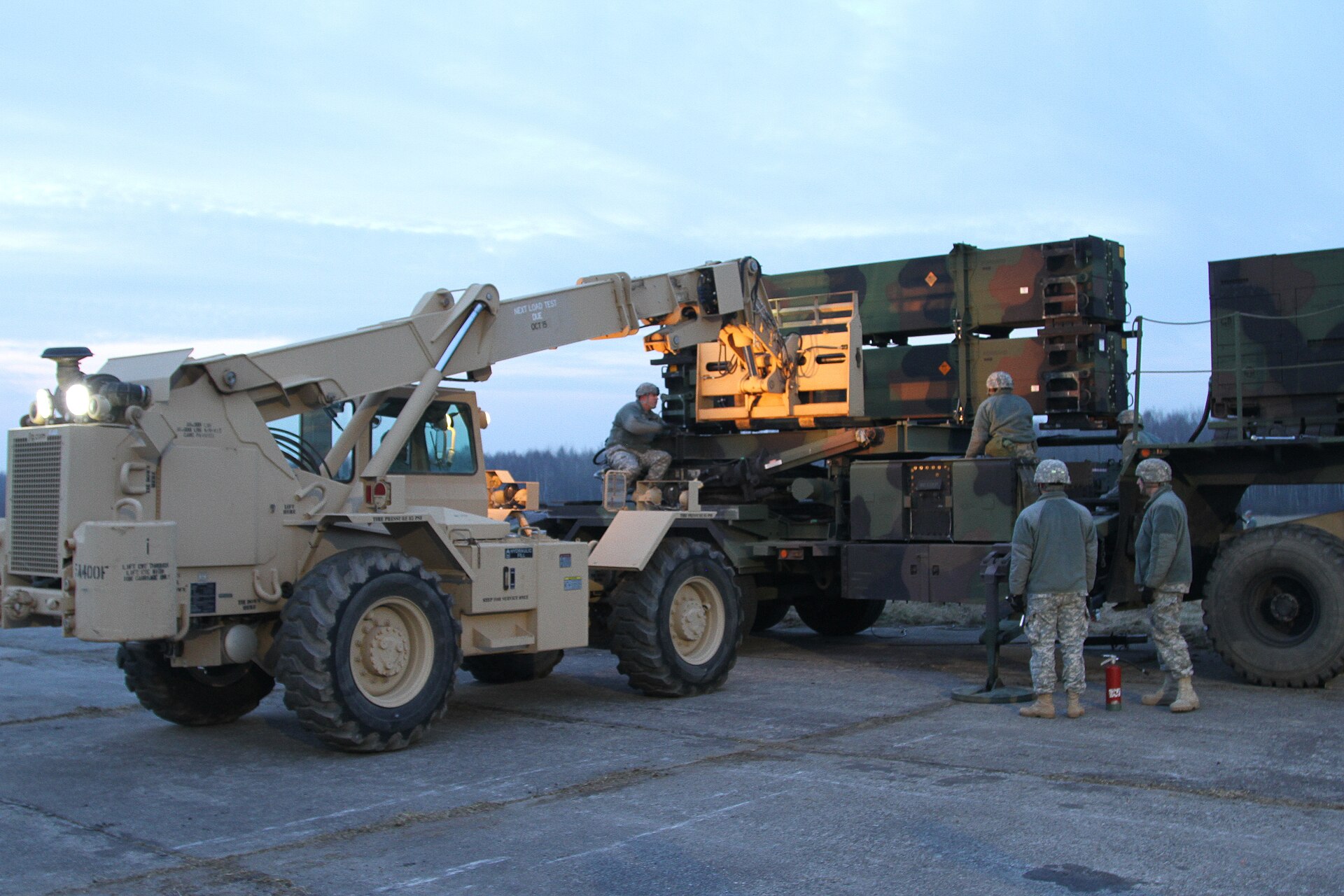
Understanding the complaint means understanding PURL — the Prioritised Ukraine Requirements List, the mechanism under which NATO allies buy American weapons for Ukraine from U.S. stocks and production. Under PURL, the money question and the delivery question are separated: European allies and Canada commit the funding and agree the package, but the equipment is American, held in American stockpiles or coming off American production lines, and its release still requires U.S. government approval at each step. A sign-off at the Pentagon is therefore not a formality Kyiv can route around. Until the Secretary of Defense's office approves the transfer, paid-for missiles do not move — no matter how urgently the buyer, the funder and the recipient all want them to. That is the bottleneck Zelenskyy named on Monday, and naming the secretary personally, rather than "the American side" in general, is what gives the post its edge.
Two cautions belong here. The nearly-a-month wait is Zelenskyy's statement; the Pentagon has not published its own timeline for the package, and the internal state of the approval is unconfirmed. And a pending signature is not, by itself, proof of a deliberate hold: interceptor transfers involve stockpile checks, because the United States guards its own Patriot magazine carefully. What can be said on the record is narrower and still significant — Ukraine's president says the approval has been pending for nearly a month, Washington has not disputed that account in public, and last week the U.S. secretary of state acknowledged that a batch of interceptors may not have been delivered while insisting the reason was not political.

Why this matters
Air defence is the point where this war's industrial arithmetic becomes civilian reality fastest, and the calendar is not neutral. Russia has stepped up its attacks on Ukraine's energy and civilian infrastructure as the heating season approaches, following the pattern of previous winters: strike the grid, degrade power and heat, and let the cold apply pressure that diplomacy has not. The interceptors at issue are the scarcest link in Ukraine's defence against exactly that campaign. Patriot missiles are the only ones that can reliably kill a ballistic missile in its terminal phase; NASAMS missiles thin out the cruise-missile and drone waves that accompany the ballistic salvoes. Every week a shipment sits unsigned is a week in which the magazine Ukraine carries into the next attack gets smaller relative to the threat — and unlike artillery shells, interceptors cannot be improvised, substituted or surged.
The delay also lands on an alliance already strained in public. It follows reported gaps in the U.S. intelligence warnings Ukraine receives ahead of Russian missile attacks, and a days-long throttling of Starshield, the military version of Starlink — a restriction Reuters has reported was ordered from inside the White House, while Elon Musk and U.S. officials have publicly disputed who could make such a decision. Behind those disputes sits a political argument: President Trump's diesel deal with Russia and his criticism of Zelenskyy over Ukrainian strikes on Russian refineries have left Kyiv arguing that Washington is pressing Ukraine while supplying it more slowly. A delayed signature does not prove that argument. But in Kyiv's reading, it fits it — and perception, in an alliance held together by trust as much as by tonnage, is itself a strategic fact.
Background: a shortage that was already documented
Monday's complaint did not arrive out of nowhere. In an analysis published on October 8, Reuters reported that Western air-defence missiles are reaching Ukraine more slowly than Kyiv had hoped and that Ukraine has in essence run out of the most critical air-defence missiles — the high-end interceptors used against ballistic threats. Signal Post News reported the same wall days later, when a source described the Patriot stockpile as exhausted as ballistic missiles struck Kyiv's power plants, in our report on how Ukraine ran out of Patriot missile interceptors. Zelenskyy has spent the autumn making the argument in every available forum; in his Bloomberg interview he described an offer built around refinery strikes and Patriot missiles, and accused Washington of pushing Kyiv toward capitulation — the exchange we covered in Zelenskyy's Bloomberg capitulation and Patriot offer remarks. The PURL delay is the newest chapter of that running story: the same scarcity, now located at a specific desk.
PURL itself was designed to solve a political problem — how to keep American weapons flowing to Ukraine after direct U.S. appropriations became contested — by having allies pay. But the design has a consequence this week exposes: because the weapons remain American until the moment of transfer, every package still passes through Washington's approval chain, at Washington's pace, whatever the urgency in Kyiv or the readiness of allied money. The programme changed who pays. It did not change who signs.
The numbers in context
The arithmetic explains why a single delayed batch matters. Ukrainian officials have said Russia is producing about 140 ballistic missiles a month — the category of weapon only Patriot-class interceptors can reliably stop. Yuriy Ignat, head of communications for Ukraine's Air Force, put Moscow's capacity higher still this week: Russia can fire more than 300 ballistic missiles a month, he said, though sustaining that rate for long is unlikely, and he urged strikes on launch platforms and missile factories as the only durable answer. Against that production, Ukraine's interceptor stock is finite, expensive and shared with every other Patriot operator on earth — including the United States itself.
The drone war runs in parallel and consumes a different layer of the same shield. Ukraine says it was hit by 900 Shahed drones in a single week. On the night of October 25–26 alone, according to Ukraine's Air Force as reported by UATV and 112.ua, Russia launched missiles together with 140 strike drones, and Ukrainian air defences neutralised 115 targets. A night like that is a success story and a warning at once: the system works, but it works by spending — drones draw off the cheaper interceptors, ballistic missiles demand the priceless ones, and every salvo leaves the magazine lighter for the next. At current consumption, a month is not an administrative interval. It is several major attacks' worth of defence.
Four readings of the same wait
Kyiv's case is the one Zelenskyy made: the package is agreed, the allies have paid, the need is documented and the season is turning — so a month without a signature is a month in which Ukrainian cities are measurably less defended, and the delay therefore requires an explanation Washington has not given. Ukraine's supporters add that public pressure was the last resort, not the first: the post says the issue was raised privately, repeatedly, before it was raised on X.
Washington's stated position, offered by Secretary of State Marco Rubio last week, is that a batch of interceptors may indeed not have been delivered — but that the delay is not for political reasons. The administration has not, on the public record, offered a detailed alternative account of the timeline; stockpile management and competing demands on a scarce munition are the explanations consistent with its position. Readers should hold both parts together: the non-delivery is acknowledged at cabinet level, the motive is officially denied to be political, and the Pentagon's own processing timeline remains unconfirmed — precisely the gap into which Zelenskyy's post was aimed.
Critics of Kyiv's approach — including some who support Ukraine's defence — argue that naming an allied defence secretary in public can backfire: it corners the very office whose signature is needed and converts a scheduling problem into a respect argument in Washington. On this reading, the wait was more likely to end with a quiet signature than with a public summons, and the post risks lengthening the delay it protests.
The fourth reading is Moscow's, and it requires no speculation about motive at all. Every week of delay is a week in which Russia's missile production — roughly 140 ballistic missiles a month on Ukrainian officials' figures — runs against a Ukrainian interceptor stock that is not being replenished at the rate of consumption. Whatever the reason for the unsigned package, its military effect is the same, and it accrues to the side that is trying to darken Ukraine's cities this winter.
What happens next
The immediate question is the simplest: whether the signature lands. If the approval now moves, the episode becomes a case study in pressure working. If it does not, the wait stretches into the heart of the winter energy campaign, and each major Russian salvo will be measured against an interceptor stock Ukraine has already described as effectively exhausted for its most critical missiles. Watch the form of the answer: a quiet delivery will tell one story about the alliance; a public rebuttal from the Pentagon would tell another.
Behind the signature sits the structural question Ukraine has been pressing all year: how to stop depending on it. Kyiv has sought licensed production of Patriot missiles with Raytheon — the long-term project we reported in Ukraine's push for licensed Patriot production with Raytheon — and European industry is working on alternatives, though the European-Ukrainian Freya system is, on Reuters' analysis, unlikely before 2027. None of that helps this winter. For this winter, Ukraine's shield still runs through American stockpiles, allied money and a Pentagon approval chain — which is why one sentence on X, naming one secretary and one unsigned package, may be the most consequential post Zelenskyy has made this autumn.
Sources
- Reuters via KTWB, October 26, 2026: Zelenskyy's statement that Ukraine has waited nearly a month for Hegseth to sign off on Patriot and NASAMS missiles under PURL, the intelligence-warning and Starshield context, and Secretary Rubio's acknowledgment that a batch of interceptors may not have been delivered for non-political reasons.
- Reuters analysis, October 8, 2026: Western air-defence missiles reaching Ukraine more slowly than hoped, Ukraine effectively out of the most critical air-defence missiles, Russian ballistic-missile production of about 140 a month, 900 Shahed drones in one week, and the Freya system unlikely before 2027.
- President Volodymyr Zelenskyy on X (@ZelenskyyUa), October 26, 2026: "We have been waiting for nearly a month for Mr Hegseth to sign off on missiles for Patriots and NASAMS. I instructed our team to raise this with the American side once again."
- Ukrainian Air Force via UATV and 112.ua, October 26, 2026: Russia's overnight launch of missiles and 140 strike drones, 115 targets neutralised, and Air Force communications head Yuriy Ignat's assessment of Russian ballistic-missile capacity.