The Zelenskyy Trump capitulate interview landed on Sunday, October 18, when Ukraine's president told Bloomberg News that recent American decisions amounted, in effect, to pressure on Kyiv to surrender to Russia. "I believe steps have been taken to convince Ukraine to capitulate," Volodymyr Zelenskyy said. "I am not saying that this is the goal of our allies. I do not want to think that our American allies could end [the war] sooner at the expense of Ukraine. But that is what it seems." In the same interview he put a concrete offer on the table: Ukraine would stop striking Russian oil refineries — the campaign President Donald Trump wants halted to bring diesel prices down — if the United States accelerated deliveries of Patriot interceptor missiles to protect Ukrainian infrastructure. He said Washington currently sends only twelve Patriot missiles a month, a quarter of the rate under the Biden administration, for weapons Ukraine has already paid for. Trump, in a social media post the same weekend, defended easing pressure on Moscow as peace diplomacy: he is negotiating an end to the war, he wrote, and does not want to drive Russia away from the bargaining table.
Kyiv / The accusation was hedged, the offer was not — Zelenskyy names his price for stopping the refinery war
Track it live: Live war tracker · Ukraine war map

What Zelenskyy actually said
KYIV, Ukraine — The Bloomberg interview, published Sunday and reported the same day by USA Today and Bloomberg Government, is the sharpest public statement yet in a week-long rupture between Kyiv and Washington. Zelenskyy tied the accusation to a specific sequence of American decisions: Trump's deal with Vladimir Putin to release Russian diesel onto world markets, the executive order waiving the congressionally passed Russia sanctions law — the Lindsey Graham Act — days after it was due to bite, reported restrictions on the Starlink and Starshield satellite services Ukraine's military depends on, and a brief interruption in the intelligence sharing that warns Ukraine of incoming ballistic missiles. Each step, in Kyiv's reading, removes a Ukrainian lever while adding a Russian one. "I believe steps have been taken to convince Ukraine to capitulate," he said. "That's how it looks."
The hedging matters, and he supplied it himself. He did not say capitulation is Washington's goal, and in a separate Sunday appearance on NBC's Meet the Press he insisted he still wants Trump as an ally and hopes the decisions will be reversed — warning there that a formal American alignment with Russia would be a "historic mistake." The Bloomberg line is therefore best read as a description of effects rather than intent: whatever the motive, he is arguing, the cumulative effect of the week's decisions is to pressure Ukraine toward accepting Russia's terms. The White House's stated motive is different and has been consistent: Trump says he is negotiating peace, that easing pressure keeps Moscow at the table, and that Ukrainian strikes on Russian refineries are raising diesel prices for American consumers. Both accounts are now on the record, in the principals' own words, on the same weekend.
The offer: refineries for Patriots
Buried inside the accusation is the most negotiable sentence Zelenskyy has uttered all week. "My latest model was: we don't target Russian diesel, you give us missiles for Patriot systems to protect our facilities," he told Bloomberg. "But they just want us to stop attacking the diesel — and if we attack, they disconnect us from something." In other words, Kyiv is not refusing Trump's central demand. It is pricing it. Ukraine's long-range strike campaign against Russian refineries is the one Ukrainian action that directly raises costs for Moscow's war economy and, Washington argues, for American drivers; the Patriot interceptor is the one American weapon that directly lowers costs for Ukrainian civilians under ballistic-missile attack. Zelenskyy is proposing to swap the first for the second.
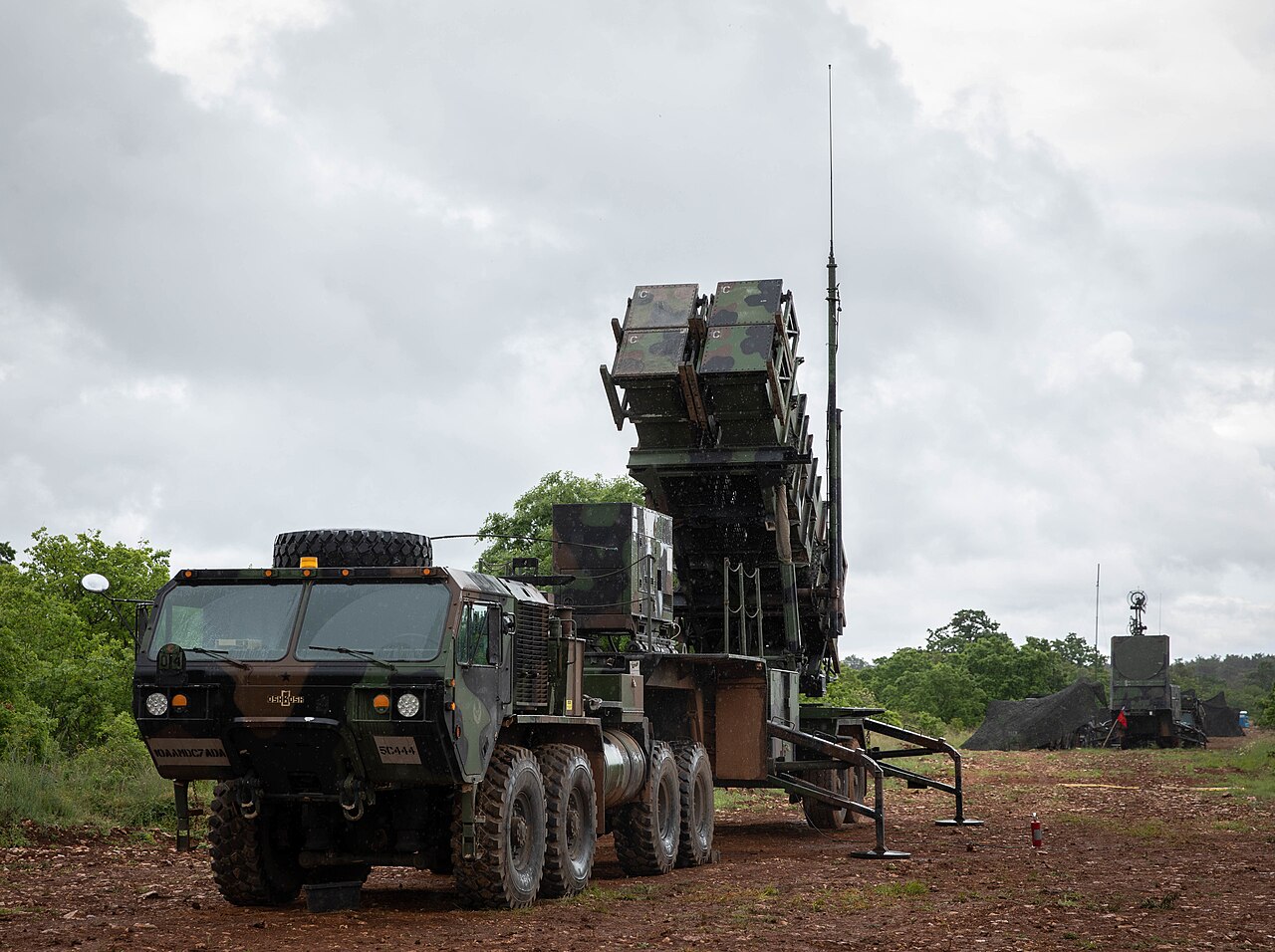
The numbers he attached to the offer deserve attention, because they convert a diplomatic quarrel into arithmetic. Twelve Patriot missiles a month, he said, is a quarter of the shipments made during the Biden administration — implying a previous rate of roughly forty-eight a month. Part of the deliveries are already authorized, he said, but the rest are not, "and it is not a technical issue." "We have paid for those weapons," he added. The claim lands on ground this site has already reported: CNN reported last week that Ukraine's Patriot interceptor stockpile had been exhausted during a major Russian attack, with almost all ballistic missiles in that salvo going unintercepted. A country that has run its interceptor magazine to zero at least once is not bargaining over an abstraction; at twelve missiles a month, a single large Russian ballistic salvo can consume more than a month's allocation in one night.
Washington's other track: the senators' proposal
What gives Sunday's interview an unusual second life is that a version of Zelenskyy's trade is already circulating in Washington — from the president's own party. Senator Kevin Cramer of North Dakota told CBS's Face the Nation on Sunday that he and Senate Armed Services Committee chairman Roger Wicker recently brought Zelenskyy a proposal of Wicker's design: Ukraine halts strikes on Russian energy facilities, and in exchange the United States expands Ukraine's access to Starshield — SpaceX's military satellite service — so Ukrainian forces can strike Russian launch sites deep inside Russia. "President Zelenskyy was enthusiastic," Cramer said. "He said, 'I'd do that tomorrow.' I would absolutely stop attacking Russia's energy facilities if I could have access to targeting capabilities… to go deep into Russia and attack their attackers — in other words, their launch facilities. Kill the archer, not the arrows." Cramer said Zelenskyy's requests in the exchange were three, and simple: the energy-strike halt for Starshield targeting, and a license to co-produce Patriot interceptors in Ukraine. "I agree with all three of them," Cramer said, adding that he has discussed the ideas at the White House, the Defense Department and the State Department.
Cramer also broke publicly with Trump on the decision that opened this sequence. He said he supports fully enforcing the Graham sanctions law, regards the waiver as a concession that invites further Russian aggression, and believes the pause should be temporary — while acknowledging the diesel-price politics pressing on the White House ahead of the November 3 midterm elections. The Wall Street Journal had earlier reported the senators' framework, including a proposed 100-day pause on Ukrainian energy strikes and a Starshield expansion reaching roughly 300 kilometres deeper into Russia. Secretary of State Marco Rubio said on Saturday that, to his understanding, Ukraine does not currently have the Starshield access at issue — a reminder that the asset being bargained over is, at the moment, switched off.
Why this matters
The word "capitulate" is doing strategic work, and it is worth being precise about what kind. Zelenskyy cannot out-vote the U.S. Congress, out-spend the White House, or replace the satellite and intelligence infrastructure only Washington provides. What he can do — what this interview does — is raise the reputational price of the current course in the one arena where Trump is most exposed: an American election season, three weeks before midterms, in which "siding with Putin" is a charge members of the president's own party are now repeating on Sunday television. Cramer did not use Zelenskyy's word, but his Face the Nation appearance is the interview's echo in domestic politics: a Republican senator, on the record, saying the Ukrainian president's three requests are reasonable, the sanctions pause should end, and the dispute is over leverage rather than loyalty.
There is also a harder, less political reading. Strip the rhetoric away and Sunday produced, for the first time, the visible shape of a bargain both sides' principals have touched: Ukrainian restraint on refineries and energy targets — the thing Trump says he wants for diesel prices and for his peace channel with Putin — exchanged for the two capabilities Ukraine says it needs to survive that restraint: targeting access to hit launchers instead of refineries, and interceptors to blunt the ballistic strikes that a refinery pause does nothing to stop. Zelenskyy's Bloomberg version prices the deal in Patriots; the Wicker-Cramer version prices it in Starshield reach plus a Patriot production license. The overlap is not a coincidence. It suggests the outline of a settlement to the Washington–Kyiv quarrel exists, has been discussed in both capitals, and differs mainly in which capital gets to announce it. What has not happened — and what Zelenskyy's "dangerous days ahead of the elections" line concedes — is any sign the White House has accepted it before November 3. He predicted calmer conditions after the vote: "After the elections, life goes on."
What each side says, and what is not established
Trump's position, stated in his own post this weekend, is that his Russia decisions are peace diplomacy: he is "in the process of negotiating peace," does not want to drive Russia "foolishly" from the bargaining table, and holds Zelenskyy responsible for prolonging the war by targeting diesel refineries whose disruption hurts world markets "including those in the United States." Zelenskyy's position is that the same decisions help only Russia, that the diesel deal strengthens Putin's will to occupy Ukraine, and that the pressure tools applied to Kyiv — satellite restrictions, an intelligence pause, slowed interceptor deliveries — were deliberate rather than technical, a characterization the administration has disputed in the intelligence case by describing the sharing as resumed and the interruption as a blockage now lifted. Moscow has not, as of Sunday, publicly answered the Bloomberg interview itself. And the central factual dispute — whether the week's American steps were intended as pressure on Kyiv or as inducements aimed at Moscow — is not resolvable from the public record: it is a disagreement about motive between two governments describing the same sequence of decisions in opposite ways. What is verifiable is the sequence itself, the twelve-a-month interceptor figure Zelenskyy asserted, and the existence of a congressional proposal he has accepted in principle.
Monday update: Zelenskyy takes the argument to Congress
On Monday, October 19, Zelenskyy carried the same argument directly to American lawmakers, telling a meeting with a U.S. congressional delegation that recent American decisions — delays in arms shipments and restrictions on intelligence sharing — were “hard to explain.” “Because it all comes down to Putin’s refusal to end this war, and to decisions on the American side that are hard to explain between friends,” he said, in remarks posted as video on Telegram and reported by Reuters. CNN, which reported the online meeting with lawmakers from both parties, said he described the current situation as “the most difficult situation from the very beginning of this war” and argued that “some political decision has been made to slow down support for us.”
The sharpest new detail concerned missiles that Ukraine’s partners have already bought. “We also know that, unfortunately, the Pentagon is delaying the delivery of missiles that our partners have already paid for through the PURL programme,” Zelenskyy said, adding that, to his knowledge, one missile package was waiting for the signature of U.S. Defense Secretary Pete Hegseth. The Pentagon had not publicly confirmed that account as of Monday. He also put a clock on Sunday’s offer: Ukraine is willing to halt strikes on Russian oil refineries, as Trump has demanded, for 30 days if Washington supplies Patriot interceptors, Reuters reported.
Zelenskyy said that on three occasions in the past week Ukraine did not receive the advance warning of an incoming attack that partners generally provide, and that Kyiv again received no advance warning of Sunday night’s ballistic attacks. He said Ukraine had not received full explanations for the limitations placed on the Starshield system, which it needs to stage some drone strikes and to defend against high-speed jet-powered drones; Trump said on Monday that he did not know who had restricted Starlink or Starshield and would “like to find out.” Secretary of State Marco Rubio, travelling in Uzbekistan, pushed back on the intelligence claim directly: “I don’t know where he’s getting these things or why he’s saying these things to the press… There’s been no pause.” The administration has also denied ordering the satellite restrictions — denials that sit alongside Zelenskyy’s account without resolving the dispute between them.
Looking ahead, Zelenskyy said he hoped a Ukrainian delegation would meet U.S. envoys Steve Witkoff and Jared Kushner in Norway in the coming days; CNN reported that he had spoken with both men on Sunday, in what he called “nonstop communication,” and had posted on X: “Ukraine never wanted this war, and we have welcomed literally EVERY attempt by our partners to bring this war to a dignified end.” On the separate idea of a three-way meeting involving Putin and Xi, Ukrainian Foreign Minister Andriy Sybiha said inviting Putin “would feed his appetite for self-aggrandizement” and would encourage him to continue the war, while the Kremlin said no concrete proposals or agreements for such a meeting had been discussed or put forward by anyone, and Rubio said there had been talk of a meeting but he did not know whether anything had been finalized. Zelenskyy also spoke on Monday with Pope Leo XIV, days after the Pope raised the grave humanitarian situation in Russian-occupied Oleshky in a call with Putin.
What happens next
Three clocks are now running. The first is electoral: Zelenskyy has publicly bet that the pressure peaks before November 3 and eases after it, which gives Kyiv an incentive to endure three weeks without conceding and gives the White House an incentive to show diesel-price results quickly. The second is seasonal: Russia attacked Ukraine's energy sector 76 times in the week after Trump announced an energy ceasefire, by Zelenskyy's count given the same Sunday, and every week of twelve-interceptor months brings the grid closer to winter with a thinner shield. The third is congressional: Cramer says the Wicker framework has been discussed inside the administration, and the senators who wrote the sanctions law Trump waived are the same Republicans now proposing the trade — meaning the waiver fight and the Starshield fight may merge into a single negotiation over what Ukraine gets in return for restraint. If a version of the bargain is accepted, expect it to be announced as a diesel-and-ceasefire measure, not as the answer to an accusation of capitulation. If it is not, Sunday's interview will read in retrospect as the moment the alliance's argument stopped being about weapons and started being about surrender — a word neither capital can easily take back.
Related coverage
Read next: Ukraine runs out of Patriot missile interceptors · Zelenskyy: Russia attacked Ukraine's energy sector 76 times since the ceasefire announcement · Starlink disruptions on Ukraine's front lines
Sources
Bloomberg News interview with President Volodymyr Zelenskyy, October 18, 2026 (as reported by Bloomberg Government and USA Today, October 18, 2026, including the "convince Ukraine to capitulate" and "dangerous days ahead of the elections" remarks and the refinery-for-Patriots offer); Demócrata (Spain) full relay of the Bloomberg interview, October 18, 2026 (twelve Patriot missiles a month, "we have paid for those weapons," "not a technical issue"); CBS News Face the Nation transcript, Senator Kevin Cramer interview, October 18, 2026 (Wicker Starshield proposal, "I'd do that tomorrow," "kill the archer, not the arrows," Patriot co-production license request, sanctions-waiver criticism); Wall Street Journal reporting on the senators' 100-day energy-strike pause proposal (via ASEAN Now relay); Reuters, October 18, 2026, on the resumption of U.S. intelligence sharing and the 76 energy attacks. Reuters, October 19, 2026, reporting Zelenskyy’s remarks to a U.S. congressional delegation (PURL programme delay, the package awaiting Secretary Hegseth’s signature, the 30-day refinery-halt formulation, three missed attack warnings in the past week, Starshield limitations, the hoped-for Norway meeting with envoys Witkoff and Kushner); CNN, October 19, 2026 (the online congressional meeting, Secretary Rubio’s “no pause” pushback, Foreign Minister Sybiha’s and the Kremlin’s reactions to a three-way meeting, the call with Pope Leo XIV). Casualty and strike figures attributed to officials are reported as their accounts; motive characterizations by each government are reported as that government's position.