The Zelenskyy CNN Amanpour interview, broadcast Thursday from Kyiv, found Ukraine's president in a conciliatory mood toward Donald Trump — "nothing personal," he insisted — and in no mood at all to bend on the demand he returned to twice: do not lift the sanctions on Vladimir Putin.
In the Zelenskyy CNN Amanpour Interview, a Conciliatory President Draws One Hard Line: No Sanctions Relief for Putin
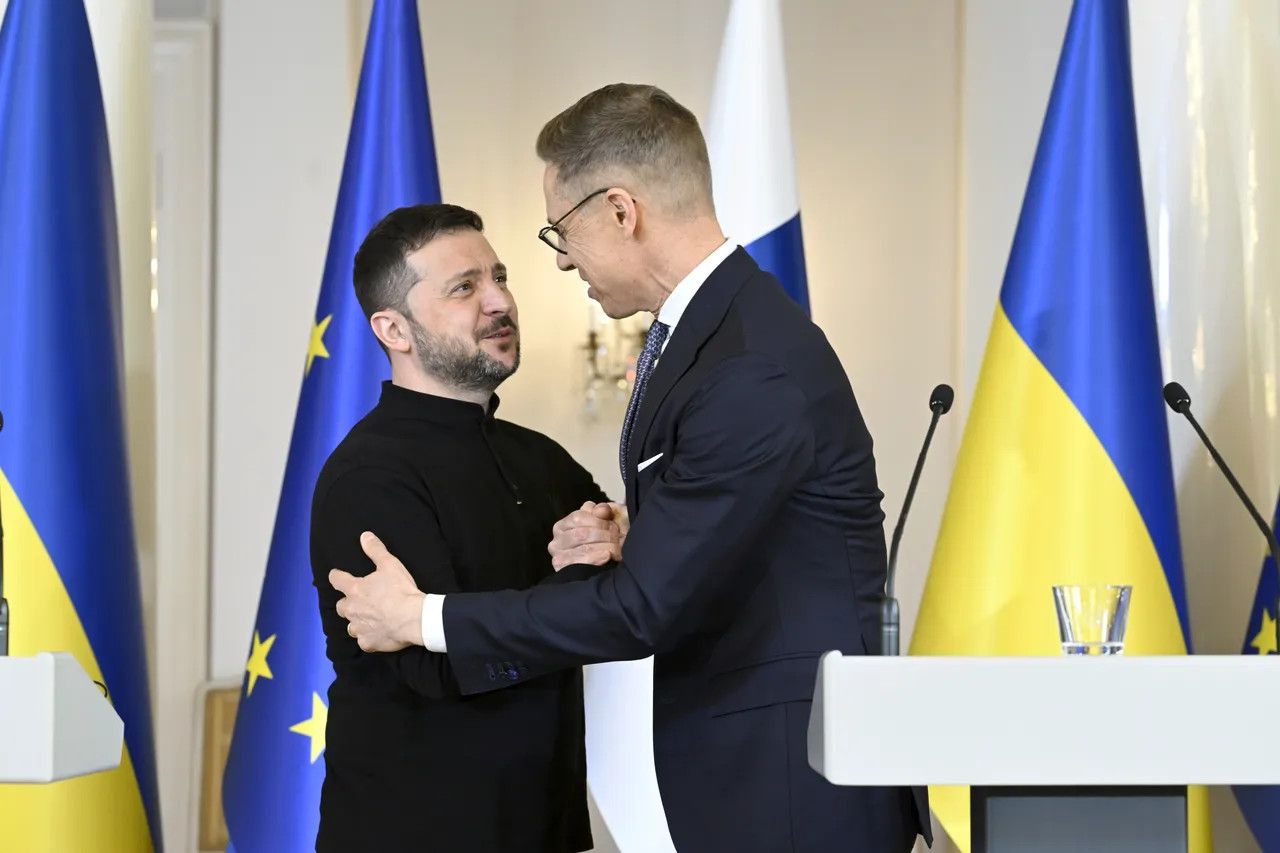
KYIV — The interview, conducted by CNN's Christiane Amanpour with Ivana Kottasová and aired Thursday at 1 p.m. Eastern, was Zelenskyy's most direct address to an American audience since his relationship with the Trump White House cracked open in public. He chose conciliation as his opening register. The tensions of recent weeks, he said, were "not about personalities." But conciliation had a boundary, and he marked it early and returned to it often: "My attitude to Putin is very clear. I think that if we lift sanctions, we will make him stronger. I'm against any lifting of sanctions."
Track it live: Ukraine war map
What he told CNN
The Zelenskyy CNN Amanpour interview ranged across the whole architecture of the war's endgame — sanctions, territory, satellites, missiles — but its emotional center was a distinction Zelenskyy drew repeatedly and carefully: between the man in the White House, with whom he insists his quarrel is not personal, and the man in the Kremlin, about whom he left no ambiguity at all. "It's not something personal between me and President Trump," he said, framing the transatlantic friction of the past weeks as a disagreement between governments over policy, not a feud between leaders.
About Putin, the language was of a different order. The Russian president, Zelenskyy said, has no intention of stopping the war, whatever is said in negotiating rooms: "Putin is playing. He plays with the lives of other people." It is a formulation he has used before, but its placement in this interview mattered — it came as the premise for everything else he asked of Washington. If Putin is playing, then concessions offered to bring him to the table are not purchases; they are gifts. And the largest gift on the table, in Kyiv's reading of the diplomacy now moving between Washington, Oslo and St. Petersburg, is sanctions relief.
His asks, when Amanpour pressed him to reduce them, were two, and he stated them as a pair: "Not to lift sanctions from Putin — and to give us better missiles." Everything else in the hour — the front lines, the satellites, the Finnish locomotives being unloaded the same day — was commentary on those two sentences.
The sanctions argument — and the rift behind it
To understand why Zelenskyy spent a CNN hour on sanctions, it helps to remember how raw the preceding weeks have been. When Trump announced a deal to buy Russian fuel, Zelenskyy said publicly that the American president was "on the wrong side of history" — the sharpest public criticism he has directed at Trump since the two men repaired their relationship after last year's Oval Office rupture, and one Signal Post News reported at the time as a gift-to-Putin argument: that buying Russian energy and easing Russian sanctions funds the very war the diplomacy claims to be ending. Trump, for his part, waived some Russia sanctions — a move criticized even within his own party — and Ukraine's access to Starlink and its military-grade sibling, Starshield, was restricted in the same period, a pressure Kyiv felt immediately at the front.
Zelenskyy's sanctions argument, laid out on Thursday, is an argument about sequence and reversibility. Sanctions, in Kyiv's account, are nearly the only leverage the West holds that Putin actually feels; they are slow to build, quick to surrender, and — once lifted — politically almost impossible to rebuild at the same strength, because the coalition that assembled them has frayed and the commercial interests that resume trading do not volunteer to stop. Relief granted before a settlement is verified is therefore not a bargaining chip spent at the table; it is a chip handed over before the hand is played. "If we lift sanctions, we will make him stronger" is the compressed version. The fuller version is that a stronger Putin, unbought and unpunished, has no reason to stop — because, as Zelenskyy put it, stopping is not what he intends.
The counter-argument, which the Trump administration has made in its own way, is that sanctions are a currency meant to be spent: that holding every measure in place forever removes any incentive for Moscow to deal at all, and that a president "close to a deal" does not tighten the screws at the moment of signature. Zelenskyy did not concede the premise. But the striking feature of Thursday's interview was how carefully he separated that disagreement from the relationship — the policy is dangerous, the president is not the enemy. Whether that distinction survives contact with Washington's next move is the question the interview leaves open.
‘The closest we’ve been’ — and the missiles that followed
The diplomacy Zelenskyy was answering had moved fast in the twenty-four hours before he sat down with Amanpour. On Wednesday, Steve Witkoff, Trump's special envoy, spent three hours with Putin in St. Petersburg — the latest in a series of meetings Signal Post News has tracked since the channel opened — and emerged praising the Russian leader as a "humanitarian" for releasing Stephen Hubbard, the 74-year-old American prisoner freed this week. Witkoff had met Zelenskyy in Oslo a day earlier. Putin agreed to talks in November, though few firm details have been published. And Trump, defending the sanctions waivers on Wednesday, argued that tightening sanctions would have kept Hubbard in a Russian cell: "When you're close to a deal, you don't put sanctions on." His administration, he said, is "the closest we've been" to settling the war.
Then came the night. Hours after those words, Russia launched hundreds of drones and ballistic missiles at Ukraine, and Reuters witnesses in Kyiv watched missiles strike the capital in the early hours of Thursday — the same Thursday on which Zelenskyy would sit for CNN and describe a negotiating partner who "plays with the lives of other people." The juxtaposition is the whole Ukrainian argument in a single news cycle: the "closest we've been" and the barrage are not in tension in Moscow's strategy; in Kyiv's telling, they are the strategy — negotiate in the afternoon, bombard at night, and let the contrast raise the price of the next concession demanded of Ukraine.
Hubbard's freedom is real, and no one in Kyiv begrudges a 74-year-old man his release. But Zelenskyy's interview invited Americans to notice the exchange rate being established: one freed prisoner, purchased with sanctions relief and legitimating praise, against a sky full of ballistic missiles that Ukraine — as he would explain minutes later — largely cannot shoot down. The November talks will test whether Washington sees that rate as a down payment on peace or as the market price of being played.
Freeze the lines, never surrender the land
On territory, Zelenskyy repeated — in softer language than he has sometimes used — the position he set out earlier this week, when he accepted the idea of freezing the front lines: an allusion to halting the war where the armies now stand, in his words to "ceasefire, stop the killing, sit and speak." It is a significant formulation, and he knows it; a freeze accepts, in practice, that Russian forces will remain for now on land they seized. But he paired it, as he always does, with the two refusals that define Kyiv's red lines. Ceding territory that Ukraine still controls — land no Russian soldier has taken — is a non-starter. And the occupied territories will never be recognized as Russian, in law, by Ukraine: "Our land is very important because it's about people. It's not about kilometers."
That sentence deserves to be read slowly, because it is the moral core of Ukraine's negotiating position and the part most often lost in map-based diplomacy. A freeze drawn on a map treats the line as a quantity of ground. Zelenskyy's insistence is that the ground contains people — Ukrainians living under occupation, whose status a signature in November cannot transfer like a deed. Secretary of State Marco Rubio, speaking on Wednesday, located the remaining fight where the maps say it is: concentrated on the remainder of the Donbas, the eastern region Russia has sought in full since 2022, and said "creative ideas" had been put forward for the territory question. Creativity will be needed. The gap between a freeze Kyiv can accept — lines held, sovereignty unrecognized, people unabandoned — and a settlement Moscow can sell is precisely the gap in which the November talks will either live or die.
Warnings without interceptors
The most operationally urgent passage of the interview concerned the sky. Zelenskyy confirmed that intelligence sharing with the United States has been restored — but that Starshield, the military-grade satellite service on which Ukrainian units depend, has not yet been fully restored, a distinction with daily consequences at the front. Later on Thursday, Trump confirmed that Elon Musk had restored Ukraine's access to a military-grade Starlink service, while declining to say whether he had requested it — an answer that left the timeline, and the leverage implied by it, deliberately unclear.
The graver gap is in interceptors. Ukraine, Zelenskyy explained, receives warnings of incoming ballistic missiles — the intelligence works, the sirens sound — but critically lacks the interceptors to shoot those missiles down. European partners have provided air-defence missiles, and he was careful to say so; they are, in his word, "not enough." Ballistic missiles are the hardest targets in modern air defence: they arrive in minutes, on trajectories that only a handful of systems in the world can engage, and the overnight strike on Kyiv — witnessed, timed and counted by Reuters — was flown substantially with them. A country that can see the missile coming and cannot stop it is living in the worst cell of the matrix: informed, and undefended. That is why "give us better missiles" sat beside "do not lift sanctions" as the interview's paired demand — one is about the diplomacy of the war's end, the other about surviving until it arrives.
Finland arrives with €300 million
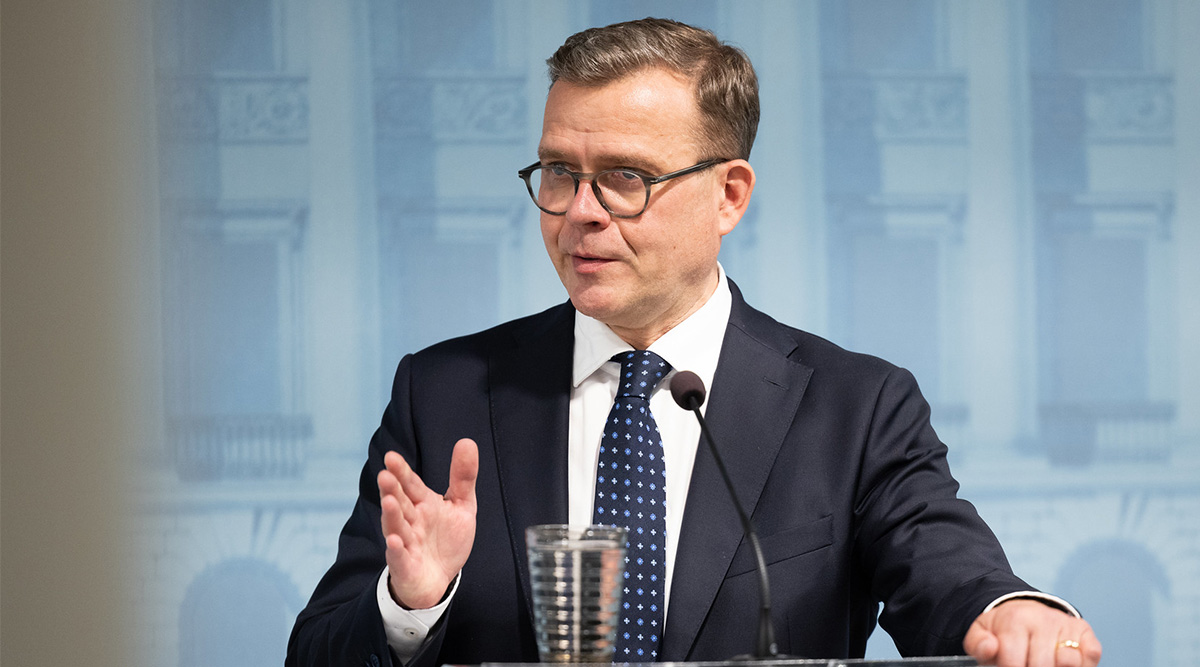
While Zelenskyy made Ukraine's case to America on television, Finland's prime minister was in Kyiv making Europe's case in documents. Petteri Orpo's visit produced seven signed agreements totalling some €300 million (about $336 million), according to the Finnish Foreign Ministry: expanded use of Finnish satellite capabilities — the ice-and-ocean imaging of ICEYE and the networks of Nokia — for Ukrainian needs; logistics and energy support aimed at the sectors Russia is striking hardest; ten donated diesel locomotives, a gift whose practicality anyone who has watched Russia bomb Ukraine's electric rail infrastructure will understand; and €2 million in additional humanitarian aid.
The presidential office in Kyiv put the day in its longer frame: Finland, a country of five and a half million people, has now delivered 29 defence packages totalling more than €2.9 billion, and its 2025–2028 support programme envisions at least €320 million more. Zelenskyy thanked Finland for supporting "our logistics and energy sectors — these are key targets for Russia right now." The pairing of the day's two events was not lost on anyone in Kyiv: an interview pleading with Washington not to relax, and a signature ceremony with a neighbour of Russia that has never once relaxed — Finland, which fought the Soviet Union twice and joined NATO in 2023, does not need the geography of this war explained to it.
Why this matters
Begin with what the interview was: not a news event but an instrument. Zelenskyy has limited levers over American policy — he cannot vote in the midterms, sit in the Situation Room or draft the November agenda — but he retains one weapon that has served him since 2022, which is direct, fluent, televised address to the American public over the heads of its negotiators. Thursday's performance was calibrated with unusual precision. The conciliation toward Trump was not warmth; it was disarmament — removing the personal feud as an excuse for dismissing the message. The message itself was the sanctions line, repeated until it could not be edited out: relief makes Putin stronger. A president who has been accused, at various points this autumn, of being the obstacle to peace spent an hour presenting himself as the reasonable party — freeze the lines, stop the killing, sit and speak — and relocating the obstacle to Moscow and to a single American policy choice.
Who gains if his framing holds? Kyiv, obviously: sanctions maintained are leverage retained, and an American debate about relief conducted on Zelenskyy's terms — does it strengthen Putin? — is a debate he mostly wins. European capitals gain too, since a Washington persuaded to hold sanctions is a Washington still underwriting the pressure strategy Europe has paid for. Who loses? The architects of the current diplomatic sprint, whose theory — momentum, goodwill gestures, a November signing — depends on relief being discussable without being defined as surrender. And Putin loses if the frame holds, which is why the overnight barrage matters analytically as well as morally: every missile that lands on Kyiv during a week of "closest we've been" either disciplines the diplomacy or discredits it, and Zelenskyy spent Thursday ensuring it would be read as the latter.
The critics deserve their hearing on both sides. Against Zelenskyy: sanctions maximalism can become its own trap. If no relief is ever available, Moscow has nothing to gain by conceding anything, and a freeze that might save thousands of lives could be lost to a doctrine that treats every concession as capitulation; the history of sanctions regimes, from Cuba to Iran, offers few cases where pressure alone, untraded, produced the desired political outcome. Against the administration: relief granted early and cheaply has its own record. Sanctions lifted as goodwill gestures — rather than exchanged, verified and made snap-back-able — have a long history of being pocketed; the entire architecture of modern sanctions diplomacy, from the JCPOA's snapback clauses onward, exists because negotiators learned that relief surrendered in advance is relief that cannot be surrendered again. And hovering over both critiques is Hubbard: a real man, really freed, whose release the administration can fairly count — and whose use as the public justification for waivers invites the question Kyiv asked on Thursday, which is what the next prisoner, and the next, will cost.
The numbers, kept in proportion, tell the war's real story. Finland's €300 million day is generous — and it is roughly a tenth of what Finland alone has already given (€2.9 billion across 29 packages), which is itself a fraction of the Western total, which is itself spread across a war now four and a half years old, fought along a front of more than a thousand kilometers. The €2 million of humanitarian aid in Thursday's package would not fund a day of the air defence Kyiv says it needs. That is not an argument against the package; it is the context that explains the interview. Ukraine's president goes on CNN because the arithmetic of European generosity, however sincere, does not close his interceptor gap or hold his sanctions line. Only Washington can do those things, and so Washington — its president, its Congress, its voters three weeks from an election — was the audience, and Amanpour's camera the delivery system.
The historical rhyme Kyiv hears is with frozen conflicts past: lines halted under exhaustion, sovereignty left in legal limbo, "temporary" arrangements that hardened into decades — Korea's armistice is in its eighth decade. Zelenskyy's formula — freeze the lines, never recognize the theft — is essentially an attempt to accept the Korean outcome's stability while refusing its permanence, and history's verdict on that combination is mixed: it has prevented wars from resuming, and it has never once, by itself, given the land or the people back. The November talks will not resolve that tension. They will only decide which side of it Ukraine wakes up on.
Three scenarios frame November. In the first, the talks convene with sanctions intact as the West's principal chip, the freeze is tabled with non-recognition language, and the interceptor and Starshield questions are settled as the price of Kyiv's flexibility — the outcome Thursday's interview was built to produce. In the second, relief is traded early for a ceasefire that freezes not only the lines but the diplomacy: Moscow pockets the waivers, the talks drift, the missiles resume at a tempo Ukraine still cannot answer, and the phrase "closest we've been" joins the archive of premature peace. In the third — the one no one in Kyiv or Washington says aloud — November produces nothing at all, and the war returns to the arithmetic of attrition, in which the side that runs out of interceptors, locomotives and men first loses, slowly and then suddenly. Zelenskyy's hour on CNN was an attempt to make the first scenario cheaper for Trump to choose than the second. It was, like everything else in this war, addressed to the one man whose choice it is.
What happens next
The calendar now takes over. Putin has agreed to November talks with few firm details; the work between now and then — Witkoff's channel, Rubio's "creative ideas" on the Donbas, the full restoration of Starshield, the interceptor deliveries — will decide whether those talks open on Zelenskyy's terms or on the terms of the overnight barrage. Watch, in the coming days, for three tells: whether any further sanctions waivers are announced or quietly frozen; whether the military-grade satellite service is confirmed fully restored rather than partially; and whether European capitals follow Finland's example with packages timed to land before November, hardening the position Zelenskyy staked out on Thursday.
He ended the interview where he began it — with the distinction between the personal and the political. Nothing personal with Trump; everything at stake with Putin. It was a polished formulation, and also, on the evidence of the week, a sincere one: the same president who said Trump stood on the wrong side of history now asks Americans to believe the quarrel was never about the man. Whether Washington returns the courtesy — by holding the sanctions line that is, in the end, the only sentence in the interview Kyiv truly needed heard — is the question November will answer.
Sources: CNN (Oct 22, 2026, Christiane Amanpour and Ivana Kottasová) — Zelenskyy interview: "not something personal" with Trump, opposition to lifting Russia sanctions, front-line freeze and non-recognition, Starshield and interceptor shortfalls; Office of the President of Ukraine (Oct 22, 2026) — Finland's support: 29 defence packages totalling over €2.9 billion, 2025–2028 programme of at least €320 million, Zelenskyy thanks Finland for logistics and energy support; Reuters (Oct 21–22, 2026) — missiles strike Kyiv in overnight Russian attack witnessed by Reuters; Finnish Foreign Ministry (Oct 22, 2026) — seven documents totalling some €300 million signed during Prime Minister Petteri Orpo's Kyiv visit, including satellite cooperation, logistics and energy support, ten donated diesel locomotives and €2 million in additional humanitarian aid.