Witkoff Putin peace talks: US special envoy Steve Witkoff met President Vladimir Putin at the Constantine Palace in St. Petersburg on Wednesday for their ninth in-person meeting, and the session opened with Russia freeing Stephen Hubbard, the 74-year-old American teacher held since 2022.
A ninth meeting, an updated American proposal — and a prisoner walking free before the talking started
Track it live: Ukraine war map — live tracker
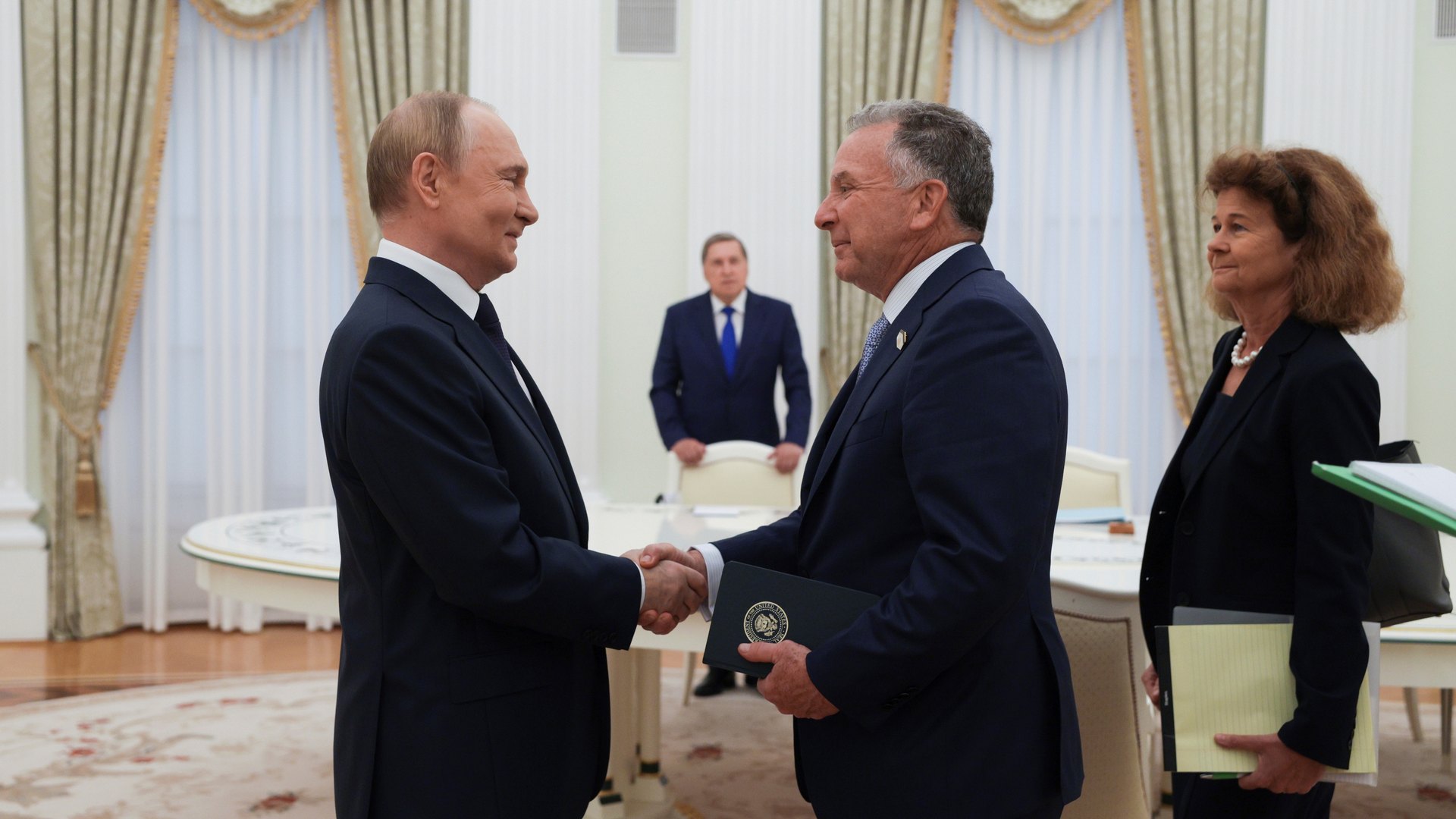
The Witkoff Putin peace talks reached their ninth round on Wednesday with the fullest agenda the channel has yet carried. Witkoff arrived in St. Petersburg directly from a day of talks in Oslo with President Volodymyr Zelenskyy and European leaders, bearing an updated US proposal to end the war that is now in its 1,701st day since Russia's full-scale invasion of February 24, 2022. Putin opened the meeting at the Constantine Palace by announcing that Stephen Hubbard had been freed and was at St. Petersburg's Pulkovo airport. Witkoff thanked him in front of the cameras — "the president sends his thanks … because of you, he's going home to his family" — and called the Russian president a humanitarian, according to Reuters, the Wall Street Journal and The Times. The two men then turned to the proposal itself: security guarantees for Ukraine, a possible resumption of trilateral talks among Russia, the United States and Ukraine, and, on Putin's side of the table, restored economic cooperation between Moscow and Washington.
What happened at the Constantine Palace
Witkoff meets Putin in St Petersburg for the ninth time
The meeting took place at the Constantine Palace in Strelna, the presidential residence on the Gulf of Finland outside St. Petersburg that Russia uses for summit diplomacy, Reuters and CNN reported. It was the ninth time Putin and Witkoff had met in person since the channel opened — a frequency that has made the New York real-estate developer turned special envoy the single most persistent American interlocutor of the war. Witkoff landed at Pulkovo airport, where he was met by Kirill Dmitriev, the Kremlin's investment envoy, according to the Journal and CNN, and travelled from there to the palace. Jared Kushner, who has worked the Ukraine file alongside Witkoff, joined the meeting remotely because he was ill with the flu, the Journal, CNN and Axios reported.
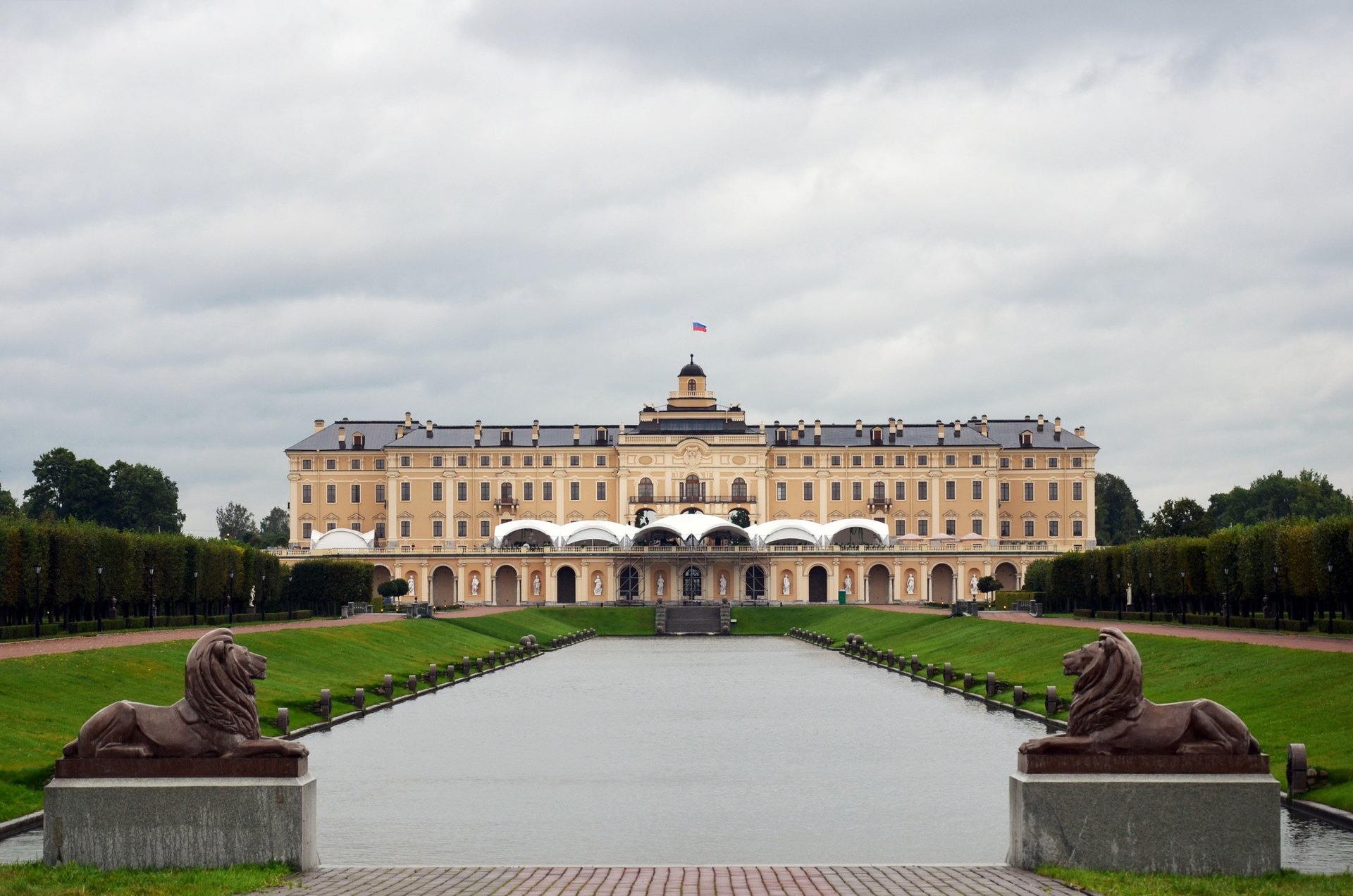
Speaking at the start of the session, Witkoff said there was "some degree of momentum" behind the process and that he hoped the meeting would be "another step forward in the peace process," CNN and Reuters reported. He urged Putin to consider resuming trilateral Russia-US-Ukraine talks at which technical issues could be worked through directly. Putin, for his part, conveyed his thanks to President Donald Trump for his efforts to settle the conflict, Russian news agencies reported via Reuters, and expressed interest in restoring economic cooperation with the United States and in a possible meeting with China to discuss Ukraine. The agenda ranged beyond Ukraine: CNN reported that the two also discussed Russia's willingness to help resolve the war in Iran and potential Russian fertilizer exports to the United States — a reminder that the channel now carries a bilateral economic file alongside the war it was built to end.
Stephen Hubbard released as the meeting opened
The release was announced before the substantive talks began. Putin told Witkoff that Hubbard was already at Pulkovo airport, Russian state media reported, and said the decision to free him had been taken for humanitarian reasons. Witkoff's response, captured on video of the meeting and reported by Reuters, the Journal and The Times, was unusually personal for a diplomatic opening: "I want to thank you very much, the president sends his thanks … the whole nation sends their thanks because of Stephen Hubbard. Because of you, he's going home to his family." He added, in the Journal's account: "You talk so much about my president — President Trump — being a humanitarian. You also are a humanitarian also, sir, and I salute that, I commend you and I thank you."
President Trump, posting on Truth Social, said Hubbard had been released at his request, made directly to Putin in a telephone call last week, and that the United States gave nothing in return and there was no swap, CNN reported. Trump linked the release to his decision last week to ease sanctions on Russia — a move that drew bipartisan criticism — arguing that had sanctions been imposed instead, the negotiations would have halted. Hubbard's son, Joseph Coleman, thanked Trump and US officials and called the release a humanitarian move by Putin, CNN reported. Reports described Hubbard as being in poor health: the Journal, citing a person familiar with the matter, said he would travel on a separate plane from Witkoff because of his health, and CBS reporting carried by the New York Post said he would fly to Texas for treatment at a military hospital. CNN said it could not immediately confirm Hubbard's whereabouts and had asked the State Department for comment.
The Hubbard case
Hubbard wrongfully detained: a teacher from Michigan, held for four and a half years
Stephen Hubbard grew up in Big Rapids, Michigan, served in the US Air Force and the National Guard, and earned a master's degree in English, according to a Reuters explainer on his case. He taught in Japan for 25 years before moving in 2014 to Izyum, in eastern Ukraine, with a Ukrainian partner. When Russia captured Izyum in the opening weeks of the full-scale invasion, he stayed. He was detained there in April 2022.
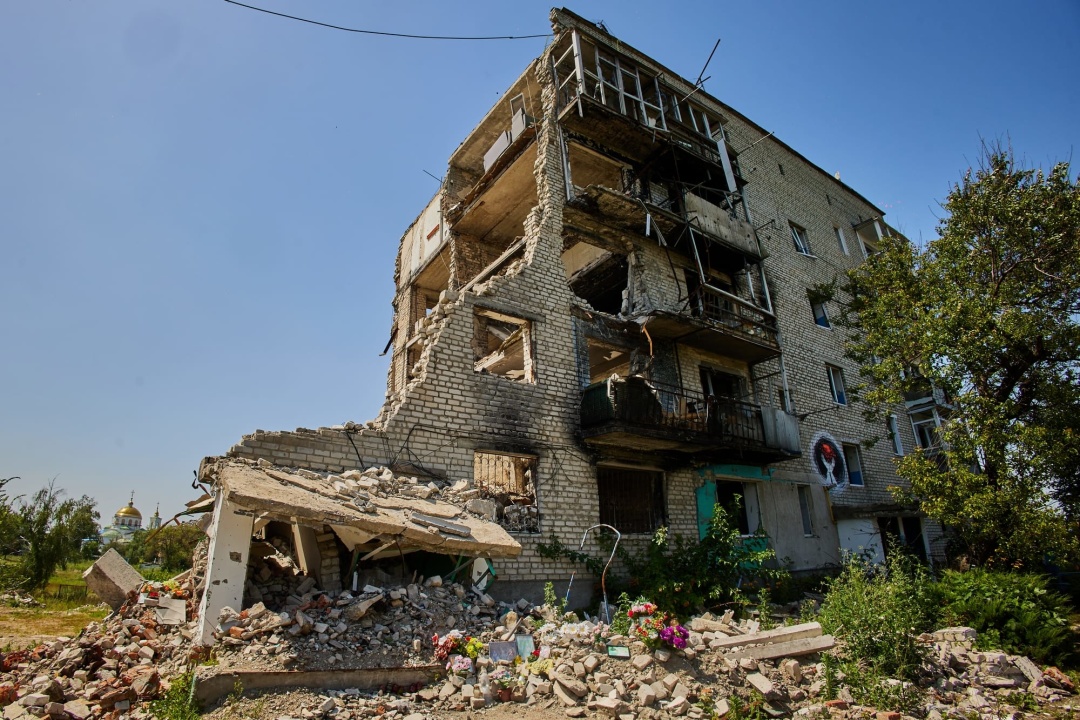
Russian prosecutors alleged that Hubbard had manned a Ukrainian checkpoint and signed a contract with a territorial-defence unit that promised him $1,000 a month; Russian state media reported that he pleaded guilty. He was convicted of mercenary activity at a closed trial and sentenced in October 2024 to six years and ten months in prison — nearly seven years. The United States designated him wrongfully detained, and at the time of his release he was the only US prisoner in Russia carrying that designation. His US-based lawyer, Martin De Luca, told Reuters that Hubbard had said the charges were false and that he was not in any combat or military unit; his sister, Patricia Hubbard Fox, disputed in a 2024 Reuters interview the idea that her brother — "so non-military," in her words, and in his seventies — had taken up arms for any government. Those denials, the prosecution's account and the guilty plea reported by Russian state media cannot all be reconciled from the public record, and the closed nature of the trial means the evidence was never tested in open court. What is not disputed is the arithmetic of the case: a 74-year-old retired teacher spent four and a half years in Russian custody on a sentence that had years left to run, and walked out of it on a Wednesday morning because two presidents had talked about him by name.
The road from Oslo
Oslo talks: Zelensky Witkoff diplomacy, one day earlier
Witkoff came to St. Petersburg straight from Oslo, where on Tuesday, October 20, he met Zelenskyy together with Norwegian Prime Minister Jonas Gahr Støre, Finnish President Alexander Stubb and representatives of France, the United Kingdom, Germany, Poland, the European Union and NATO, Reuters reported. A US official called the Oslo talks "constructive," said Ukraine had brought new ideas and proposals that were discussed in detail, and said the subjects included security guarantees for Ukraine, a postwar economic plan and the broader European security architecture. Washington's hope, the official said, was to "create a pathway toward direct trilateral and broader multilateral negotiations." Zelenskyy has since said the next step should be a trilateral leaders' meeting among himself, Trump and Putin — a format Russia has so far rejected. The shuttle was not frictionless: the Oslo meeting also took up Kyiv's complaints that the United States has at times held back real-time intelligence on Russian attacks and disrupted Ukraine's use of the Starshield satellite service, and Zelenskyy said agreement was reached in Oslo to resolve those issues, Reuters reported. Our earlier coverage followed Zelenskyy's push to get Witkoff and Kushner back to the table: Zelenskyy seeks new talks with Witkoff and Kushner.
The Hubbard release, too, had a public runway. A day earlier, in the Oval Office, Trump had told reporters he had been talking to Putin about "Mr. Hubbard" at length and had asked him to release him — remarks we reported in our coverage of the White House fraud-whistleblower announcement, where the president first trailed the request: Trump launches the WHIP fraud-tip program — and says he has asked Putin to free Hubbard. And the St. Petersburg meeting opened under the shadow of the war itself: hours before Witkoff sat down with Putin, Russian drones and missiles had killed four people across Ukraine overnight, as we reported this morning: Kharkiv drone strike kills two in Korotych as Russia fires 98 drones and six missiles overnight.
Why this matters
Three features of Wednesday's meeting carry weight beyond the day's headlines, and they are worth separating from the claims each side made about it.
First, the sequencing. Prisoner releases in this war have usually been trades — bodies for bodies, names for names, negotiated for months and executed at borders. A unilateral release, announced by the detaining power's president at the opening of a negotiating session and credited by the receiving side to a phone call, is a different instrument: it is a down payment. Moscow spent something it alone controlled — the only wrongfully-detained American — at the precise moment it wanted Washington to read goodwill into the room, and it spent it in a form that costs the Kremlin nothing it values militarily. Washington, in turn, received something it can present at home as proof the channel works. Whether the gesture is reciprocated in substance — on territory, on security guarantees, on the terms Kyiv actually has to live with — is the question the release is designed to postpone, and the one that will decide what Wednesday is remembered as.
Second, the number nine. Nine in-person meetings between a president and an envoy is no longer a channel; it is an institution, with its own momentum and its own constituency in both capitals. That cuts two ways. It means the conversation no longer depends on summit theatre, and technical work can proceed between headlines. It also means the process can generate its own evidence of progress — meetings held, gestures exchanged, "momentum" declared — while the underlying positions, on the evidence available Wednesday, had not visibly moved: Russia's foreign minister, Sergei Lavrov, said Moscow would listen to the new proposals but ruled out "political concessions," and the trilateral leaders' format Kyiv wants remains one Moscow has rejected. Momentum is a claim, not a measurement; the measurement will be text — a proposal Moscow accepts as a basis for talks, or does not.
Third, the balance of who needs what. Kyiv's worry, voiced for weeks and sharpened by this month's diesel deal and sanctions easing, is that its leverage is being spent by others: intelligence held back, satellite access disrupted, Russian fuel revenue restored — each step taken in Washington, each justified as the price of bringing Moscow to the table. Wednesday gave Kyiv one concrete return on that argument, the resolution of the intelligence and Starshield disputes in Oslo, and one test it did not choose: if the table is now set, the next move is a trilateral format Russia has refused. Washington's claim is momentum, and it now has a freed American to point to. Moscow's asks were the clearest thing in the room: economic cooperation restored, fertilizer exports, a possible China meeting — the agenda of a state negotiating its way back into the world economy, not merely out of a war. The numbers frame the stakes: nine meetings, four and a half years of one man's detention, a sentence of six years and ten months cut short, one wrongfully-detained American reduced to zero, and a war on day 1,701 that killed four more people the night before the handshakes.
Background: the diesel deal and the sanctions question
The meeting came at the most strained point in US-Ukraine relations since the channel opened. Earlier in October, Trump announced a diesel export deal with Russia, and last week his administration eased sanctions on Moscow — steps Kyiv and its allies read as concessions made before negotiations rather than at them, and which drew bipartisan criticism in Washington, CNN reported. High fuel costs since strikes on Iran have hurt Republicans ahead of November's legislative elections, Reuters noted, giving the administration a domestic reason to want Russian supply back in the market and the war wound down. Trump has said it is time for Ukraine to end the war or face "a very bad thing." It was in that context that Zelenskyy went to Oslo asking for the intelligence and satellite issues to be fixed, and in that context that the Hubbard release landed: for the administration, evidence that engagement produces results; for its critics, a humanitarian outcome purchased inside a pattern of easing pressure. Both readings were available on Wednesday because both are, on the reported facts, partially true — the release is real, and so is the sequence of concessions that preceded it.
What happens next
The next test is the trilateral format itself. Witkoff urged Putin to resume trilateral Russia-US-Ukraine talks on technical issues; Zelenskyy wants to go further, to a leaders' meeting. Russia has rejected the leaders' format so far, and Lavrov's formulation — Moscow will listen, but no political concessions — sets the ceiling of what St. Petersburg promised. Witkoff said in Oslo that he would share a security-guarantee text with Moscow, and Kyiv is waiting for feedback on the proposals it tabled there; the speed and specificity of Moscow's response will show whether the updated US proposal is a basis for negotiation or another document in a series that began in the spring of 2025. Hubbard's journey home — the separate plane, the reported treatment in Texas — will close the human file that opened in Izyum in April 2022. The file that opened in February 2022 remains open, and on its 1,701st day the distance between the Constantine Palace's courtesies and the front line's arithmetic was, as ever, the whole story.
Sources
Reuters (October 21, 2026): Russia's Putin meets US envoy Witkoff, agencies report — the ninth meeting at the Constantine Palace, Putin's thanks to Trump and interest in restoring economic ties, Witkoff's ceasefire-basis and trilateral remarks via Interfax and TASS; Reuters wires (October 21, 2026) on the Oslo talks of October 20, the US official's "constructive" assessment and Ukraine's new proposals, and the intelligence and Starshield disputes; Reuters explainer reporting on Stephen Hubbard's background, detention in Izyum in April 2022, the checkpoint and territorial-defence allegations, the closed trial and October 2024 sentence of six years and ten months, the wrongful-detention designation, and the family's and lawyer Martin De Luca's denials. CNN (October 21, 2026): US envoy Witkoff meets with Putin in effort to advance proposals to end war in Ukraine — the Constantine Palace meeting, the momentum remarks, the Iran and fertilizer agenda, Kushner joining remotely, Dmitriev at the airport; and Russia frees 74-year-old American Stephen Hubbard captured in occupied Ukraine — Trump's Truth Social account of his request and the sanctions link, and Joseph Coleman's statement. Wall Street Journal (October 21, 2026): Russia Releases Captured American in Sign of Warming Ties — the humanitarian exchange at the table, Hubbard's health and the separate-plane travel arrangement, Kushner's illness. The Times (October 21, 2026): Witkoff calls for trilateral peace talks as Putin releases retired teacher — the trilateral call, the release announcement at Pulkovo, and Trump's Oval Office remarks of October 20. Axios reporting via multiple outlets (October 20–21, 2026) on the Oslo pathway toward trilateral and multilateral negotiations. CBS reporting via the New York Post on Hubbard's expected treatment in Texas. Statements by individual governments and officials are reported as their own claims; casualty and battlefield figures elsewhere in this coverage are official figures as reported by the outlets above and had not been independently verified on the ground at publication.