Zelenskyy freeze front lines: President Volodymyr Zelenskyy told Fox & Friends on Wednesday that he is open to freezing the front lines where they stand to end the war — a ceasefire first, security guarantees next, and no handover of the whole Donbas.
Asked whether he would freeze everything where it stands and keep 75% or more of his country, Ukraine's president said yes — then set out the guarantees he wants, the territory he will not surrender, and the Russian refusal already on the record
Track it live: Ukraine war map — live tracker
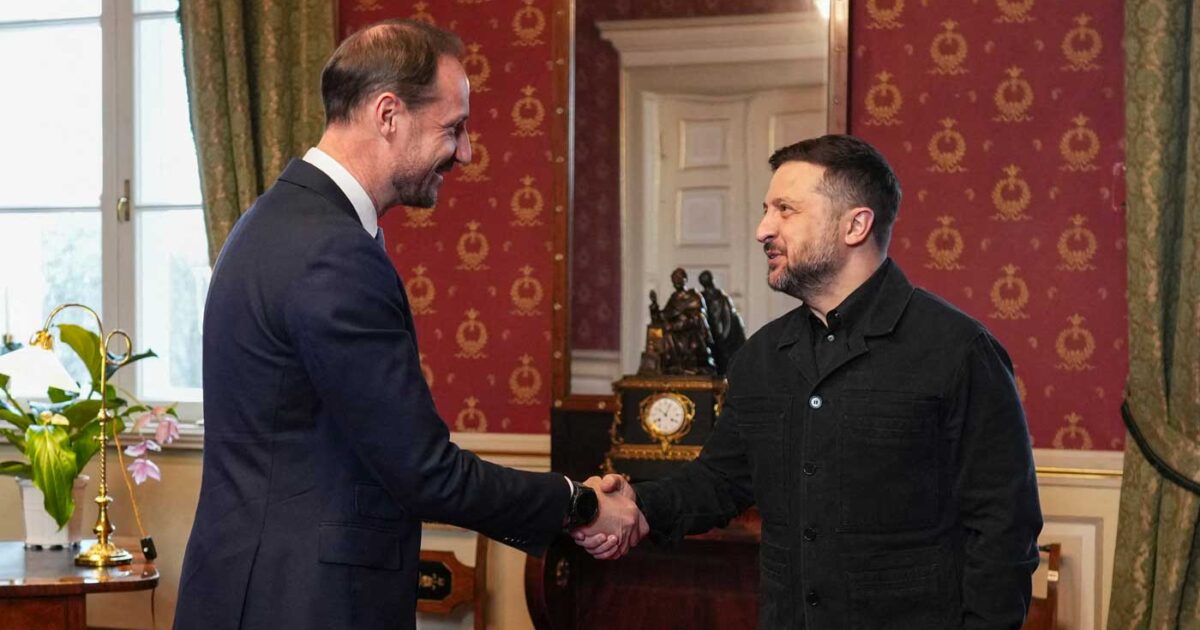
The exchange was short, and it will be quoted for a long time. Kilmeade asked whether Zelenskyy would accept a peace deal that "freezes everything the way it is right now, where you still keep 75% or more of your country." Zelenskyy did not hedge. "Yes, right now, we have to freeze, and I think this is [a] real way to end this war," he said, in Fox News's account of the interview. "We call it ceasefire or 'stop killing' like President Trump called it." He described a freeze as "the minimum of what we need from Russia today" — the floor of a settlement, not its ceiling — and said that once the guns stopped, Kyiv would go to President Donald Trump and to the Europeans to ask for security guarantees. "The most important is peace, and also security peace," he said. It was the clearest public statement yet from Ukraine's president that the war could end along the line where it is currently being fought — and it landed on the same day that Russia freed an American prisoner at Washington's request and signalled, through a Kremlin aide, a willingness in principle to resume three-way talks next month.
What Zelenskyy actually said
The Zelenskyy Fox and Friends interview: "we have to freeze"
The setting matters. Fox & Friends is the programme the American president watches, and an interview there is an address to Washington as much as to the network's audience. Zelenskyy used it to make three connected points. First, the freeze itself: fighting stops where the armies stand, along the current line of contact, without Ukraine first withdrawing from territory it still holds or Russia first withdrawing from territory it occupies. Second, the sequence: a freeze is the beginning of a settlement, not the settlement itself — after it, Kyiv would seek the Zelenskyy security guarantees peace deal it has demanded throughout the war, commitments from the United States and Europe intended to make a renewed Russian attack too costly to attempt. Third, the human arithmetic behind the offer. Zelenskyy said Russia is not winning on the battlefield, and in posts on X on Wednesday he wrote that "Russia strikes our country virtually every hour," that Ukraine is losing people and time, and that some 9.5 million displaced Ukrainians abroad need to be able to come home to live and build their country — a figure he also raised in the interview, saying Ukraine needs those who lost their houses to return.
None of this was improvised from nothing. The Washington Examiner noted that Zelenskyy had pointed to his earlier support for the same formula: in October 2025 he signed a joint statement with Ukraine's partners calling a freeze along the current front lines a good starting point for negotiations — while consistently doubting, then as now, that Russia would accept it. Wednesday's difference is one of emphasis and audience. A position once set out in a joint diplomatic statement was restated, on American morning television, as a direct answer to a direct question about a specific territorial outcome: freeze everything as it is, keep 75% or more of the country. Zelenskyy said yes.
A freeze is not a cession: Kyiv's distinction
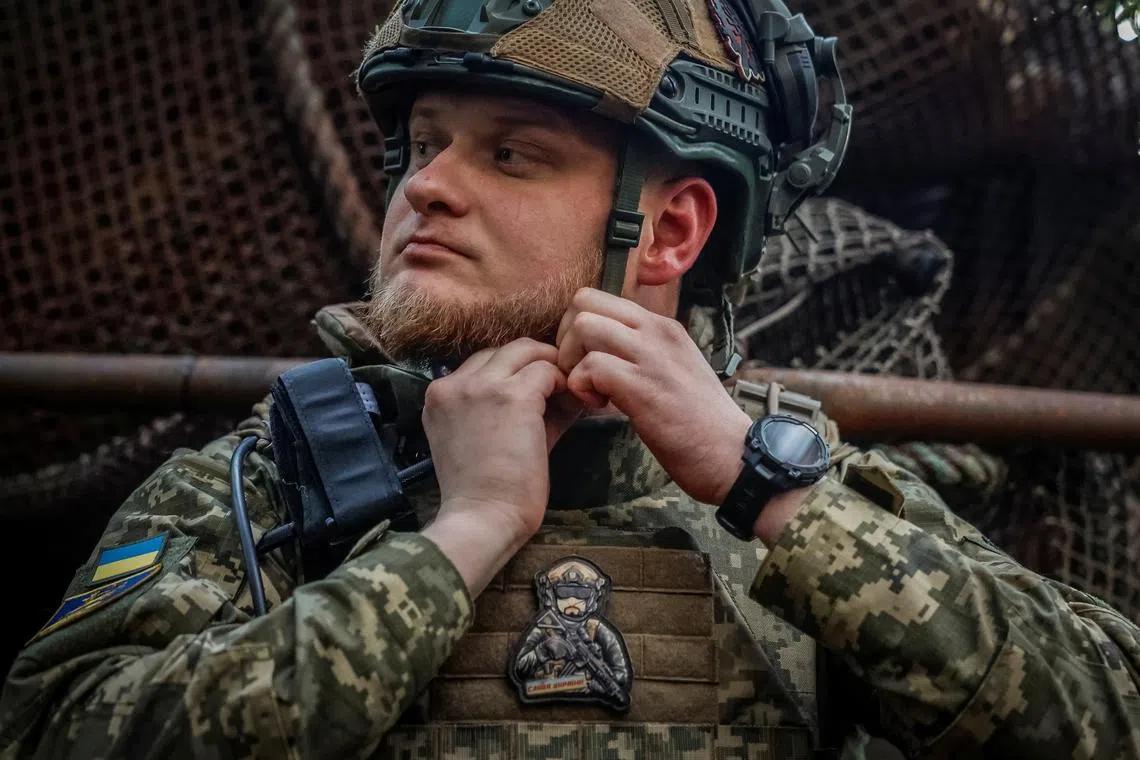
The distinction at the heart of Kyiv's position is between stopping on a line and surrendering what lies beyond it. A Ukraine peace deal freeze front lines arrangement, as Zelenskyy described it, halts the fighting in place; it does not sign away the occupied territories, does not require Ukraine to hand over land its army still defends, and does not by itself settle the legal status of anything. That is why the same interview that produced the "yes" to a freeze also produced a refusal on the Donbas. Asked about giving up the whole region, Zelenskyy said it was "not fair," the New York Post reported. The two answers are consistent in Kyiv's framing: Ukraine will stop where it stands, but it will not retreat from ground it holds in order to make the map tidier for Moscow — above all not from the unoccupied part of the Donbas, the region of Donetsk and Luhansk oblasts in Ukraine's east.
The Donbas question
Ukraine war freeze Donbas not fair: the territory at the centre of the argument
The Donbas is where the war's geography and its politics collide. Russia has occupied the vast majority of the region since its September 2022 referenda — votes held in occupied Donetsk, Luhansk, Zaporizhzhia and Kherson oblasts that were widely rejected internationally as shams and that Moscow used to claim the territories as Russian. But "vast majority" is not "all": Ukrainian forces still hold a belt of the northern Donetsk oblast, including fortified towns built up over years of fighting. A freeze along current lines leaves that belt in Ukrainian hands. A settlement on the terms Moscow has repeatedly demanded — Ukrainian withdrawal from the whole Donbas as the price of peace — would require Kyiv to give up, without a battle, the strongest defensive ground it holds in the east. Ukrainian and Western officials have warned that ceding the region outright could enable a future invasion, opening the road westward once the fortifications are gone. That warning is the substance behind Zelenskyy's two words: not fair, and, in Kyiv's strategic reading, not safe either.
The timeline explains why the argument has hardened. Russia's claim on the Donbas rests on the 2022 referenda, now more than four years old. Ukraine's counterclaim rests on the ground its soldiers still hold after four years of defending it. A freeze finesses the contradiction by deciding neither claim: the line holds, the lawyers wait. A cession decides it in Moscow's favour before negotiations begin — which is precisely why Kyiv treats the freeze and the cession as opposite ideas, however similar they may look on a map drawn at a distance.
Moscow's answer is already on the record
Lavrov rejects ceasefire Ukraine: "no ceasefire" to let Kyiv rearm
Russia has often rejected ceasefire proposals on the stated ground that a pause would let Kyiv rearm and return to the fight stronger — and its foreign minister repeated the objection in its bluntest form only last week. "There will be no ceasefire to bring him back to his senses and pump him full of weapons," Sergei Lavrov said, according to the Interfax news agency, in remarks carried by Fox News — "him" being Zelenskyy. The argument is structural, not personal: from Moscow's stated point of view, any halt that leaves Ukraine armed, supplied and allied is a operational pause in a war Russia expects to resume, so a freeze that Kyiv presents as an ending is read in Moscow as an intermission. Russian officials have likewise insisted that a durable settlement must address what they call the war's root causes — language that has covered demands including Ukrainian neutrality, limits on its armed forces and recognition of Russian control over occupied territory, none of which Kyiv has accepted.
Supporters of a freeze answer that the rearmament argument cuts both ways: a pause also lets Russia rebuild, which is why Kyiv insists the freeze must arrive with security guarantees attached rather than as a bare halt. Critics of Zelenskyy's position, in Ukraine and among its harder-line supporters abroad, warn from the other direction — that freezing a line drawn by invasion rewards the invasion, strands millions of Ukrainians under occupation, and stores up a second war. Both critiques were circulating within hours of the interview. What neither side disputes is the fact of the offer: the Ukrainian president has now publicly accepted, as a starting point, the territorial status quo that his army has spent four years and enormous losses preventing from becoming worse.
Washington's pressure, and Washington's day
Trump pressure Zelenskyy make a deal
The interview cannot be separated from the pressure that preceded it. Relations between Washington and Kyiv ruptured this month after Trump's diesel deal with Russia, as the Washington Examiner reported, and Trump has publicly urged Ukraine to pick a new leader while suggesting Zelenskyy was not interested in peace. On Tuesday he put the administration's position in a single conditional sentence: "Ukraine has to want to settle this war. Zelensky has to want to settle this war. And if he doesn't, I think it's going to be a very bad thing." He has argued that Russia holds the stronger position — pointing to the damage done to Ukraine's economy, its manpower and its energy grid — and that Kyiv should settle while it still can. Read against that backdrop, the Fox & Friends appearance was also a rebuttal delivered in the president's own media home: a demonstration, in the most public format available, that Ukraine's leader is prepared to settle — on the freeze formula Trump himself has championed with the phrase "stop killing," which Zelenskyy pointedly quoted back.
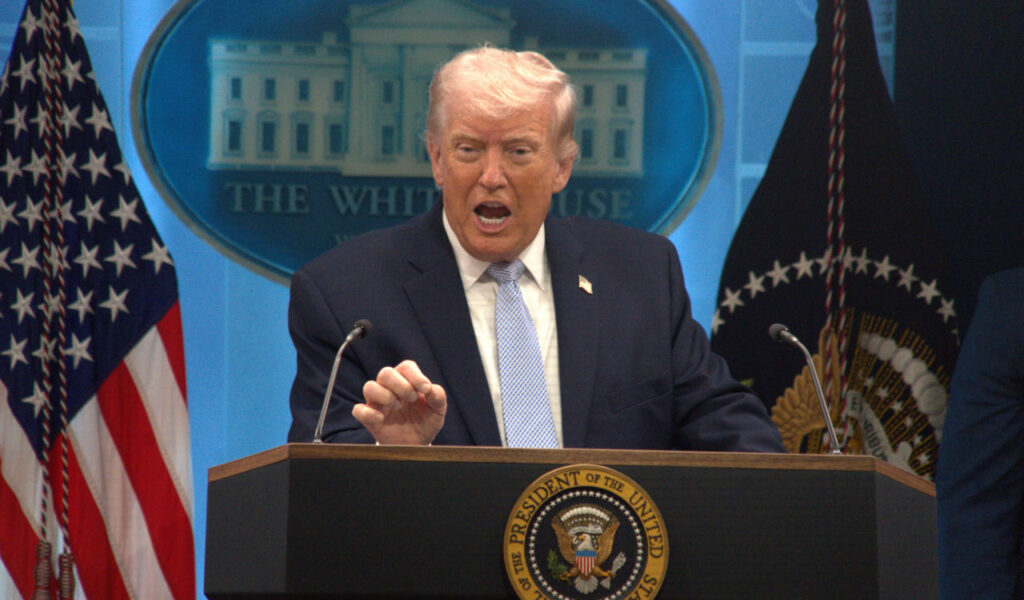
Wednesday also gave the administration two results it could point to alongside the interview. Russia released Stephen Hubbard, the 74-year-old retired American teacher held since 2022, at Trump's request — a story we covered in full today: Putin hosts Witkoff in St. Petersburg as Russia frees Stephen Hubbard. And Kremlin adviser Yuri Ushakov said President Vladimir Putin had agreed "in principle" to resume trilateral US-Russia-Ukraine negotiations after November 10, the Associated Press reported via Fox News. Neither development settles anything about territory or guarantees, and our earlier coverage of the administration's calls for new Ukrainian leadership sets out the other side of the relationship: Trump says Ukraine needs a new president. But together they describe the board on which Zelenskyy's offer was made: an American president demanding a settlement and claiming momentum, a Russian president releasing a prisoner and naming a window for talks, and a Ukrainian president choosing that moment to say, on the record, what he would accept.
Why this matters
Start with who gains and who loses from a freeze, because the answer depends entirely on which clock you watch. In the short term, a freeze gains most for the people under the bombs: Zelenskyy's own framing — strikes "virtually every hour," people and time being lost, children without "a real life and childhood" — is a statement of the daily cost of continuing. It gains for Trump, whose central foreign-policy promise has been to end this war and who can present a freeze both sides accept as the deal he said he would deliver. It gains, in a different register, for Russia's stated war aims only if the frozen line is later converted into recognised control — which is why the fight over what a freeze legally means will be as intense as the fight over the freeze itself.
In the longer term, the losses are distributed differently. Ukraine loses, for as long as a freeze lasts, any near-term prospect of recovering the occupied fifth or so of its territory by force, and the 9.5 million displaced people Zelenskyy cited cannot all go home to places that remain occupied or mined. Russia loses the prospect of conquering the rest of the Donbas by arms without paying the price its army has been paying for incremental gains — and loses, if guarantees are real, the option of a cheap second attempt. Europe loses the clarity of a war with a front it can supply, and gains the burden of guaranteeing a line indefinitely. Zelenskyy's critics make the sharpest version of the long-term case: a freeze without enforceable guarantees is a countdown, not a conclusion. His supporters answer with the arithmetic he offered Kilmeade: Ukraine keeps 75% or more of its country, its army intact, its capital and coast and west untouched — and stops losing the people it cannot replace. Both arguments are now attached to a specific, public offer, which is what makes Wednesday different from the war's many previous rounds of peace talk: this time the offer's author is the president of the country that would be frozen.
The guarantee is the deal
Zelenskyy's own sequencing gives the game away: the freeze is "the minimum," and the next sentence is about guarantees. Kyiv's experience is the reason. Ukraine has previously traded concrete assets — most famously its nuclear arsenal in the 1990s — for written assurances that did not stop an invasion, and no Ukrainian leader can sell a settlement at home whose only Russian obligation is a promise. Hence the formula repeated in the interview: freeze first, then "we will go to President Trump and to Europeans and we'll ask security guarantees," because "the most important is peace, and also security peace" — peace that holds. What form those guarantees might take is the unanswered centre of the entire negotiation: American and European commitments have been discussed in forms ranging from bilateral security agreements to troop deployments and air defence umbrellas, and Moscow has rejected several of them in advance. Until a guarantee exists that Kyiv trusts and Moscow tolerates, a freeze is a photograph of the war, not its end.
What happens next
Trilateral talks Ukraine Russia US November: the window after November 10
The calendar now has a date-shaped object in it. Ushakov's statement that Putin agreed in principle to resume trilateral talks after November 10 — reported by the Associated Press via Fox News — creates the first concrete window in which Zelenskyy's freeze offer could be tested at a table with all three parties represented. Kyiv has already said it wants such a format; Zelenskyy reiterated his support for negotiators-level trilateral talks on Wednesday, and his earlier push to get the American envoys back to the table is traced in our coverage: Zelenskyy seeks new talks with Witkoff and Kushner. If the November window produces a round of talks, the freeze formula gives the negotiators something they have previously lacked: a Ukrainian position, stated publicly by Ukraine's president, that does not require Russia to withdraw before the shooting stops.
The scenarios branch quickly. If Russia engages on the freeze — even provisionally, even while Lavrov's objections stand — the argument moves to the guarantee architecture and to verification: who watches the line, what counts as a violation, what happens on the first one. If Russia refuses the freeze outright and insists on the Donbas cession Zelenskyy has now publicly called "not fair," the diplomatic onus shifts: Kyiv will argue it offered the compromise Washington demanded and Moscow declined it, and the question becomes whether the Trump pressure Zelenskyy make a deal has been under is redirected at the Kremlin — or redoubled on Kyiv. If the November window slips, as previous windows have, the war returns to its default setting, in which the line moves slowly at enormous cost and the freeze offer remains on the table as the stated Ukrainian position, quoted back at every subsequent round. In each scenario, Wednesday's interview is the fixed point: the day Ukraine's president said yes to freezing the war where it stands, named his price in guarantees, and drew his one territorial line — the Donbas is not Kyiv's to hand over whole, and handing it over would not be fair. Track it live: Ukraine war map.
Sources
Fox News (October 21, 2026): Ukraine's Zelenskyy open to freezing front lines in ceasefire with Russia — the Fox & Friends interview with Brian Kilmeade: the freeze answer and the 75% question, "stop killing," the minimum-from-Russia framing, the security-guarantees sequence, the 9.5 million displaced, Russia's record of rejecting ceasefires, and Lavrov's "no ceasefire" remarks via Interfax. New York Post (October 21, 2026): Ukraine's Zelensky says he'd accept peace deal with Russia that 'freezes' front lines: 'Real way to end war' — the Donbas "not fair" answer, Russia's occupation of the vast majority of the Donbas since the September 2022 referenda and the warnings that ceding the region could enable a future invasion, and "they're not winning on the battlefield." Washington Examiner (October 21, 2026): Zelensky says he would accept peace deal freezing war along current lines — the October 2025 joint statement background, the rupture in US-Ukraine relations after the diesel deal, Trump's call for a new Ukrainian leader and his Tuesday remarks. Associated Press reporting carried by Fox News (October 21, 2026) on Stephen Hubbard's release and Yuri Ushakov's statement that Putin agreed in principle to resume trilateral negotiations after November 10. Zelenskyy's posts on X (October 21, 2026) as quoted by Fox News. Statements by officials of all governments are reported as their own claims; battlefield characterisations are attributed to the officials who made them and had not been independently verified on the ground at publication.