A Kyiv missile attack on Wednesday evening injured six people and damaged homes, a petrol station and transport equipment east of the Dnipro River — hours after Moscow said it was ready in principle to resume three-way peace talks with Ukraine and the United States.
World / Ukraine War — the capital was struck on Wednesday evening and again early Thursday, testing a diplomatic opening Washington calls the closest yet to ending the war
What happened on Wednesday evening
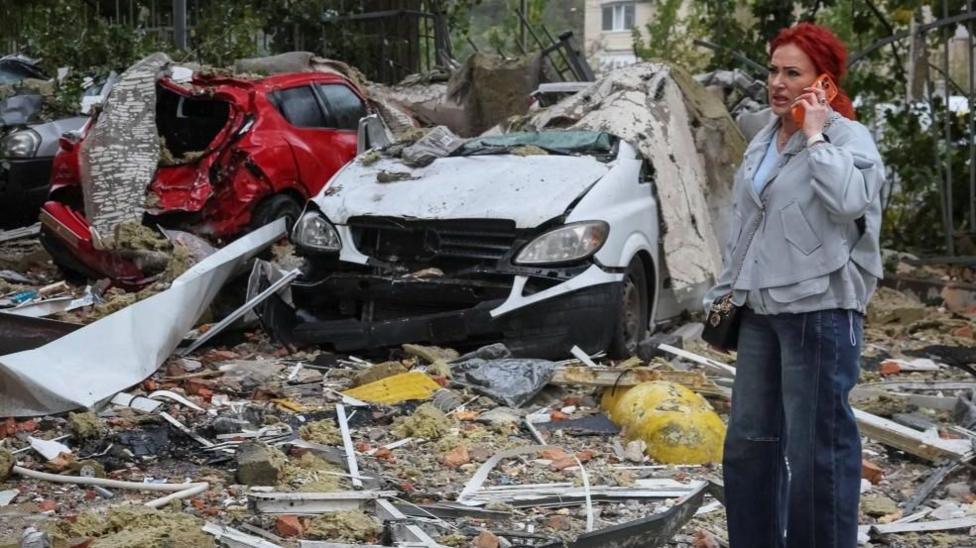
The Wednesday-evening attack was a ballistic missile strike, the fastest and hardest class of weapon Russia fires at the capital, and it landed on the city’s left bank. Reuters reported that the city’s military administration said missiles hit private homes as well as a petrol station on the eastern side of the Dnipro, and that transport equipment was also damaged. Klitschko announced on Telegram that the city was under missile attack and urged residents to remain in shelters; Reuters witnesses in Kyiv reported hearing explosions. The city remained under a drone warning more than two hours after the initial alert was declared, Reuters reported, a reminder that in Kyiv a missile strike is rarely the end of a night’s danger — it is usually the beginning of it.
The BBC, reporting independently on the same attack, said Kyiv came under another missile attack only hours after Moscow said it was ready in principle to restart peace negotiations, and that Mayor Klitschko said several homes were struck and six people were injured. No deaths were reported in the Wednesday-evening strike by either Reuters or the BBC. The two accounts agree on the toll — six injured, four hospitalised — on the location east of the river, and on the timing: the missiles fell on the same evening that produced the most encouraging diplomatic language of the autumn.
A second wave early Thursday — and a reported strike inside Russia
The night did not end there. Reuters reported early on Thursday, October 22, Kyiv time, that missiles struck the capital again in the early hours, citing a Reuters witness in the city. That follow-on report, filed by Reuters correspondent Gleb Garanich in Kyiv at 23:45 GMT on Wednesday, is attributed to Reuters throughout this article: no second news organisation had independently confirmed the Thursday wave when this article was published, and no casualty or damage figures for it had been reported.
The same Reuters wire reported a strike in the opposite direction. In Lipetsk, a Russian city about 400 kilometres (250 miles) south of Moscow that is home to a major steel plant, a man was injured as drones hit apartment buildings and a medical facility, Governor Igor Artamonov said on Telegram, according to Reuters. That account rests on the regional governor’s statement as reported by Reuters and had not been independently confirmed elsewhere; Ukraine had not claimed the Lipetsk strike in the reporting available at publication, and Kyiv generally does not comment on individual strikes inside Russia. The pairing, if confirmed, fits the war’s established rhythm: a Russian missile night over the Ukrainian capital answered, or accompanied, by Ukrainian long-range drones reaching hundreds of kilometres into Russia.
The diplomacy the missiles landed in the middle of
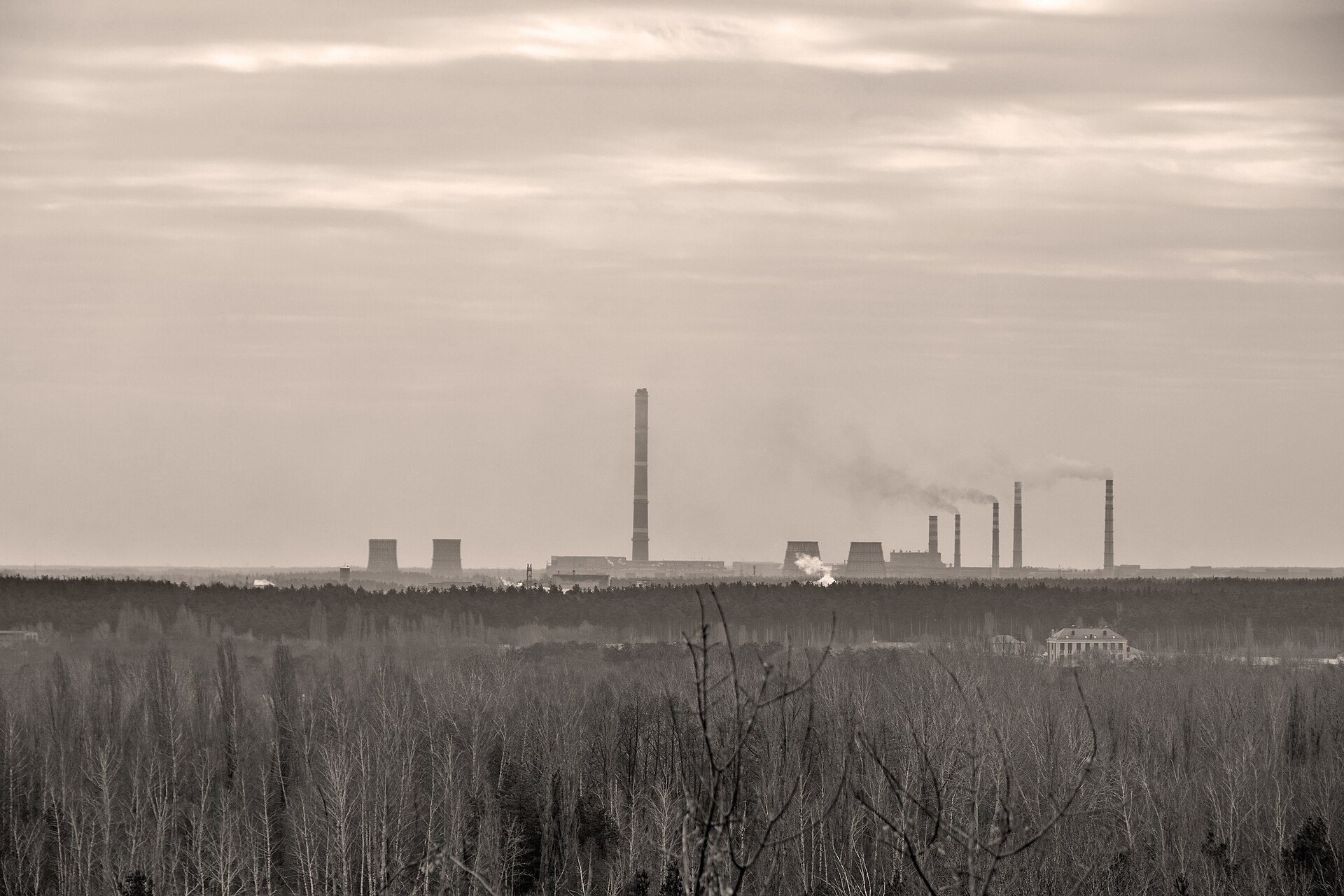
To understand why this particular strike drew attention far beyond its casualty count, consider the day that preceded it. On Wednesday, Witkoff spent about three hours with Putin at the Constantine Palace in St. Petersburg — their ninth in-person meeting — with Jared Kushner joining by video, a day after Witkoff met President Volodymyr Zelenskyy and the leaders of Norway and Finland in Oslo. The meeting opened with a goodwill gesture: Russia released Stephen Hubbard, a 74-year-old retired American teacher held since 2022. It closed, according to the Kremlin’s account, with Russia agreeing in principle to resume three-way talks with Ukraine and the United States. Russian officials floated Abu Dhabi as a venue and a date around November 10, saying the talks should focus on security arrangements for both countries after the conflict ends, the BBC reported.
President Donald Trump said the effort may now be the closest yet to ending the war. Zelenskyy, for his part, said on Wednesday that Ukraine could accept an agreement that freezes positions along the current front line, describing that as the minimum Kyiv needs from Russia now, with firm security guarantees to follow. But the Kremlin’s own readout carried a colder note: Putin aide Yuri Ushakov described the ideas brought to Moscow as not very useful and repeated Moscow’s claim that Russian forces hold the initiative along the front — a picture Ukraine and its European allies dispute, pointing instead to a grinding stalemate. Three-way talks have been stalled since February, a period in which Russia increased its strikes while Ukraine’s supply of Western-supplied interceptor missiles dwindled, the BBC noted. That is the gap Wednesday night’s missiles fell into: a process everyone describes as reviving, and a battlefield nobody has paused.
Why this matters
The significance of the Kyiv strike is not its size. Six injuries, however serious for the six families involved, is a small toll by the standards of a war now in its fifth calendar year, in which single nights have killed dozens in the capital alone. Its significance is its placement in the diplomatic sequence — and what that placement reveals about how this war is now negotiated.
First, the strike underlines that in the current phase, talks and bombardment are not alternatives; they run in parallel, each side using one to price the other. Moscow agreed in principle to talks while making no reciprocal gesture in the air. That is a negotiating position stated in ordnance: Russia will discuss the post-war security order, Ushakov’s stated agenda, without conceding the thing Ukraine most needs in the present tense, which is an end to the strikes themselves. Kyiv’s freeze proposal makes the mirror-image point — Zelenskyy is offering to stop the map where it is, roughly a fifth of his country under Russian control, precisely because a ceasefire line is the only concession Ukraine can make that Russia cannot simply take by force over a winter of missile nights.
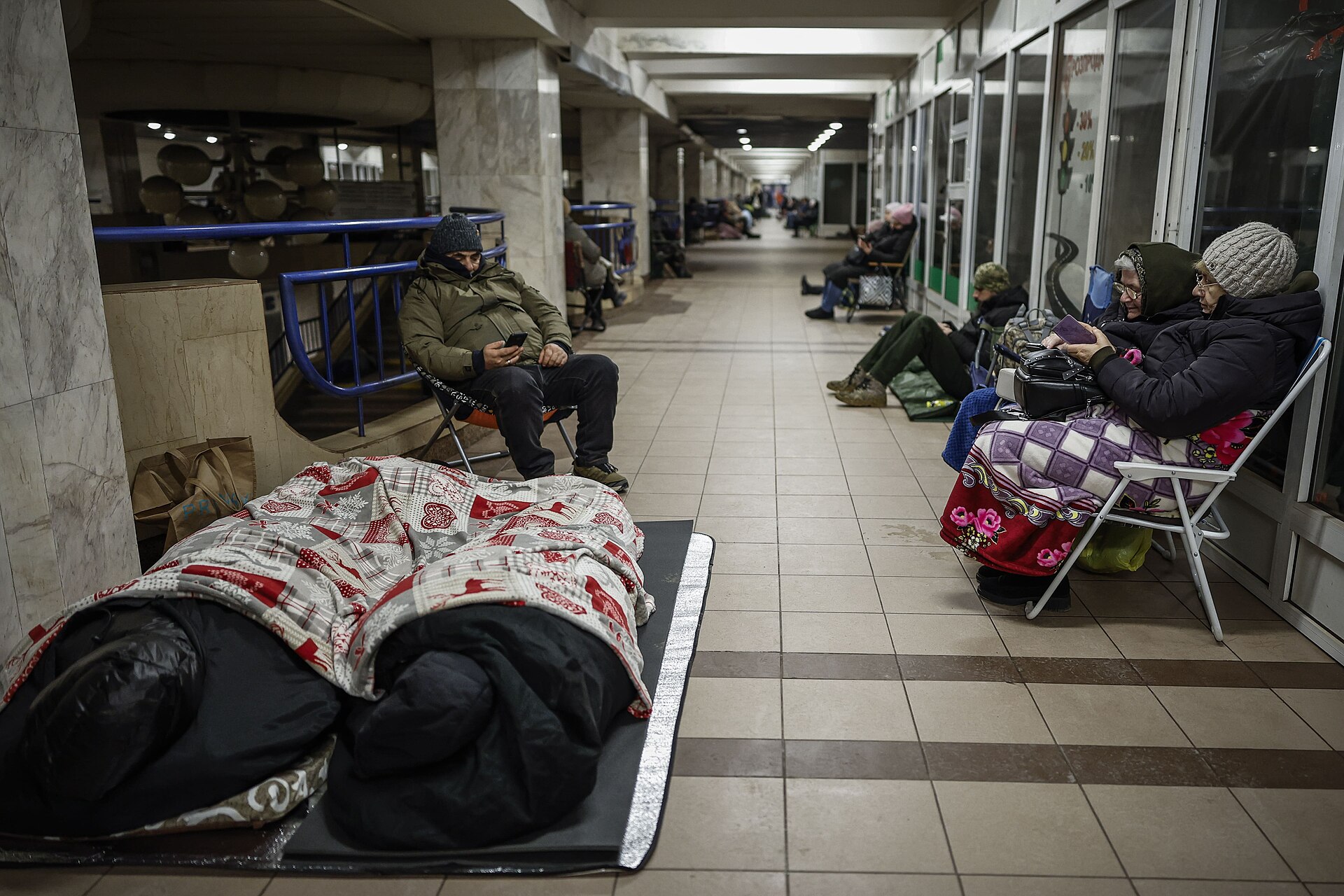
Second, the evening’s targets tell the winter story in miniature. Homes, a petrol station, transport equipment: none of it is front-line military infrastructure, and all of it belongs to the civilian systems — heat, fuel, mobility — that Russia’s autumn campaigns have systematically attacked to make Ukrainian cities harder to live in as temperatures fall. A ballistic missile is an expensive, scarce weapon to spend on a petrol station. When Russia spends them that way on the very evening of a diplomatic opening, the message to Kyiv’s residents is part of the strategy: negotiations will not shelter you, so pressure your government to settle. The counter-message, visible in every shelter photograph from the capital, is that four years of this pressure have not yet produced a Ukrainian public demanding capitulation.
Third, the interceptor arithmetic hangs over everything. The BBC noted that Ukraine’s supply of Western-supplied missiles to defend against ballistic attacks has dwindled since talks stalled in February. Ballistic missiles can only be stopped by a small family of high-end systems, and every night like Wednesday’s spends interceptors Kyiv cannot replace from its own industry. That scarcity is itself a diplomatic fact: it strengthens Moscow’s incentive to keep firing through the negotiating window, and it strengthens Washington’s argument to Kyiv that time is not neutral. Both conclusions can be true at once, which is why the freeze idea — stop the lines, stop the killing, argue about guarantees next — has moved from the margins to the centre of the conversation this week.
Who gains, who loses, from talks under fire
Russia gains leverage from the juxtaposition itself. It enters any November round having demonstrated it can strike the capital at will on the day of its choosing, while offering a venue, a timeframe and an agenda — post-conflict security arrangements — that presupposes its territorial gains as the starting point. Its cost is reputational and cumulative: striking homes hours after agreeing to talk hands Kyiv and Europe a ready-made argument that Moscow negotiates in bad faith, an argument that travels directly into Western debates about sanctions and air-defence deliveries.
Ukraine loses interceptors and sleep, but gains the diplomatic contrast. Zelenskyy’s freeze offer, made the same day, reads very differently against footage of a burning petrol station: Kyiv is the side publicly offering to stop, Moscow the side publicly continuing. That framing matters in Washington, where the administration’s patience with Kyiv has visibly thinned, and where Ukraine’s strongest remaining asset is the argument that it, not Russia, is the party saying yes.
The United States holds the pen and the problem. Trump’s claim to be closer than ever to ending the war will be measured, in Kyiv at least, against nights like this one. If a November round convenes in Abu Dhabi and the strikes continue through it, the talks risk becoming what earlier rounds became: a venue in which the war is discussed while it is prosecuted unchanged. If, instead, the freeze concept hardens into an actual pause, Wednesday’s strike will be remembered as one of the last of the pre-ceasefire campaign. The difference between those two histories is the whole of the next three weeks.
What happens next
Watch four things. Whether a date and venue for the three-way talks are actually announced — Ushakov’s “in principle” and the floated November 10 timeframe are not yet a scheduled meeting, and Zelenskyy has separately backed talks at negotiators’ level no later than early November, a window that does not quite overlap Moscow’s. Whether the Thursday wave is confirmed and what it hit, which will set the scale of this week’s Kyiv campaign. Whether Washington pairs its diplomacy with fresh air-defence deliveries, the single variable Kyiv’s officials raise in every conversation. And whether Russia repeats the pattern — strikes on the eve of each diplomatic step — which would confirm that the bombardment calendar and the negotiating calendar are being run, deliberately, as one instrument.
For now, the verified facts of Wednesday night are narrow and stark: ballistic missiles, two districts east of the Dnipro, homes and a petrol station hit, six people injured, four in hospital — on the evening of the day the war’s diplomacy came back to life. Track it live: Ukraine war map.
Sources
Reporting based on Reuters (October 21, 2026, 20:07 GMT, updated 22:11 GMT; Valentyn Ogirenko reporting, Ron Popeski writing — ballistic missile attack on Kyiv on Wednesday evening, Klitschko Telegram statements, six injured including four hospitalised, drone warning continuing more than two hours after the initial alert) and the BBC (October 21, 2026 — missiles hit Kyiv hours after Russia said it was ready in principle to resume peace talks; Klitschko: several homes struck, six injured; Witkoff–Putin St. Petersburg meeting of about three hours with Kushner by video; Abu Dhabi floated as a venue around November 10; Ushakov’s characterisation of the proposals; Zelenskyy’s front-line freeze position; dwindling Ukrainian interceptor supply). The early-Thursday second wave over Kyiv and the Lipetsk drone report are based on Reuters (October 21, 2026, 23:45 GMT; Gleb Garanich in Kyiv) alone, including Governor Igor Artamonov’s Telegram statement on Lipetsk, and are attributed to Reuters in the text; neither had been independently confirmed by a second outlet at publication. No deaths were reported in the Wednesday-evening strike by Reuters or the BBC; claims of fatalities in some aggregator rewrites conflate this attack with an earlier overnight strike and were not used.
Related coverage: Putin hosts Witkoff in St. Petersburg as Hubbard is released · Kyiv ballistic strike hits Desnianskyi district · Zelenskyy seeks new talks with Witkoff and Kushner