War · Ukraine
For the second night in a row, Russia sent a mass wave at Ukraine — 164 drones and three guided missiles from 18:00 on November 7. Air defence neutralised 137 drones, but hits were recorded at 23 locations, one person was reported killed in Odesa, and the wave landed two days before US-brokered trilateral talks in Abu Dhabi.
Track it live: Live war tracker · Live Ukraine war map
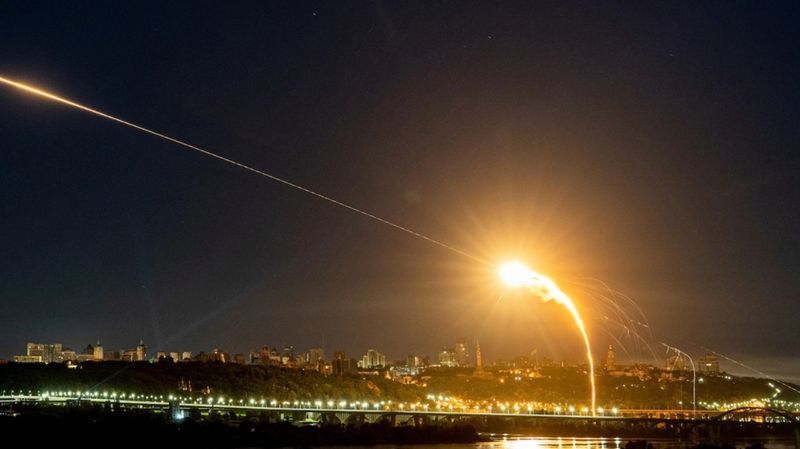
KYIV, November 8, 2026 — The Russia 164 drones Ukraine barrage began at 18:00 on Saturday, November 7, and ran through the night into Sunday morning: three Kh-59/69 guided air-to-surface missiles fired from the Sea of Azov and 164 attack drones launched from five directions, according to the Air Force of the Armed Forces of Ukraine. By 08:00 on November 8, Ukrainian air defence had neutralised 137 of the drones, the Air Force said, but impacts were recorded at 23 locations and falling debris at six more, and several drones were still in the air with combat work continuing as the tally was published. In Odesa, an attack late on Saturday evening damaged infrastructure and set a non-residential building on fire, and one person was killed, according to the head of the city’s military administration. It was the second consecutive heavy overnight wave, and it came two days before US-brokered trilateral talks open in Abu Dhabi on November 10–11.
What happened overnight
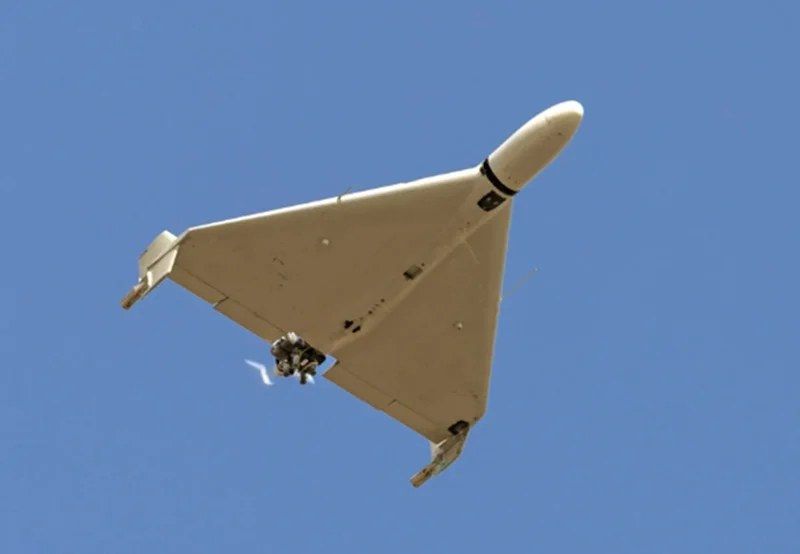
The Air Force said the drone wave was made up of Shahed-type attack drones — 112 of them jet-powered, a notably fast and harder-to-intercept variant — alongside Gerbera and Parodiya decoy drones, which are designed to draw fire and exhaust interceptors. Launch directions listed by the Air Force were Oryol, Kursk, Millerovo and Primorsko-Akhtarsk in Russia, the temporarily occupied city of Donetsk, and Hvardiiske in occupied Crimea. The three Kh-59/69 missiles were launched from airspace over the Sea of Azov. Those details come from a single official Ukrainian source — the Air Force statement reported by Kyiv24 and by UNN and Ukrinform — and they had not been independently verified at the time of publication. Russian officials had not commented on this specific wave in the reports cited here.
Odesa and Khmelnytskyi: the human cost
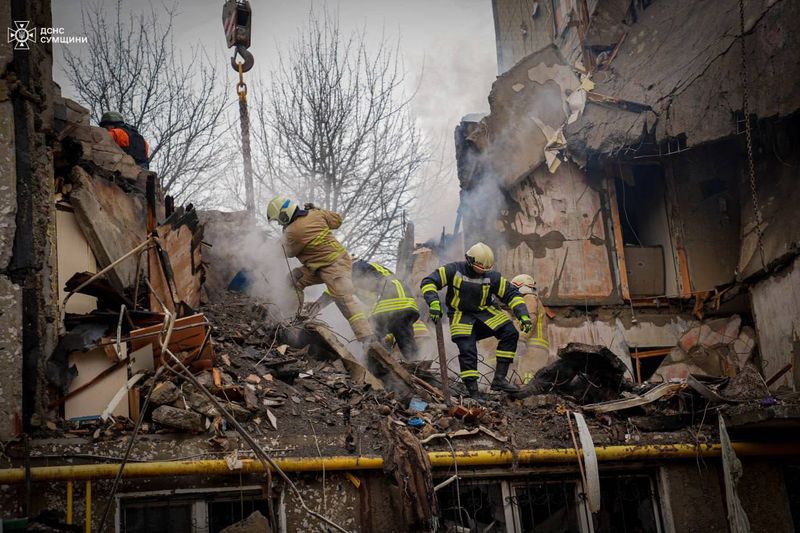
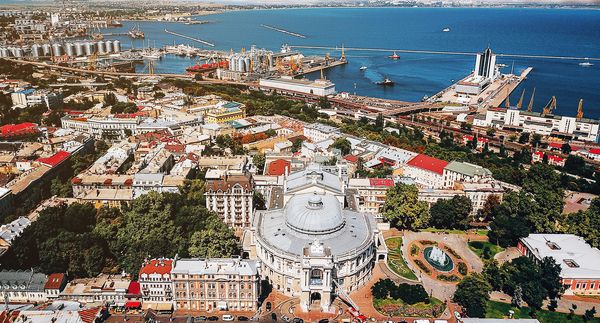
The night’s reported death came in Odesa. Serhii Lysak, head of the Odesa city military administration, said a Russian attack late on Saturday evening damaged infrastructure in the city, set a non-residential building ablaze and killed one person, Kyiv24 reported. That account rests on a single official source and has not been independently confirmed; casualty figures in the first hours after a mass attack are routinely revised as rescue services clear sites, and readers should treat this toll as provisional. In Khmelnytskyi region in western Ukraine, regional authorities said a drone damaged residential buildings and one person was injured. The Air Force tally — hits at 23 locations, debris at six — implies damage spread well beyond the two places officials had detailed by Sunday morning, but a full regional breakdown had not been published at report time.
The numbers in context
Read closely, the Air Force figures describe both a strong interception rate and a wave built to leak through. Of 164 drones launched, 137 were neutralised — about 84 per cent. But the composition matters: 112 of the 164 were jet-powered, and 88 of the 137 neutralised drones were jet-powered, meaning roughly two dozen jet-powered drones were not accounted for in the neutralised tally, alongside the hits recorded at 23 locations. Jet-powered Shahed-type drones fly faster and at profiles that shorten the engagement window for the mobile fire groups and guns that handle much of Ukraine’s drone defence, while Gerbera and Parodiya decoys force defenders to spend attention and ammunition on targets carrying no warhead. Even a high percentage interception, against a wave of this size, still leaves dozens of impact and debris sites — which is the arithmetic Ukrainian officials cite when they argue that the only durable answer is more interceptors and more launchers, and the arithmetic Russian planners appear to rely on when they send waves on consecutive nights.
Second heavy night in a row
Saturday night did not arrive in isolation. The night before, November 6–7, Russia launched one of its heaviest attacks of the autumn on Kyiv — 36 ballistic missiles and 172 drones, by President Volodymyr Zelenskyy’s count — closing the Northern Bridge, wrecking a kindergarten and blacking out Chernihiv, as Signal Post News reported in our report on Russia’s ballistic missile attack on Kyiv. A week earlier, Russia’s 310-drone barrage against Kyiv and Zhytomyr power stations underlined the campaign’s focus on energy infrastructure as winter approaches. Two consecutive heavy nights, following a record-scale drone wave days before, fit the pattern Ukrainian officials describe as deliberate pressure on air-defence stocks and repair crews: each wave forces expenditure of interceptors that are slow to replace, and each night of damage adds to a repair backlog heading into the heating season. On the ground, meanwhile, the front line recorded 187 combat engagements by 22:00 on November 7, Ukrinform reported, with the heaviest fighting in the Kostiantynivka sector — a reminder that the air war and the land war are running at full intensity at the same time.
Why this matters
Analysis. Three things make this wave more than another line in a nightly tally. First, the jet-powered share: at 112 of 164 drones, more than two-thirds of the wave used the faster variant, which suggests the mix itself is evolving toward profiles that stress gun-based and short-range defences, not simply toward larger raw numbers. Second, the timing: back-to-back heavy waves, two days before a negotiating round, are read in Kyiv as coercion and in Moscow’s framing as legitimate military pressure on a belligerent’s infrastructure and logistics; analysts caution that attacks have preceded talks throughout this war, so timing alone does not prove intent either way. Third, the geography: launches from the Sea of Azov, four Russian regions and two occupied territories, against targets from Odesa to Khmelnytskyi, show a strike complex that Ukraine must defend everywhere at once.
Who gains and who pays is equally contested. If the aim is leverage before Abu Dhabi, Russia’s negotiators arrive with a fresh demonstration of strike capacity; if the aim is attrition, Ukrainian interceptor stocks and repair crews bear the cost either way. Ukraine’s air defenders, for their part, can point to 137 neutralisations as evidence the layered defence still works at scale. Critics of Kyiv’s position argue that publishing only Ukrainian tallies gives an incomplete picture of the night; critics of Moscow’s argue that waves mixing decoys, jet drones and guided missiles against cities cannot be described as precision targeting when the documented outcomes include a dead civilian in Odesa and damaged homes in Khmelnytskyi. What is established is narrower than either claim: the Air Force’s figures, the Odesa and Khmelnytskyi officials’ reports, hits at 23 locations, and a second consecutive night in which hundreds of thousands of people spent hours under air-raid alerts.
What happens next
Attention now turns to Abu Dhabi, where US-brokered trilateral talks between Ukraine, Russia and the United States are scheduled for November 10–11. Ukrainian delegates will travel from a country that has absorbed two heavy strike waves in two nights; whether the talks address the air campaign directly — through a ceasefire proposal, an energy-infrastructure pause of the kind floated and abandoned before, or no reference to it at all — is one of the clearest tests of what the meeting can achieve. Watch, in the next 48 hours, for three things: whether a third consecutive heavy wave follows on Sunday night, which would strengthen Kyiv’s argument that the strikes are timed to the talks; whether casualty and damage figures from Odesa and Khmelnytskyi are revised as regional authorities publish fuller accounts; and whether either delegation publicly links the overnight attacks to its negotiating position before the Abu Dhabi sessions open. Along the front, the Kostiantynivka sector — the heaviest of Saturday’s 187 engagements — remains the ground battle to follow alongside the air war.
Do you think the Abu Dhabi talks should open with the overnight strike campaigns on the table — or can diplomacy only work if the fighting and the talking are kept apart? Follow Signal Post News for continuing coverage of the war in Ukraine and the Abu Dhabi talks.
Sources
- Kyiv24, “Russia attacks Ukraine with three missiles and 164 drones” (November 8, 2026) — reporting the Air Force of the Armed Forces of Ukraine statement and Serhii Lysak’s Odesa report
- UNN / Ukrinform via EuropeSays, “Russia attacks Ukraine with three missiles and 164 drones” — reporting the same Air Force statement, and Ukrinform’s front-line tally of 187 combat engagements