Yemen Taiz offensive Bab al-Mandeb
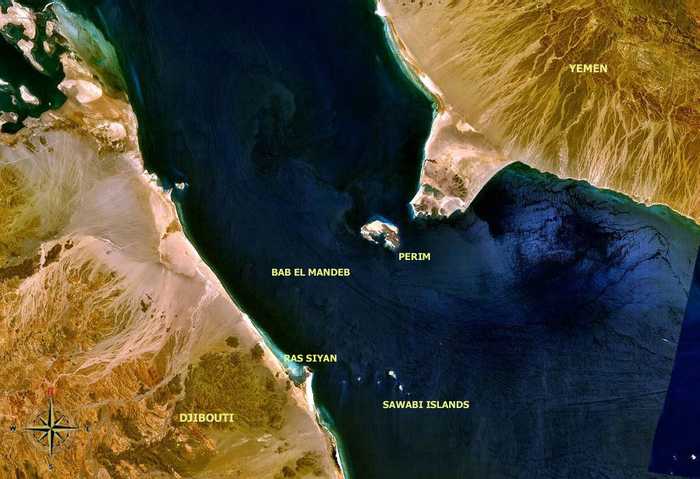
TAIZ, YEMEN — The Yemen Taiz offensive Bab al-Mandeb crisis is moving on two connected tracks: an immediate battle across Taiz and Lahej, and a larger Saudi-backed plan to push down the Red Sea coast toward one of the world's most consequential shipping chokepoints.
Yemen's internationally recognized government said warplanes carried out 20 strikes over three hours against Houthi movements, personnel, vehicles and equipment in Taiz province. Six military sources told Reuters that fighting had spread across Taiz and that authorities closed all 19 roads into the province, designating them military operational areas. Separately, reporting cited by Newsmax from Axios says Saudi Arabia and allied Yemeni forces are preparing a campaign that could mobilize more than 100,000 troops.
The United States is not signing on to the air war. U.S. officials said Washington rejected two Saudi requests in recent weeks for American strikes on the Houthis. The distinction is important: American intelligence and targeting assistance may continue, but the White House has so far drawn a line at kinetic participation.
Why this matters
Taiz is not an isolated front. Its roads and mountain approaches connect Yemen's interior to the southwest coast, while the Bab al-Mandeb Strait funnels traffic between the Red Sea and the Gulf of Aden. A battle that changes who controls those approaches could alter military logistics on land and the risk calculus of commercial shipping at sea.
That does not mean a coastal offensive would automatically reopen safe passage. Shipping companies and insurers price risk before an armed group achieves formal control. Even limited missile or drone capability, ambiguous warnings and a few credible attacks can raise premiums, force rerouting and slow cargo. The Red Sea shipping Houthi threat is therefore as much about perceived reach as territorial lines on a map.
The planned operation also tests three strategic judgments at once: whether Saudi airpower can produce durable gains for Yemeni ground forces; whether the Houthis can hold or disrupt the coastline while fighting across Taiz; and whether Washington can support a partner without being pulled into another open-ended Yemen campaign.
Background: the 2022 truce gave way to a new escalation
The current fighting is the most serious Saudi-Houthi escalation since a U.N.-brokered truce in 2022 largely halted cross-border attacks. The truce did not resolve Yemen's war, but it changed its tempo. That relative restraint has now eroded through an accumulating sequence of territorial battles, airstrikes and contested cross-border incidents.
The latest phase accelerated after September 10, when the Houthis took Mokha, according to the timeline in Anadolu reporting carried by Asia News Today. Since then, pressure has built across southwestern Taiz and neighboring Lahej, the corridor that links inland battlefronts with the approaches to Bab al-Mandeb.
Cross-border claims have further narrowed room for de-escalation. Saudi Arabia said the Houthis attacked a power-distribution station in Medina that supplies electricity around the Prophet's Mosque. A Houthi military source, quoted by the Houthi-run Saba news agency, denied responsibility. Two weeks earlier, Riyadh said it intercepted a Houthi drone south of Mecca before it entered restricted airspace; the Houthis denied targeting Mecca or any holy site. Those claim-and-denial cycles matter because an incident near either holy city could generate powerful public and political pressure even before independent evidence is available.

The battlefield: 20 strikes, 19 closed roads and pressure on Tor Al-Baha
The scale of reported air activity is stark but still requires careful attribution. Yemen's government said 20 strikes were carried out in three hours in Taiz province. On the Tor Al-Baha military axis, warplanes conducted six strikes against Houthi positions and vehicles on the Al-Akboush, Al-Ahkoum and Hayfan fronts, according to military statements carried by Anadolu. The army said it had thwarted a large-scale Houthi attack across all fronts of that axis.
Fighting was also reported in Bani Bakari in Jabal Habashi district, on the Himyar front in western Taiz's Maqbanah district, and at Al-Aqroud southeast of Taiz. A military source told Anadolu that government forces foiled another Houthi attack in the Sharie area of Sama'a district. These are not interchangeable place names: together they describe a broad contest over southern and western access routes rather than a single breakthrough at one point.
The closure of 19 roads into Taiz turns military geography into a civilian emergency. Checkpoints and road closures can slow reinforcements, but they also restrict food, fuel, medical evacuation and family movement. Government data says displacement since operations intensified in July has approached 198,000 people. That figure is not an independently verified count, yet it indicates the scale of the Yemen displacement crisis around 200,000 even before a new coastal operation begins.
For earlier stages of this widening front, see Signal Post News coverage of the Taiz air campaign and the battle over the Taiz-Aden road.
The coastal offensive plan: 100,000 troops and the Kahboub angle
The planned Saudi Houthi offensive on the Red Sea coast is larger than the current Taiz strike package. Six people familiar with the preparations said the operation is expected in coming weeks, with Yemeni forces leading on the ground and Saudi aircraft providing air support. More than 100,000 Yemeni troops could be mobilized. A U.S. official said Saudi planners had worked on the concept for weeks and that Saudi leadership approved it several days ago.
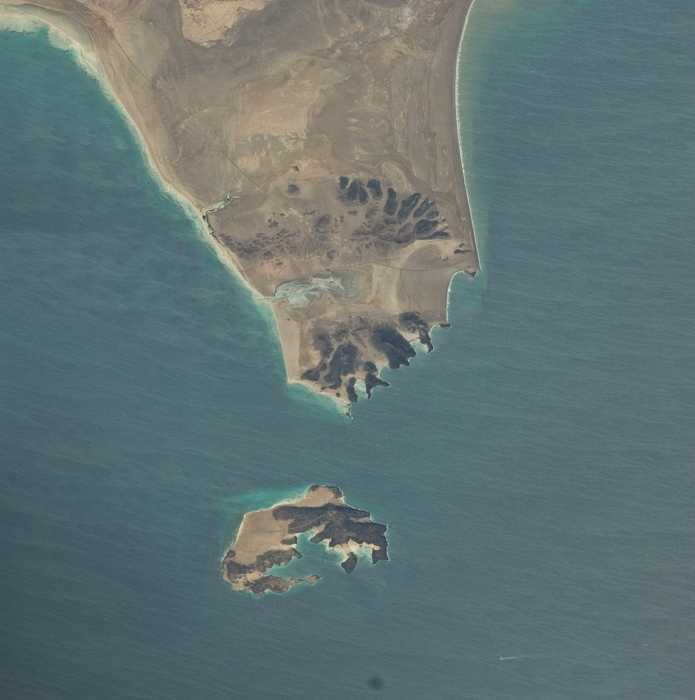
The operational aim is described as securing Bab al-Mandeb. The strait is narrow, exposed and strategically unforgiving: Perim Island sits in the channel, while the Shaikh Said Peninsula and the Kahboub Mountains shape the land approaches. A September report from TBS News said Houthi forces were pushing toward the Kahboub Mountains in Taiz and Lahej to protect the rear of units around Bab al-Mandeb. The Kahboub mountains Houthi advance therefore intersects directly with any coalition effort to reach the coast.
Securing Perim's approaches would be valuable, but holding them would demand more than a rapid landing or armored thrust. Forces would need protected supply lines, air defense, coastal surveillance and enough local support to prevent the Houthis from shifting to missiles, drones, mines or hit-and-run attacks. The phrase “secure the strait” compresses a difficult, open-ended mission into three words.
Washington says no — twice
Saudi Defense Minister Prince Khalid bin Salman called U.S. Secretary of War Pete Hegseth on Thursday to brief him on the plan and again request American airstrikes. A U.S. official said Washington “is not going to take kinetic action for now.” It was the second rejection in recent weeks.
The first came after President Donald Trump was close to ordering a strike on the Houthis following a request from Crown Prince Mohammed bin Salman, according to Axios. He ultimately declined. U.S. Central Command had serious reservations, seeing a new Yemen campaign as a distraction from its focus on Iran. In short: the argument inside Washington is not that the strait does not matter; it is that the opportunity cost of direct military action may matter more.
Non-kinetic support remains substantial. The United States is providing intelligence and targeting information, and roughly 200 U.S. military personnel are already in Saudi Arabia. CENTCOM commander Adm. Brad Cooper flew to the kingdom on Thursday. That arrangement allows Washington to shape the campaign while limiting direct exposure, but the boundary could become harder to defend if American intelligence is central to a Saudi air operation that produces civilian casualties or a wider regional response.
The decision that the U.S. refuses Yemen airstrikes is also a signal to other partners. Saudi Arabia must decide whether it can meet its objectives without American combat aircraft; Yemeni commanders must plan around Saudi capacity; and the Houthis can test whether Washington's restraint holds after a provocation. For related cross-border reporting, see our account of the Houthi missile wave toward Asir and Najran.
Claims versus verified facts
Information from the battlefield is fragmented and politically motivated. The most defensible facts are the existence of widespread fighting, government announcements of airstrikes and road closures, and preparations for a larger operation as reported by multiple officials. Exact damage, territorial control and casualty totals remain much less certain.
Tasnim reported Houthi claims that the Saudi-led coalition conducted 94 airstrikes in 24 hours, compared with what the Houthis described as an earlier daily baseline of 40 to 50, and roughly 1,350 strikes since the escalation began. The Houthis also claimed to have captured the strategic Al-Rasen mountain range in Taiz province and destroyed a key supply bridge linking Saudi-backed territory to Aden. Signal Post News could not independently verify those claims.
Government-aligned sources made their own expansive claims: that 75 airstrikes in 24 hours repelled a major Houthi attack in Taiz; that about 100 Houthi fighters were killed, dozens wounded and 20 captured; and, in a separate claim, that 474 strikes killed or wounded 1,540 Houthi fighters in 24 hours. Those casualty and strike figures are unverified and should not be read as established battlefield totals.
This asymmetry matters. A claimed capture can precede visual proof by hours or days; casualty figures can include duplicates, estimates or propaganda; and airstrike counts may describe different time windows or geographic areas. Readers should distinguish the reported actions from each side's claimed effects.
Multiple angles: who benefits, who loses and what critics see
Saudi Arabia's calculus
Riyadh's best-case outcome is a Yemeni-led force that pushes the Houthis away from Bab al-Mandeb while Saudi airpower limits the kingdom's ground exposure. That would strengthen allied bargaining power, reduce pressure on Red Sea traffic and answer Houthi cross-border attacks. The risk is familiar: airpower may help take territory without creating the political settlement, local legitimacy or logistics needed to hold it.
Houthi capability and limits
Mohamad Elmasry of the Doha Institute for Graduate Studies told Al Jazeera the Houthis are “probably more advanced than the force the Saudis were fighting about a decade ago,” citing Iranian missiles, drones and air-defense systems. Andreas Krieg of King's College London offered a different emphasis: the Houthis are poor at governance and may be unable to sustain a Bab al-Mandeb blockade, while the Saudi-backed coalition was previously overestimated. Those views are not contradictory. A force can be effective at disruption and coercion while struggling to govern territory or sustain conventional control.
Insurers and shipping companies
For maritime trade, possession is not the only variable. As Krieg argued, the Houthis do not need full control of the Bab al-Mandeb strait; a hint of danger can be enough to pressure carriers and insurers. One ambiguous missile launch or mining report can widen war-risk premiums. Conversely, even a successful coastal push will not restore confidence unless it clearly reduces the Houthis' ability to threaten vessels from inland launch sites.
Displaced civilians
Civilians lose first and most predictably. Closing every road into Taiz can isolate communities before food and fuel systems adjust. Expanding combat toward the coast threatens another displacement wave through areas that already host families uprooted by earlier phases of the war. The people counted in the 198,000 figure are not a strategic abstraction; they need transport, shelter, clean water, healthcare and safe routes while each military side tries to use the same roads.
Why Washington is reluctant
The U.S. calculation appears rooted in escalation management and force prioritization. CENTCOM wants to stay focused on Iran, while direct strikes in Yemen could create retaliation risks and deepen American ownership of the campaign. The compromise—intelligence without kinetic action—reduces immediate exposure but does not eliminate responsibility or the possibility of mission creep.
The data in context
198,000 displaced: government data says displacement since July has approached that level. Earlier U.N. reporting cited by TBS News put the number who had fled at more than 120,000, with nearly 700 people killed and thousands injured during the flare-up. The figures may use different reporting periods and methodologies, so they should not be combined into a single total. The direction, however, is unmistakable: displacement is accelerating.
94 claimed strikes versus a 40–50 baseline: this is the Houthi account, not an independently verified air-operations log. If accurate, it would imply roughly a doubling of daily tempo. But propaganda incentives are strong, and strike counts alone reveal little about military effectiveness or civilian harm.
More than 100,000 troops: that is a mobilization possibility, not a confirmed order of battle. A force of that size would exceed many past single-front operations in Yemen, but headline strength can conceal uneven training, divided command structures and fragile supply chains. The decisive number may be the fraction of troops that can be concentrated, supplied and coordinated under fire.
Nearly 700 killed, thousands injured: the U.N. figures cited in September show that civilian and combatant harm was already severe before the newest Taiz surge. They offer scale, not precision for this week's fighting.
What happens next
Scenario one: the coastal push begins. Yemeni forces, backed by Saudi aircraft, move toward Kahboub and the Perim approaches. Early gains would be measured not by a flag near the strait but by whether supply routes remain open and Houthi launch capacity is reduced.
Scenario two: the operation stalls in the mountains. The terrain south and west of Taiz favors defenders who can disperse, mine roads and attack logistics. A stalled offensive could consume Saudi airpower, widen displacement and leave shipping risk unchanged.
Scenario three: cross-border attacks change Washington's decision. A verified strike on a high-profile Saudi target—or an attack affecting Americans—could reopen the kinetic debate. The Medina and Mecca episodes show why attribution will be decisive. Claims alone should not trigger conclusions; independently verified evidence and official responses will matter.
Scenario four: diplomacy interrupts the timetable. The threat of a 100,000-strong campaign may itself be leverage. Saudi Arabia could seek guarantees on Red Sea attacks, border fire and territorial positions without launching the full operation. That outcome would spare civilians the immediate cost but leave the underlying contest unresolved.
The indicators to watch are specific: confirmed troop movements toward Lahej and the west coast; sustained rather than one-day changes in airstrike tempo; evidence about control of Al-Rasen and the Kahboub approaches; changes to war-risk insurance; and any shift in U.S. language from “for now.” Until those indicators move, the safest conclusion is that a major campaign is prepared, Taiz is already escalating, and direct American combat involvement remains withheld.
Sources and reporting notes
- Reuters: Yemen says 20 strikes hit Houthi targets in Taiz (October 2, 2026)
- Anadolu via Asia News Today: Yemen sees widest escalation in three weeks (October 3, 2026)
- Newsmax carrying Axios reporting: Saudi Arabia plans Houthi offensive as U.S. declines strikes (October 2, 2026)
- Dainik Jagran English: Saudi-Yemeni offensive plan and U.S. decision (October 2, 2026)
- Tasnim: Houthi claims on airstrikes, Al-Rasen and a supply bridge (October 3, 2026)
- Inshorts: Government claims on the Taiz fighting and casualties
- TBS News: Kahboub Mountains, Bab al-Mandeb and humanitarian toll (September 2026)
Reporting note: battlefield claims and casualty figures are attributed to the government, the Houthis or the outlet that carried them. Signal Post News could not independently verify competing claims about territorial control, casualties, total strike counts or the destruction of a supply bridge. Forward-looking scenarios are analysis, not predictions.