Houthi missile attacks Saudi Arabia
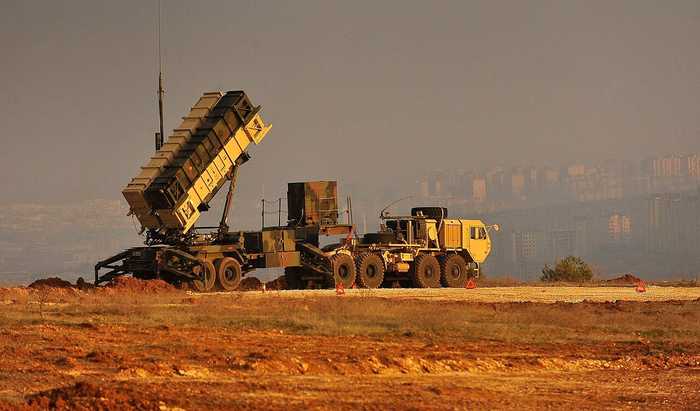
ASIR, Saudi Arabia — Falling debris from an intercepted Houthi ballistic missile injured a resident, pierced the ceiling of a prayer hall and damaged several vehicles in Ahad Rafidah governorate on Saturday, October 3, Saudi Civil Defence said. Photographs carried by the Saudi Press Agency and reported by Arab News showed metal fragments scattered across prayer rugs; vehicles had cracked sunroofs and dents. Civil defence teams gave the resident medical assistance, inspected the affected structures and carried out safety measures.
The episode capped three days of reported launches across southern, western and central Saudi Arabia. On Friday, October 2, Saudi Civil Defence said a Houthi-launched projectile fell on a school in Najran and caused material damage, with no casualties initially reported. Emergency crews conducted safety procedures at the site. Early the same day, at about 3 a.m., the Saudi-led coalition said air defenses destroyed three ballistic missiles heading toward Khamis Mushait and four Houthi drones. Coalition spokesman Maj. Gen. Turki Al-Maliki announced the interceptions.
On Thursday, October 1, the coalition said it intercepted two ballistic missiles and four drones over Khamis Mushait and Jazan. It said debris from one missile fell in residential areas of Khamis Mushait, damaging buildings and vehicles. The coalition also accused the Houthis of striking the Taiba power-distribution station in Madinah with a drone, disabling one transformer that serves the area around the Prophet's Mosque while leaving the wider grid operating. The Houthis disputed Saudi accounts surrounding the Madinah episode. The UAE, Bahrain, Kuwait and Jordan condemned the reported strike, and the Gulf Cooperation Council reaffirmed solidarity with Saudi Arabia.
Saudi authorities also said air defenses intercepted two drones headed toward Riyadh on Saturday. Two days earlier, six ballistic missiles aimed at Yanbu and Taif were intercepted, according to coalition statements. Those figures are official claims from a belligerent and cannot all be independently verified in real time. What can be seen in the damage reports is the civilian geography of the campaign: a school, homes, vehicles, a prayer hall and infrastructure serving one of Islam's holiest cities.
Why this matters
This wave matters because it tests a strategic assumption at the heart of Saudi security: that layered air defenses can keep a long-range campaign politically and economically manageable. The interceptions demonstrate substantial defensive capability. The damage demonstrates its limits. A missile destroyed in flight does not simply vanish. Its fragments continue along ballistic paths, and the very act that prevents a direct hit can scatter hazardous metal over the communities below.
That distinction is more than semantic. Governments usually count an interception as a military success; residents experience the outcome through roofs, windows and emergency sirens. The Ahad Rafidah prayer hall missile debris made the paradox visible. The apparent target was denied, yet one person was hurt and civilian property was damaged. In Najran, even a projectile that caused no reported injuries forced a school into an emergency response. Defense reduced the harm. It did not erase it.
The campaign also widens the map of risk. Asir, Najran, Khamis Mushait and Jazan lie in the southwest near Yemen. Yanbu is a Red Sea energy and industrial center farther north; Taif sits inland in the west; Riyadh is the capital. Madinah brings religious symbolism and global Muslim attention. A force able to threaten all of them can compel Saudi Arabia to distribute interceptors, radar coverage and civil-defense readiness across a vast territory rather than concentrate them at the border.
Three days of strikes, interceptions and competing claims
Houthi ballistic missile intercepted in Asir leaves debris on worshippers' space
Saudi Civil Defence's account of the Houthi ballistic missile intercepted in Asir is unusually concrete: a named governorate, a treated resident, visible fragments and specific property damage. That makes it a useful case study in what “intercepted” means on the ground. It does not establish the missile's intended target, the type of interceptor or the precise trajectory. Those details had not been publicly confirmed at publication.
Najran school Houthi projectile raises the civilian-protection stakes
The Najran school Houthi projectile reported Friday caused material damage but no initially reported casualties. That absence of deaths is fortunate, not exculpatory. Schools are protected civilian objects unless used for military purposes; no such use was alleged in the official Saudi account. The incident therefore sharpens pressure on the Houthis to explain targeting and on Saudi authorities to show how warnings, sheltering and debris-risk procedures work around schools.
Khamis Mushait missile interception in October 2026 becomes a pattern
The Khamis Mushait missile interception October 2026 sequence is not a single event. The coalition reported two missiles and four drones intercepted over Khamis Mushait and Jazan on Thursday, followed by three missiles and four drones toward Khamis Mushait early Friday. Repeated salvos can be designed to probe radar coverage, consume interceptors and force defenders to classify several airborne threats at once. The coalition's totals remain its own operational account, but the repetition itself is strategically important.
How the Saudi-Yemen war reached this point
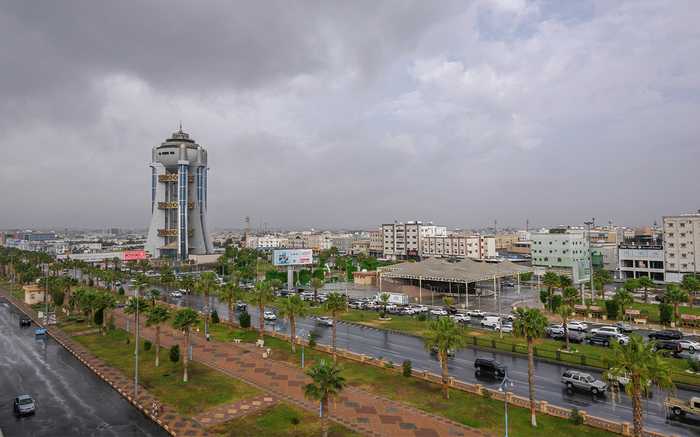
The current Saudi Yemen war October 2026 escalation sits on more than a decade of conflict. The Houthis, formally Ansar Allah, seized Sana'a in 2014 and expanded south. Saudi Arabia led a military intervention in 2015 to restore the internationally recognized government. Air campaigns, ground fighting, blockade allegations, hunger and disease followed. The conflict became both a Yemeni civil war and a regional contest in which Iran backed the Houthis while Saudi Arabia and partners backed anti-Houthi forces.
Cross-border missiles and drones are not new. Earlier waves targeted airports, cities and energy facilities, most famously the 2019 attack on Abqaiq and Khurais that temporarily disrupted a large share of Saudi oil production. A 2022 truce sharply reduced attacks even though it never matured into a comprehensive peace. That period encouraged hopes that Riyadh and the Houthis could negotiate a durable arrangement. The October 2026 attacks show how quickly an incomplete settlement can unravel.
Reuters reported on September 17 that a Yemeni resident was killed in Taif during the interception of a Houthi drone, while a Saudi woman and a Pakistani resident were injured. The report said 86 people had been injured in Houthi attacks during September. Those figures place Saturday's injury in a broader pattern: many incidents do not produce mass casualties, but cumulative harm and persistent alarms can reshape public behavior and government choices.
The parallel war inside Yemen is accelerating. The Houthis claimed Saudi forces conducted 94 strikes on Houthi-controlled areas in the previous 24 hours and 1,350 since renewed fighting began. Those totals have not been independently verified. Yemen's armed forces, aligned against the Houthis, separately said they carried out 474 airstrikes and precision operations in the previous 24 hours against Houthi positions, movements, reinforcements and military capabilities. Again, that is a belligerent's claim, not an independently audited count.
Hans Grundberg, the United Nations special envoy for Yemen, said Thursday he was alarmed by developments in Taiz and warned that Houthi operations pose grave risks to civilians. His intervention matters because Taiz has long combined military importance with acute civilian vulnerability. Escalation there can displace families and constrict aid even before battlefield claims are independently resolved.
The numbers: high interception rates, persistent damage
Across the publicly announced events from Thursday through Saturday, Saudi authorities described at least 11 ballistic missiles intercepted—two over Khamis Mushait and Jazan, three toward Khamis Mushait, and six toward Yanbu and Taif—plus at least 10 drones, including the four reported Thursday, four Friday and two toward Riyadh Saturday. Those numbers should not be mistaken for a complete launch total or an independently verified success rate. They are the coalition's reported interceptions across several episodes.
The more revealing ratio is between apparent military penetration and civilian consequence. Even when most incoming weapons are stopped, a small number of impacts or debris falls can damage multiple sites. Air defense is therefore probabilistic, not absolute. A defender has to succeed repeatedly; an attacker needs only occasional leakage, fragmentation or a sufficiently alarming near miss to impose costs.
There is also an economic asymmetry. One-way attack drones can cost far less than the sophisticated interceptor missiles fired against them. Exact costs vary by weapon, configuration and contract and were not disclosed for these engagements, so a precise comparison would be false precision. The broad burden is clear: cheap or expendable threats can force defenders to launch scarce, high-performance munitions, keep crews at readiness and protect many possible targets simultaneously. Electronic warfare and cheaper short-range systems can narrow that imbalance, but ballistic missiles still demand top-tier defenses.
Who gains, who loses—and what critics will ask
The Houthis gain leverage if repeated launches make Saudi cities, investors and international partners doubt that normality can be insulated from Yemen. They also gain political value by showing that they can reach beyond the immediate border. But the movement risks hardening a regional coalition against it, legitimizing expanded strikes on its military infrastructure and worsening conditions in territories it governs.
Saudi Arabia benefits tactically when interceptions work and diplomatically when attacks on schools, religious facilities or civilian neighborhoods draw regional condemnation. Yet it loses if every defensive success still produces visible debris, high expenditure or pressure for a ground campaign. Riyadh must balance public demands for protection with memories of the long, costly intervention that began in 2015.
Yemeni civilians are the clearest losers. Intensified Saudi strikes and anti-Houthi operations can hit or disrupt communities inside Yemen; Houthi cross-border launches put Saudi residents and migrant workers at risk and can provoke further retaliation. Shipping companies, energy buyers and insurers also lose when the Houthi Red Sea shipping threat raises uncertainty at Bab el-Mandeb. On Saturday, the UK Maritime Trade Operations agency said a crude-oil tanker was struck by an unknown projectile off Oman and that all crew were safe. UKMTO did not publicly attribute the attack in the account available at publication, so it should not be folded into the Saudi-Houthi tally as established fact.
Critics of the Saudi campaign will ask whether intensive airstrikes degrade launch capacity enough to justify civilian and humanitarian risks. Critics of the Houthis will ask why weapons continue to be directed toward populated territory and critical infrastructure. Both questions deserve evidence rather than slogans. Neither side's operational totals can substitute for independent casualty monitoring, geolocated damage assessment and clear targeting explanations.

Bab el-Mandeb and the Red Sea stakes
Bab el-Mandeb is the narrow gateway connecting the Red Sea to the Gulf of Aden and, through the Suez Canal, to Europe. Control of the Yemeni coast near that strait carries leverage far beyond Yemen. Threats to shipping can push vessels around Africa's Cape of Good Hope, adding time, fuel expense and insurance costs. The effect is not only on oil. Containerized goods, food, components and manufactured products all move through the corridor.
That is why reporting about a possible Saudi-backed offensive to retake Bab el-Mandeb deserves attention—and caution. Reports indicate Saudi Arabia is preparing options for a large campaign involving more than 100,000 Yemeni ground troops. Plans are not orders, and force estimates are not proof that an operation will occur. A coastal push could improve shipping security if it dislodged Houthi forces and held territory. It could also open a difficult ground war, expose supply lines and drive more missile attacks on Saudi cities.
Historical parallels counsel restraint. The coalition entered Yemen in 2015 with major airpower and regional backing, yet the Houthis survived, adapted and expanded their missile and drone arsenal. Terrain, local alliances and governance matter as much as the number of troops assembled. Seizing a chokepoint is different from securing the communities and roads that sustain it. A force large on paper may fragment under pressure if command, pay and political objectives diverge.
What happens next: four escalation paths
1. Defense and retaliation remain bounded
In the least dangerous scenario, Saudi Arabia continues interceptions and limited strikes while intermediaries restore a pause. The Houthis preserve some claim of deterrence; Riyadh avoids another open-ended ground war. This requires both sides to conclude that continued launches bring diminishing political returns. The damage in Asir and Najran makes restraint harder, but not impossible.
2. A Saudi-backed ground push targets the coast
A more forceful option would concentrate Yemeni forces on the Red Sea coast and Bab el-Mandeb rather than attempt to conquer all Houthi-held territory. The military logic is to protect shipping and pressure Houthi revenue and resupply. The political risk is that a supposedly limited operation expands once resistance, missile retaliation or demands from local allies complicate the original objective.
3. The United States deepens involvement
Axios reported that President Donald Trump's top national-security officials met secretly at Camp David on Friday to discuss the Iran war and the Saudi-Houthi conflict. The report said Vice President JD Vance chaired a meeting attended by Secretary of State Marco Rubio, Defense Secretary Pete Hegseth, envoy Steve Witkoff, CIA Director John Ratcliffe and Gen. Dan Caine. One official told Axios that “things were decided or at least deeply discussed.” The White House did not comment.
That Trump Camp David Iran Yemen meeting belongs in forward-looking analysis, not in the ledger of confirmed operations. Reporting indicates Trump has leaned against joining a Saudi offensive with U.S. airstrikes, but could change his position. Intelligence, logistics and maritime defense could deepen without direct participation in a ground campaign. The key threshold would be whether Washington treats the attacks as a discrete Saudi-Yemeni conflict or as one front in a wider confrontation with Iran.
4. The Iranian shadow turns into a regional escalation ladder
Iran's support for the Houthis gives every launch a wider strategic interpretation, but support does not prove Tehran selected each target or timing. Trump warned Thursday that the United States would hit Iran “very hard” if Tehran were linked to an attempted FlyDubai cockpit hijacking; he offered no evidence for an Iranian link. That warning shows how quickly separate incidents can be connected rhetorically before an attribution case is public.
The escalation ladder is therefore crowded: more Houthi launches, broader Saudi strikes in Yemen, a ground offensive near Bab el-Mandeb, attacks or ambiguous incidents at sea, and possible U.S. action against Iranian-linked targets. Each rung creates pressure to climb the next. Misidentifying an attacker or overstating a proxy relationship could accelerate that movement. Clear attribution and private crisis channels are strategic defenses in their own right.
The conclusion: interception is buying time, not ending the threat
Saudi air defense prevented several reported missiles and drones from reaching their apparent targets this week. That is militarily significant. The injured resident in Ahad Rafidah, the pierced prayer-hall ceiling, the damaged school in Najran and the scarred vehicles in Khamis Mushait are reminders that it is not a complete answer.
The next decision is political. Riyadh can continue absorbing and answering attacks while trying to preserve space for diplomacy, or it can attempt to change the balance on the ground in Yemen and at Bab el-Mandeb. Washington can remain a supporting actor or move closer to direct operations. The Houthis can use their reach to seek leverage or push far enough to unite a larger coalition against them. None of those choices is cost-free.
The most sober reading of the past three days is that the war is expanding faster than its claims can be independently verified. Civilian safety depends on keeping those two facts separate: report the damage precisely, attribute battlefield totals honestly, and resist turning plans and warnings into accomplished events. The missile wave has already shown what escalation looks like from below—a fragment through a ceiling, after the interceptor succeeds.
Sources
- Arab News report via 24x7 Live Newz — Asir injury and prayer-hall damage
- Madhyamam — intercepted-missile debris in Ahad Rafidah
- Bloom Pakistan — Najran school and Khamis Mushait interceptions
- Dalena Reporters — coalition account of three missiles and four drones
- GFM Review — Thursday interceptions and Madinah power station
- Devdiscourse — coalition statement on four drones and two missiles
- Newsbeep — Saturday regional and maritime developments
- Reuters — September 17 Taif casualties and monthly injury total
- Reuters — U.S. position on military support against the Houthis
Reporting note: Saudi, coalition, Houthi and Yemeni military figures are attributed to the parties that issued them. Where independent verification was unavailable, this article says so. Forward-looking sections analyze reported plans and scenarios; they are not statements that an offensive or U.S. intervention has been ordered.