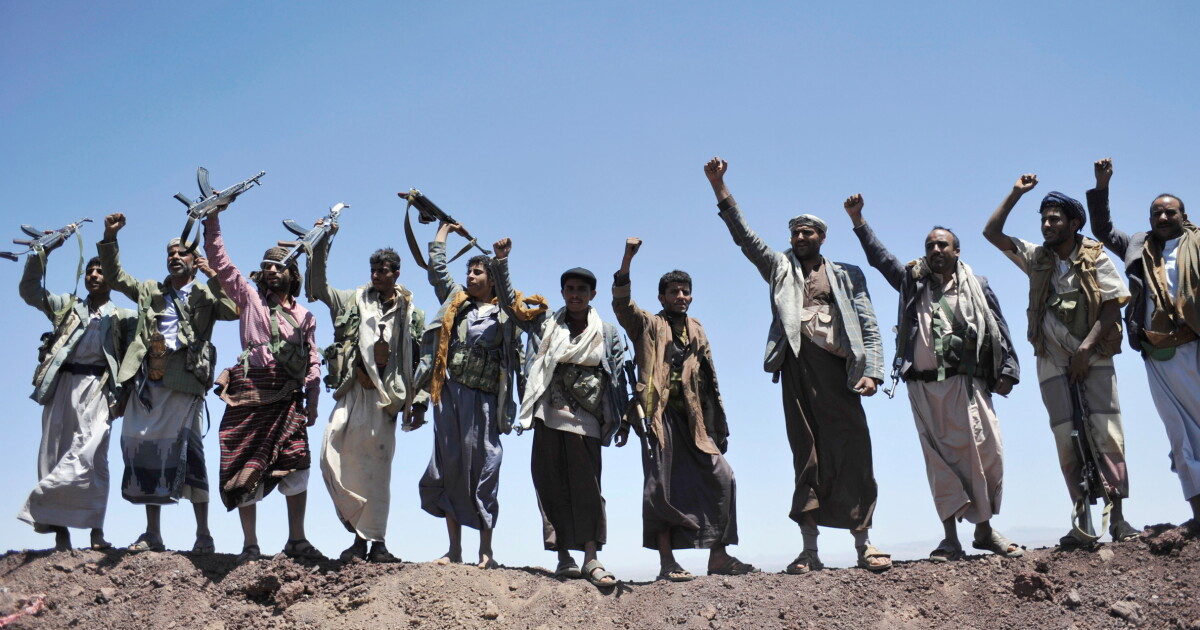
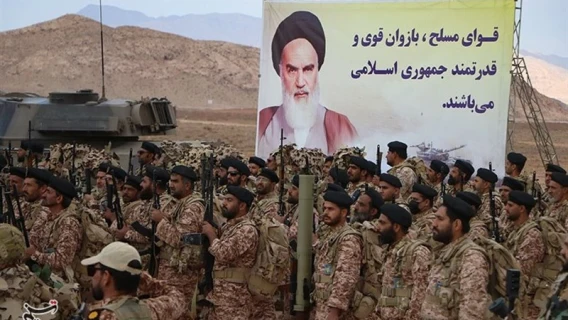
Iranian advisers and the Houthis in Yemen were no longer operating at arm's length when rebel forces swept down the Red Sea coast in less than 48 hours, according to an Associated Press investigation published September 23. People familiar with the offensive told the AP that advisers from Iran's Islamic Revolutionary Guard Corps were in the field helping direct the battle. If their accounts are accurate, the operation marks Tehran's most direct intervention on behalf of its Yemeni ally since the civil war erupted in 2014.
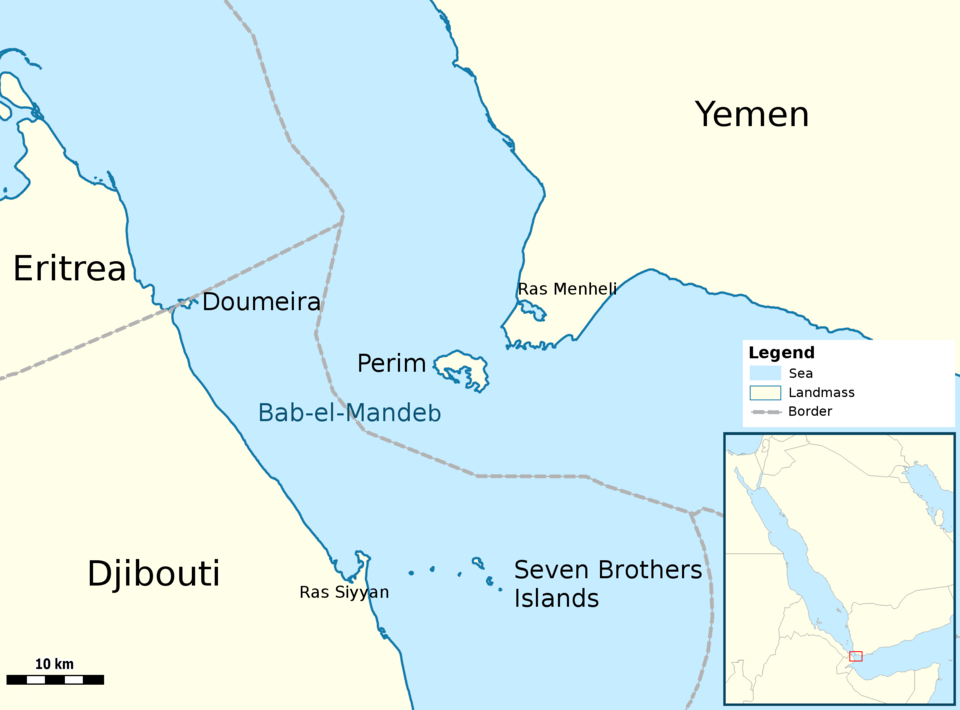
The offensive was the Houthis' biggest land grab in years. Over a 115-kilometer, or roughly 75-mile, advance, they broke through forces aligned with Yemen's Saudi-backed, internationally recognized government, entered the port city of Mokha after defenders withdrew and seized nearby strategic islands. Those gains put additional pressure on shipping near Bab el-Mandeb and strengthened the Houthis' ability to threaten routes used for Saudi oil exports.
The central finding is not simply that Iran helped. Iranian training, weapons knowledge and logistical support for the Houthis have been reported for years. What changed, according to the AP's sources, was proximity to command: advisers who had previously concentrated on strategic planning were now working with front-line commanders, interpreting communications and satellite intelligence, and helping plan tactical maneuvers while the battle was underway.
What the AP investigation found
The AP spoke to 10 officials and soldiers, including a senior Houthi official, two regional officials, a top Yemeni military commander and a member of Yemen's ruling presidential council. Several spoke anonymously because of the sensitivity of the operation. The senior Houthi official said Iranian advisers were “present at all levels,” a description that moves the reported role from consultation toward operational direction.
Security analyst Mzahem Alsaloum, who runs a private intelligence firm, told the AP that the advisers also analyzed intercepted communications and satellite intelligence. Iran's mission to the United Nations did not respond to requests for comment. That silence does not confirm the accounts, but it leaves the detailed allegations unanswered.
Reuters separately reported on September 10 that Yemeni government, Iranian and regional sources described direct Revolutionary Guard guidance for the coastal campaign. Two Iranian sources told Reuters that Tehran had urged the Houthis to intensify attacks on Saudi Arabia and promised more funding, weapons and senior officers. A regional diplomat briefed by Tehran said senior Guard commanders had traveled to Yemen to oversee Houthi attacks. Iran has publicly denied directing the movement and says the Houthis are “not a proxy.” The evidence therefore rests on multiple attributed but mostly anonymous accounts rather than public orders or independently released command records.
How the 48-hour Houthi offensive unfolded
The build-up began well before the final dash toward Mokha. Last year, according to Alsaloum, Iran expanded training and logistical support covering advanced missiles, drones and uncrewed attack boats. In July, the Houthis renewed attacks on Saudi Arabia after accusing the kingdom of striking Sanaa's airport to prevent a flight from Tehran. The flight later landed carrying Revolutionary Guard advisers who joined Guard and Hezbollah personnel already based in Yemen, Alsaloum and the senior Houthi official told the AP.
For roughly a month, Houthi forces subjected positions held by the National Resistance to sustained bombardment. National Resistance spokesman Maj. Gen. Sadiq Dwaid said the group recorded 130 ballistic missiles and 145 suicide drones. His force, led by Lt. Gen. Tariq Saleh, numbered about 30,000 fighters spread across a 170-kilometer front. AP's reporting put the attacking Houthi force at an estimated 75,000.
The numerical imbalance was compounded by command fractures. The Giants Brigade came to reinforce the coast in early September, but the forces had not built a unified command structure. Saudi Arabia and the United Arab Emirates had long backed different components of the anti-Houthi coalition, and the UAE abruptly withdrew from Yemen in January. A senior Yemeni military official called the lack of coordination “a priceless opportunity for the Houthis.”
The Houthis also penetrated the National Resistance's internal communications, according to the AP, allowing them to track movements and spread confusion. On September 9, they advanced south toward Mokha through a narrow mountain valley under heavy bombardment. By afternoon they had taken the mountain road and a nearby base, cutting supply lines to the port.
At about 6 p.m., retreat orders went out to field units. Two National Resistance fighters told the AP that the arrival of retreating troops in Mokha triggered panic among forces stationed there. Resident Issa Gubwani watched fighters stream out. “They left us to face our fate,” he said. Tens of thousands of residents joined the nighttime exodus. A Houthi official said the city was empty when rebel forces entered without opposition early on September 10.
Saleh fled to Saudi Arabia as his troops withdrew, the AP reported. The Houthis seized armored vehicles, rockets, artillery shells and ammunition, much of it originally supplied by the UAE and Saudi Arabia, according to two government officials. The movement displayed captured equipment in a televised parade. The National Resistance was said to have lost 500 fighters, though the AP could not independently confirm that number, and the Houthis have not announced their own losses.
A senior Yemeni military official said government forces were stunned that Saudi aircraft did not strike the advancing Houthis. The Saudi government media office did not respond to the AP. The absence of an immediate air response became part of the battlefield calculation: it suggested that fear of Houthi drone and missile retaliation, or uncertainty inside the coalition, could restrain Saudi intervention at a decisive moment.
Why the Red Sea coast seizure matters
The reported deployment represents a change from remote Iranian support to in-field command assistance. That distinction matters because a force that shares targeting, intelligence and tactical judgment during combat is taking greater ownership of both the military outcome and the risk of escalation. It also shows how Iran's partner network can open a new front in a wider conflict with the United States without deploying conventional Iranian formations in large numbers.
The coastal geography magnifies that leverage. Bab el-Mandeb is about 18 miles wide at its narrowest point and is the southern gateway to the Red Sea and Suez Canal. Published estimates cited in the AP reporting put its share at roughly 10% of global seaborne petroleum. Houthi control of territory near Mokha and strategic islands does not by itself close the strait, but it can improve surveillance, widen launch options and make insurers and shipowners price in a greater risk of attack.
The latest advance fits with the fight for the Kahboub Mountains behind the Red Sea front. High ground and supply roads can determine whether the new coastal positions are temporary gains or a defensible corridor. The military map, in other words, is not only about the shoreline; it is about controlling the approaches that protect launch sites, ports and island positions.
For Saudi Arabia, the danger is compounded by the reported closure of a key pipeline and the possibility that maritime pressure could constrict oil exports. Brent crude was above $100 a barrel in the period covered by the reporting. A rise in price cannot be attributed to one battlefield event alone, but the combination of a threatened chokepoint, reduced export redundancy and a broader U.S.–Iran confrontation adds a war-risk premium to fuel markets.
The timing also places the reported Iranian role beside a diplomatic contradiction. The Group of Seven had already demanded that Tehran stop arming the Houthis, as detailed in the G7 statement on Iran and Yemen. At the same time, Iran had proposed a seven-day reopening of the Strait of Hormuz. Tehran's regional leverage now spans two maritime chokepoints, strengthening its bargaining position while increasing the chance that pressure in one theater spills into another.
From Yemen's civil war to a regional front
The Houthis seized Sanaa in 2014, and a Saudi-led coalition intervened the following year to support the internationally recognized government. Government forces drove the Houthis from parts of the Red Sea coast in 2017. For years afterward, the movement concentrated on the inland front around Marib rather than launching another major coastal campaign.
A United Nations-brokered truce in 2022 sharply reduced major fighting, even after its formal term expired. The Houthis later attacked Red Sea shipping over the Gaza war. A sustained U.S. bombing campaign in 2025 raised the cost of those operations. After the United States and Israel attacked Iran in February 2026, the Houthis initially stayed mostly on the sidelines. The September coastal offensive broke that pattern and demonstrated that the movement retained substantial land forces as well as missiles and drones.
That history explains why the reported Iranian field presence is consequential. Assistance is not a new allegation; operational integration at the moment of a decisive advance is. It also complicates Iran's argument that the Houthis act independently. A partner can retain its own leadership and still receive direction, intelligence and resources from an outside power. The unanswered question is where advice ended and command began.
Who gains, who loses and what remains disputed
Iran gains leverage. The operation demonstrates a model in which a relatively small number of advisers can help a partner exploit local divisions, capture imported weapons and impose costs on a much wealthier rival. The closer the Houthis stand to Saudi shipping lanes, the more valuable that partnership becomes in any U.S.–Iran negotiation.
The Houthis gain territory and equipment. Their seizure of the coast and nearby islands extends the Red Sea shipping crisis from missile range into physical control of ports and approaches. Their immediate challenge is consolidation: captured ground is useful only if supply lines hold and defenses survive a counteroffensive or air campaign.
Saudi Arabia and the anti-Houthi coalition lose room for delay. Riyadh faces a choice between tolerating a strengthened Houthi position and risking retaliation by striking it. National Resistance commanders face questions about intelligence security, force coordination and the retreat from Mokha. Brig. Gen. Walid Ziyad wrote that “losing the West Coast is not the end of the battle; rather, it marks the beginning of a fiercer battle.”
Civilians absorb the immediate cost. Published reports put displacement from the wider September fighting above 125,000 people. The figure is attributed and may change as agencies update registrations. The exodus from Mokha adds families who left at night with little time to prepare. Their needs—shelter, water, food, medical care and safe routes—will continue whether the front stabilizes or moves again.
Several numbers require caution. The National Resistance's claim of 130 ballistic missiles and 145 suicide drones is not an independent count. The reported loss of 500 fighters was not verified. Houthi-run Al-Masirah said 408 merchant ships passed through the area from September 11 to 21, compared with 393 from September 1 to 10; those figures cannot establish normal traffic or safety without independent vessel data. Iran's denial of military direction also remains on the record.
The numbers in context
A 115-kilometer advance in under 48 hours stands out in a conflict where front lines often move slowly. The speed reflected more than the estimated 75,000-to-30,000 manpower advantage. It reflected concentration against a force spread over 170 kilometers, a month of missile and drone pressure, compromised communications, fractured command and the absence of expected Saudi air support.
The shipping figures illustrate a different point. More vessels passing in one 11-day period than in the preceding 10 days, even if accurate, would not prove that risk disappeared. Traffic volume can rise while insurance costs and threat assessments worsen. Similarly, Brent above $100 shows a stressed market but does not isolate Yemen from other drivers, including the broader conflict with Iran. Numbers can define scale without proving a single cause.
What happens next
- Consolidation. The Houthis are building defenses around captured territory. Evidence of hardened launch sites, air defenses, mines or new supply routes would indicate they expect to hold the coast rather than trade it in negotiations.
- A counteroffensive. The National Resistance and allied forces may attempt to retake the mountain road, Mokha or the islands. Whether Saudi and Emirati-backed units can establish a unified command will matter as much as the number of fighters they deploy.
- Saudi or U.S. air action. A major strike campaign could slow Houthi consolidation but might widen attacks on Saudi cities, oil infrastructure and commercial shipping. Washington's apparent reluctance to enter the battle has already shaped perceptions of deterrence.
- More direct Iranian support. Reuters' sources said Tehran promised funding, weapons and senior officers. If advisers remain embedded with front-line commanders, the model could be repeated elsewhere in Yemen—or create a clearer trigger for retaliation against Iranian personnel.
- A chokepoint bargain. The coast may become a bargaining chip in the U.S.–Iran confrontation. Any deal would need observable terms for shipping, attacks and force deployments; a rhetorical promise without monitoring would leave insurers and crews to price the uncertainty themselves.
The Houthis' rapid advance was made possible by local weaknesses, but the AP and Reuters reporting points to an outside hand exploiting them in real time. That is the lasting significance of the battle. The Red Sea coast is no longer only a Yemeni front. It is a place where Iranian advisers, Saudi security, U.S. restraint and global energy exposure now meet.
Sources and reporting notes
- Associated Press, September 23, 2026: interviews with 10 officials and soldiers on Iranian field advisers and the Houthi coastal offensive
- Reuters, September 10, 2026: Iranian, Yemeni government and regional sources on Revolutionary Guard guidance, funding and weapons
Reporting cutoff: September 23, 2026 at 7:10 p.m. PDT. The core account is attributed to Associated Press interviews, with corroborating Reuters reporting. Many sources spoke anonymously because they were not authorized to discuss operations. Signal Post News did not independently verify battlefield casualty totals, missile and drone counts, captured-equipment inventories, merchant-ship traffic claims or the precise command authority exercised by Iranian advisers. Iran denies directing the Houthis and says they are not a proxy; Iran's U.N. mission and the Saudi government media office did not respond to the AP's requests for comment.