Yemen Taiz airstrikes October 2026
Yemen Taiz airstrikes October 2026Yemeni air force strikes TaizHouthi Saudi war escalationUN envoy Grundberg Yemen warningTaiz front line fightingYemen government airstrikes Houthi positionsMaqbana Hayfan airstrikesrenewed Houthi Saudi warYemen civilian casualties TaizHans Grundberg Ansar Allah statementYemen war October 2026
The Yemen Taiz airstrikes of October 2026 marked the Yemeni government's heaviest air operation over Taiz province in weeks. Yemen's armed forces said air-force warplanes carried out 20 precision strikes in the space of three hours against Houthi movements, reinforcements, gatherings, personnel, vehicles and military equipment — "hit hostile targets directly and inflicted losses," the armed-forces spokesperson said in a post on X, in a report carried by a Reuters-syndicated feed.
A second announcement, carried separately by the government-linked Saba news agency, came from the regular Armed Forces spokesperson, Colonel Majid al Nuzaili. He said the Air Force had flown "27 precise and concentrated airstrikes along the front lines of Taiz" against what he described as an "integrated military system" of the Houthis: missile depots, command and control centers, supply points and armored vehicles in the districts of Maqbana, Hayfan and Sabr Al Mawadim. Al Nuzaili said the strikes added to a high-value operation in Sana'a and an attack on eleven strategic targets in Saada governorate, according to Demócrata's reporting on the Saba statement.
Two announcements, two strike counts — keep them separate
The 20 and the 27 are not the same claim, and this article does not merge them. The "20 precision strikes over three hours" figure was announced by an armed-forces spokesperson on X. The "27 precise and concentrated airstrikes" figure came from Colonel al Nuzaili's separate Saba-carried statement. They may describe the same operation from different vantage points, or two overlapping waves of one campaign — neither source says. Signal Post News reports both as attributed announcements.
The same discipline applies to casualties. Al Nuzaili claimed "direct hits" that "neutralized a large number of militia members, both dead and wounded." That is a belligerent's claim, and we report it as one. No neutral body has published a toll for these strikes, and no independent verification of casualties in Taiz is available. We do not assert a death toll.
Why this matters: Taiz is the fulcrum of Yemen's war
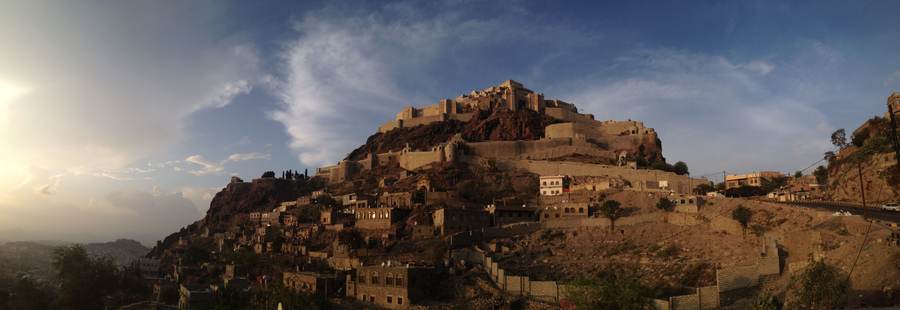
Taiz is not just another front. It is Yemen's third most populous city and the prize both sides have fought over for a decade — a city that endured a years-long siege earlier in the civil war and remains ringed by front lines. Control of Taiz means control of the highlands between the Red Sea coast and the interior, and of the roads that connect the south's capital-in-exile, Aden, with the north.
The UN special envoy for Yemen, Hans Grundberg, underlined why the city's civilians matter now: his office says Taiz hosts most of the country's newly displaced people — families fleeing fighting elsewhere have crowded into a city that is itself a battlefield. Grundberg warned that the recent military operations of Ansar Allah — the Houthi movement's official name — in Taiz pose "serious risks to the civilian population," citing what his office called "deeply concerning" reports of casualties, damage to essential infrastructure and roadblocks hindering escape. He called on Ansar Allah to halt its military offensive and protect civilian infrastructure.
Note the direction of that warning carefully: it is directed at the Houthi movement's operations in Taiz, not only at the government's airstrikes. The envoy's statement describes a two-sided battle in which the side on the offensive — per the UN — is the Houthi movement, and the government's air campaign is its answer.

The wider war: what 800 dead and 145,000 displaced actually mean
The Taiz strikes land in the middle of a renewed Houthi–Saudi war that began in September 2026 and has already killed more than 800 people, according to WHO data reported by The New York Times; the International Organization for Migration puts displacement at more than 145,000, including 16,000 newly displaced. Those figures come via an aggregator citing WHO/NYT/IOM data — the primary sources are the agencies and the Times, not the aggregator.
The escalation ladder is steep and fast: Houthi drones aimed at Riyadh were intercepted in late September; the Saudi-led coalition says Houthi drones hit a power station serving the Prophet's Mosque in Medina on October 1 — a claim the Houthis deny, covered in our related reporting below; and on October 2 Yemen's foreign ministry condemned the Medina drone attack and called for a unified international stance against the Houthis.
Put the 800 dead against Yemen's collapsed health system and the number hardens into something worse. Aden's hospitals are already overwhelmed — AP has described a "very dangerous" crisis in which oxygen, fuel and staff run short. Every new casualty wave from airstrikes or ground fighting lands in hospitals that cannot absorb it. In a country where the health system is itself a casualty of the war, the casualty count understates the human cost.
Who gains, who loses, what the critics say
For Yemen's internationally recognized government, the air campaign is a bid to do what its ground forces have struggled to do: degrade the Houthis' ability to project force. Missile depots and command centers are the nodes that turn a militia into an army capable of striking Riyadh and Medina; hitting them is both a military and a political signal — to the Houthis that their strike capacity has a cost, and to Riyadh that the government can fight rather than merely hold ground.
For the Houthis, the strikes are likely to confirm rather than change their calculus. Their pattern across this war has been to absorb punishment and answer asymmetrically — with drones and missiles aimed at Saudi infrastructure. A Houthi retaliation, possibly another long-range drone sortie, is the most predictable next move.
The losers, as ever, are the civilians of Taiz — caught between a Houthi offensive the UN says endangers them and an air campaign conducted over the districts where they live. Critics of the government's air strategy will note that precision from the air still kills from the sky in populated districts, and that the roadblocks the UN cites — hindering escape — turn airstrike zones into traps. The government's answer is that the targets were military: depots, command posts, armor. Neither claim can be independently verified from the ground right now.
Reading the strike counts
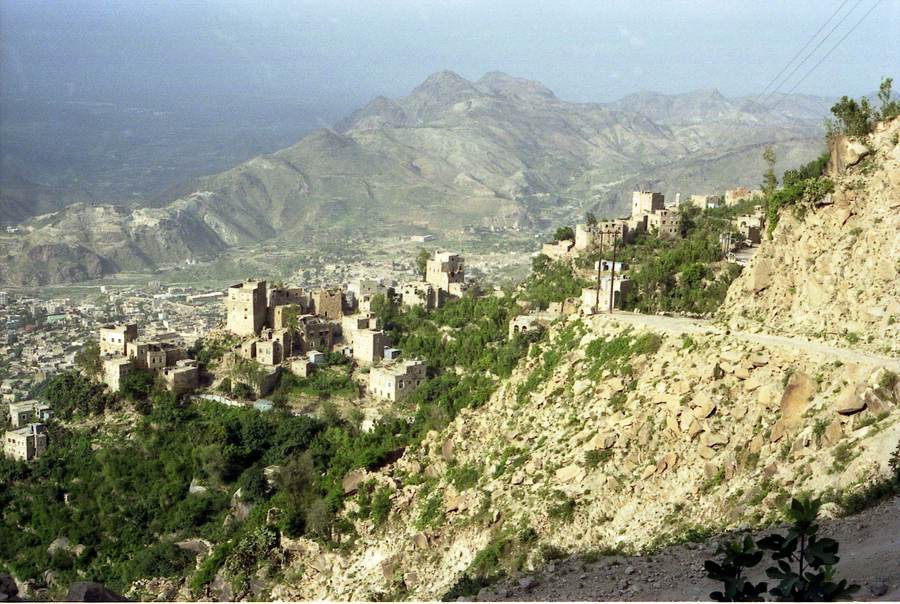
Twenty strikes in three hours is roughly one strike every nine minutes — a tempo that suggests pre-planned target sets rather than reactive close air support. The named districts — Maqbana, Hayfan, Sabr Al Mawadim — form an arc across Taiz's front lines, consistent with an attempt to hit the Houthi "integrated military system" al Nuzaili described: the depots, communications and supply nodes that sustain an offensive.
Al Nuzaili's mention of a parallel "high-value operation" in Sana'a and eleven strategic targets in Saada suggests this is a campaign, not an isolated raid — a coordinated effort to strike Houthi military infrastructure across multiple governorates at once. That framing matters: it positions the government as conducting a strategic air offensive rather than a tactical response.
As for the gap between 20 and 27: belligerents have reasons to shade numbers in both directions — undercounting to look restrained, overcounting to look overwhelming, or simply counting different things (sorties versus targets versus munitions). The exact tally matters less than the scale it signals: a multi-district, multi-wave air operation over a single province in a single day.
What happens next
Four scenarios branch from here. First, the escalation spiral: Houthi retaliation with drones or missiles, likely aimed at Saudi targets, inviting further Saudi or government strikes — the cycle that has already defined September and October.
Second, deeper Saudi involvement. The Medina drone attack has already pushed Riyadh toward a harder line; sustained government air operations give the coalition a Yemeni partner visibly fighting, which may unlock more Saudi air and intelligence support.
Third, the American question. With President Donald Trump having called off direct U.S. strikes, Washington's posture is watchful rather than engaged — which gives both Yemeni sides more room to escalate without an American ceiling, and gives the UN envoy less leverage.
Fourth, mediation. Grundberg's statement is a bid to keep a civilian-protection floor under a war that is losing one: his call on Ansar Allah to stop its Taiz offensive and protect infrastructure is the narrowest possible demand — not a ceasefire, just a halt to one offensive and protection for the infrastructure civilians need to survive. Whether it lands depends on whether the Houthis, currently on the offensive, see any reason to stop.
A note on sourcing
Every casualty-adjacent claim in this article is attributed, never asserted. The 20-strike and 27-strike figures are reported as separate announcements from separate spokespeople; we do not reconcile them. The "large number neutralized" claim is Colonel al Nuzaili's, reported as his claim. The UN envoy's warning is directed at Ansar Allah's operations in Taiz, per his office's statement — we keep that attribution exact. The war's wider toll (800+ dead, 145,000+ displaced) is attributed to WHO data reported by The New York Times and to IOM figures, via an aggregator citing them.
Sources
- Reuters-syndicated via Devdiscourse: Yemen Air Force carried out 20 strikes on Houthi targets in Taiz province — the 20-strike announcement via the armed-forces spokesperson's X post.
- Demócrata, October 2026: Yemen intensifies the bombings against Houthi positions in the province of Taiz — the 27-strike Saba statement from Colonel al Nuzaili and the UN envoy's warning.
- Archynetys trend synthesis: Over 800 killed in renewed Houthi–Saudi war in Yemen — 800+ killed per WHO/NYT data and 145,000+ displaced per IOM, cited via the aggregator.
- pakistantv.com: Middle East live, October 2, 2026 — October 2, 2026 Middle East live context.