Yemen offensive to retake Houthi territory
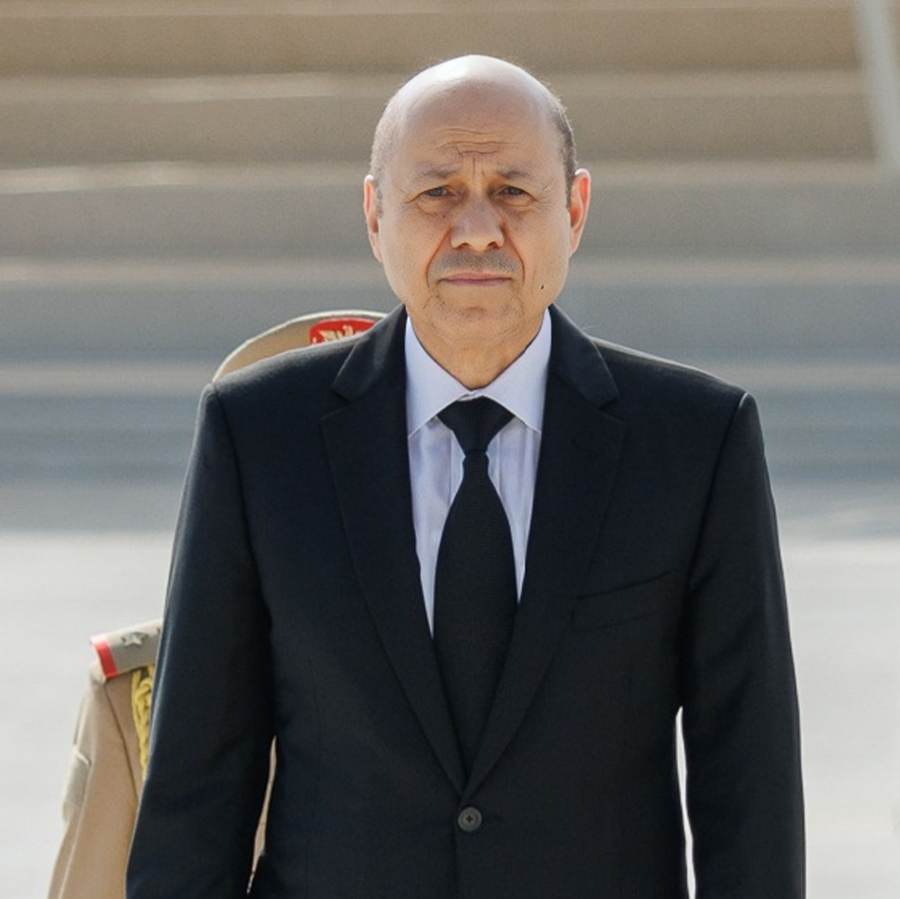
ADEN, YEMEN — The Yemen offensive to retake Houthi territory moved from preparation to declared action on Sunday, October 4, when Rashad al-Alimi announced the start of military operations aimed at recovering the remaining territory held by the Houthis and extending state authority nationwide.
“Today, I announce the start of military operations to retake the remaining territory of the republic and extend the authority of the state and its institutions across the entire national territory,” al-Alimi said in a televised address.
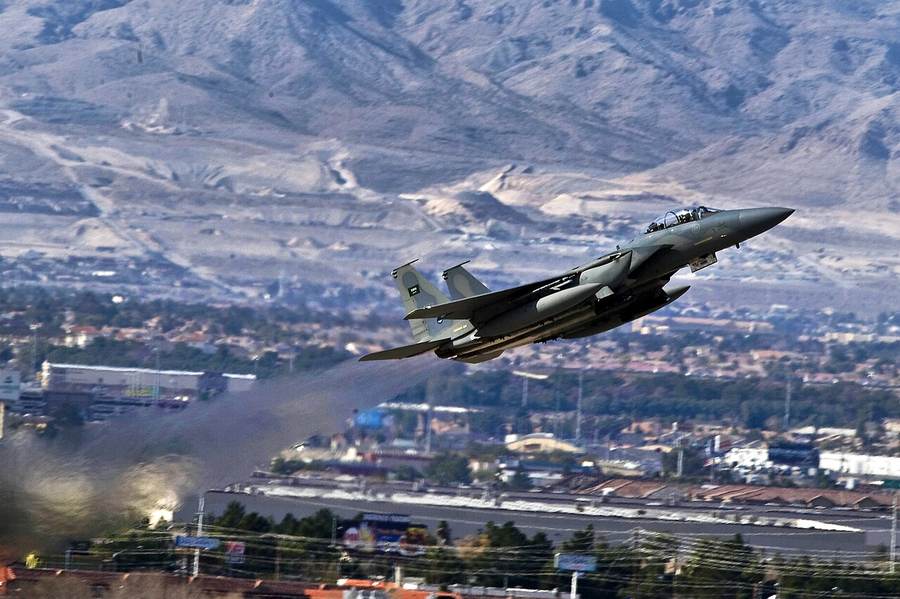
The declaration is the clearest official signal yet that the internationally recognized government and its Saudi backer intend to reverse recent Houthi coastal gains by force. Regional and Western officials had previously told Reuters that Saudi Arabia and its Yemeni allies were planning the assault, with Saudi aircraft leading the air campaign and Yemeni formations conducting the ground war.
What al-Alimi did not provide is equally important. His address did not publicly establish the operation's timetable, opening axes, force strength, rules of engagement or immediate territorial results. The announcement proves political authorization and declared intent; it does not by itself prove that government forces have broken Houthi lines or changed control on the ground.
Why this matters
This is not simply another round of strikes in Yemen's long war. A head of government has declared a campaign whose stated end point is recovery of all remaining Houthi-held territory. That turns a limited counterattack into a maximal military objective and raises the stakes for every actor that benefited from the relative restraint established after the 2022 truce.
The operation also joins Yemen's internal balance of power to the security of two waterways. The Houthis' recent seizure of the Bab el-Mandeb Strait gives them leverage over the southern exit of the Red Sea. The route connects Mediterranean traffic through the Suez Canal with the Gulf of Aden and Asia, and it has become even more important as an alternative to the Strait of Hormuz during the Iran conflict.
Territory near a chokepoint matters, but control is not binary. An advancing army can occupy coastal ground without eliminating missiles, drones, mines or mobile launch units operating farther inland. Commercial carriers and insurers will therefore judge the campaign by whether attacks and credible threats decline—not only by which side raises a flag near the coast.
For Saudi Arabia, the declaration tests whether airpower can enable a Yemeni-led recovery without recreating the open-ended intervention that began in 2015. For the Houthis, it tests whether a lightning advance can be converted into defensible control. For civilians, it threatens a new phase of displacement, damaged infrastructure and restricted access to food, fuel and medical care.
From the 2015 Saudi intervention to the 2022 truce
Saudi Arabia entered Yemen's civil war in 2015 at the head of an Arab coalition supporting the internationally recognized government after the Houthis drove it from Sanaa. The coalition possessed overwhelming airpower, but the war demonstrated the limits of translating aerial superiority into durable political control across fragmented terrain.
That historical parallel is the central warning for the new Saudi-backed Yemen offensive. Airstrikes can suppress fixed positions, destroy vehicles and interrupt reinforcement routes. They cannot independently hold towns, reopen ministries, rebuild policing or reconcile armed factions whose interests overlap only in opposition to the Houthis.
A U.N.-brokered truce in 2022 largely halted cross-border attacks and reduced the intensity of direct Saudi-Houthi confrontation, even after the formal arrangement expired. The truce was never a comprehensive peace. Front lines remained militarized, Yemen's institutions remained divided and no final settlement resolved who would govern, disarm or control national revenue.
That relative calm broke down this year as Houthi missile and drone attacks struck Saudi shipping and oil infrastructure amid spillover from the Iran war. Each attack widened the conflict's geography and increased pressure on Riyadh to show that restraint would not leave strategic infrastructure exposed.
Bab el-Mandeb changes the strategic equation
Weeks before al-Alimi's address, Houthi forces seized the strategic Bab el-Mandeb Strait in a rapid advance down Yemen's coast as government defenses collapsed. The gain gave the Houthis an unusually powerful combination: land control near a maritime bottleneck and an established ability to threaten targets at range.
Bab el-Mandeb is the Red Sea's southern gate. Ships moving between the Mediterranean and the Indian Ocean generally pass through it unless they take the much longer route around Africa. Because the Strait of Hormuz has been effectively closed by the Iran conflict, disruption at Bab el-Mandeb would place pressure on the remaining alternative rather than on a peripheral lane.
That is why the campaign's military and economic clocks are different. Ground forces may need weeks or months to contest coastal positions, while insurers can reprice danger in hours. A single verified attack can produce a wider commercial response than a small territorial gain. Conversely, a government advance will not automatically restore confidence if Houthi strike capability remains intact.
Read the immediate prelude in our analysis of the Saudi-backed Taiz and Bab el-Mandeb plan, which examined the coastal axes, Washington's reluctance to join the air war and the logistical difficulty of holding the strait.
The reported battle plan: Saudi airpower, Yemeni ground forces
Officials familiar with the preparations described a division of labor: Saudi Arabia would lead aerial combat, while Yemeni allies would fight on the ground. On paper, that limits Saudi ground exposure and places the visible burden of territorial recovery on local forces. In practice, it creates a demanding coordination problem.
Aircraft need reliable targeting and deconfliction. Ground units need protected supply routes, communications, medical evacuation, engineers and commanders able to cooperate across organizational lines. Yemen's anti-Houthi camp includes institutions and formations with distinct leaders, territorial bases and political goals. Their ability to advance together is not the same as their ability to govern together afterward.
The campaign must also choose among competing priorities: defend Taiz and the approaches to Aden, move toward the coast, pressure Houthi-held Sanaa, protect Saudi infrastructure, or attempt several axes at once. A broad declaration of nationwide restoration creates political momentum, but it can disperse military effort if commanders are expected to deliver progress everywhere.
The weekend's airstrikes on Houthi-held Sanaa show the air campaign's widening reach. They do not establish that a ground advance has succeeded, and reporting on targets, damage and casualties remains contested.
Who benefits, who loses and what critics will question
The Presidential Leadership Council gains a test of authority
Al-Alimi benefits politically if the announcement unifies anti-Houthi forces around a clear objective and produces visible gains. Recovering a port, road junction or administrative center could help the Presidential Leadership Council demonstrate that it is more than a diplomatic umbrella. Failure would expose the gap between national claims and fragmented command.
Saudi Arabia can regain deterrence—but inherits the outcome
Riyadh's strongest case is that Houthi attacks on shipping and oil infrastructure, combined with the loss of Bab el-Mandeb, made inaction strategically costly. A successful counteroffensive could restore deterrence and strengthen the government's position in any later talks. The downside is ownership: once Saudi aircraft become the campaign's decisive enabler, civilian harm, operational setbacks and an inconclusive end state will all be tied to Saudi choices.
The Houthis lose freedom of action but can exploit a long war
The Houthis now face a declared coalition campaign rather than scattered local resistance. That can strain manpower, expose supply lines and force air defenses to protect several fronts. Yet the group may benefit if the offensive becomes prolonged, causes civilian casualties or sharpens divisions among its opponents. A defender does not have to win everywhere; it can make the cost of holding territory exceed the attacker's political patience.
Civilians and aid systems face the most immediate losses
Combat over roads, ports and urban approaches can interrupt the same networks that move flour, fuel, medicine and humanitarian staff. Even where no strike lands, fear and checkpoints can push families to leave. Critics of the campaign will ask whether commanders have credible evacuation procedures, protected aid routes and plans to restore public services in any recaptured area.
Critics will challenge the maximal objective
“The entire national territory” is a political destination, not a military plan. Skeptics will argue that the 2015 intervention already showed the danger of broad goals without an attainable settlement. Supporters will answer that allowing the Houthis to consolidate Bab el-Mandeb would make future negotiations less balanced and regional shipping less secure. Both arguments turn on what the operation can hold and govern, not simply what it can strike.
The figures in context
2015: Saudi Arabia's first intervention is now an essential comparison point. More than a decade of conflict shows that tactical superiority can coexist with strategic stalemate. The lesson is not that airpower has no effect; it is that battlefield effects must connect to institutions and a political end state.
2022: the truce created roughly four years of relative cross-border restraint before the 2026 escalation. That period matters because the new operation risks dismantling mechanisms and informal understandings that limited violence even without a peace treaty.
Two operational layers: Saudi aerial combat and Yemeni ground action divide tasks, but they also create two potential points of failure. Air strikes without coordinated ground exploitation may not change control. Ground advances without reliable air cover and logistics can stall.
No public timetable or opening force count: al-Alimi's announcement did not answer the most useful measurement questions. Any claims of a rapid nationwide victory should therefore be treated cautiously until independently verified territorial evidence appears.
What happens next
Scenario one: a concentrated coastal counteroffensive. Government-aligned units could prioritize routes linking Taiz, Lahej and Bab el-Mandeb, using Saudi airpower to disrupt Houthi reinforcements. The key indicator would be sustained control of roads and settlements, not a one-day claim of advance.
Scenario two: simultaneous pressure without a decisive breach. Strikes may expand around Sanaa and other Houthi-held areas while ground forces probe several fronts. That could stretch Houthi defenses, but it could also dilute the coalition's combat power and increase civilian risk without recovering the strait.
Scenario three: Houthi retaliation against Saudi infrastructure or shipping. Missile and drone attacks could be used to raise the cost of the operation and force Riyadh to divert air defenses. Verified attribution will matter; rapid claims by either side should not be confused with independently established responsibility.
Scenario four: battlefield pressure opens negotiations. The declaration may function partly as coercive diplomacy. Early government gains—or the threat of a larger assault—could produce talks over shipping, borders and territorial lines. Negotiations would not mean the military announcement was a bluff; they could be its intended strategic payoff.
Scenario five: the campaign becomes another long contest. Mountainous terrain, divided commands and mobile Houthi weapons could prevent a decisive result. The warning signs would be repeated strike claims without verified territorial change, rising displacement and shifting objectives.
The next reliable answers will come from observable evidence: confirmed movement of Yemeni formations, geolocated changes in control, sustained Saudi air activity, damage to Houthi launch capacity, shipping advisories and humanitarian access. Until those indicators emerge, the central fact is consequential but narrow: al-Alimi has formally opened a military campaign to recover Houthi-held Yemen, while its scale, pace and prospects remain uncertain.
Sources and reporting notes
- Reuters: Head of Yemen's presidential council announces military operations to retake territory (October 4, 2026)
- Reuters report by Mohammed Ghobari and Timour Azhari: Yemen leader announces major military operations (October 4, 2026)
- AzerNews: Yemeni leader launches operation to reclaim Houthi-held areas (October 4, 2026)
Reporting note: the start of operations and quoted objective come from al-Alimi's televised declaration and reporting cited above. Signal Post News has not independently verified new territorial gains, force strength, strike effects or a campaign timetable. Assessments of beneficiaries, risks and future scenarios are analysis, not predictions.