Sanaa airstrikes October 2026
War / Middle East / YemenAFP correspondents heard at least five blasts across the Yemeni capital on Saturday as warplanes struck Houthi military sites — the sharpest Saudi–Houthi escalation in years, with a hospital damaged and tens of thousands newly displaced.

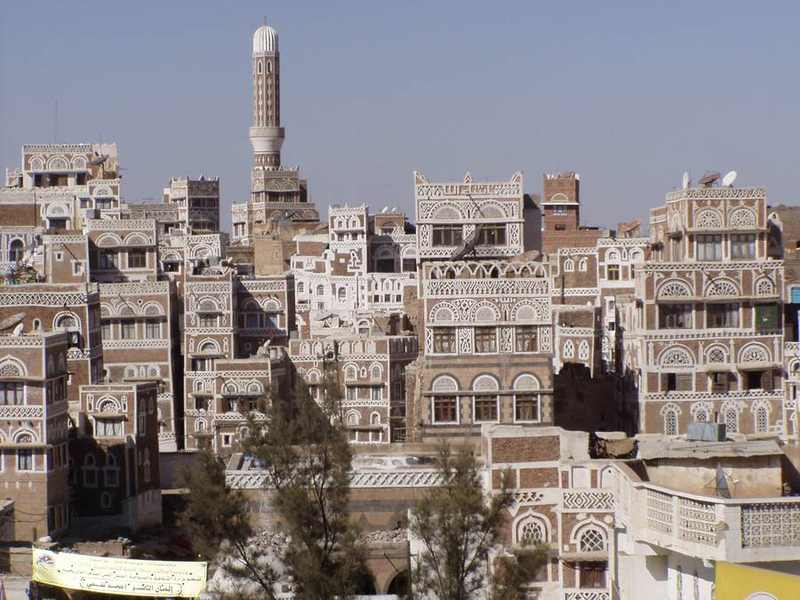
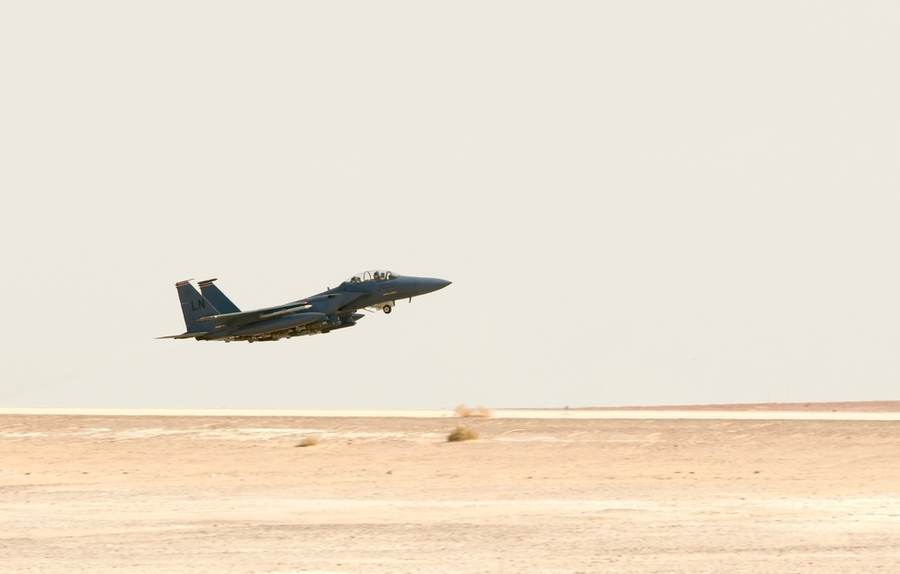
Explosions tore through Sanaa on Saturday, October 3, 2026, making the Sanaa airstrikes October 2026 the most serious escalation between Saudi-aligned forces and the Houthis in years. AFP correspondents in the Houthi-held Yemeni capital heard at least five loud blasts in different districts around midday; one correspondent watched two warplanes fire missiles into the city, according to an AFP dispatch timed 11:22 GMT. Houthi-run al-Masirah television denounced what it called “Saudi aggression,” while residents told China's Xinhua news agency that more than seven explosions shook the capital in quick succession, with warplanes circling overhead and columns of smoke rising from the Al-Nahdayn and Jabal Attan heights — both long-standing Houthi military sites. Video from Associated Press Television showed damage near the Al Sabeen Maternity and Childhood Hospital: broken windows, shattered glass, wrecked equipment inside. Yemen's internationally recognized government said its air force had hit “legitimate military targets” in Sanaa. No casualty toll could be independently verified by publication time, and there was no immediate Saudi comment on the strikes.
Why this matters
Capitals are thresholds. For years the air war over Yemen followed an unspoken geography: the front lines around Taiz and Marib took the bombs, while Sanaa — home to roughly three million people and the seat of Houthi power — absorbed pressure through blockade, sanctions, and the occasional precision strike. Saturday's raids break that pattern openly. Hitting Al-Nahdayn and Jabal Attan is not battlefield close-air support; it is a message aimed at the Houthi leadership's own command infrastructure, delivered over the city they rule. The timing matters as much as the targets. The strikes come one day after Yemen's government said its warplanes flew 20 sorties in three hours against Houthi movements in Taiz province, and they land in a week when the UN's Yemen envoy has already warned of grave risks to civilians. Read together, the two days look less like isolated raids and more like the opening of a coordinated air campaign — the first time since the 2022 truce collapsed that Saudi-aligned airpower has been applied simultaneously to a ground offensive and to the Houthi capital itself. For Red Sea shipping, for the Gulf states, and for the millions of Yemenis caught between the lines, the era of a contained, front-line war may just have ended.
What happened in Sanaa on October 3
Update — early Sunday, October 4 (Yemen time)
Reuters reported early Sunday that a spokesperson for Yemen’s armed forces — the military of the internationally recognized government — said Yemeni forces were conducting strikes against the Iran-aligned Houthis in Sanaa and Saada. The spokesperson said the operation was hitting “vital targets” but provided no further details about the sites, aircraft or weapons involved. Saada is the Houthis’ northern stronghold and political heartland, while Sanaa remains the capital under Houthi control. Separately, Houthi-run Al Masirah TV reported an attack on Sanaa and attributed it to Saudi Arabia. Saudi authorities had not confirmed involvement at the time of the Reuters report. The two accounts therefore agree that a new wave of strikes was under way but conflict over who flew or directed it: the Yemeni government says its own forces are conducting the campaign, while Al Masirah says Saudi jets are responsible. Neither claim had been independently verified, and there were no independently confirmed casualty figures for this wave. Any figures circulating without corroboration should be treated as unverified.
Why it matters — analysis: The government is now openly claiming an air campaign over both the Houthi-held capital and Saada, a meaningful shift from Saturday’s attribution ambiguity. If the government’s account stands, this is the first publicly government-claimed air operation on Sanaa since the 2022 truce collapsed. It also gives operational weight to the government’s earlier vow to “retake Sanaa” and extends the campaign beyond the 20 sorties in Taiz on October 2 that a government spokesperson described to Reuters. The Taiz count and the new Sanaa-Saada operation remain official claims, not independently audited strike records.
The attribution puzzle — analysis: Al Masirah says Saudi jets attacked Sanaa; the Yemeni government says its own forces are striking Houthi targets; Riyadh remains publicly silent. That gap matters because direct Saudi participation would raise the escalation threshold differently from a campaign formally led by Yemen’s government. Insurers and shipping operators assessing the Red Sea and Bab al-Mandeb are likely to focus less on the competing labels than on whether the strikes trigger Houthi retaliation against Saudi territory or commercial shipping.
What to watch — analysis: A sustained government air campaign could force Houthi commanders to shift air defenses, personnel and logistics away from the Taiz front, potentially changing the ground battle without guaranteeing a government breakthrough. It would also increase civilian danger in Sanaa, a dense city of roughly three million residents, especially if target sets broaden or attribution remains opaque. Reuters establishes the government’s announcement; Al Masirah establishes the Houthi-side attribution claim. Neither source, by itself, resolves who conducted each strike or what was hit.
“Sanaa explosions today”: the witness record
The first authoritative account came from AFP, whose correspondents in Sanaa reported at least five powerful explosions across different areas of the city, with one correspondent directly observing two warplanes firing missiles. Houthi-run al-Masirah TV quickly framed the raids as “Saudi aggression” airstrikes on the capital — the Houthis' standard characterization, and one that should be read as their claim rather than an independently verified attribution. Residents speaking to Xinhua described more than seven explosions within a short period, warplanes audible overhead, and smoke plumes climbing from the mountainous districts of Al-Nahdayn and Jabal Attan, which house Houthi military installations. The Institute for the Study of War, in its October 3 Iran Update, assessed that “Saudi or Yemeni government-aligned forces conducted airstrikes on Sanaa City on October 3, likely to degrade Houthi capabilities central to the group's offensive campaigns,” and separately noted that Houthi attempts to advance in western and eastern Taiz on October 2–3 had failed.
The al-Sabeen hospital strike
The most politically charged episode of the day unfolded near the Al Sabeen Maternity and Childhood Hospital. APT video from the scene showed broken windows, shattered glass, and damaged equipment inside the facility after a strike hit a nearby area. Houthi health ministry spokesperson Anees al Asbahi condemned the strike and called for an investigation. Yemen's internationally recognized government countered that its air force had targeted what it described as “legitimate military targets” in Sanaa. Neither account can be independently verified from the footage alone, and the truth likely sits in the contested space both sides are already shaping: hospitals near military sites have been a recurring flashpoint in Yemen's war, and each side has an interest in how this one is remembered. What is not in dispute is that a maternity and children's hospital sustained damage on Saturday — a fact that will travel far beyond Yemen regardless of whose munition caused it.
How Yemen's war reached this escalation
The Taiz offensive and the return of the air war
The road to Sanaa ran through Taiz. For weeks, southwestern Yemen has seen the heaviest fighting in years: Houthi forces pressing on Taiz city and the Aden road, the Yemeni government ordering general mobilization, and on Friday, October 2, a government spokesperson telling Reuters that warplanes had carried out 20 strikes in three hours on Houthi movements and equipment in Taiz province. Our earlier reporting detailed those Taiz raids and the UN envoy's warning about civilian risk. Saturday's strikes on the capital extend that logic upward — from supporting a ground battle to degrading the Houthi war machine at its source, exactly as the ISW assessment describes. It is the classic escalatory ladder of airpower: tactical support first, strategic targets second.
A year of rising pressure
The wider arc has been building all year. Houthi drone attacks reached toward Riyadh in late September, with Saudi Arabia intercepting drones over the capital on September 26. British RAF refuelling support for Saudi operations drew scrutiny the same month. Strikes around Hodeidah and reports of a planned Saudi offensive to break the Houthi Red Sea chokehold signaled that Riyadh's patience with the status quo was thinning. The 2022 UN-brokered truce, which once froze the front lines and halted the coalition air campaign, has long since collapsed into something neither war nor peace — until this weekend, when the “neither” part arguably ended.
Who benefits, who loses — and what the critics say
For Yemen's internationally recognized government in Aden, the strikes are leverage: proof to its own public and to backers that it can take the fight to the Houthi heartland, and pressure on Houthi commanders to divert resources from the Taiz offensive to capital defense. For Saudi Arabia — which has not commented on the Sanaa raids — the ambiguity is useful either way: if the strikes were Saudi-flown, silence preserves deniability; if they were Yemeni-flown, the kingdom benefits from Houthi degradation without owning the political cost. For the Houthis, the damage is real but so is the narrative opportunity: images of a damaged maternity hospital are potent recruiting and diplomatic material, and “Saudi aggression” is a frame they have refined over a decade. The losers, as ever, are Yemeni civilians — tens of thousands newly displaced by the southwestern fighting, hospitals already collapsing under the strain documented through September, and a hunger crisis the World Food Programme warned on Friday could become “absolutely devastating.” Critics of the air campaign will point to the hospital damage as evidence that precision from altitude is a fiction in dense urban terrain; supporters will answer that Jabal Attan and Al-Nahdayn are legitimate military targets and that the Houthis' own offensive made escalation inevitable. Both claims deserve scrutiny rather than acceptance.
What the numbers actually imply
Start with what we do not know: as of publication, no independently verified casualty figure exists for the Sanaa strikes, and any number circulating on social media should be treated as unconfirmed. That uncertainty is itself data — it reflects how thoroughly the information environment over Sanaa is contested. What is documented: more than seven explosions heard by residents, at least five confirmed by AFP correspondents, two warplanes observed firing. On the ground war, the tempo is measurable and rising: 20 government airstrikes in three hours in Taiz on October 2, Houthi advances in Taiz repelled on October 2–3 per ISW, and tens of thousands displaced across the southwest in recent weeks. The humanitarian baseline was already catastrophic before Saturday: the WFP's Friday warning of a potentially “absolutely devastating” hunger crisis, record child malnutrition documented through September, and a health system described as collapsing. Against history, the current campaign is still far from the 2015–2022 coalition air war, which ran to tens of thousands of strike sorties and, with the ground fighting and blockade, left UN-estimated death tolls in the hundreds of thousands. The question the numbers pose is whether this weekend is a spike or an inflection — and the honest answer is that one day of strikes cannot settle it, but the direction of travel is unmistakable.
What happens next: three scenarios
One: the air campaign expands. Sanaa joins Taiz as a routine target set, with strikes on Houthi command, missile, and drone infrastructure becoming weekly events. This is the ISW-reading scenario — degradation of Houthi offensive capability — and it risks the most civilian harm. Two: Houthi retaliation. The group's established playbook is asymmetric response: drones and missiles toward Saudi and Emirati targets, and renewed pressure on Red Sea shipping — the very chokehold Saudi planners reportedly want broken. An attack on a tanker or a Gulf airport would internationalize the crisis within days. Three: a scrambled de-escalation. The UN envoy, Gulf intermediaries, and the sheer humanitarian cost force a pause — not a truce, but a return to the uneasy pre-October equilibrium. The smart money in Sanaa tonight is probably on a mix of one and two, with diplomacy arriving late, as it usually does.
Sources
- AFP reporting on the October 3 Sanaa explosions via Pakistan TV live coverage
- Institute for the Study of War: Iran Update, October 3, 2026
- Reuters: Yemen carried out 20 strikes on Houthi targets in Taiz province, October 2, 2026
- IANS/Xinhua via The Freedom Press: Airstrikes hit Yemen's Houthi-held capital Sanaa
- APT: Houthi Health Ministry Denounces Damage To Sanaa Hospital After Air Strike