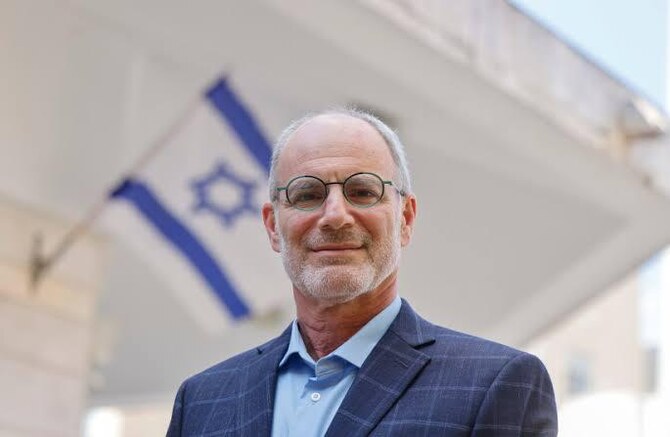
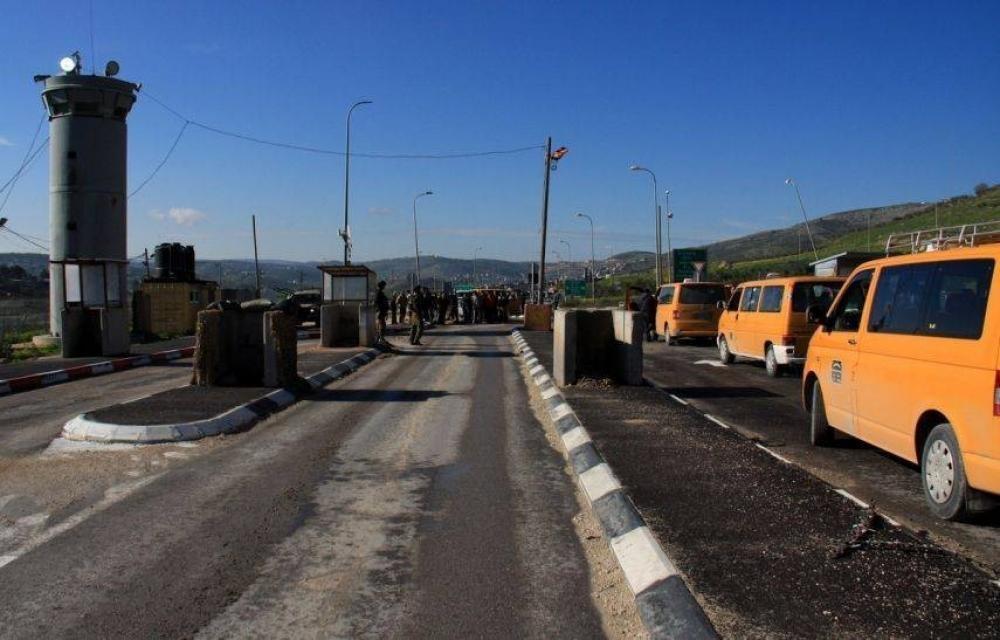
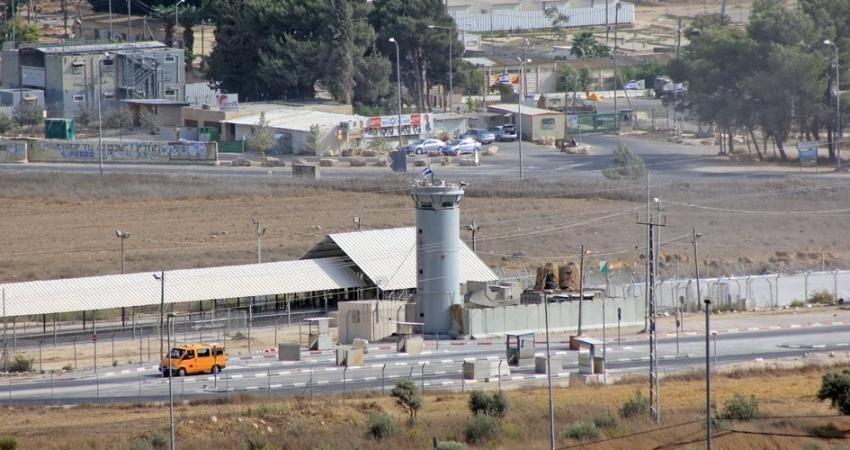
The Neria Leiter ramming attack has put the West Bank back at the center of Israel's attention on the eve of Benjamin Netanyahu's address to the United Nations. Neria Leiter, an Israel Defense Forces reservist and the son of Israel's ambassador to the United States, Yechiel Leiter, was critically injured on Wednesday afternoon when a Palestinian driver rammed his car into a checkpoint near the Beit Horon settlement, west of Ramallah. The driver, identified by the Palestinian Health Ministry as 29-year-old Mahmoud Muhammad Mahmoud Suleiman of the nearby village of Beit Ur al-Tahta, was shot and killed by Israeli forces at the scene. The IDF said the reservist was “severely injured”; Ambassador Leiter said on social media that his son was fighting for his life.
What happened at the checkpoint
According to Israeli police, the vehicle drove toward Israeli forces stationed at a checkpoint intersection near Beit Horon on Wednesday afternoon. Neria Leiter, a reserve soldier operating at the checkpoint, was hit and left unconscious, according to the Magen David Adom ambulance service. Medics treated him at the scene and evacuated him to Shaare Zedek Medical Center in Jerusalem in serious condition. Troops at the scene shot dead the driver, whom Israeli security officials identified as Mahmoud Mohammad Suleiman, 29, from Beit Ur al-Tahta; the Palestinian Health Ministry confirmed his identity and said Israeli authorities retained his body.
The exact checkpoint has been reported under several names — Israel's president called it the Maccabim checkpoint; military-affairs reporters described it as the “Bell” checkpoint where Routes 4436 and 4437 meet the main Jerusalem–Tel Aviv highway, Route 443, near Beit Horon. The Israeli military said more forces were sent to the area after the incident, and IDF chief of staff Lt. Gen. Eyal Zamir said in a statement that the IDF is “on high alert, deployed and prepared with soldiers reinforced across all sectors,” with a mission “to thwart terrorism, act decisively against every threat, and protect the citizens of the State of Israel.”
“Neria needs a miracle” — a family already scarred by war
Ambassador Yechiel Leiter announced the news himself on X. “Neria needs a miracle,” he wrote. “I believe in the power of prayer, and I believe that when the people of Israel unite, miracles happen.” He thanked the IDF and the medical team at Shaare Zedek who, he said, “are now fighting to save the life of Neria Dov ben Chana.”
The tragedy is compounded for the Leiter family. Leiter's elder son, 39-year-old Moshe Yedidya Leiter, was killed fighting in Gaza in November 2023, in the first weeks of the war triggered by the Hamas-led attack of October 7. Neria, the ambassador said, continued to serve in the reserves after losing his older brother, and “has done hundreds of reserve duty days on various fronts since October 7th.”
The response crossed Israel's political divide. President Isaac Herzog offered “a prayer for the complete and speedy recovery of Neria Leiter, a reservist soldier who was run over today in a heinous terror attack.” Israel's UN Ambassador Danny Danon offered solidarity, calling it a “heinous terrorist attack.” Hamas, for its part, praised the attack in a statement Wednesday, describing it as a “natural response” to Israeli actions in the West Bank and Jerusalem and calling for increased resistance against Israel — without claiming responsibility for it.
The timing: Netanyahu's UN speech and a violent week
The attack came one day before Prime Minister Benjamin Netanyahu's scheduled address to the UN General Assembly on Thursday — an address already expected to be confrontational, with Netanyahu promising to “tell the truth” about Israel's critics. Signal Post News has separately examined the political stakes surrounding Netanyahu's Thursday UNGA address. The ramming also came amid a burst of West Bank violence. Just days earlier, on the Sunday before Yom Kippur, Netanel Shukrun, a father of six from the Alei Zahav settlement, was shot and killed while bathing at a natural spring in the West Bank; his 16-year-old son credited his father with saving his life when he shouted a warning to take cover.
The pattern is part of a much grimmer ledger. Since the Hamas-led October 7, 2023 attack triggered the Gaza war, violence in the West Bank has soared: 67 civilians and Israeli security personnel have been killed in attacks in Israel and the West Bank, plus eight members of the Israeli security forces killed in clashes during raids in Palestinian cities. During the same period, more than 1,100 Palestinians have been killed in the West Bank by Israeli forces or settlers, according to the Palestinian Authority's health ministry; the IDF says the vast majority were gunmen killed in exchanges of fire, rioters who clashed with troops, or people carrying out attacks.
Why this matters — analysis
Three things make this attack larger than a single checkpoint incident. First, the personal and the political are inseparable. Yechiel Leiter is not just a father; he is Israel's most important diplomat in Washington — appointed by Netanyahu, taken up his post in January 2025, and the man Israel relies on to keep the US-Israel channel smooth during the most consequential diplomatic week of the year. An attack on his son, the day before Netanyahu speaks at the UN, ensures that Israel's delegation arrives in New York with West Bank violence at the top of its emotional — and political — agenda. Hamas's praise of the attack will only sharpen that framing.
Second, the tactic. Vehicle ramming is one of the simplest, hardest-to-predict forms of attack: no weapons to smuggle, no network to infiltrate, a single driver and a car. The Beit Horon attack followed the exact script of dozens of past ramming incidents — and each one forces Israel to answer a question it has never fully solved: how do you defend hundreds of fixed checkpoints against a threat that announces itself only in the final seconds? The “Bell” checkpoint's position on Route 443, the main highway between Jerusalem and Tel Aviv, makes the vulnerability a national one, not a frontier one.
Third, the trend. The Shukrun shooting on Sunday, the ramming on Wednesday — the West Bank is experiencing the kind of attack rhythm that, in past years, has preceded wider escalations. The territory has been a slow-burning second front since October 2023, with more than a thousand Palestinian deaths alongside the Israeli toll, and both sides' leaders under pressure from their own hard lines. Against that backdrop, an attack that hits the family of the ambassador to Washington risks turning a local tragedy into a diplomatic fact — the kind of fact that shapes what gets said at the UN podium on Thursday, and what the United States hears in its own capital.
Who benefits, who loses — the reactions, weighed
Nobody “wins” from a ramming attack, but the political effects are real. For Hamas, praising the attack costs nothing and signals to its base that resistance continues even as its Gaza leadership is being hunted. Our report on Israel's claim that it killed Hamas finance chief Muhammad Abu Alwan provides the immediate Gaza context. For Israel's government, the attack — on the eve of Netanyahu's speech — arrives as emotional reinforcement for a hard line it was already taking; the prime minister can now speak about West Bank violence with a personal example at the podium. For the Palestinian Authority, the incident is pure cost: another attack, another IDF reinforcement of West Bank sectors, another step away from any de-escalation narrative.
The genuine loser is the same as always in this territory's cycles: the civilians on both sides living between checkpoints and spring-bathing traditions, for whom the attack rhythm has made ordinary movement a calculation.
The numbers behind the attack
- 29: age of the attacker, Mahmoud Muhammad Mahmoud Suleiman, from Beit Ur al-Tahta — shot dead at the scene.
- 2: sons of the Leiter family now lost or fighting for life — Moshe Yedidya, 39, killed in Gaza in November 2023; Neria, critically injured Wednesday.
- 67: civilians and Israeli security personnel killed in attacks in Israel and the West Bank since October 7, 2023, plus eight security forces members killed in raid clashes.
- 1,100+: Palestinians killed in the West Bank by Israeli forces or settlers in the same period, per the Palestinian Authority health ministry; the IDF disputes the characterization of the dead.
- 6: children left behind by Netanel Shukrun, shot dead at a West Bank spring days before the ramming.
- 1: day before Netanyahu's UN General Assembly address that the attack occurred.
What happens next — three scenarios
- Heightened West Bank security, no strategic change. The most likely near term. The IDF reinforces checkpoints across the West Bank — Zamir has already announced reinforcements — conducts raids in Beit Ur al-Tahta and surrounding villages, and the attack becomes one more entry in the toll, while Netanyahu uses it rhetorically at the UN without altering policy.
- A reprisal cycle. If the IDF's response in the attacker's village produces confrontations — or if copycat ramming attempts follow, as they have after past incidents — the West Bank's attack rhythm quickens into the kind of cycle that has, in past years, drawn in settler retaliation and broader unrest.
- Diplomatic hardening in New York. The least predictable but potentially most consequential. Netanyahu's Thursday speech now has a live wound to point to; Israel's UN delegation, led by Danon, may press harder on West Bank security narratives; and in Washington, the attack on the ambassador's own son becomes part of the US-Israel conversation at exactly the moment Trump and Xi dominate the capital's attention. An attack in the West Bank rarely moves great-power diplomacy — but it can move the mood, and the mood is where UNGA speeches land.
The bottom line
A checkpoint near Beit Horon, a car that didn't stop, a reservist fighting for his life in a Jerusalem hospital — and a father who happens to be Israel's ambassador to the United States, posting that his son “needs a miracle.” The Neria Leiter ramming attack is a West Bank incident with a diplomatic blast radius: it hit a family already grieving one son, it landed on the eve of Netanyahu's UN speech, and it was praised by Hamas within hours. The West Bank's violence has a way of outliving the headlines it generates. Whether this one does will be decided in the coming days — at the checkpoints, in the villages around Beit Horon, and at the UN podium in New York.
That diplomatic timing unfolds alongside the week's wider Israel-Gaza violence, including the vehicle strike in western Khan Younis that killed two Palestinians, according to Palestinian health officials.
Sources
- CNN, “Son of Israeli ambassador to US critically injured in West Bank ramming attack,” September 23, 2026
- Sky News via Capital FM, “Son of Israeli ambassador to US 'seriously injured' in West Bank ramming attack,” September 23, 2026
- New York Post, “Son of Israel's US ambassador injured in West Bank terror attack on eve of Netanyahu General Assembly speech,” September 23, 2026
- Times of Israel via QOSHE, “Son of Israel's US envoy, a soldier, seriously hurt in car-ramming attack in West Bank; assailant shot dead,” September 23, 2026