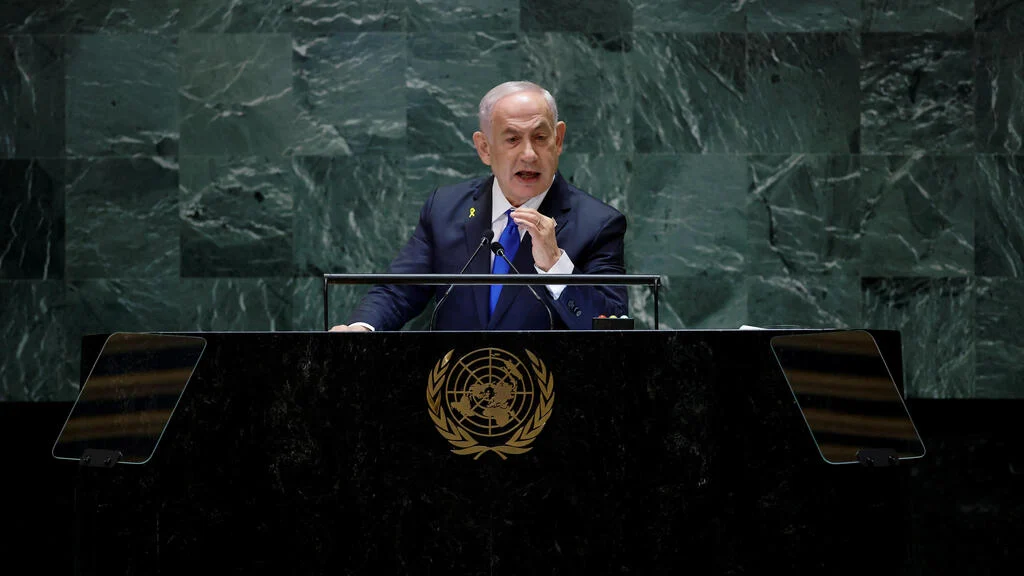
Netanyahu Mamdani UN speech September 2026 is no longer merely a dispute about what New York City might do when a foreign leader under an International Criminal Court warrant visits the United Nations. Prime Minister Benjamin Netanyahu has turned the argument into a promise for the podium: in a brief video posted Tuesday, he said he would defend Israel’s soldiers and “tell the truth” about Mayor Zohran Mamdani when he addresses the General Assembly on Thursday, September 24.
“I’m coming to the UN. I’m going to tell the truth about our heroic soldiers, and I’m going to tell the truth about you,” Netanyahu said. He then addressed the mayor directly: “Shame on you, Mr. Mamdani. Shame on you for supporting the Hamas terrorist monsters who butchered our people. Shame on you for inciting riots against New York Jews.”
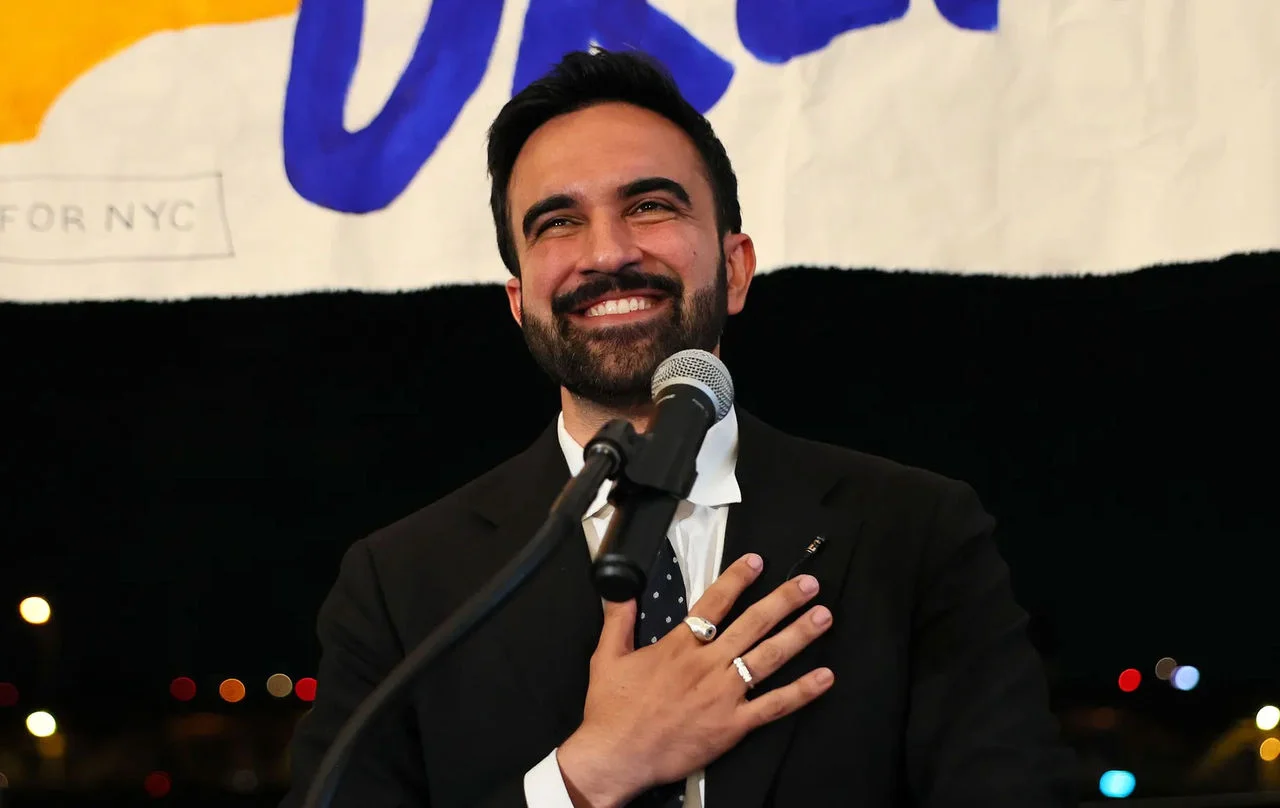
Mamdani rejected the accusations on Tuesday. “We all know that what the prime minister has said in that video is not true,” he told reporters. His answer followed a CNN interview on Monday—after his meeting with President Donald Trump at Gracie Mansion—in which he called Netanyahu “a war criminal and an architect of a horrific genocide of the Palestinian people,” renewed his demand for accountability and said the ICC should intervene.
The result is a confrontation operating on several levels at once. It is a diplomatic clash between a visiting head of government and the mayor of the host city; an argument over Gaza and antisemitism; a public-safety challenge for the NYPD; and a campaign instrument for two politicians who can each strengthen loyalty at home by presenting the other as a moral threat.
Why this matters: a foreign leader pulls City Hall onto the UN stage
Foreign leaders regularly use the General Assembly to criticize governments, institutions and ideological opponents. It is far rarer for one to announce that a speech will target the sitting mayor of the American city hosting the United Nations. That makes the episode an extraordinary—and in modern city diplomacy, virtually unprecedented—escalation of Israel–U.S. municipal politics.
The distinction matters because Mamdani does not direct U.S. foreign policy. He cannot recognize a state, impose national sanctions or bind Washington to the ICC. But he does oversee the city government responsible for traffic, emergency coordination and the police department that must help protect Netanyahu and the thousands of New Yorkers likely to demonstrate for and against him. Netanyahu’s attack therefore moves a dispute over words into an institutionally awkward space: the official being condemned is also responsible for the local machinery that keeps the visit secure.
It also internationalizes a domestic American debate. Mamdani won the 2025 mayoral election on a pro-Palestinian platform in a city long central to American support for Israel and home to the largest Jewish population outside Israel. Netanyahu’s decision to name him from the world’s most visible diplomatic forum tells both audiences that New York’s municipal politics now form part of Israel’s national political argument.
The Netanyahu “shame on you” video and the CNN trigger
The Netanyahu shame on you video was framed as a direct rebuttal. According to Reuters, Netanyahu said he would use his UN address to defend Israel’s military actions against Palestinians and answer Mamdani. Israel says its campaign is aimed at dismantling Hamas’s military and governing capabilities and denies committing genocide.
The immediate trigger was the Mamdani war criminal CNN interview. The mayor’s language fused two claims that need to remain analytically distinct. The ICC has issued a warrant alleging war crimes and crimes against humanity; a genocide allegation is a separate legal claim. Mamdani uses the latter as a political and moral judgment, while Israel rejects it. The existence of an arrest warrant does not itself determine the genocide charge.
The war’s human toll makes the rhetoric especially combustible. Israeli authorities say Hamas’s October 7, 2023 attack killed about 1,200 people and that 251 were kidnapped. Gaza health officials say more than 73,000 Palestinians have been killed in Israel’s response; their count does not distinguish fighters from civilians. Those figures describe different categories and sources, but together they explain why both leaders speak to constituencies for whom the argument is neither abstract nor remote.
The arrest threat meets hard legal limits
The Netanyahu Mamdani arrest threat is politically potent precisely because the legal path is so narrow. Mamdani has acknowledged that he lacks authority to order Netanyahu’s arrest. The United States is not a party to the Rome Statute that created the ICC, and the federal government—not City Hall—controls foreign relations, diplomatic protections and the country’s obligations toward representatives traveling to United Nations headquarters.
The ICC issued its warrant for Netanyahu in November 2024 over alleged war crimes and crimes against humanity. Israel rejects the allegations and disputes the court’s authority. The warrant remains legally consequential in ICC member states that accept the court’s jurisdiction, but it is not a self-executing command to the NYPD. A mayor cannot convert an international warrant into a valid local arrest without a domestic legal basis and cooperation from federal authorities.
That is why the phrase NYC mayor ICC Netanyahu describes a constitutional collision more than a practical arrest plan. The mayor can advocate, criticize and press the federal government. He cannot independently rewrite treaty status or foreign-sovereign protections. Any attempted detention outside a clear federal legal framework would provoke immediate litigation and a confrontation with Washington.
Security risk is real even when the arrest scenario is not
The practical burden falls on the NYPD and partner agencies. The Wall Street Journal reports that volatile pro- and anti-Israel demonstrations are expected and that the department is charged with helping protect Netanyahu. Mamdani has said he will not attend demonstrations and will focus on keeping New Yorkers safe.
Threat perception cannot be dismissed as campaign messaging. The Washington Examiner, citing NYPD data, reported that antisemitic hate crimes were up 8.5% in the city through August compared with the same period a year earlier. A separate Examiner report said anti-Jewish incidents accounted for 57% of reported city hate crimes in 2025, despite Jewish residents making up roughly a tenth of the population. Those statistics do not prove that one politician caused violence; they do show why accusations that raise the temperature are treated as operational concerns rather than ordinary campaign insults.
Jewish New Yorkers who fear antisemitic attacks lose when political leaders collapse criticism of a government into allegations against a community—or when legitimate safety concerns become partisan props. Palestinian and Muslim New Yorkers lose when condemnation of Israeli military policy is treated as presumptively extremist. The city’s job is to protect both speech and people without allowing either side’s most inflammatory rhetoric to dictate enforcement.
The Netanyahu reelection campaign makes Mamdani a useful foil
Netanyahu reelection campaign Mamdani is not incidental context. The Journal reports that Netanyahu, who is seeking re-election, has already used the mayor as a foil in campaign advertising. Mamdani offers a recognizable symbol for Netanyahu’s argument that critics abroad misunderstand Israel’s war and excuse Hamas. Naming the mayor lets Netanyahu move from a difficult debate over military conduct and civilian deaths to a simpler confrontation with a foreign political opponent.
The polling explains the incentive. A September 17 Middle East Forum average of recent Israeli surveys put Likud at 23 seats and Gadi Eisenkot’s Yashar at 24, with Netanyahu’s governing bloc at 53 seats—eight short of the 61 needed for a Knesset majority. The average is unaudited and polls vary, but the broad picture is a close, fragmented contest in which base mobilization matters.
For Netanyahu, the benefit is coalition discipline: the video turns criticism from New York into evidence that Israel is under political attack. For Mamdani, the benefit is symmetrical. A direct assault from Netanyahu validates his role as a leading American critic of Israel and may strengthen support among the voters who carried his pro-Palestinian campaign to City Hall in 2025.
That mutual benefit is also the trap. Each politician can gain from escalation while actors with less control over the rhetoric bear the cost. NYPD commanders must plan for motorcades, protest zones and potential clashes. Jewish communities face heightened fear. Democratic moderates must defend a mayor whose language may be popular with the party’s left but difficult in swing constituencies. Israelis and Palestinians become campaign symbols while the policy questions—hostage recovery, civilian protection, accountability and a political future—receive less attention.
- Thursday, Sept. 24
- Scheduled Netanyahu UN General Assembly address
- November 2024
- ICC warrant issued over alleged war crimes and crimes against humanity
- 1,200 / 251
- People killed and kidnapped in the October 7 attack, according to Israeli authorities
- 73,000+
- Palestinians killed, according to Gaza health officials, whose count does not distinguish fighters and civilians
- 53 seats
- Netanyahu bloc in one September 17 poll average; 61 are required for a majority
- 8.5%
- Reported rise in antisemitic hate crimes in NYC through August, according to NYPD data cited by the Washington Examiner
Who benefits—and who loses
Netanyahu’s base benefits from a clear adversary. Mamdani’s sharp language allows Netanyahu to place international legal pressure, Gaza criticism and American progressive politics in one frame. That can be more electorally useful than defending every operational decision in the war.
Mamdani’s base benefits from confirmation that its critique has reach. The fact that Israel’s prime minister answered him directly makes the mayor look consequential. It also shifts attention from the limits of his arrest power to the substance of his opposition to the Gaza campaign.
Public institutions and vulnerable communities carry the downside. The NYPD must protect a visitor whom the mayor condemns while managing demonstrations inspired by the same dispute. Jewish New Yorkers can reasonably fear that charged language will spill into harassment or violence. Palestinian and Muslim New Yorkers can reasonably fear collective suspicion or restrictions on lawful protest. Democratic moderates inherit a national argument whose terms are being set by two leaders rewarded for maximal contrast.
Critics of Mamdani say his rhetoric fuels hostility toward Jewish residents and blurs opposition to Israel with support for Hamas. Mamdani has repeatedly condemned antisemitism and says criticism of Israeli policy is wrongly conflated with hatred of Jews. Critics of Netanyahu say he is weaponizing those fears to evade scrutiny of Gaza and improve his election position. Both critiques deserve to be tested against conduct: whether the mayor protects Jewish New Yorkers and lawful protest equally, and whether the prime minister’s UN speech addresses evidence and policy rather than only attacking an opponent.
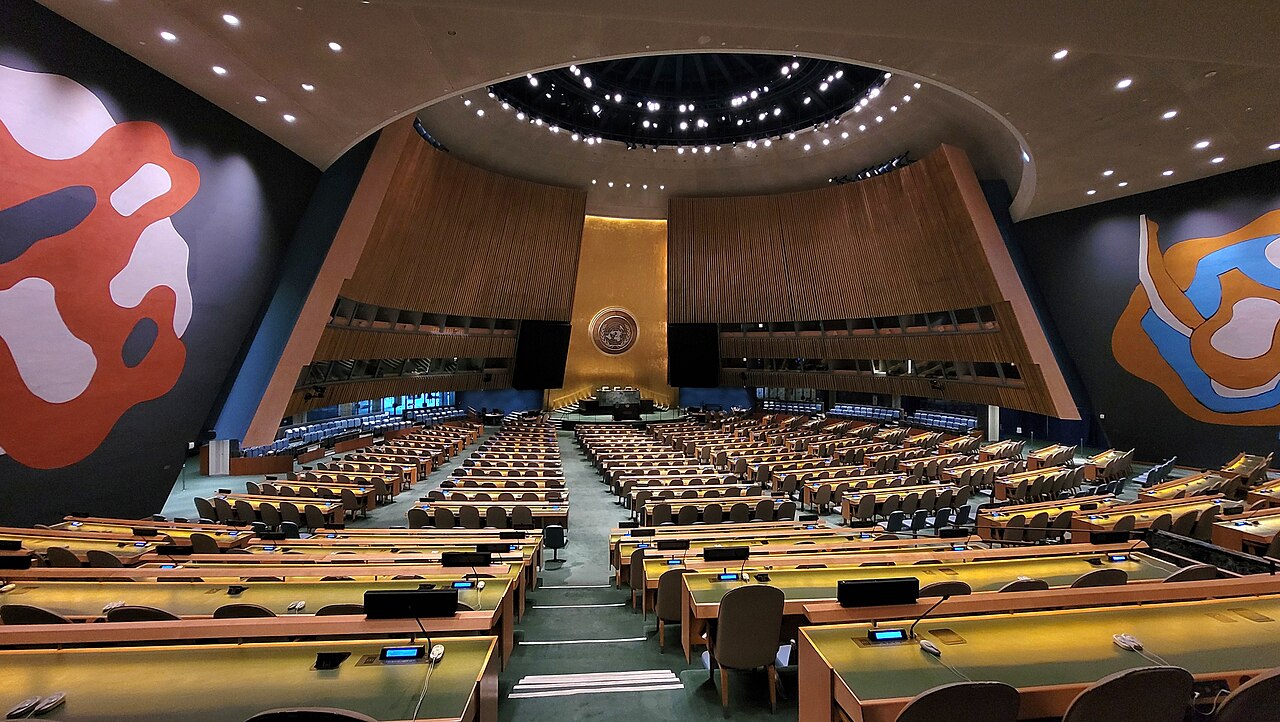
What to watch in Netanyahu’s UN General Assembly speech Thursday
The first scenario is direct escalation. Netanyahu could repeat Mamdani’s name, expand the allegation that the mayor supports Hamas and use the dispute to frame international criticism of Israel as hostility toward its soldiers and citizens. That would give both men highly shareable campaign material and could intensify protests outside the UN.
The second is strategic restraint. Netanyahu may devote only a brief passage to the mayor and focus the speech on Israel’s military objectives, regional threats and its case against genocide allegations. That would preserve the promised confrontation without allowing a city politician to dominate a head-of-government address.
The third is a security-driven pivot. If protests or threats escalate before the speech, public attention may shift from rhetoric to operations: access routes, crowd separation, arrests for actual offenses and protection of religious institutions. Mamdani’s performance would then be judged less by what he says about Netanyahu than by whether the city preserves lawful protest and prevents violence.
The legal question is less likely to change. Unless the federal government alters its position or a U.S. court recognizes a valid domestic basis for action, City Hall’s arrest rhetoric remains advocacy rather than an executable order. The most immediate authority Mamdani holds is not over the ICC warrant; it is over how New York handles a dangerous week.
Conclusion: the podium will reveal whether this is policy or theater
Netanyahu and Mamdani disagree over foundational questions: the legitimacy and conduct of Israel’s war, the reach of international law and the boundary between anti-Israel advocacy and antisemitism. But the timing also serves them. Netanyahu can rally a pressured electorate by confronting a prominent foreign critic. Mamdani can demonstrate that his pro-Palestinian politics command international attention.
Thursday’s speech will show whether Netanyahu uses the UN to make a substantive case about the war and the warrant, or turns it into campaign theater centered on New York’s mayor. The streets will show whether the city can protect political expression and public safety at the same time. And the law will remain the boundary rhetoric cannot cross: a mayor may demand an arrest, but he cannot manufacture the federal authority required to carry it out.
Sources and reporting notes
- Reuters, September 22: Netanyahu’s video statement, scheduled speech, war-death figures and the leaders’ competing claims
- The Wall Street Journal, September 23: NYPD protection, protest risk, Mamdani’s response and Netanyahu’s campaign use of the mayor
- New York Post, September 22: the video, Mamdani’s CNN remarks, his Tuesday response and prior protest call
- Washington Examiner: Mamdani’s response and New York hate-crime context
- The Times: Israel’s ambassador, planned demonstrations and the politics of Mamdani’s pro-Palestinian 2025 victory
Reporting cutoff: September 23, 2026 at 6:20 p.m. PDT. Netanyahu’s Thursday address had not yet occurred. Allegations before the ICC remain allegations; Israel rejects them. Gaza casualty figures are attributed to Gaza health officials and do not distinguish fighters from civilians. Poll averages are snapshots, not forecasts.