Israeli settlers kill Palestinian in Yasuf
Israeli settlers kill Palestinian in YasufYasuf settler attackMashour YassinWest Bank settler violence 2026Yasuf settler outpostPalestinian killed West BankIsraeli military investigationsettlement outposts international lawWest Bank violence October 2026
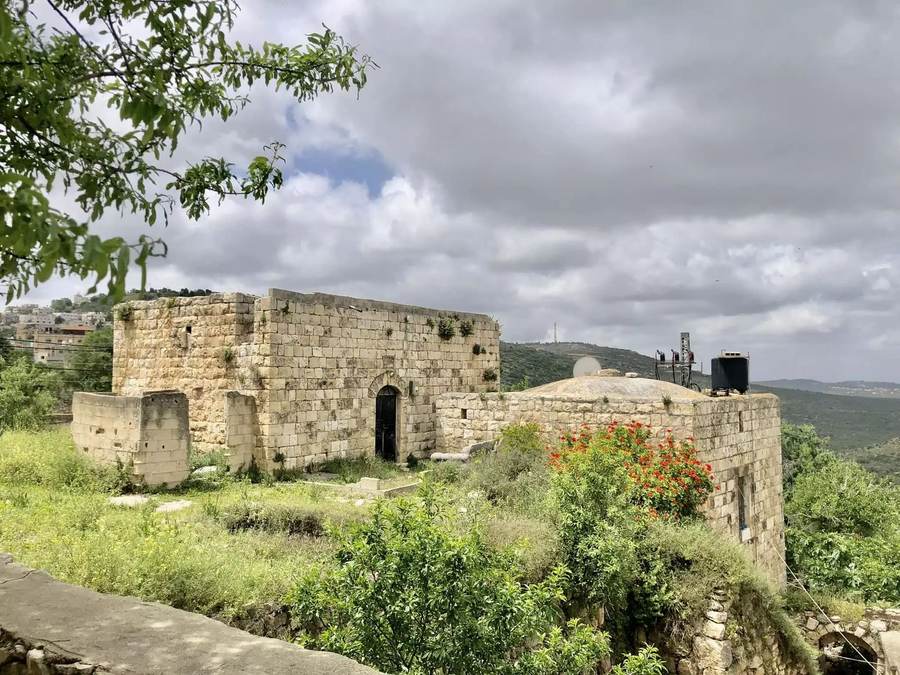
YASUF, West Bank — Israeli settlers kill Palestinian in Yasuf in an attack that also wounded another man, Palestinian officials said Thursday. Village council head Jumaa Abdel Fattah identified the person killed as Mashour Yassin, 51, and said he was shot during an attack on his home on the village's outskirts. The Israeli military said it was checking the incident.
Abdel Fattah told Reuters that the assailants came from the direction of a settler outpost established near Yasuf about two months earlier. He said settlers had attacked the village continuously since the outpost was built. Signal Post News could not independently verify that account, identify the shooters or establish who fired the fatal round. Reuters and the Australian Associated Press both reported the village official's account and the military's response.
What is known about the Yasuf settler attack
Mashour Yassin was killed at his home
The central facts reported by Palestinian officials are specific: two Palestinians were shot, one was killed and the other was wounded; Yassin was 51; and the shooting occurred during an attack on his home on Yasuf's edge. The condition and identity of the wounded person were not immediately reported in the accounts reviewed by Signal Post News.
The details that remain unconfirmed are equally important. No public account reviewed for this report named a suspect, described an arrest or supplied forensic evidence tying a particular weapon to the killing. The Israeli military's statement that it was checking the incident was not a final finding. Reporting the attack accurately therefore requires separating the reported outcome from unresolved questions of individual criminal responsibility.
The Israeli military investigation is the first test
The military did not dispute the report in its initial response, but said only that it was checking. That leaves several immediate questions: when forces were alerted, when they arrived, whether soldiers or police secured the scene, whether weapons were seized, and whether witnesses were interviewed. Answers will matter both for a criminal case and for confidence that violence involving Israeli civilians in the occupied territory is investigated with the same urgency as other fatal attacks.
An effective inquiry would need to preserve ballistic evidence, examine phone and security-camera records, map the assailants' route and identify any security personnel who saw the confrontation. The longer that evidence remains uncollected or undisclosed, the harder it becomes to distinguish a rapid preliminary check from a credible investigation.
Why this matters
The killing matters beyond one village because it combines three forces driving instability in the occupied West Bank: armed civilian violence, the rapid spread of outposts and a weak record of accountability. When a new outpost appears close to a Palestinian community, the change is not merely architectural. It can alter roads, grazing access, farm work and the frequency of armed encounters at the village edge.
The United Nations figure cited by Reuters gives the broader scale without assigning every death to the same actor: Israeli forces and settlers together have killed more than 80 Palestinians in the West Bank since the start of 2026. That total includes different circumstances and cannot by itself explain the Yasuf shooting. It does show that Thursday's death occurred in a year of sustained lethal violence rather than in isolation.
For Palestinians, the practical question is whether they can remain safely on their land. For Israeli authorities, the question is whether the state can restrain and prosecute unlawful violence by settlers while meeting its security obligations. For neighboring governments and Israel's allies, each unresolved case makes diplomatic claims that the situation is under control harder to defend.
The Yasuf settler outpost and the geography of pressure
Why a two-month-old outpost matters
Abdel Fattah's claim that the attackers came from a Yasuf settler outpost built roughly two months ago puts the timing at the center of the story. Outposts can begin with a small footprint but quickly create new security demands, access roads and confrontation points. Rights groups describe the expansion of settler presence near Palestinian villages as part of a campaign to take land and shrink the territory available for a future Palestinian state.
Israel's government and many settlers reject that framing. Israel says the territory's final status is disputed and should be resolved through negotiations; supporters of settlement say Jewish communities have historic and security claims there. Those positions do not decide the criminal facts of Thursday's shooting. They explain why a local attack can immediately become evidence in a much larger argument over sovereignty, statehood and control.
Settlement outposts and international law
Israel captured the West Bank in the 1967 war and has held it under military occupation since then. The United Nations and most governments regard Israeli settlements in occupied territory as illegal under international law. Israel disputes that interpretation and describes the territory's legal status as unresolved. Outposts can also occupy a distinct place under Israeli law, depending on whether they were formally authorized, but no available report established the legal status of the site near Yasuf.
Prime Minister Benjamin Netanyahu's government has overseen a major expansion of Jewish outposts, according to Reuters. That policy context shapes risk even when senior officials do not direct a specific act of violence: more outposts, more roads and more armed civilians at village boundaries create more opportunities for confrontations. Accountability for any shooting, however, still turns on evidence about the people involved.
West Bank settler violence in 2026
The Yasuf attack follows other reported assaults on Palestinian communities. In Jalud, more than 100 settlers were reported to have overwhelmed an Israeli military escort during a court-ordered return operation, torching homes and injuring officers. The International Committee of the Red Cross has separately warned that settler attacks, demolitions and movement restrictions are making civilian life increasingly difficult across the territory.
These events are not identical and should not be merged into a single narrative without evidence. But they point to a repeating operational problem: violence can develop quickly at the edges of villages, while the systems meant to deter it or establish responsibility respond later. A pattern does not prove who committed a particular act; it raises the stakes for transparent evidence in each case.
Who gains and who loses
Armed extremists gain when fear drives families away from farmland or makes ordinary movement feel unsafe. Political actors on both sides can also use an unresolved killing to harden public opinion: Palestinian factions can point to impunity, while Israeli hard-liners can fold local confrontations into a wider security argument. Neither outcome produces reliable facts or protection.
Palestinian residents bear the immediate human cost. Israeli civilians also lose when violence by settlers deepens instability, diverts security forces and increases the likelihood of retaliation. The Palestinian Authority loses credibility when it cannot protect communities, while the Israeli government risks deeper diplomatic isolation if investigations do not produce visible results.
What happens next
The first scenario is a documented criminal investigation, including identification of suspects and a public account of how Yassin was killed. That would not settle the political dispute over settlements, but it would test whether the legal system can address a specific fatal attack. A second scenario is a prolonged inquiry without charges or public evidence, reinforcing the belief among villagers that attacks can occur without consequence.
A third scenario is escalation around Yasuf. Further confrontations could draw in Israeli forces, settlers from nearby areas and Palestinian protesters, turning a localized shooting into a broader cycle of raids, funerals and reprisals. Preventing that outcome requires more than statements of concern: authorities would need to secure the village perimeter, preserve access to homes and farmland, and investigate threats before they become attacks.
The clearest near-term measures are observable. Watch for arrests, ballistic findings, a fuller military or police timeline, restrictions on the nearby outpost, and any change in the wounded man's condition. Without those facts, the essential verified picture remains narrow but grave: a 51-year-old man is dead, another Palestinian is wounded, village officials blame settlers, and Israel's military says it is checking what happened.
Sources and reporting notes
- Reuters, October 1, 2026 — the fatal shooting, village council account, Israeli military response, UN toll and settlement context.
- Australian Associated Press, October 2, 2026 — corroborating publication of the reported casualty details and official responses.
- PalestineRemembered.com: Yasuf photo record — source page for the file image of the village; the photograph does not depict the attack.
Reporting cutoff: October 1, 2026 at 6:09 p.m. PDT. Claims about the attackers' identity and route are attributed to Palestinian officials. The Israeli military said it was checking the incident. Signal Post News could not independently verify the shooting or identify a suspect.