Health · Wisconsin · Measles · Outbreak
The Wisconsin measles outbreak has claimed a second child in Grant County, the Wisconsin Department of Health Services confirmed on November 13, as the state count reached 649 cases across 20 counties — the highest Wisconsin total in more than 35 years.
Track it live: Outbreak tracker
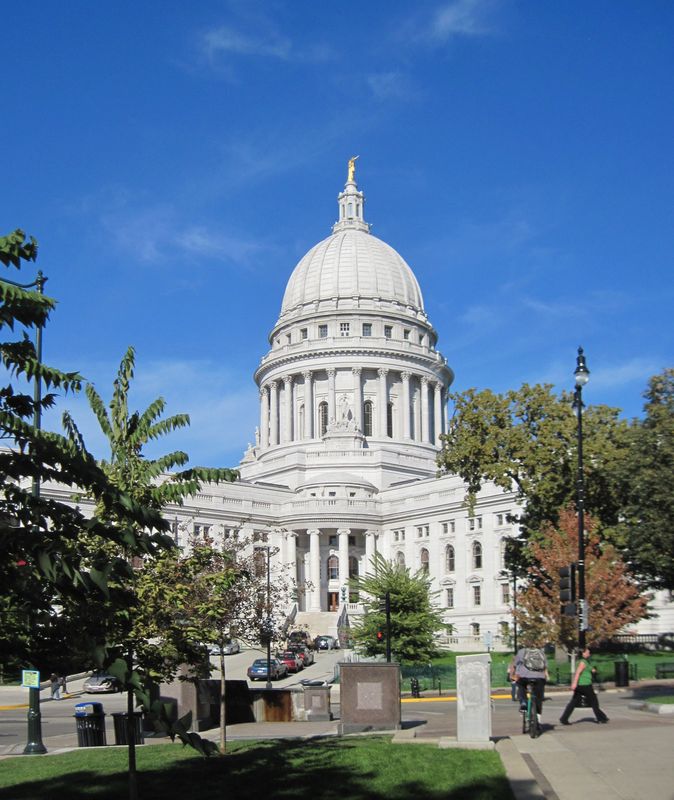
MADISON, Wisconsin, November 13, 2026 — The Wisconsin measles outbreak has claimed the life of a second child, the Wisconsin Department of Health Services (DHS) and the Grant County Health Department confirmed on Friday, in an announcement that moves this outbreak out of the category of alarming statistics and into the smaller, graver set of American measles outbreaks that kill more than once. The death is, in the department’s official terminology, a measles-associated death: DHS defines the term to mean that the child had measles, died within 30 days of rash onset, and measles was listed on the death certificate as a cause of death or as a significant contributor to it. It is the second pediatric measles-associated death of this outbreak, and both children died in Grant County, in the state’s rural southwest.
Officials released no details about the child — no name and no age — out of respect for the family’s privacy, and nothing in the reporting by Reuters, the Milwaukee Journal Sentinel or FOX6 supplies any either. That restraint is itself part of the story. Behind the case counts that have climbed week after week sits a family in a county of roughly 52,000 people that has now, in the space of nine days, recorded both of Wisconsin’s measles deaths this year — and, in public, its loss is a single carefully worded line in a state press release.
What officials did release is the scale of what they are fighting. DHS reports 649 confirmed measles cases across 20 Wisconsin counties since August 2026, a total the department describes as the state’s highest in more than 35 years. A second child is dead, the case count is the largest in a generation, and the outbreak shows no settled trajectory — in a state that, like the rest of the country, was certified free of endemic measles transmission at the start of this century.
Two counts, one outbreak: 649 cases, or 651
Readers comparing Friday’s coverage will meet two different case totals, and the difference is worth understanding rather than smoothing over, because it says something about how outbreak numbers are actually built.
The Wisconsin Department of Health Services reports 649 cases across 20 counties since August 2026. That is the state’s official ledger: confirmed cases that have been reported to, investigated by and entered into the state system, dated from August, when DHS dates the outbreak’s start.
The Milwaukee Journal Sentinel, working from state and local health data, reports 651 cases — and describes the outbreak as beginning in July, a month earlier than the state’s dating. The Sentinel also notes the point epidemiologists make about every large outbreak: the true size is likely larger than either figure, because people with mild illness may never seek care, never get tested and never enter any count at all.
Both figures appear in this article attributed to their sources, and they should not be merged into a single number. A two-case gap between a state total and a newspaper’s state-and-local tally is, in outbreak terms, small — the kind of difference that reporting lags, county-level confirmations and case reclassifications produce routinely. The one-month gap in start dates is the more interesting discrepancy: it suggests transmission was under way weeks before the outbreak was formally recognized, which is consistent with how measles behaves. The virus spreads through the air, remains infectious in a room’s airspace for up to two hours after an infected person leaves, and produces its recognizable rash only days after the fever and cough begin. By the time the first case is confirmed, second and third generations of infection are typically already incubating. Neither 649 nor 651 is the outbreak’s final size; both are snapshots of a count that was still moving on the day the second death was announced.

Grant County: two deaths in nine days
Grant County, a largely rural county along the Mississippi River in Wisconsin’s Driftless southwest, is now the outbreak’s center of gravity in the only way that ultimately matters: it is where the children died.
The first death was reported on November 5: a Grant County infant, whose death was Wisconsin’s first measles death since 1990. Grant County health officer Kessa Klaas said at the time that the infant was too young to have been vaccinated. That single fact carries the outbreak’s central vulnerability in miniature. The first dose of measles, mumps and rubella (MMR) vaccine is routinely given at 12 to 15 months of age, which means the youngest infants in any community can be protected only indirectly — by the immunity of everyone around them. When measles circulates widely enough, it eventually finds the people who cannot yet be vaccinated, and in Grant County it has now found two children in nine days.
Friday’s confirmation makes the pattern explicit. The Wisconsin toll stands at exactly two deaths. Both were children. Both were in Grant County. Beyond that, officials have said nothing identifying about the second child, and this article will not speculate: no name or age for either child beyond what officials released about the first — an infant, reported on November 5 — exists in the public reporting, and inventing detail around a family’s loss would add nothing but harm.
The 35-year framing deserves a pause. Wisconsin’s first measles death since 1990 arrived on November 5; its second arrived eight days later. For a disease the United States declared eliminated in 2000, a state going 36 years without a measles death and then recording two in just over a week is not a statistical wobble. It is what the return of sustained measles transmission looks like at ground level: a county health department, built for a world in which measles was a historical footnote, now confirming pediatric deaths.
The state response
The confirmation came jointly from DHS and the Grant County Health Department, the state-local pairing that has fronted the outbreak response throughout. State Health Officer Paula Tran is the senior DHS voice in the department’s releases, and the department’s messaging has held a consistent line across the autumn: measles is circulating in Wisconsin at levels not seen in decades, the case count will be updated as counties report, and vaccination is the only intervention that reliably stops transmission.
The working machinery behind those releases is unglamorous and essential: case investigation, in which local health staff identify each confirmed patient’s contacts and the places they visited while infectious; exposure notification for schools, clinics and public venues; and isolation and quarantine guidance for the exposed, particularly the unvaccinated. In a 20-county outbreak, that work multiplies fast. Every confirmed case can generate dozens of contacts, and every contact who lacks documented immunity becomes a person to reach, advise and follow through a 21-day incubation window. Rural departments like Grant County’s run that operation with small staffs, which is one reason state support and state-level communication — Tran’s role in the releases — matter in an outbreak of this size.
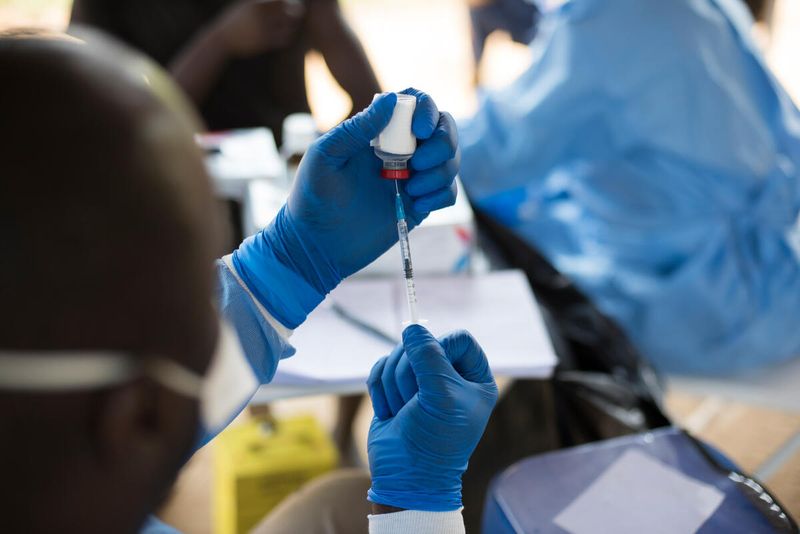
Officials also made a deliberate choice on Friday that is worth noting: they confirmed a death while declining to describe the child. In outbreak communication, that is a balance agencies strike constantly — the public has a legitimate need to know that measles has killed again, because that fact changes what prudent parents, schools and clinics should do, while the family has a right not to have its worst week turned into copy. DHS and Grant County held both ends of that balance in a short release, and the state’s major outlets, including the Journal Sentinel and FOX6 in their Friday coverage, respected the same boundary.
Why this matters
Start with the simplest significance: 649 confirmed cases by the state’s count — 651 by the Journal Sentinel’s — is the largest Wisconsin measles caseload in more than 35 years, spread across 20 counties. A generation of Wisconsin clinicians trained, practiced and in many cases spent entire careers without seeing a case. Measles is not a mild childhood rite of passage in this data; it is a disease that hospitalizes a meaningful share of the people it infects and, as Grant County has now demonstrated twice, kills children who encounter it without immunity.
Second, the deaths expose the arithmetic of herd immunity from its weakest side. Vaccination programs do not protect only the vaccinated. They build a wall of immunity around the people who cannot be vaccinated yet — above all, infants in their first year of life, like the Grant County infant whose death was reported on November 5. That wall holds only when coverage stays high and even. When it thins in pockets — a school, a community, a county — the virus does not need to infect everyone to do its worst damage. It needs only to reach the unprotected, and the unprotected are disproportionately the very young. Two child deaths in one county is what a thinned wall looks like when measles tests it.
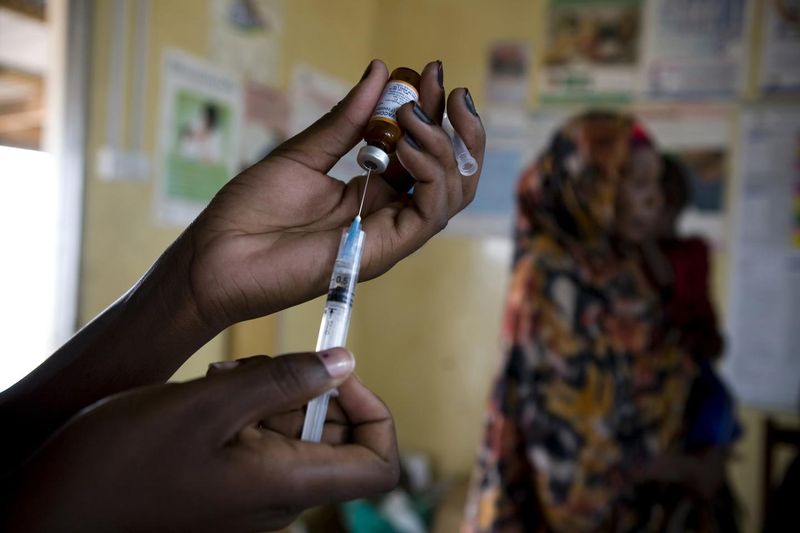
Third, Wisconsin is not an outlier; it is the latest front in a national year. United States measles cases have passed 5,000 in 2026 — Signal Post News reported the count at 5,182 confirmed cases, the highest national total in 35 years, with outbreaks running concurrently across the country. Pennsylvania’s outbreak alone topped 1,004 cases in October, weeks after the state recorded its fifth measles-associated death of the year. Wisconsin’s 649 and Pennsylvania’s thousand-plus are not separate stories that happen to share a virus; they are one national story about what happens when measles transmission re-establishes itself in community after community: each new outbreak burns until it runs out of susceptible people or until vaccination closes the gaps it is exploiting.
Fourth, the timing collides with a formal reckoning. A decision on whether the United States keeps its measles elimination status is expected around the end of November. Elimination status is not a trophy; it is a verified finding that endemic transmission has been interrupted, and losing it would formally record that measles has re-established continuous circulation in the United States. The decision is pending, and no ruling has been announced either way. But the evidentiary file the reviewers will consider now includes a 20-county Wisconsin outbreak at a 35-year high, a second dead child in Grant County, and a national count above 5,000. Whatever the reviewers decide, Friday’s news is the human content of the category they are judging.
What happens next
The outbreak’s trajectory is the first thing to watch. Measles outbreaks do not end on announcement days; with cases distributed across 20 counties and an unknown number of mild infections never tested, transmission chains already seeded will surface as new confirmed cases for weeks. The numbers to follow are the state’s updates themselves — whether DHS’s count, 649 on Friday, climbs steeply, plateaus, or begins the long decline that marks an outbreak losing susceptible hosts — and whether cases appear in new counties, which would signal geographic spread rather than burnout in known clusters. Readers can follow the running totals on the outbreak tracker.
The second front is vaccination. The practical response to an outbreak like this runs through clinics: county health departments and providers urging every unvaccinated or under-vaccinated resident to get MMR, catch-up appointments for children who missed scheduled doses, and particular attention to the households and schools around known exposures. For parents, the operative facts have not changed since August: two doses of MMR are about 97 percent effective against measles, the first dose is due at 12 to 15 months, and anyone unsure of their family’s vaccination status can check with their provider or local health department. In an outbreak, officials can also recommend an early dose for infants in affected areas — a decision parents in and around Grant County should raise directly with their pediatrician rather than wait out.
The third date on the calendar is the elimination decision expected around the end of November. It will not change what happens in a Grant County clinic the next morning, but it will define how this year is recorded: either the United States retains a status its own case counts are straining to breaking point, or it formally loses a standing it held for a quarter-century, with regaining it requiring at least a year of interrupted transmission followed by re-verification. Wisconsin’s outbreak — its 649 state-counted cases, its 20 counties, and now its two dead children — will be part of the record either way.
And the last thing to watch is the oldest question in this outbreak: whether the two counting systems on display Friday — the state’s 649 since August and the Journal Sentinel’s 651 since July — converge as the outbreak is reconstructed, and what the final accounting shows about how long measles circulated before anyone counted it. Outbreaks are always understood late. The task for Wisconsin’s health departments now is to make sure the understanding, when it comes, describes an outbreak that ended — not one still looking for the next unprotected child.
Sources
Wisconsin Department of Health Services and Grant County Health Department, November 13, 2026: confirmation of the second pediatric measles-associated death, with the department’s definition of a measles-associated death (the child had measles, died within 30 days of rash onset, and measles was listed on the death certificate as a cause or significant contributor); no details of the child released out of respect for the family’s privacy; 649 confirmed cases across 20 counties since August 2026, the highest Wisconsin count in more than 35 years. Grant County Health Department, November 5, 2026: the first death, a Grant County infant — Wisconsin’s first measles death since 1990 — with health officer Kessa Klaas noting the infant was too young to have been vaccinated; State Health Officer Paula Tran is the senior DHS voice in the department’s releases. Reuters, November 13, 2026: national confirmation coverage. Milwaukee Journal Sentinel, November 2026: 651 cases per state and local data, the outbreak described as beginning in July, and the true size likely larger because mild cases are never tested. FOX6, November 13, 2026: Wisconsin coverage of the second death. National context: US measles cases passed 5,000 in 2026; a decision on whether the United States keeps its measles elimination status is expected around the end of November 2026 and remains pending. Photos: Wikimedia Commons, World Health Organization and UNICEF, as credited in the captions; file photos are labeled as such.