Pennsylvania measles outbreak
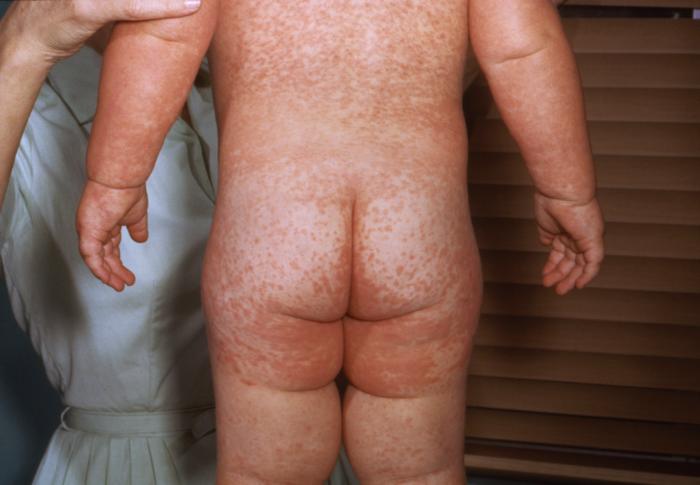
The Pennsylvania measles outbreak has crossed a grim milestone. The state Department of Health reported 1,004 confirmed cases as of Monday, October 5, 2026 — with 106 new infections in just the past seven days — making this the worst American measles surge in more than three decades. Five people have died, all of them unvaccinated, and Pennsylvania stands alone: it leads the nation in cases and is the only state reporting measles-associated deaths this year.
The national numbers are stark. The CDC counts 3,887 measles cases across the United States in 2026, the most since the 1989–1991 resurgence that infected 55,000 Americans and killed 123. A disease declared eliminated in the United States in 2000 is now producing death counts that epidemiologists measure against outbreaks from before many of today's parents were born.
The numbers in context
One thousand and four cases is hard to interpret without the denominator of history. As recently as 2024, the entire United States recorded 285 measles cases for the whole year. Pennsylvania alone has now recorded nearly four times that total, in a single state, in a single outbreak that began in the Lebanon County area in late April 2026. The weekly pace — 106 cases in seven days — shows transmission is not slowing as the calendar moves toward respiratory-virus season, when measles traditionally finds its easiest spread.
The human cost is concentrated but real. One hundred ninety-eight people have been hospitalized — roughly one in five confirmed cases. Thirty-two percent of infections are in people under 18, and more than 99 percent of all cases are in people who were not fully vaccinated. That last figure is the single most important number in the outbreak: measles is almost entirely a disease of the unvaccinated in 2026, and the MMR vaccine is 97 percent effective after two doses.
Why Lancaster County is the epicenter
Geography explains much of the spread. Lancaster County, with 391 confirmed cases, is by far the hardest-hit county in the state, followed by Mifflin with 118 and Chester with 84. The outbreak seeded in the Lebanon County area in late April and radiated outward through central and southeastern Pennsylvania over the summer and early fall.
What the county map shows is a chain of transmission sustained by pockets of under-vaccination — not random bad luck. Measles is among the most contagious viruses known: one infected person can spread it to 12 to 18 unvaccinated contacts, and the virus lingers in the air for up to two hours after the infected person leaves a room. In communities where vaccination rates dip below the roughly 95 percent needed for herd immunity, a single introduction can smolder for months. That is what Pennsylvania is experiencing: not one outbreak that flared and burned out, but sustained chains of transmission across multiple counties for more than five months.
Even Pittsburgh, so far, has been spared the worst of it. No confirmed cases have been reported among Allegheny County residents as of October 5, though health officials have verified cases in the surrounding region — a reminder that in a state with 1,004 cases, no county's clean record is guaranteed.
The CDC death-count gap — and what it means
Here is where the story gets complicated. Pennsylvania reports five measles-associated deaths this year — the fifth, announced September 30, was an unvaccinated Lancaster County resident. But the CDC has confirmed only two measles-related deaths nationally in 2026, without naming the states involved.
Neither number is "wrong" — they are measuring different things. States report deaths as measles-associated based on their own case investigations; the CDC applies a narrower national definition, and the agency says it is currently working with state epidemiologists to standardize what counts as a measles-related death. That definitional gap matters beyond this outbreak: it determines how the federal government characterizes severity, how the public understands risk, and how history will record 2026.
What is not in dispute: all five of Pennsylvania's reported deaths were in unvaccinated people. The pattern is unambiguous, whatever the final national tally.
Who is at risk, and what the vaccine does
Measles is not a mild childhood illness that modern medicine has defanged. Before the vaccine, it killed an estimated 2.6 million people a year worldwide. Complications include pneumonia — the most common cause of measles deaths — and encephalitis, which can cause permanent brain damage. Children under five, adults over 20, pregnant people, and the immunocompromised face the highest risk.
Against that, the MMR vaccine is one of the great success stories in medicine: two doses are 97 percent effective at preventing measles, and protection is typically lifelong. The vaccine does not just protect the person who gets it; at high coverage it shields infants too young to be vaccinated and people whose immune systems cannot mount a response. The 99-percent-unvaccinated figure among Pennsylvania's cases is the vaccine working exactly as advertised — in reverse. Where it is absent, measles finds its victims; where it is present, the virus cannot gain a foothold.
Parents watching for symptoms should know the sequence: high fever, cough, runny nose, and red eyes typically appear first, followed by the characteristic red, blotchy rash that spreads from the face downward. Anyone with symptoms should call a clinician before visiting a clinic or emergency room, so the facility can prevent exposing others — the virus's two-hour airborne persistence makes waiting rooms a transmission risk.
What happens next
Three forces will shape the rest of this outbreak. The first is the calendar: measles spreads most efficiently in the late winter and spring, but transmission in crowded indoor settings rises through the respiratory season, and schools are a natural amplifier. The second is school exclusion policy: Pennsylvania, like most states, can exclude unvaccinated students from school during outbreaks, and prolonged exclusions become more likely as case counts climb. The third is spillover: neighboring states with their own under-vaccinated pockets are watching Pennsylvania's curve the way forecasters watch a storm track.
The plausible scenarios range from a slow burn into 2027 — the most likely, given the five-month transmission chains — to a sharper winter peak if the virus reaches a large, under-vaccinated school population. The scenario that epidemiologists fear most, a multi-state expansion, has not materialized yet; Pennsylvania's isolation as the only state with measles deaths suggests the outbreak is, for now, contained by the vigilance of surrounding states' health departments.
The bottom line
Pennsylvania's 1,004 cases are not a mystery. They are the predictable arithmetic of a hyper-contagious virus meeting communities where vaccination has slipped. The outbreak will end the way every measles outbreak ends: when enough people are immune — through vaccination or infection — that the virus runs out of hosts. The only open question is how many more hospitalizations and deaths accumulate before that happens, and whether the country treats 2026 as a warning or a preview.
Sources: Pennsylvania Department of Health; CDC measles surveillance; Reuters, Oct. 5, 2026; USA Today, Oct. 5, 2026.