World / Americas — Thousands of Venezuelans marched on Thursday, October 22, 2026, in Caracas, Valencia, Maracay, San Cristóbal and Maracaibo in the first nationwide opposition protest in nearly two years, demanding that the interim government of acting President Delcy Rodríguez publish a date for free elections. The mobilisation, organised by opposition leader María Corina Machado’s Vente Venezuela movement, also called for the release of more than 320 people the legal rights group Foro Penal counts as political prisoners, and for guarantees for Machado’s return to the country. Nine months after U.S. forces captured President Nicolás Maduro, neither Rodríguez nor U.S. President Donald Trump has set a date for a legislative or a presidential vote.
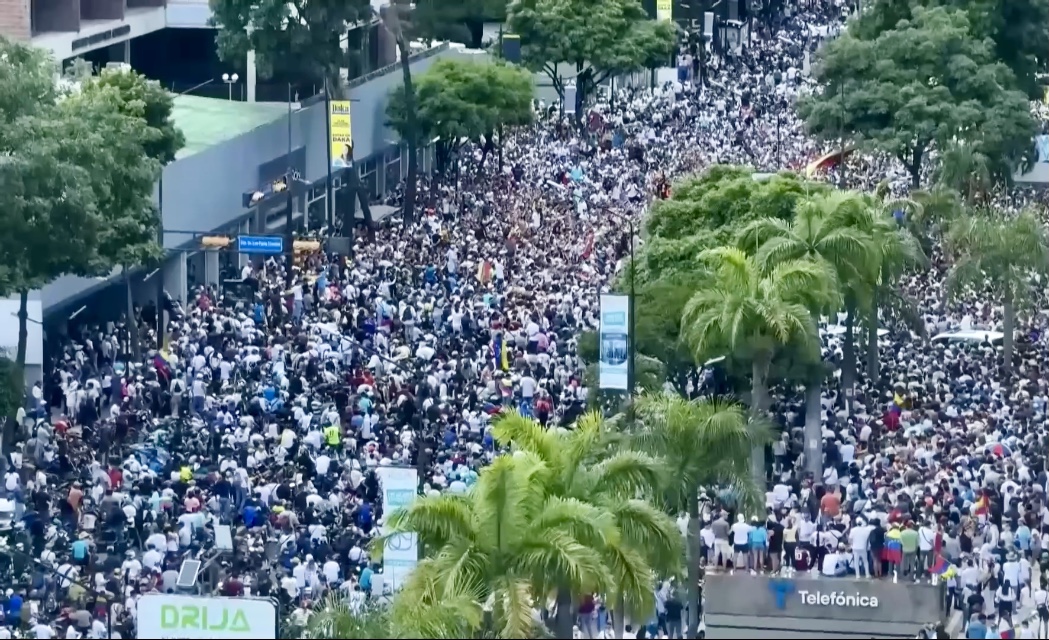
The Venezuela protest demanding elections began, deliberately, on an anniversary. October 22 marked three years since the opposition primaries of October 22, 2023, in which María Corina Machado consolidated her leadership of the opposition — and the movement she leads from abroad chose the date to test whether it could still fill streets across the whole country at once. By the measure its organisers set themselves, it could: Reuters reported crowds in the capital and in at least four other cities, waving Venezuelan flags and chanting for an electoral timetable under the slogan “the date of the elections is the date of liberation.”
In northern Maracay, 18-year-old cosmetology student Leosmary Hernandez told Reuters she had gathered with hundreds of others despite the hardships of recent years. “Seeing this makes me happy because I know change is possible,” she said. “I’ve been through so many hardships, so many problems because of the dollar, and difficulties studying. I have high hopes for my country and for our next leader, president, Maria Corina.” She added: “I went out to protest before, when things were much tougher, and I’m even less afraid today because I want my voice to be heard.” In Valencia, the Associated Press quoted a 57-year-old trader, María Débora Marín, putting the demand in its bluntest form: “We want presidential elections now, a timetable now. We are not going to wait until 2028.” And in Caracas, an 18-year-old demonstrator quoted by the AP summarised the mood toward Washington: “The United States removed a big problem, which was Maduro, but the rest remains.”
What the protesters are asking for
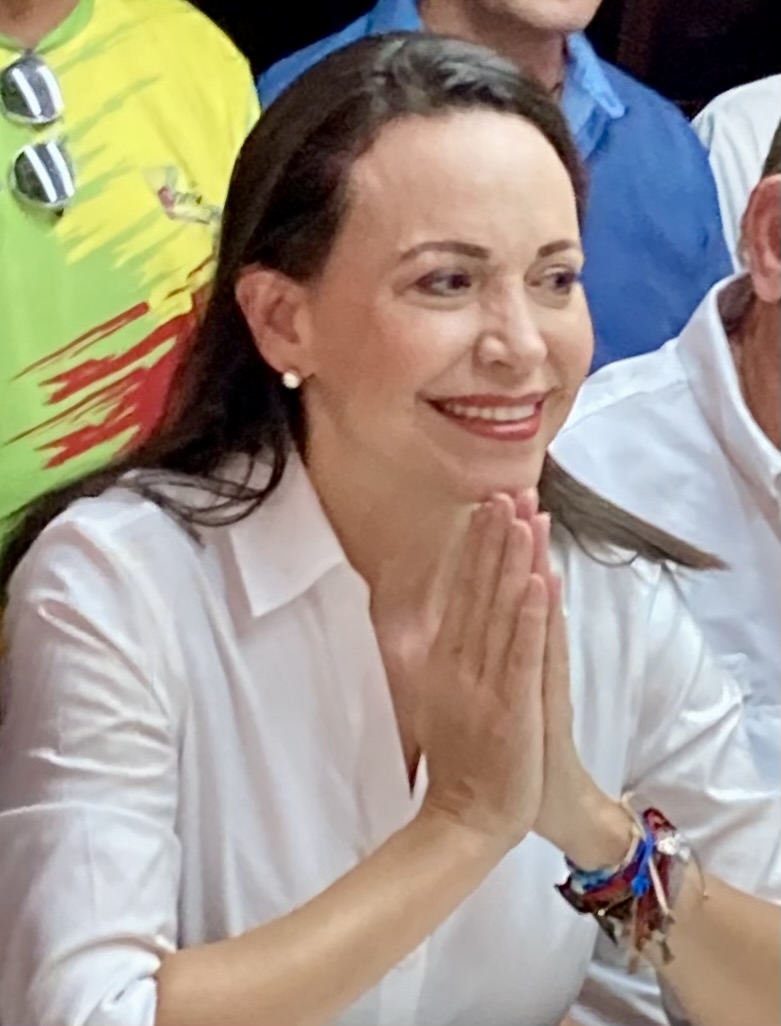
The demands repeated in every city were threefold: a published electoral calendar, with a presidential vote held by July 2027 as Machado has insisted; the release of the people Foro Penal counts as political prisoners — more than 320, the group says, despite releases carried out under an amnesty law backed by the legislature earlier this year; and safe conditions for Machado’s return. Machado, who won the Nobel Peace Prize, has been outside Venezuela for nearly a year: she lived in hiding after the contested 2024 election, in which her proxy candidate Edmundo González Urrutia was declared the winner by opposition-published vote tallies while the government, which never released full counts, proclaimed Maduro the victor with the backing of the country’s legal and electoral institutions. Her last public appearance inside Venezuela was at protests marking Maduro’s third inauguration in January 2025, where she was briefly detained; she left the country in December 2025, according to AP reporting, and has not been able to return.
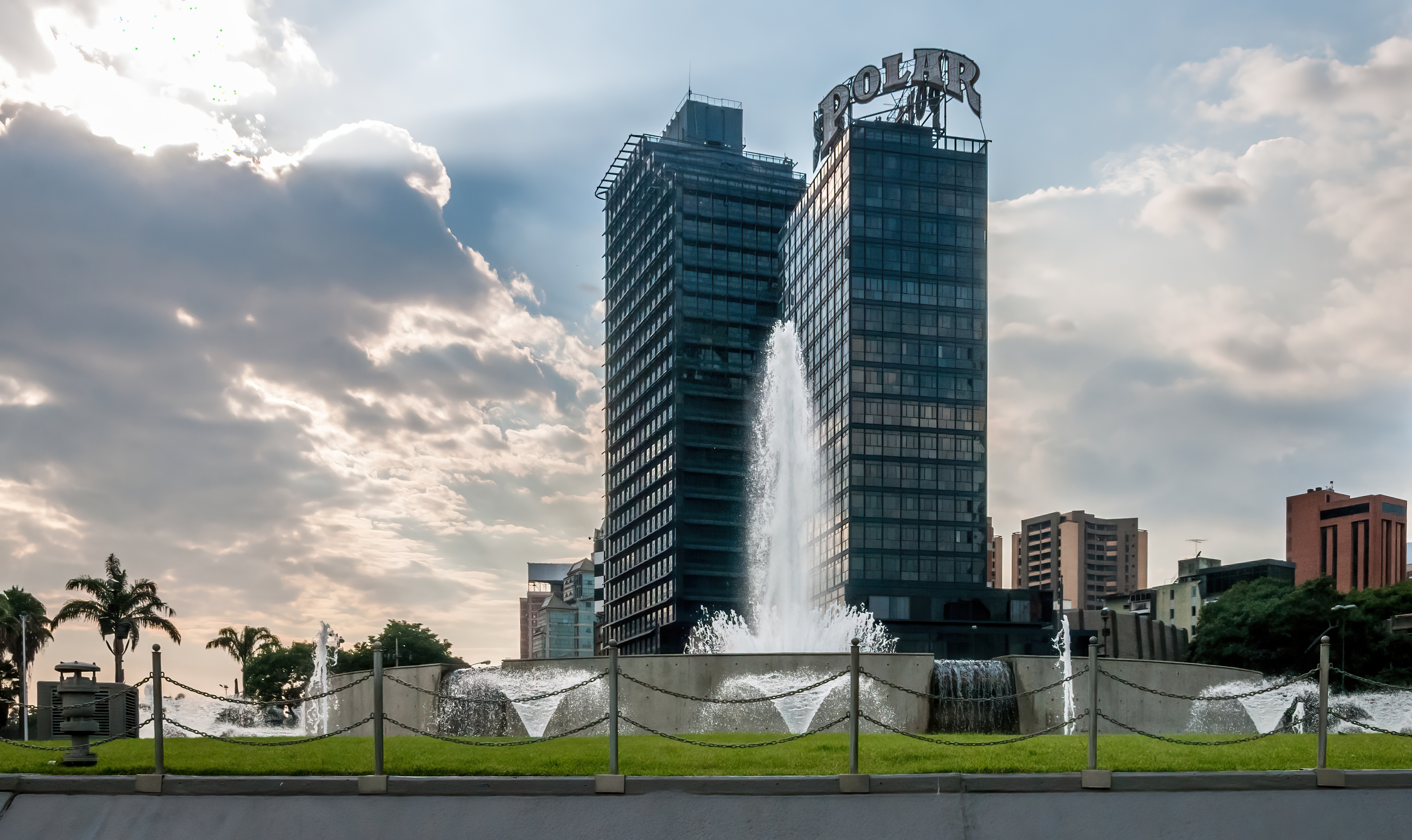
The interim government’s position, stated repeatedly by Rodríguez and echoed by Trump, is that elections will happen — but on no announced schedule. The government has repeatedly denied that it holds political prisoners and describes the amnesty as generous. On Thursday it also contested the streets themselves: the ruling Socialist Party called its own supporters to march from Caracas’s Plaza Venezuela — the same square where the opposition had planned to gather two hours later — toward a point near the presidential palace, in an event framed as a commemoration of breast cancer awareness month. Interior Minister Diosdado Cabello, who is closely tied to the security services, was shown on state television attending that march, while opposition supporters moved their gathering to a nearby location.
The detail that said the most: who was not there
For veterans of Venezuela’s protest cycles, the most striking feature of Thursday was an absence. Venezuela’s socialist movement, in power since 1999 under the late Hugo Chávez and then Maduro, has in the past deployed security forces against protesters decrying repression, inflation and failing public services — including after the 2024 election. This time, Reuters reported, government forces had a minimal presence at protest sites, the AP described the security presence as notably scarce, and in many smaller cities demonstrators simply dispersed before dark. Machado had called on supporters beforehand to take part with heads held high, in family groups, with flags — a framing aimed at a peaceful, civic demonstration rather than a confrontation.
That restraint cuts both ways, and analysts of Venezuelan politics will read it in opposite directions. The interim government can argue it proves the transition is real: a state that lets its opponents march in five cities, on the anniversary of their leader’s primary victory, is not the state that cleared streets by force in 2024. The opposition can answer that a single tolerated afternoon is not a concession but a calculation — that Rodríguez, who governs with open U.S. backing and U.S. investors in mind, has every incentive to avoid televised repression while the electoral question remains unanswered. Vente Venezuela said, in a message on X reported by RFI, that police had detained seven participants in the mobilisation and that it had no word of them; that claim is the party’s, it has not been independently confirmed, and it sits alongside the wire reports of an otherwise low-profile security operation. Both things can be true at once, and the gap between them is exactly where the argument over Venezuela’s transition will be fought.
Why this matters
A protest does not set an election date. What Thursday changed is the cost of continued delay. Since January, the interim arrangement has rested on a quiet bargain: Washington works with Rodríguez, praises her management and her openness to U.S. investors, and treats elections as a later problem — Trump said last month it was too soon to consider them — while the opposition that actually won the streets in 2023 and, on its tallies, the vote in 2024, waits outside the room. The negotiations that do exist, U.S.-backed talks between a faction of the opposition and the interim government aimed at remaking the supreme court and the electoral council to make an eventual vote fair, held their latest session this month; they do not include Machado’s movement, although she has said she will not stand in the way of their progress, and even participants concede the institutional changes could take significant time.
Thursday was the excluded movement demonstrating that exclusion has a price. A leader who can put crowds into five cities simultaneously, on a weekday, after nearly a year abroad and nearly two years without a national mobilisation, retains the one asset no negotiating table can confer: visible, countable support. That matters to three audiences at once. To Rodríguez, it is a reminder that the calm she sells to Washington and to investors is rented, not owned. To the Trump administration, which has asked Machado to delay her return home — her wish to come back, especially after June’s devastating twin earthquakes, has caused friction in Washington, Reuters has reported — it is evidence that deferring her also defers the question of who legitimately speaks for Venezuela’s voters. And to the opposition faction inside the talks, it is leverage and warning in one: reforms negotiated without the country’s most popular politician will have to survive contact with her movement’s street.
How Venezuela got here
The line from 2024 to Thursday runs through a sequence this site has covered as it happened. The July 2024 election ended in rival claims and mass protest; the crackdown that followed pushed Machado into hiding and, eventually, out of the country. In January 2026, U.S. forces captured Maduro, who with his wife Cilia Flores now faces drug and torture charges in the United States, to which both have pleaded not guilty — a case we covered in the charges facing Maduro and Flores. Washington then chose continuity over rupture, working with Rodríguez, Maduro’s former deputy, as acting president — the relationship visible in Trump’s meeting with Rodríguez at the U.N. General Assembly — while U.S. military pressure continued offshore, as in the U.S. bomber flights near Venezuela. The result is the paradox Thursday’s marchers were protesting: the foreign power that removed Maduro is now the interim government’s closest partner, and the democratic mandate Venezuelans believe they delivered in 2024 remains unexercised, with no date on any calendar.
What happens next
Three clocks are now running. The first is Machado’s: she says elections must be held by July 2027, and Thursday’s turnout will be used to argue that the deadline is a popular demand, not a personal one. The second is the negotiators’: the talks on the court and the electoral council are the only institutional path currently moving, and their pace will be judged against the street’s impatience — Marín’s “not until 2028” line in Valencia was aimed at exactly the fear that process becomes postponement. The third is Washington’s: Trump has praised Rodríguez and called elections premature, but a transition sold to Americans as a democratic rescue becomes harder to sustain the longer it produces marches instead of ballots. Watch for whether Rodríguez answers Thursday with a date, a gesture such as further prisoner releases, or silence; whether Vente Venezuela can turn one day of marches into a sustained campaign; and whether Machado’s return — deferred at Washington’s request so far — becomes the next confrontation. The demand, at least, is no longer abstract. It has a date attached, a slogan, and, as of Thursday, crowds in five cities willing to repeat it in person.
Sources
- Reuters, October 22, 2026 — “Venezuelans call for elections in first national protest in nearly two years” (thousands march in Caracas, Valencia, Maracay, San Cristóbal and Maracaibo; Vente Venezuela organised; Machado’s July 2027 demand; Leosmary Hernandez quotes; Socialist Party counter-march from Plaza Venezuela and Cabello attendance; U.S.-backed talks on the court and electoral council excluding Machado’s movement; Foro Penal’s figure of more than 320 political prisoners and the government’s denial; Trump’s praise of Rodríguez and “too soon” position on elections; Machado’s delayed return and Washington friction): https://wncy.com/2026/10/22/venezuelans-call-for-elections-in-first-national-protest-in-nearly-two-years/
- Reuters via Al Jazeera, October 23, 2026 — “Venezuelans demand elections in first national protest in nearly two years” (minimal government security presence at protest sites; demonstrators in smaller cities dispersed before dark; González Urrutia named as Machado’s 2024 proxy): https://occasionaldigest.com/venezuelans-demand-elections-in-first-national-protest-in-nearly-two-years-us-venezuela-tensions-news/
- Associated Press, October 22–23, 2026, as carried in AP copy by Diario Plural and Datos Interesantes (notably scarce security presence; María Débora Marín quote in Valencia; Caracas demonstrator on Maduro’s removal; Plataforma Unitaria Democrática backing; Machado outside Venezuela since December 2025; AP photo by Ariana Cubillos): https://diarioplural.com.ar/la-oposicion-vuelve-a-las-calles-en-venezuela-despues-de-casi-dos-anos-y-aumenta-la-presion-sobre-delcy-rodriguez/
- RFI, October 23, 2026 — “Venezuela: miles de manifestantes exigen elecciones y el retorno de María Corina Machado” (Vente Venezuela’s claim, reported as the party’s, that police detained seven participants; opposition and interim government conclude a new round of transition talks in Caracas): https://www.rfi.fr/es/am%C3%A9ricas/20261023-venezuela-miles-de-manifestantes-exigen-elecciones-y-el-retorno-de-mar%C3%ADa-corina-machado
- Vente Venezuela (@VenteVenezuela) on X, October 22, 2026 — the movement’s own call and slogans for the national day of mobilisation (election timetable, political prisoners, Machado’s safe return), via El News: https://theelnews.org/2026/10/22/en-las-calles-se-exigio-que-se-fije-la-fecha-de-las-elecciones-presidenciales-venezuela-respondio-al-llamado-de-maria-corina-machado/