Venezuela / The bombers came back — and the carrier is already there
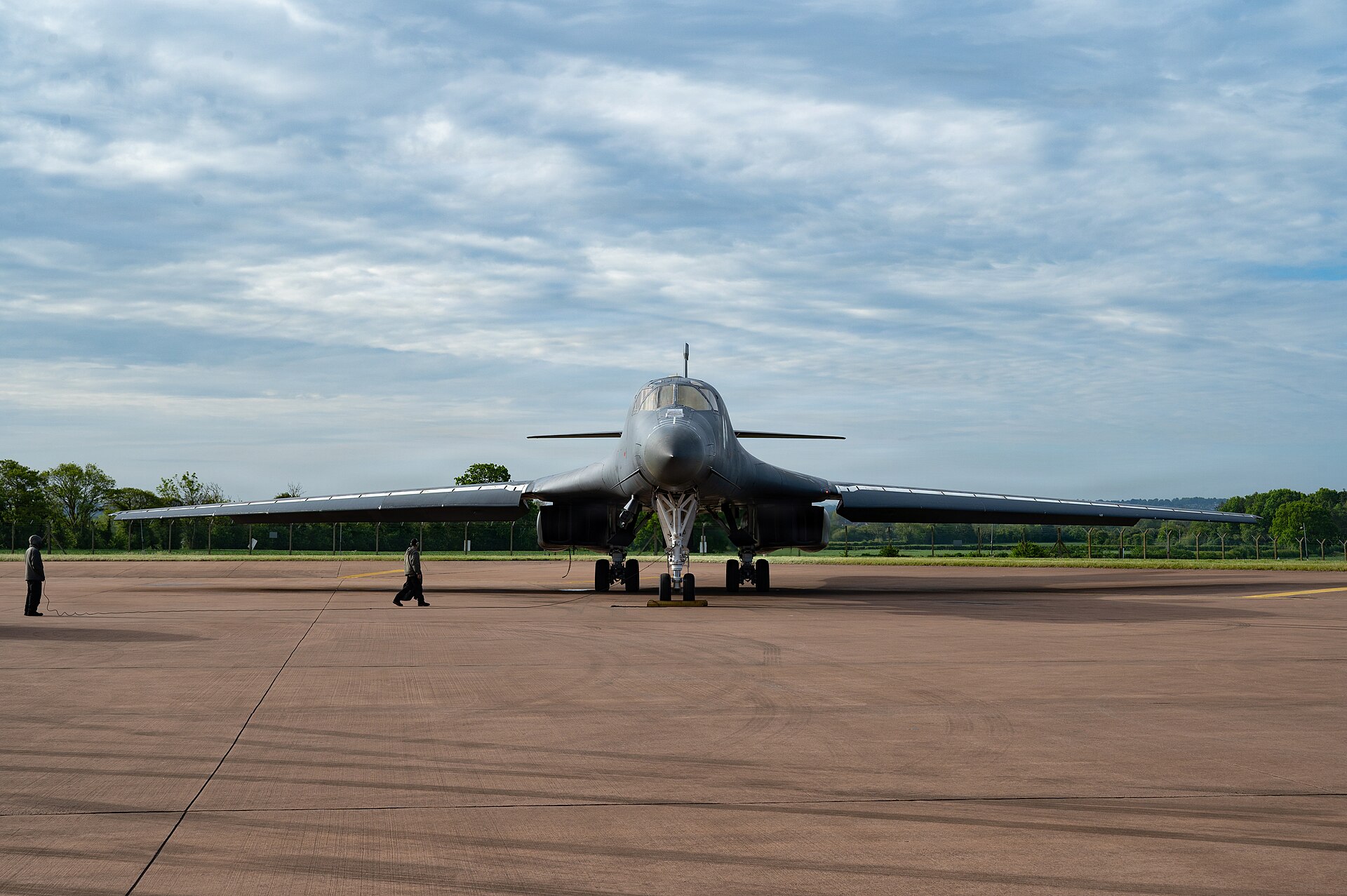
Start with the detail that gives the game away: the transponders were on. A bomber that wants to be invisible does not announce itself. A bomber that wants to be seen — by radar operators in Caracas and by every newsroom in the hemisphere — flies exactly the profile the B-1Bs flew on Friday, close enough to Venezuela's coast to be unmistakable. This was the second such flight in a week, and repetition is the point. One flight is a demonstration. Two in seven days is a rhythm, and a rhythm reads as the opening pattern of a campaign rather than a gesture inside one.
The flights land on a relationship that has been deteriorating in public, step by documented step. The Trump administration has struck boats it describes as drug-smuggling vessels, designated a Venezuelan cartel as a foreign terrorist organization in an announcement by Secretary of State Marco Rubio, and — as background that Caracas cites constantly — authorized CIA covert operations inside Venezuela. President Donald Trump has said he may talk to Maduro and has declined to rule out ground troops. Maduro, for his part, says Venezuela will talk face to face. Between those two sentences sits everything else in this story: a carrier group, roughly 15,000 troops, and bombers that keep coming back.
Track it live: Live global conflicts tracker
A second flight in a week — transponders on, message intended
The B-1B is an odd instrument for a drug war and a perfect one for a message. The Lancer is a long-range, supersonic heavy bomber built to deliver large payloads over intercontinental distances; nothing in a counter-narcotics patrol requires its speed, its range or its bomb bays. What it offers instead is visibility and capacity — the ability to be tracked in real time by anyone watching, and the understood knowledge of what it could carry if a demonstration ever stopped being one. Defence analysts make the comparison instinctively: when Washington wanted to signal Tehran or Pyongyang in past crises, it reached for the same class of aircraft, flown the same conspicuous way, for the same reason. Presence you can watch on a public map is deterrence you do not have to take on trust.
There is also a tempo argument. A single flight can be explained as training, and the Pentagon routinely describes such missions that way. Two flights in a week, inside a named operation, alongside a carrier deployment and a public argument about covert action, cannot be explained as routine without stretching the word. Venezuelan officials call the flights provocation; American officials call them unremarkable. Both descriptions are strategic. Caracas gains by dramatizing the threat, which rallies domestic opinion and international sympathy. Washington gains by normalizing it, which lowers the shock value of the next flight — and of whatever might follow it.
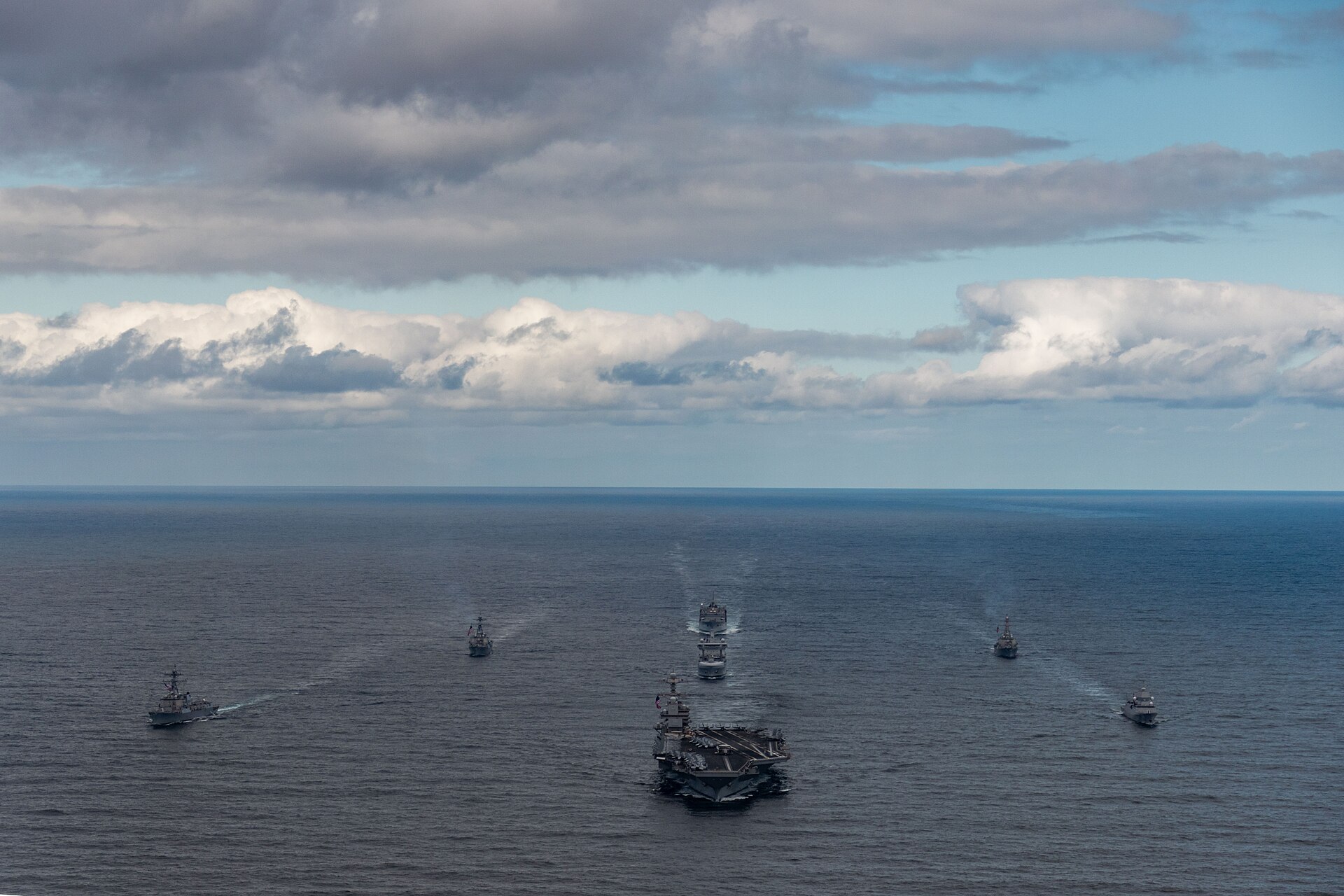
Southern Spear: the force behind the flights
The bombers are the visible tip of a much larger structure. The deployment now in the Caribbean is, by the assessment of the officials announcing it and the analysts counting it, the largest US naval presence in the region in decades. Its centrepiece is the USS Gerald R. Ford carrier strike group — the world's largest aircraft carrier and its escorts — supported by a troop presence put at roughly 15,000 personnel across the region. Defence Secretary Pete Hegseth has given the operation a name, Operation Southern Spear, and names matter: administrations do not brand routine patrols. A named operation has a headquarters logic, a public narrative and, usually, a next phase already written down somewhere.
Put the numbers against the recent past and the scale sharpens. For most of two decades, US naval presence in the Caribbean meant a handful of Coast Guard cutters, occasional destroyer patrols and counter-narcotics cooperation run at a deliberately low temperature. A carrier strike group is a different category of instrument: the force package Washington sends when it wants the option of sustained air operations, not merely interdiction. That does not mean the option will be used. It means the argument about intent must be conducted honestly — the force assembled is capable of far more than its official mission, and everyone in the region, starting with Caracas, can do that arithmetic as well as Washington can.
Counter-narcotics, says Washington; regime change, says Caracas
The administration's stated case is narcotics. Venezuela, in Washington's telling, is a narco-state whose leadership profits from cocaine transshipment, whose designated cartel — treated now in US law-enforcement language as a foreign terrorist organization — fuses state and trafficking, and whose alleged drug boats have already been struck at sea. On that account, the bombers, the carrier and the troops are leverage and interdiction capacity: pressure designed to raise the cost of trafficking and, perhaps, to persuade Maduro that negotiation on Washington's terms is cheaper than defiance. Trump has kept the diplomatic door visibly open even while widening the military one, saying he may talk to Maduro directly.
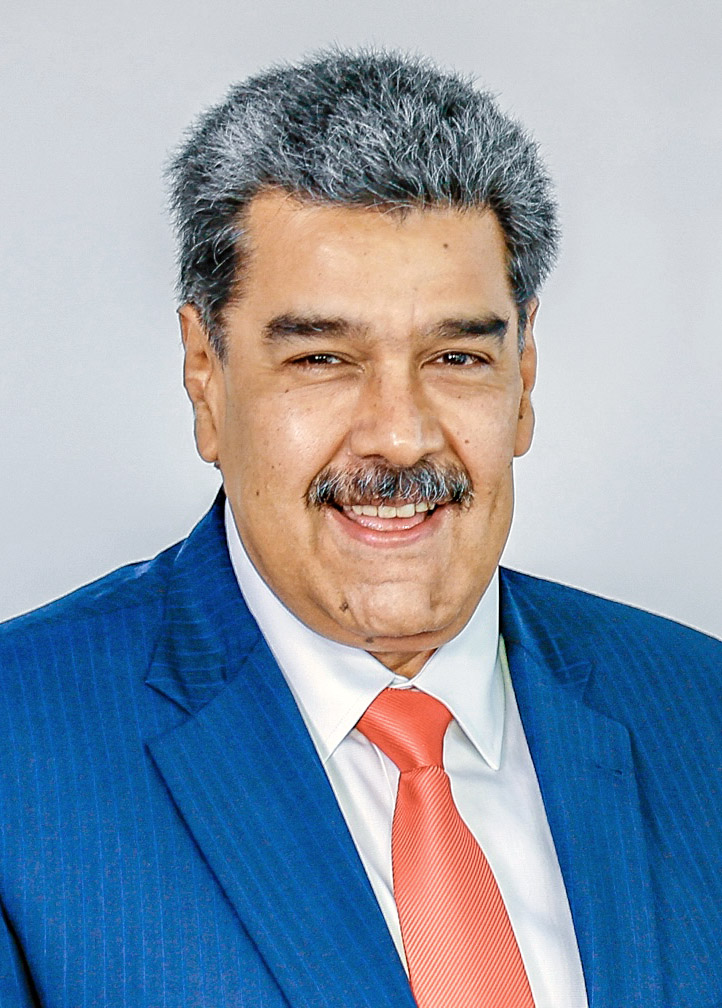
Caracas reads the same order of battle and reaches the opposite conclusion. Maduro's government argues that narcotics is the pretext and regime change the purpose — pointing to the covert-action authorization, the terrorist designation applied to a cartel the administration links to Maduro himself, the boat strikes conducted without a public judicial process, and now heavy bombers flying a coast no drug boat has ever required a B-1B to police. His counter-offer, repeated this week, is direct talks, face to face. Critics inside the United States split the difference uncomfortably: many accept that trafficking through Venezuela is real and serious, while questioning whether the legal authorities cited for lethal strikes and covert action stretch as far as the operations they are asked to cover. The lobbying history around Venezuela policy in Washington — a decade of it is traced in our report on David Rivera and the Venezuela lobbying decade — is a reminder that this argument has been running, with money and careers attached, long before the bombers arrived.
Why this matters
This matters because pressure campaigns have their own physics, and the physics does not care which capital's framing is correct. Each side is now publicly committed: Washington to a narrative in which Maduro heads a criminal enterprise that force can squeeze, Caracas to a narrative in which any concession under bomber patrols is surrender. Public commitments raise the price of backing down, which is precisely why analysts quoted across this week's coverage keep returning to the same word — miscalculation. A jittery air-defence commander, a boat crew that does not stop, a bomber that strays: the distance between a signalling campaign and a shooting incident is one bad minute, and both governments know it. There is a wider ledger, too. Latin American governments that spent years asking Washington to treat the region as a priority are discovering what priority looks like when it arrives as a carrier group; their reactions — public silence, private unease, occasional open criticism — will shape whether the United States converts pressure into a regional settlement or merely into a regional fact. And the comparison running underneath every briefing is the one our Ukraine War Day 1695 briefing makes from the other side of the Atlantic: Washington is simultaneously arguing that coercive airpower must be resisted in Europe and that coercive airpower is a legitimate negotiating instrument in its own hemisphere. Both arguments may be defensible. They are not the same argument, and the world has noticed.
What happens next
Four tests will show where this is going. First, tempo: a third bomber flight inside a fortnight would confirm a standing patrol pattern rather than paired demonstrations. Second, the talks track: Trump's stated openness to speaking with Maduro, and Maduro's stated willingness to meet face to face, either produces a visible channel — an envoy, a venue, a date — or it curdles into one more exchanged insult. Third, the legal track in Washington: the boat strikes and the covert-action authorization are drawing scrutiny that could either consolidate behind the operation or begin to fence it in. Fourth, the force itself: carrier groups rotate, and whether the Ford is relieved on station, reinforced or allowed to sail home will tell the region more about American intentions than any statement. Until one test resolves, the bombers will keep making the argument in the only language both capitals agree the other understands — presence, repeated on schedule, transponders on.
Sources: Reuters, Oct. 16, 2026 (bomber flights and deployment); Associated Press, Oct. 16, 2026 (Operation Southern Spear and official statements); The Times, Oct. 16, 2026 (pressure-campaign analysis). Related on Signal Post News: David Rivera and 10 years of Venezuela lobbying · Ukraine War, Day 1695 briefing.