War · Russia · Moscow · Security
A U.S. Embassy alert naming one palace museum and one day — today — set off a rare public sequence on Saturday: Washington warning Moscow, Russia's FSB confirming it had received the information, and the Tsaritsyno Museum Reserve closing its gates. No attack has taken place, and none of the three governments' statements names who might be behind the threat.
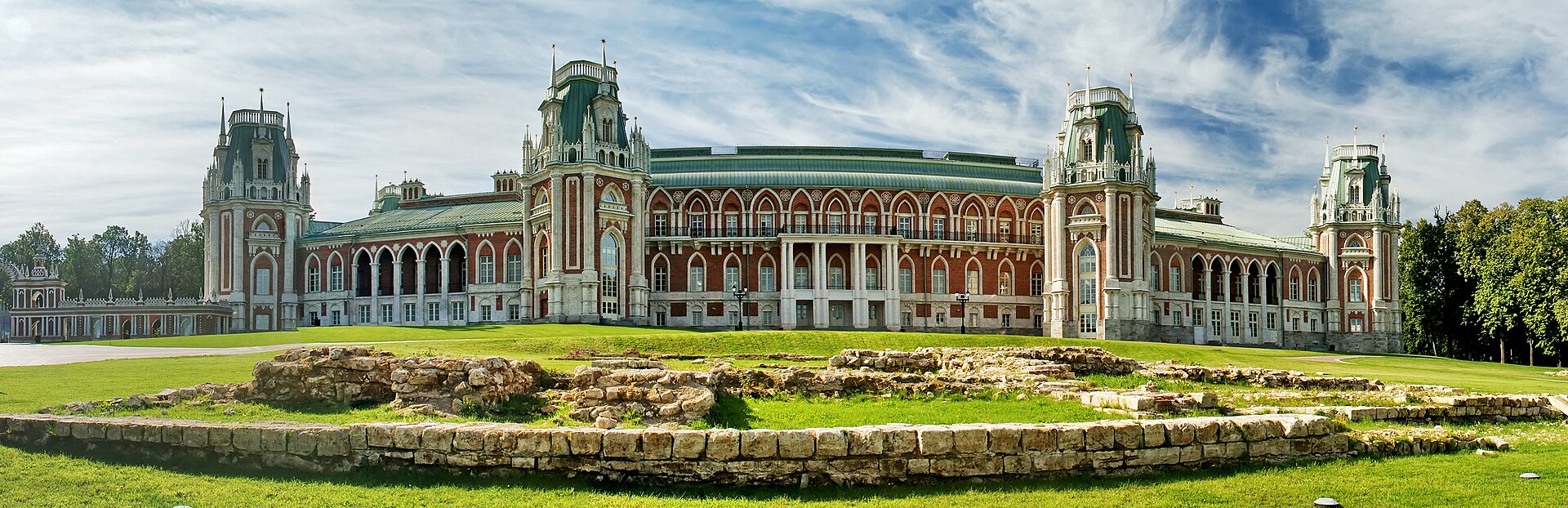
The United States warned Russia of a possible terrorist attack in Moscow on Saturday and told its own citizens to stay away from one of the capital's best-known palace museums, in a public security alert that Russia's Federal Security Service (FSB) then confirmed it had received. The U.S. Embassy said it was “aware of a credible threat of a mass casualty event TODAY October 31, at the Tsaritsyno Museum Reserve in Moscow,” and the museum was temporarily closed, with park access restricted. This is a threat warning, not an attack: no incident, detentions or casualties at the site have been reported, and neither government has named a perpetrator or described the threat's nature.
Track it live: https://signalpostnews.com/tracker/wars
What we know
The sequence on Saturday, October 31, unfolded across three public statements. First, the U.S. Embassy published its alert: “aware of a credible threat of a mass casualty event TODAY October 31, at the Tsaritsyno Museum Reserve in Moscow at Dolskaya Ulitsa 1, Moscow, Russia 11569,” adding that “the U.S. government is coordinating with appropriate Russian authorities on a response.” Second, the FSB said, in remarks reported by Reuters, that it had received information from the United States “through established partner channels” about preparations for a terrorist attack in Moscow and was taking appropriate measures. Third, RIA, citing law enforcement, reported that the museum has been temporarily closed and park access restricted.
Two precisions matter, because the speed of a story like this invites overstatement. The FSB confirmed receipt of American information about preparations for an attack in Moscow; it did not publicly name Tsaritsyno, identify a perpetrator, or describe the threat's nature. The Tsaritsyno specifics — venue, address and day — come from the U.S. Embassy's alert. And the closure, reported by RIA citing law enforcement, is a precaution in response to a warning; nothing has happened at the museum itself.
The alert, in full
Embassy alerts are usually terse, and this one follows the standard form — but its specificity does not. Alongside the venue and the word “TODAY” in capitals, it lists the actions U.S. citizens should take: avoid the location today, avoid the area, stay alert, avoid crowds, review their personal security plan, keep a cellphone charged, carry proper identification, monitor local media, and enroll in the Smart Traveler Enrollment Program (STEP). The embassy's assistance line is +7 495 728-5577. The practical core of that advice applies to anyone in Moscow today: give the Tsaritsyno grounds a wide berth, expect a visible security presence around the park, and follow local reporting rather than rumour.
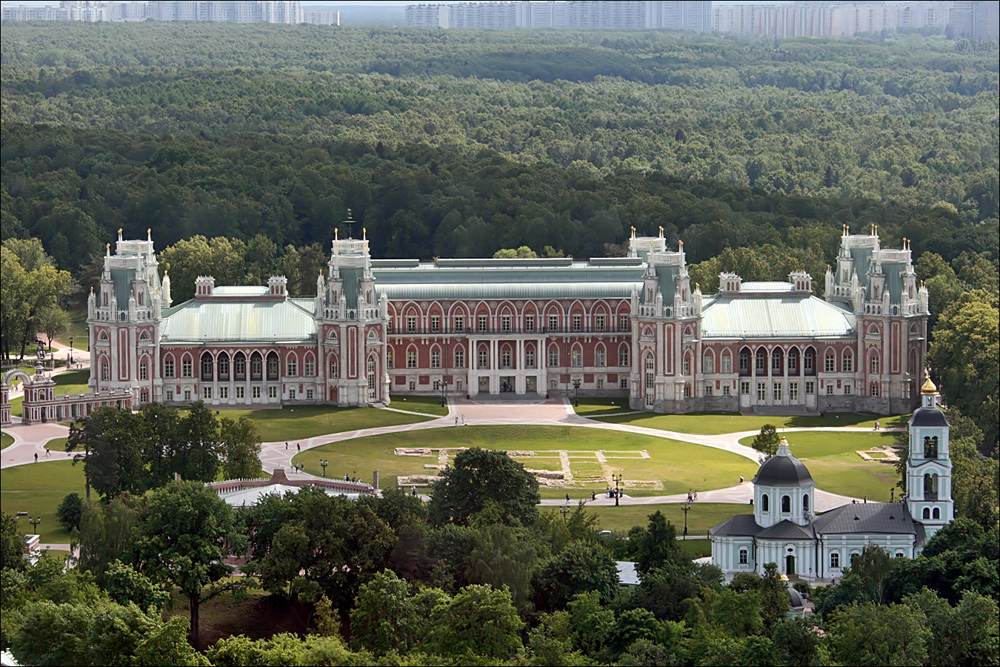
The place: a palace park built for an empress
Tsaritsyno is not an obscure venue. The museum-reserve in southern Moscow is a palace and park complex founded in 1775 as Catherine the Great's summer residence. Its centrepiece, the Grand Palace, was built between 1786 and 1796 to designs associated with the architect Matvey Kazakov, in a flamboyant pseudo-Gothic style of red brick and white stone; after two centuries largely unfinished and semi-ruined, a major restoration returned it to public use as one of Moscow's flagship museums. Its grounds — lawns, ponds, woodland paths and the palace itself — draw large weekend crowds.
That profile is precisely why the alert reads the way it does. A threat against a named, open, heavily visited leisure site on a Saturday — the museum's busiest day — is the scenario security services treat as most dangerous: many potential victims, a soft perimeter, and a public arriving in a holiday mood. Closing the museum and restricting the park removes the crowd, which is both the target and the complication, and converts an open public space into a controllable one. It is also a highly visible act in a capital where the authorities generally prefer security operations to be invisible — an early indication of how seriously the warning is being taken on the Russian side as well.
Why this matters
The first reason is the channel itself. The United States and Russia are on opposite sides of an active war diplomacy — this same Saturday, Ukraine's president was in Istanbul discussing Black Sea security and a possible November negotiating track, as Signal Post News reported in its coverage of Zelenskyy's Istanbul talks with Erdoğan — yet on Saturday the two governments were, by both sides' accounts, cooperating on a threat to Russian civilians. Counterterrorism warning is one of the few functions Washington and Moscow still perform for each other, under the U.S. intelligence practice known as the “duty to warn”: when the United States learns of a specific threat to innocent lives, it passes the warning on, including to adversaries. The FSB's phrase — information received “through established partner channels” — is calm language for a channel that has survived the worst rupture in U.S.–Russian relations since the Cold War.
The second reason is specificity. A warning that names one site and one day is far more actionable than a general alert — it lets the receiving service close one museum rather than guard a whole city. But specificity also hands the receiving government a public test: act visibly, and you concede the threat was credible; act quietly, and you own the outcome if anything happens. Moscow, notably, did both halves at once — the FSB confirmed receipt publicly the same day, and the museum closed.
The third reason is timing inside the wider war. Saturday was also the day hundreds of evacuees from Russian-occupied Oleshky completed their journey back into Ukraine under a humanitarian ceasefire, as Signal Post News reported in its story on the Oleshky evacuees' arrival — a reminder that the U.S.–Russian relationship runs on parallel tracks that barely touch: confrontation over Ukraine, feelers about ending that war, and, underneath both, a thin residue of professional cooperation on threats neither side wants to see succeed. A mass-casualty attack in Moscow today would land on all three tracks at once.
The precedent: Crocus City Hall, March 2024
No honest account of Saturday's warning can avoid the comparison. In early March 2024, the U.S. Embassy warned publicly that extremists had imminent plans to target large gatherings in Moscow, including concerts; no venue was named. On March 22, 2024, gunmen attacked the Crocus City Hall concert venue, killing more than 140 people in Russia's deadliest terrorist attack in two decades. The Islamic State group, through its Islamic State Khorasan (ISIS-K) affiliate, claimed responsibility. Washington said it had warned Moscow privately as well, under the duty-to-warn policy. FSB director Alexander Bortnikov later described the American information as “of a general nature” — a characterisation that became part of the bitter argument over whether the warning could have prevented the massacre.
The comparison is instructive in both directions. What is similar: the warning originates with U.S. intelligence, is issued publicly by the same embassy, concerns a mass-casualty attack on a civilian gathering place in Moscow, and was passed to the Russian services. What is different — and the difference is the story — is the resolution of the picture. In 2024 the public warning was general: large gatherings, imminent, no place, no precise date. In 2026 the alert names one museum and one day, today. And in 2024 the Russian confirmation that a warning had been received emerged only afterwards, amid recrimination; in 2026 the FSB confirmed receipt publicly on the day itself, and the named site closed. Whether that reflects lessons learned from Crocus, a different quality of intelligence, or a different political moment is analysis, not established fact — but the behavioural contrast between the two episodes is a fact, and it is stark.
What we don't know
The unknowns here are not a footnote; they are most of the picture. Neither government has named a perpetrator or a group, and neither has described a method — no official statement speaks of gunmen, explosives or any other modality. The embassy's alert does not say how the threat was detected or whether any suspects have been detained; the FSB says measures are being taken, without describing them. No Russian official has publicly confirmed, in terms, that the FSB's statement and the embassy's Tsaritsyno alert concern the same plot, although the timing and subject make that the natural reading. Any social-media claim that fills these gaps — a named group, an arrest, an incident at the park — should be treated as unverified unless an official source or a reputable newsroom confirms it.
The numbers in context
Some figures calibrate the day. Crocus killed more than 140 people and remains the benchmark against which every Moscow warning is measured. Tsaritsyno — estate founded 1775, Grand Palace built 1786–1796, at Dolskaya Ulitsa 1 in the capital's southern districts — is among Moscow's most visited museum-reserves on weekends: the exposure the closure eliminates for today. Two and a half years separate the two warnings: long enough for procedures to be rewritten, short enough for March 2024 to be the first thing every official involved thought of this morning.
Reading the two statements: an analysis
What follows is analysis by Signal Post News, distinguishing interpretation from the confirmed facts above. Three readings of Saturday's choreography are available, and they are not mutually exclusive. The first is the straightforward one: U.S. intelligence obtained threat reporting specific enough to name a venue and a day; the duty to warn obliged Washington to pass it and to alert its own citizens; the FSB, burned politically by the “general nature” argument after Crocus, chose same-day public confirmation as insurance — proof, lodged in advance, that it received and acted on the warning. The second reading is about signalling: a public alert is also a message to whoever is planning something that their operational secrecy is blown, which can itself disrupt or deter an attack. The third reading is diplomatic: in a week when back-channels over Ukraine are active again — including allied capitals rehearsing how their forces might underwrite any settlement, the subject of Signal Post News' report on the UK–Poland defence discussions in Warsaw — a clean act of cooperation costs both capitals little and keeps a channel warm that each may want for other business.
Against those readings sits a caution: most specific threats, thankfully, do not mature into attacks — disrupted, abandoned once exposed, overstated, or never real. A quiet Saturday at Tsaritsyno would not prove the warning false, just as the warning does not prove an attack was certain; in prevention, success looks like nothing happening.
What happens next
The immediate test is the rest of today. If the day passes without incident, expect the closure to be framed by Russian officials as a precaution completed, and watch for whether the FSB says anything further — a statement about detentions or a disrupted plot would transform the story; silence would leave the warning as the story. Three scenarios frame the coming days. In the first, the threat is quietly resolved: arrests or a disrupted cell are announced, the museum reopens, and the episode becomes a documented case of U.S.–Russian counterterrorism cooperation working as designed. In the second, nothing is ever announced: the park reopens, the alert expires with the day, and the episode joins the long list of warnings whose basis the public never learns. In the third, the warning becomes contested after the fact: if any incident occurs in Moscow in the coming days, or if Russian officials later characterise the American information as vague or alarmist, Saturday's statements will be re-read line by line, as the March 2024 statements were. The FSB's decision to confirm receipt publicly, on the day, suggests Moscow has already priced that third scenario in.
Conclusion
On Saturday morning, two governments that agree on very little performed, in public and in sequence, one of the oldest transactions in intelligence: a warning given, a warning acknowledged, and a gate closed before anything could happen. The Moscow Tsaritsyno attack threat has produced no attack, no named suspect and no claim of responsibility — and it was never entitled to be reported as anything more than what it is: a credible warning, unusually specific, handled unusually openly. Whether it prevented something may never have a public answer. What can be said is that the practice tested after the failure of March 2024 — warn precisely, confirm receipt, close the site, say so the same day — was, this time, visibly used. Signal Post News will update this story as official statements develop.
Sources
- U.S. Embassy Moscow — official security alert (October 31, 2026): credible threat of a mass casualty event today, October 31, at the Tsaritsyno Museum Reserve, Dolskaya Ulitsa 1; U.S. government coordinating with Russian authorities; actions to take and the +7 495 728-5577 assistance line.
- Reuters — reporting (October 31, 2026): the FSB said it received information from the United States through established partner channels about preparations for a terrorist attack in Moscow and was taking appropriate measures.
- Fox News — reporting (October 31, 2026) on the embassy warning of a credible mass casualty threat at the popular Moscow tourist attraction.
- RIA, via law-enforcement sourcing as reported October 31, 2026: the Tsaritsyno Museum Reserve temporarily closed and park access restricted. Historical background on the March 2024 embassy warning and the March 22, 2024 Crocus City Hall attack (more than 140 killed; Islamic State/ISIS-K claim; FSB director Alexander Bortnikov's “general nature” characterisation) is a matter of public record.
This article is based on the U.S. Embassy Moscow security alert of October 31, 2026, and on Reuters reporting of the FSB's statement the same day, with the museum closure as reported by RIA citing law enforcement. The FSB did not publicly name Tsaritsyno, a perpetrator or the threat's nature; no incident, detentions or casualties have been reported, and this article reports a threat warning, not an attack. Analysis is by Signal Post News.