War · Ukraine · Kherson · Ceasefire
Oleshky evacuees arrive Ukraine at last: hundreds of residents of the Russian-occupied Kherson-region town crossed the Belarus–Ukraine border on Saturday afternoon, many carrying pets, at the end of a route that ran through Crimea, the Russian port of Anapa and four flights to Gomel — hours before the ceasefire that made their journey possible expires on November 1.
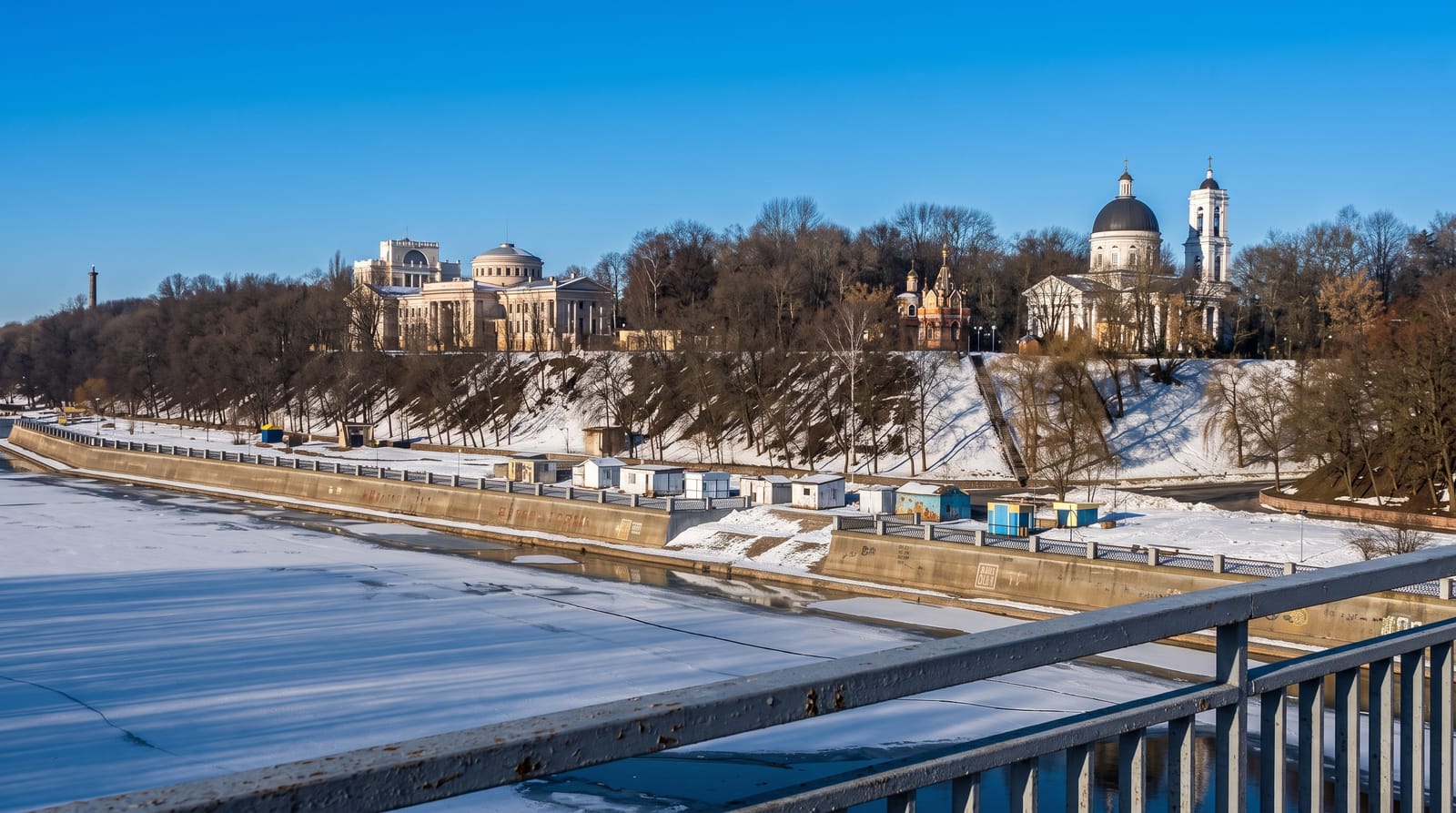
Hundreds of evacuees from Oleshky, the Russian-occupied town on the left bank of the Dnipro in Ukraine’s Kherson region, arrived back in Ukraine on Saturday afternoon, completing the final and most closely watched leg of a humanitarian operation built on a local ceasefire brokered through the mediation of US First Lady Melania Trump. CNN, reporting on the scene at the Belarus–Ukraine border, described hundreds of people coming home, many of them travelling with their pets, as buses that had left Gomel airport in Belarus earlier in the day reached the crossing and families separated by years of occupation were reunited on Ukrainian soil. No official final arrival count has been published by either side, and Signal Post News is not publishing one: “hundreds” is the figure supported by on-scene reporting, and it is the figure used throughout this article.
President Volodymyr Zelenskyy announced the arrival on Telegram, thanking President Donald Trump and the First Lady for their mediation. “When the world pays attention, people are rescued,” he wrote, in remarks carried by both CNN and The Sun. “Further steps toward de-escalation and real progress toward peace are also needed.” The arrival closes a five-day ceasefire window that began at 03:00 Kyiv time on Tuesday, October 27, was later expanded across the wider Kherson region, and is due to expire at 22:59 Kyiv time on Sunday, November 1. By the accounts of both Ukrainian and Russian officials given to Reuters, the truce held without violations through the operation — making it, in Reuters’ description, the first ceasefire of its kind in this war and its longest humanitarian pause.
Track it live: Ukraine war map — live tracker
Reunions at the border
The human texture of Saturday afternoon is what distinguishes this arrival from the communiqués that preceded it. The Sun, reporting independently of CNN, described residents draped in Ukrainian flags stepping down from the buses to tearful reunions, with the precise location of the crossing withheld for security reasons. CNN’s on-scene reporting centred on one couple whose separation measures the length of the occupation itself: a Ukrainian soldier named Dmytro waited at the border for his wife, Larisa, whom he had not seen for 1,711 days — a span that reaches back to the first weeks of Russia’s full-scale invasion, when Oleshky fell under occupation in 2022 and the front line hardened along the Dnipro between the town and Ukrainian-held Kherson city across the river.
Medical teams waiting
The reception on the Ukrainian side was organised as a medical as well as an emotional event. CNN reported that Andriy Zhydenko, the director of Chernihiv Regional Hospital, was waiting at the crossing with his staff and medical teams, ready to receive evacuees whose health after years without reliable medicine in Oleshky was an immediate concern. The presence of hospital leadership at a border crossing, rather than at a hospital, reflects the condition in which many of those who remained in the town were understood to be living: elderly residents, people with chronic illnesses and families with small children predominated among those who had stayed, and the journey they had just completed — by road through Crimea, by air from Anapa to Gomel, and by bus to the border — was itself an ordeal for the frailest among them.
The Dmytro Lubinets Oleshky escort
The convoy did not travel unaccompanied. Ukraine’s parliamentary commissioner for human rights, ombudsman Dmytro Lubinets, escorted the evacuees on their journey, CNN reported — a role that made him, in CNN’s description, the first high-profile Ukrainian official to openly travel to occupied territory and Russia since the war began. That detail is more than colour. The Oleshky operation ran through the war’s narrowest and most durable channel: the two sides’ human rights ombudsmen, whose offices have handled prisoner exchanges and the return of children throughout the conflict. That the Ukrainian ombudsman could physically accompany civilians out of occupied territory, across Russia and Belarus, and home, without the arrangement collapsing, is the operational fact on which any claim that this model can be repeated will stand or fall.
The route home: Oleshky, Crimea, Anapa, Gomel
The geography of the evacuation explains both its duration and its fragility. Oleshky sits directly across the Dnipro from Ukrainian-held territory, but no direct crossing was possible: the bridges are destroyed or fought over, and the river line is one of the most surveilled stretches of the front. The route that the ceasefire opened instead ran the long way around — south and east out of Oleshky through occupied Crimea, onward to Anapa on Russia’s Black Sea coast, then by air north to Gomel in Belarus, and finally by bus south to the Belarus–Ukraine border. Reuters, in its updated October 31 reporting, confirmed that four planes in total landed at Gomel carrying residents evacuated from Oleshky, with the final plane arriving on Saturday, and that a bus convoy then departed Gomel airport for the border crossing where CNN and The Sun recorded the arrival.
Oleshky evacuation Gomel Belarus: the air bridge
The Anapa–Gomel air leg was the operation’s hinge. Moving hundreds of civilians, including ambulance cases, by road the entire distance would have taken days the ceasefire clock did not contain; the flights compressed the longest segment into hours and placed the evacuees, for the final road leg, within reach of a border crossing into Ukraine rather than a front line. It also required a chain of permissions — Russian airspace and airfields, Belarusian reception at Gomel, Ukrainian reception at the border — each of which depended on the ceasefire holding everywhere along the route, not merely around Oleshky itself. That the chain held for four flights across two days is the logistical core of the story, and it is why both sides’ confirmation to Reuters that the truce was observed without violations matters beyond the usual exchange of claims.
The ceasefire behind it
The pause that made Saturday possible was announced on October 23 by Melania Trump, whose mediation — conducted, according to Reuters, with the involvement of Pope Leo XIV — produced the first local ceasefire of its kind in the war. It entered into force at 03:00 Kyiv time on Tuesday, October 27, initially around Oleshky, and was subsequently expanded across the Kherson region, as Signal Post News reported in its coverage of the expanded Oleshky ceasefire. Under its terms, residents of the town were offered a genuine choice rather than a one-way order: they could leave for Ukrainian-held territory, leave for Russia, or remain in Oleshky with replenished supplies of food, water and medicine brought in under the truce.
The ground operation that preceded the flights was itself substantial. On Friday, an aid convoy entered the town and the evacuation began in earnest — 25 buses with some 750 seats, plus ambulances for those who could not travel seated — in the operation Signal Post News covered as the aid convoy entered Oleshky and evacuations began. Residents who chose to stay received supplies intended to carry the town through the ceasefire’s expiry and beyond. Residents who chose Ukraine began the Crimea–Anapa–Gomel journey that ended at Saturday’s border crossing. The design matters to how the outcome should be read: this was an evacuation by consent under a time-limited truce, not a transfer imposed by either army, and the numbers on each side of that choice — how many left for Ukraine, how many for Russia, how many stayed — have not been officially published by Kyiv, Moscow or the mediators.
A town emptied: Oleshky before the ceasefire
To understand what “hundreds” means, it has to be set against what Oleshky was. Before the full-scale invasion, the town was home to some 24,000 people. Occupied since 2022, it was devastated in June 2023 when the destruction of the Kakhovka dam upstream sent floodwater through its streets, drowning neighbourhoods, destroying homes and contaminating wells — a disaster whose toll in occupied territory was never independently counted. In the years since, the remaining residents lived with months at a time without reliable food, water, electricity or medicine, within artillery range of a front line they could not cross.
How many people were still there when the ceasefire began is reported differently by the two most careful sources, and the difference is presented here rather than resolved. Reuters reported that about 1,700 people remained in Oleshky out of the pre-war population of 24,000. CNN reported that about 2,000 people, including some 50 children, had remained in the town. The two figures are not necessarily contradictory — they may reflect different counting dates or definitions — but no official census exists, and readers should treat both as attributed estimates. What neither figure supports is any precise claim about what share of the town chose each of the ceasefire’s three options on Friday and Saturday. The verified fact is the arrival itself: hundreds of people, seen by independent reporters, home.
A disputed claim, flagged as unverified
One claim circulating as the ceasefire approached its expiry requires explicit caution. Rodion Miroshnik, the Russian foreign ministry’s ambassador-at-large, asserted via IR-Press that a Ukrainian drone had struck a civilian car near Oleshky, injuring two people, before the truce’s expiry. That claim is unverified: it has no independent confirmation, Kyiv had not commented on it at the time of reporting, and it sits in direct tension with what both Ukrainian and Russian officials told Reuters — that the ceasefire held without violations. Signal Post News reports the claim because a senior Russian official made it, and reports its status with equal prominence: a single-source allegation, unconfirmed, contradicted in its general implication by both sides’ own statements to Reuters about the truce. It should not be read as an established fact about the ceasefire’s final hours.
Why this matters
Analysis: the Oleshky arrival matters on three levels, and they should be kept distinct, because the operation’s success at the first level does not guarantee anything at the other two.
A mediation model that actually moved people
At the humanitarian level, something happened here that four and a half years of summit diplomacy had not produced: a ceasefire, however local and brief, that was designed around civilians rather than around a front line, and that ended with the civilians where they chose to be. The channel that built it was unusual in composition — a US First Lady as public mediator, Pope Leo XIV involved behind her, and the two sides’ human rights ombudsmen as the working mechanism, with the Ukrainian ombudsman ultimately escorting the convoy in person. Each element supplied something the others lacked: Washington supplied leverage both capitals answer to; the Vatican supplied a moral address neither side wishes to be seen refusing; and the ombudsmen supplied a standing, technically competent channel that already knew how to move lists of names across the line. If any part of this war’s diplomacy is repeatable on demand, it is likelier to be this humanitarian machinery than the grand-bargain formats that have repeatedly stalled.
Who gains, who is exposed
The gains are real but unevenly distributed. For Kyiv, Saturday delivered a visible proof that its citizens in occupied territory are not forgotten, an ombudsman-led success it can cite in every future negotiation about prisoners and deported children, and a presidential message — Zelenskyy’s Telegram post — that coupled gratitude to Washington with a pointed call for “further steps toward de-escalation and real progress toward peace.” For the Trump administration, and for the First Lady personally, Oleshky is a deliverable: a named, photographed, completed humanitarian outcome in a war where the president’s broader peace effort has yet to produce a settlement. For Moscow, participation bought a demonstration of cooperation at low military cost — the ceasefire was local, brief and around a town Russia continues to occupy — together with a channel to Washington that functions even while the wider relationship does not.
The exposures are equally clear. Critics of the arrangement, in Ukraine and among its partners, make three arguments that Saturday’s emotion should not be allowed to bury. First, a ceasefire that requires the occupied population to leave through the occupier’s territory, and offers “safety” as the alternative to staying in a town the occupation itself made unliveable, operates under a coercion gradient no consent form fully cures; the choice was real, but the conditions that framed it were made by the war. Second, local truces can be used to normalise the line they pause around — each successful humanitarian window around Oleshky leaves the occupation itself one day older and no less entrenched. Third, a model that depends on a First Lady’s personal mediation and a Pope’s involvement is, by construction, hard to schedule: it worked once, for one town of under two thousand remaining residents, over five days. Whether it scales to a city, or survives contact with a genuinely contested objective, is unproven.
The numbers in context
The data frame both the achievement and its limits. A pre-war town of 24,000 had fallen, on Reuters’ figure, to about 1,700 remaining residents; on CNN’s, to about 2,000 including 50 children. The Friday lift alone marshalled 25 buses and 750 seats plus ambulances, and four aircraft flew the Anapa–Gomel leg. Against those numbers, “hundreds arrived” describes an operation that plausibly moved a large share of those who chose Ukraine — but because neither the mediators nor either government has published a final manifest, any more precise claim would be invention, and the absence of an official count is itself a fact readers should hold onto: in a war where both sides weaponise numbers, the most credible figure in this story remains the one reporters could see.
After November 1: expiry, repetition, and Abu Dhabi
The forward-looking question is what survives the ceasefire’s expiry at 22:59 Kyiv time on Sunday, November 1. Three scenarios frame the coming days. In the first, the humanitarian channel is deliberately kept warm: the ombudsmen’s offices move directly to the next list — another town, another category of detainees, the children whose return Kyiv has long demanded — and Oleshky becomes the template its architects already claim it is. In the second, the window closes as a one-off: the guns resume around Kherson on schedule, each side banks its narrative, and the operation is remembered as a singular alignment of a First Lady’s initiative, Vatican backing and a town small enough to empty in five days. In the third, the Oleshky channel is folded upward into the larger diplomatic track now forming around the possible trilateral meeting in Abu Dhabi between November 6 and 10, which President Zelenskyy discussed this weekend during his Istanbul talks with President Erdoğan — the subject of Signal Post News’ report on Zelenskyy’s Istanbul visit and the Black Sea agenda. In that scenario, the proof that a Trump-family-brokered pause can hold becomes an argument, in the room, that a larger pause could.
Which scenario unfolds will be legible quickly: in whether the ombudsmen announce further work, in whether Oleshky itself stays quiet after 22:59 on Sunday, and in whether Abu Dhabi acquires confirmed dates. What will not change is the baseline the operation exposed — that on the Dnipro’s left bank there are more towns like Oleshky, and that the distance between them and Saturday’s border crossing is measured not in kilometres but in permissions.
What happens next
Immediately, attention turns to the ceasefire’s final hours and its expiry on Sunday night, to the medical and resettlement reception of the hundreds who arrived on Saturday, and to the still-unpublished accounting of how many residents chose Russia or chose to remain in Oleshky with replenished supplies. Beyond the weekend, the tests are the ones set out above: any announcement of a follow-on humanitarian operation through the same channel, and the fate of the November 6–10 Abu Dhabi window. Signal Post News will update this story as official figures, if any are released, and as the truce’s expiry passes.
Conclusion
On Saturday afternoon, at a border crossing whose location was withheld for their safety, hundreds of people from a town of what was once 24,000 stepped off buses onto Ukrainian soil — some wrapped in flags, some carrying pets, one of them into the arms of a husband she had not seen for 1,711 days. Behind them lay a route through occupied Crimea, a Russian airfield and a Belarusian transit city, held together by the longest humanitarian pause of the war and by a mediation channel that ran from the White House to the Vatican to two ombudsmen’s offices. Ahead of them lies a ceasefire with one day left to run. The arrival is complete; what it proves about the war is still being decided, and the honest verdict is the narrow one: for five days, in one place, the machinery of this war was made to run in reverse — and people came home.
Sources
- CNN — reporting on the scene at the Belarus–Ukraine border (October 31, 2026): hundreds of evacuees arriving, many with pets; Zelenskyy’s Telegram announcement and quotations; Dmytro and Larisa, separated for 1,711 days; Chernihiv Regional Hospital director Andriy Zhydenko and medical teams waiting; ombudsman Dmytro Lubinets escorting the convoy; about 2,000 residents including 50 children reported to have remained in Oleshky.
- Reuters — updated reporting (October 31, 2026): four planes landed at Gomel, Belarus, the final plane on Saturday; bus convoy departed Gomel airport for the border; route via Crimea and Anapa; ceasefire held without violations according to both Ukrainian and Russian officials; about 1,700 residents remained of a pre-war 24,000; mediation by Melania Trump with Pope Leo XIV involvement; first ceasefire of its kind and the longest humanitarian pause of the war.
- The Sun — independent arrival report (October 31, 2026): residents draped in Ukrainian flags disembarking from buses, tearful reunions, crossing location withheld for security, and the same Zelenskyy Telegram quotations.
- Signal Post News — prior verified coverage of the ceasefire’s announcement on October 23, its entry into force on October 27, its expansion across the Kherson region, and the Friday aid convoy and evacuation operation (25 buses, 750 seats, ambulances; residents’ choice of Ukraine, Russia, or remaining with replenished supplies); ceasefire expiry 22:59 Kyiv time on November 1.
This article is based on CNN on-scene reporting and Reuters reporting of October 31, 2026, and on The Sun’s independent October 31 report of the arrival. No official final arrival count has been published; this article follows CNN in describing the arrivals as “hundreds” and attributes the remaining-population estimates to Reuters (about 1,700) and CNN (about 2,000 including 50 children) respectively. The drone-strike allegation by Russian ambassador-at-large Rodion Miroshnik, carried by IR-Press, is reported as an unverified single-source claim: it has no independent confirmation, Kyiv had not commented, and both sides told Reuters the ceasefire held without violations. Analysis is by Signal Post News.