The United States and Venezuela signed an agreement on Wednesday to reestablish military ties, announced in Caracas by Secretary of Defense Pete Hegseth on an unannounced first trip to the country — ten months after U.S. forces captured Nicolás Maduro. Hegseth said the deal covers joint training, intelligence sharing and defense equipment. Its text, timeline and cost have not been released, and the Pentagon offered no further details.
Track it live: Live wars tracker
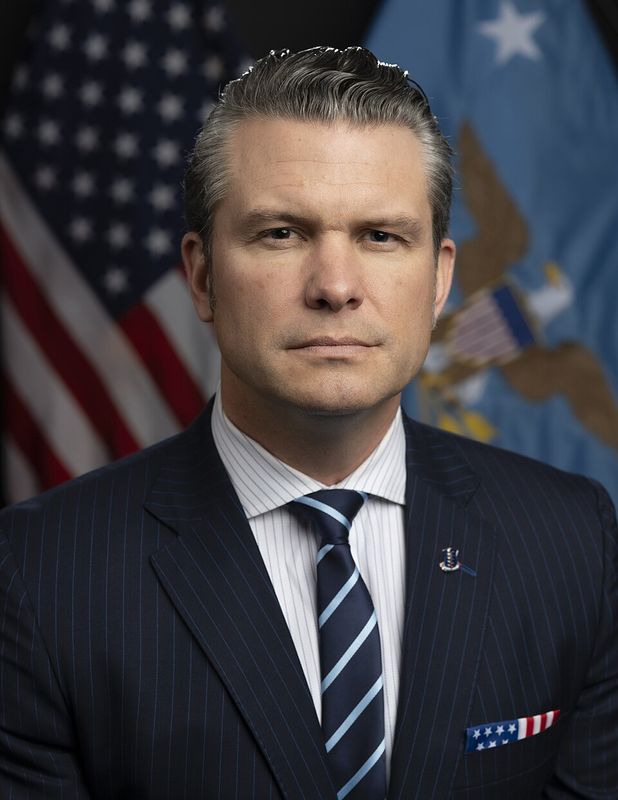
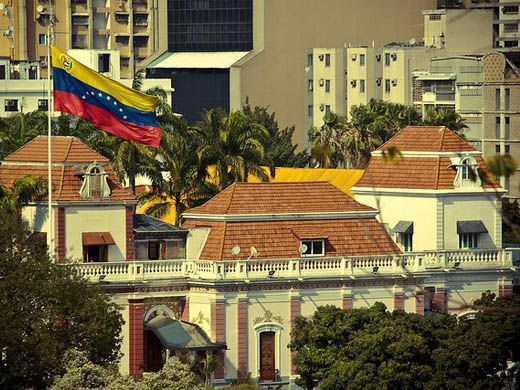
November 18, 2026 — The signature came first, and the explanation was a single sentence. Appearing at Miraflores Palace in Caracas on a trip the Pentagon had not announced in advance, U.S. Secretary of Defense Pete Hegseth signed an agreement with Venezuelan Defense Minister Gustavo Gonzalez Lopez to reestablish military ties between the two countries, according to footage broadcast on Venezuelan state television and reported by CNN. He then met interim President Delcy Rodriguez in a televised meeting at the palace, and outside the U.S. Embassy in Caracas he delivered the line that will define the day: Venezuela, Hegseth said, “has gone from our most aggressive regional threat to a compliant security partner.”
Read that sentence against the calendar. On January 3, 2026 — ten and a half months ago — U.S. forces carried out a surprise nighttime raid in the Venezuelan capital, captured then-President Nicolás Maduro and flew him to New York. On Wednesday, the American defense secretary stood in that same capital, at the palace of the government that succeeded Maduro, and signed a paper restoring the military relationship that the raid appeared to have ended for a generation. Hegseth did not pretend the moment was ordinary. “The weight of this moment does not escape me,” he said, in remarks reported by CNN. “Just one year ago, my presence here … would have been deemed impossible.”
What was signed — and what Hegseth and Rodriguez said it covers
What is established is the fact of the signature and the broad strokes both governments chose to announce. The agreement reestablishes military ties between the United States and Venezuela, and according to both Hegseth’s remarks and the Associated Press’s reporting from Caracas, its announced scope runs from American and Venezuelan forces training together, to sharing intelligence, to more defense equipment and other capabilities flowing between the two militaries. Hegseth, summarising it for an audience of diplomats and military officials from both countries, described the two militaries as “training together, partnering together, sharing intelligence, more defense equipment and capabilities together,” the AP reported.
Hegseth framed the agreement as a restoration rather than an invention. “We spent some time talking about the long history of our countries, so in many ways we see this as a reestablishment of our defense partnership and the opportunity to work together between our two great militaries,” he said, according to the AP. He called the deal “historic,” insisted it would not be “cosmetic,” and said it would require defense and security reforms to modernise Venezuela’s military and eliminate what he called “persistent threats” to both nations, CNN reported. He praised what he called the “close cooperation” with Rodriguez that had allowed officials “to stabilize Venezuela and rid it of narco-terrorists once and for all,” and pointed to Venezuela partnering with the United States “to recover its territory from narco-terrorist networks,” the AP reported.
Rodriguez, in televised remarks alongside Hegseth at the palace, described a renewal of “technical-military cooperation” between the two countries. She said the agreements would strengthen the training of Venezuela’s Bolivarian National Armed Force, favour its operational equipment and facilitate its access to new technologies — “very beneficial for our military officials,” in her words, as reported by the AP — and that the training would allow the two countries to “face common threats.” The renewed cooperation, she said, is meant to confront those common threats and make the region safer, and she said she hoped it could reach “its highest possible level.”
What is not known
Almost everything that would let an outsider judge this agreement is, at the time of publication, undisclosed — and that is not a gap in this article’s reporting; it is the state of the public record, stated plainly by both source chains. The timeline and scope of the deal remain unclear, CNN reported. The Defense Department did not respond to CNN’s questions about the agreement or about Hegseth’s trip, and it did not provide a daily schedule for the secretary on the day of his visit. The Pentagon “did not immediately offer further details” on the new partnership, the AP reported. No text of the agreement has been published.
It follows that several things sometimes asserted within hours of a signing like this cannot responsibly be asserted here. No cost, funding line, duration, troop numbers or start dates have been released, and none is stated in this article as fact, because none exists in the reporting. Nothing in the CNN or AP reporting establishes U.S. bases in Venezuela or a permanent U.S. troop presence there, and this article makes no such claim. Secondary reporting in recent weeks has said that a status-of-forces agreement — the kind of legal framework that governs foreign troops stationed in a country and can lay groundwork for a long-term presence — was under negotiation between Washington and Caracas; whether the document signed on Wednesday is that agreement, part of it, or something narrower has not been established, and it is carried here as attributed, unresolved context only. Two further precision points belong on the record. This is a signed agreement as announced by the secretary of defense — it is not a treaty ratified by the U.S. Congress. And as of Wednesday night, no implementation of it — no first joint exercise, no first equipment transfer, no first intelligence product — has been reported by anyone.
How we got here: ten months from a raid to a signature
The agreement is the latest step, not the first, in a sequence that began with force. Since Maduro’s capture on January 3, the United States has worked with Venezuela’s acting government on what both sides describe as a transition and reconciliation process, CNN reported. Rodriguez, who leads that interim government, has met a series of Washington’s demands, including releasing hundreds of political prisoners and easing the terms for U.S. companies to invest in Venezuela, according to CNN’s account. Her own political position remains unsettled: she is interim, or acting, president; the AP notes that her court-allowed term expired in July, that she continues as head of state, and that no date has been set for the next presidential election. She is not an elected president, and nothing about Wednesday’s ceremony changes that status — though a defense secretary’s televised visit to her palace is its own kind of recognition, a point taken up in the analysis below.
Energy ran ahead of defense in the rapprochement. Hegseth is the latest Cabinet member to visit Venezuela, following trips this year by the secretaries of the Interior and Energy focused on the country’s oil reserves and critical minerals, the AP reported. President Trump said in August that Hegseth himself had helped broker a deal for the United States to take control of some Venezuelan oil reserves, and the administration says that more than $12 billion — almost 99 percent of Venezuelan oil-sale revenue — has been returned under the energy deal, according to the AP. That figure is the administration’s, carried here as context attributed to it via the AP, not as an independently audited number. The military channel, meanwhile, was being rebuilt below Cabinet level before Wednesday: Gen. Francis Donovan, the commander of U.S. Southern Command, has met Venezuela’s interim authorities at least twice this year, the AP reported. Wednesday’s signing is therefore best read as the public, political ratification of a working relationship that soldiers and energy officials had already been constructing for months.
The political track has been moving in parallel, and this site has covered its milestones as they happened: the return from exile of opposition leader María Corina Machado, in our report on Machado’s return to Venezuela, and Rodriguez’s appearance on the world stage in New York, in our report on Trump’s meeting with Rodriguez at the UN General Assembly. Machado’s return is context for the transition the interim government claims to be managing; she was not part of Wednesday’s signing, and the military agreement does not, on anything released so far, speak to the election question her return keeps open.
A regional tour, not a single stop
Caracas was the headline, not the itinerary. Hegseth travelled on to Colombia later on Wednesday, and Ecuador and Honduras are also expected stops on his Latin America tour, CNN reported. The Venezuela signing is, in the administration’s own framing, one piece of a wider regional push: Wednesday’s deal is the latest effort by the Trump administration to bolster security cooperation with Latin American countries with the aim of combating what it calls “designated terrorist organizations” in the region, CNN reported. That framing matters for reading the Venezuela agreement’s likely centre of gravity. Its announced purposes — training, intelligence, equipment, action against “narco-terrorist networks” — are the vocabulary of counter-cartel and counter-trafficking cooperation, the same mission set Washington is pursuing with Bogotá, Quito and Tegucigalpa, rather than the vocabulary of a conventional alliance aimed at a state adversary. What each subsequent stop produces — signed paper or communiqués — will help calibrate how exceptional, or how routine, the Caracas document turns out to be.
Why this matters
Analysis: a defense secretary signing a military agreement in a capital his own military raided ten months earlier would be remarkable at any speed. What makes Wednesday’s signing analytically important is not only that it happened, but what its wording, its silences and its setting reveal about how this administration converts coercion into partnership — and about what has been traded, deferred and left unexamined in the process. Five points deserve to be weighed separately from the facts above.
The speed of the reversal — and the telling word in it
Adversary to training partner in under a year is, as a sequence, close to without precedent in modern U.S. hemispheric policy: a captured president in January, an energy deal by summer, a defense agreement by November. The administration presents that speed as vindication — proof that decisive force, followed by structured cooperation, produces outcomes that decades of pressure and diplomacy did not. Critics of the January raid, who warned it would produce chaos, occupation or a durable rupture, are entitled to note that none of those three has so far materialised in the form predicted; supporters of the raid are equally entitled to note that a signature is not an outcome, and that everything about this agreement that would prove it real remains unpublished. Both readings have to survive contact with the same undisclosed document.
The most revealing word in Hegseth’s sentence is not “partner” but “compliant.” Alliances are usually announced in the language of shared values or mutual interest. This one was announced in the language of obedience rewarded: Venezuela was a threat, Venezuela complied — with demands on prisoners, on investment access, on oil — and Venezuela is now a partner. That is a template, and it is plainly meant to be read as one, in every capital in the region and beyond: the partnership on offer from Washington is explicitly conditional, explicitly revocable, and explicitly sequenced after submission to Washington’s terms. Whether that template deters other governments or merely instructs them in the price of American friendship is the strategic question Wednesday’s ceremony poses. The ceremony itself, notably, was staged to be read: an unannounced arrival for security, but a televised signing and a palace meeting for effect.
Who benefits, who loses
The interim government is the clearest immediate beneficiary. Rodriguez’s administration gains, in a single day, the two things an unelected interim government most lacks: external legitimacy, conferred by a U.S. defense secretary’s televised presence at her palace, and a path to a modernised military, with American training, equipment and technology that she herself itemised on camera. It gains both without an election date having been set — the AP’s observation that her court-allowed term expired in July and no election is scheduled sits, unresolved, underneath the ceremony. Washington gains a hemisphere partner on the Caribbean coast, intelligence access it has lacked for two decades, leverage over the region’s largest oil reserves already formalised in the energy deal, and a demonstration case for its regional strategy as Hegseth flies on to Colombia, Ecuador and Honduras.
The losses are quieter and mostly fall on questions rather than parties. Venezuela’s democratic transition — the process in whose name the post-Maduro order was justified — is not advanced by anything announced on Wednesday, and may be deferred by it: an interim government being armed, trained and legitimised by Washington has less external pressure on it to schedule the vote that would end its interim status. Venezuela’s opposition, whose most prominent figure returned from exile only weeks ago, must now calculate its future against a security partnership between Washington and the government it opposes. And the U.S. Congress, which has ratified nothing and been shown no text, is presented with a military relationship as a fait accompli — a pattern, critics in both parties have argued in other contexts this year, that converts the legislature’s war and treaty powers into a notification service. The administration’s answer, implicit in Hegseth’s framing, is that an executive agreement to train and share intelligence requires no one’s ratification. Both claims can be true at once; which one governs is a constitutional argument Wednesday did not settle.
The unknowns are the story
It is worth pausing on how much of this agreement does not exist in public. There is no text. There is no timeline, no cost, no troop number, no start date, no schedule — the Pentagon did not even publish the secretary’s itinerary for the day. There is no established answer to the largest structural question, whether the signed document is, incorporates, or sits alongside the status-of-forces framework that secondary reporting says has been under negotiation, and which would determine the legal position of any American personnel who eventually train in Venezuela. Until some of that is published, neither Congress, nor Venezuelans, nor Venezuela’s neighbours can judge whether Wednesday produced a liaison arrangement of a few dozen advisers, a standing training mission, or the legal foundation of a long-term U.S. security footprint in northern South America. Those are radically different things wearing the same headline. The discipline this article has applied — reporting the signature and the speeches as fact, and everything structural as unknown — is not caution for its own sake. On the available record, the unknowns are not the footnotes to this story. They are most of it.
The numbers in context
Three figures frame the agreement, and each needs its attribution kept attached. The administration says more than $12 billion — almost 99 percent of Venezuelan oil-sale revenue — has been returned under the energy deal, according to the AP: that is the economic engine of the rapprochement, the reason Caracas can fund cooperation and the reason Washington can present the relationship as reciprocal rather than extractive; it is also an administration figure, not an audited one. The AP also reports, as context for the security relationship’s harder edge, that at least 240 people have been killed since September 2025 in U.S. strikes on alleged drug boats, with little public evidence released about the targets — the enforcement campaign whose logic the new partnership extends onto Venezuelan territory and into Venezuelan institutions, and whose legal and evidentiary basis remains contested. And the deepest frame is a date rather than a number: secondary reporting on Wednesday’s signing notes that technical-military cooperation between the two countries was suspended in 2005 under President Hugo Chávez. That line comes from secondary chains rather than from the CNN and AP reporting at this article’s spine, and it is carried here with that attribution — but if accurate, Wednesday’s agreement formally closes a twenty-one-year rupture that began under Chávez, deepened under Maduro, and ended not with either man’s diplomacy but with Maduro’s capture.
What to watch next: two scenarios
The forward evidence to watch for is specific. First, the text, or any Pentagon implementation schedule: the day either appears, the agreement becomes judgeable, and the argument about what Wednesday meant can be settled with documents instead of adjectives. Second, the remaining legs of Hegseth’s tour — Colombia, and Ecuador and Honduras if they proceed as expected — which will show whether Caracas was the template or the exception. Third, any announcement of an election date in Venezuela, which would test whether the legitimacy conferred on Wednesday was a bridge to a vote or a substitute for one. Against those markers, two scenarios cover the plausible range. In the first, the agreement matures into a narrow, durable counter-cartel liaison: trainers and intelligence fusion aimed at trafficking networks, equipment flowing in measured tranches, no permanent American footprint, and a relationship that survives because both governments continue to find it useful and neither tests its limits. In the second, the framework quietly becomes structural — a status-of-forces architecture, a standing U.S. presence, and a security guarantee that hardens the interim government into a permanent one, with the election question indefinitely postponed and the region’s other governments recalculating what American partnership requires and what it costs. Nothing released on Wednesday decides between those futures. The signature is real, the sentence that announced it will be quoted for years, and the document underneath both remains, for now, unread by anyone outside the two governments that signed it.
Sources
Sources: CNN, November 18, 2026 — “Venezuela a ‘compliant security partner,’ Hegseth says as he announces military deal with Caracas” (cnn.com): the announcement in Caracas on Hegseth’s first, unannounced trip; the “compliant security partner” quotation, delivered outside the U.S. Embassy; the signing at Miraflores Palace with Defense Minister Gustavo Gonzalez Lopez as shown in Venezuelan state television footage; the televised meeting with interim President Delcy Rodriguez; the “historic” and “not cosmetic” framing and the defense-reform and “persistent threats” language; the “weight of this moment” quotation; the post-capture transition context, including the release of hundreds of political prisoners and eased U.S. investment access; the absence of Pentagon responses, details and daily schedule; the onward travel to Colombia with Ecuador and Honduras expected; and the “designated terrorist organizations” regional framing. Associated Press via Military.com, November 18, 2026, 12:28 PM EST (Jorge Rueda, Ben Finley and Regina Garcia Cano) — “US and Venezuela Sign a Deal to Reestablish Military Ties, Hegseth Says on Visit to Interim Leaders” (military.com): independent Caracas reporting of the deal’s range from training to intelligence sharing; the same Hegseth quotation to an audience of diplomats and military officials; the “training together, partnering together, sharing intelligence” summary; the “reestablishment of our defense partnership,” “close cooperation,” “stabilize Venezuela” and “narco-terrorist networks” quotations; Rodriguez’s televised remarks on strengthening the training, operational equipment and technology access of the Bolivarian National Armed Force, on facing common threats, and on hoping cooperation reaches “its highest possible level”; the Pentagon offering no further details; the prior Cabinet visits by the Interior and Energy secretaries; Trump’s August statement on the oil-reserves deal and the administration’s figure of more than $12 billion, almost 99 percent of oil-sale revenue, returned under the energy deal; SOUTHCOM commander Gen. Francis Donovan’s at least two meetings with interim authorities this year; Rodriguez’s expired court-allowed term and the absence of an election date; and the context figure of at least 240 people killed since September 2025 in U.S. strikes on alleged drug boats. The suspension of technical-military cooperation in 2005 under Hugo Chávez and the reported negotiation of a status-of-forces agreement are carried from secondary reporting chains and are attributed as such in the text; neither is established by the CNN/AP spine. Photographs: U.S. Department of Defense via Wikimedia Commons (official portrait of Secretary Hegseth) and Wikimedia Commons file photographs of Miraflores Palace, credited in the captions; neither palace photograph depicts the November 18 signing.