World / Americas — Machado returns to Venezuela: the Nobel Peace Prize laureate and opposition leader María Corina Machado announced her arrival home on Sunday with four words — “I’m here. With you all” — ending more than ten months in exile, at least seven failed attempts to get back in, and a long season in which Washington built Venezuela’s future around almost everyone except her. By Sunday afternoon, President Donald Trump was telling reporters he had known nothing about it.
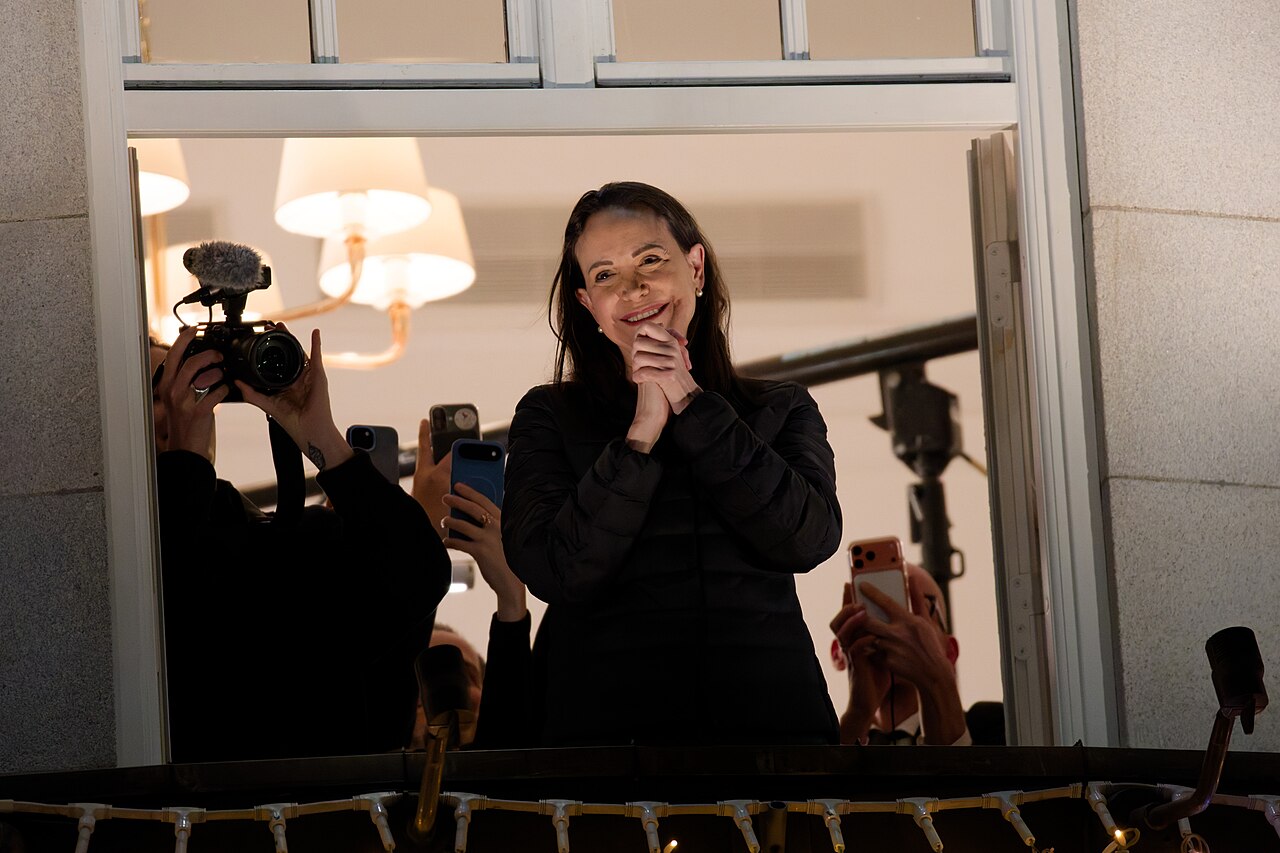
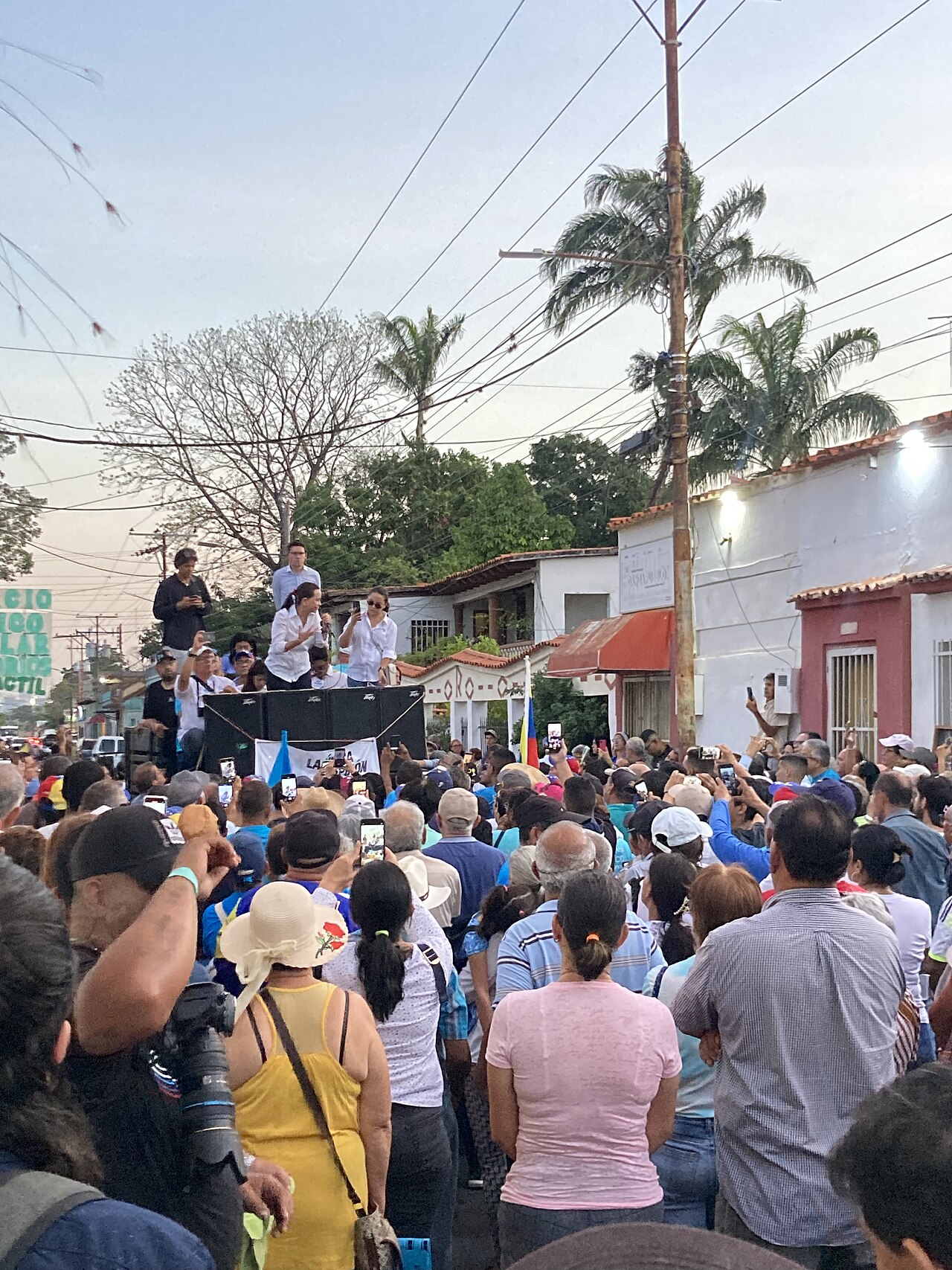
CARACAS — There was no airport announcement, no motorcade, no negotiated homecoming ceremony. Early on Sunday, María Corina Machado simply appeared — first in a short social media post, “I’m here. With you all,” and then in the flesh, among worshippers at Santa Rosa in Lara state, in Venezuela’s central-west, where her press team shared images of her at the church in the Plaza del Pueblo de Santa Rosa, surrounded by an ecstatic congregation. The Wall Street Journal, citing video posted by her party, placed her at the Sanctuary of the Divine Shepherdess — the Divina Pastora shrine in the Barquisimeto area, one of the most potent religious symbols in the country. For a politician returning from exile, the choice of stage was unmistakable: before she addressed a rally, a parliament or a camera, she stood in front of the Virgin’s congregation and let Venezuela see that she was really home.
The confirmation travelled fast. Edmundo González Urrutia, the candidate Machado backed in the disputed 2024 presidential election after the authorities barred her from standing herself, wrote on X from his own exile in Spain that it was “a very important day for Venezuelans,” adding: “Our sovereign voice returns with her to lead and guide this process” — and promising that he would join her “very soon” so the country could “truly advance towards freedom.” Her senior foreign-policy adviser, David Smolansky, told Reuters what the return is for: Machado will meet victims of the deadly earthquakes that struck Venezuela in June, the families of political prisoners, the international community and leaders of the democratic movement, and “she will work proactively for a date for free and fair elections.” Neither the White House nor Venezuela’s communications ministry had formally responded to the return when Reuters filed on Sunday, and the interim government of acting President Delcy Rodríguez had said nothing in public at all.
Seven failed attempts, then a Sunday morning
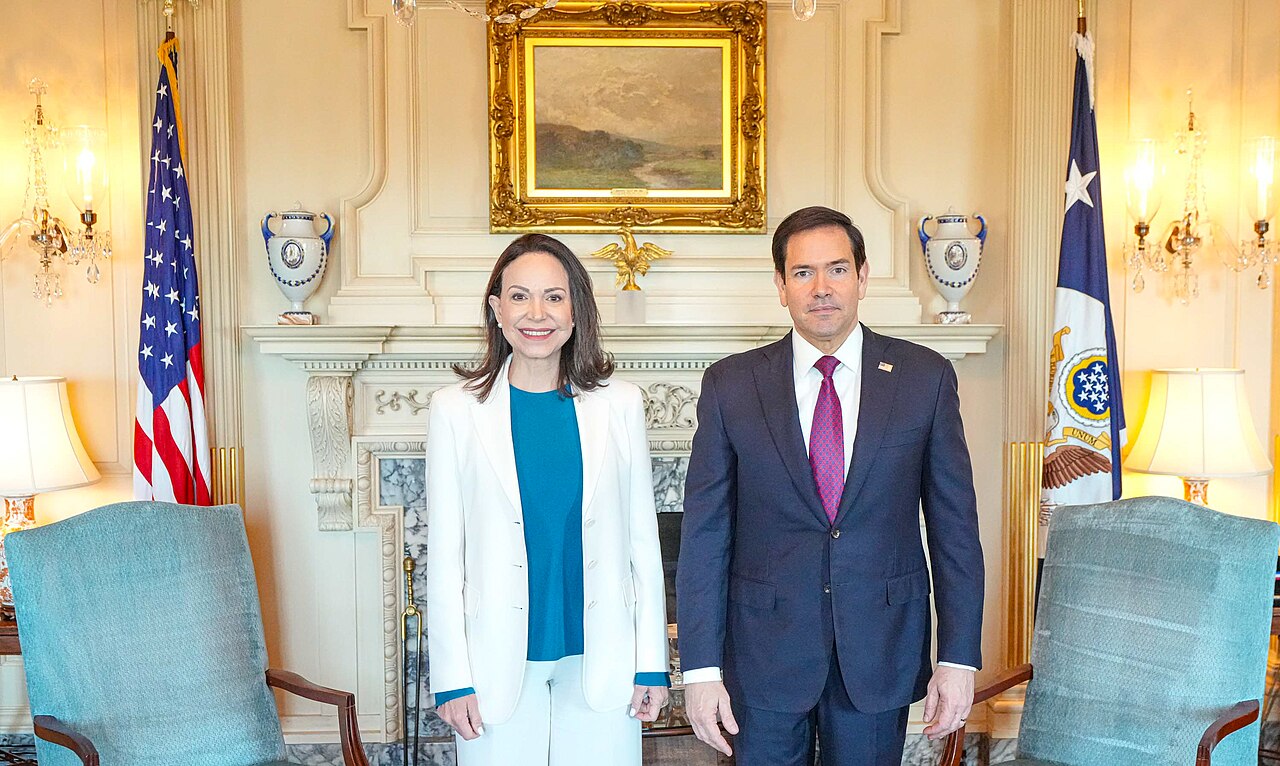
Sunday’s arrival was not her first try — it was, by her advisers’ count, at least the eighth. CNN and the Wall Street Journal both report that Machado attempted to re-enter Venezuela at least seven times over the past few months, routing through Curaçao and Panamá, and that some of those attempts were thwarted amid opposition from U.S. officials. She first tried in late June, hoping to help with reconstruction after two powerful earthquakes devastated parts of the country, and said the government blocked her by closing its airspace. She tried again in late September, while Rodríguez was in New York for the United Nations General Assembly, and was, by her team’s account, denied entry three times in a single day. Secretary of State Marco Rubio addressed the question on September 1, in remarks CNN quoted: Washington had concerns about her safety, he said, “but she does not need the United States’ approval” — “María Corina Machado, a Venezuelan citizen, has every right to enter her country whenever she wants to return.” In late August, a key member of her inner circle, Omar González, had already slipped back into the country after almost three years in exile, in what he himself called a “prelude” to her arrival. The prelude, it turns out, was accurate.
The exile itself had two acts. Machado spent eleven months in hiding inside Venezuela after being briefly detained following a protest in January 2025, then left the country in a clandestine escape — by boat, the Journal reports — and resurfaced last December in Oslo, where she received the Nobel Peace Prize for her peaceful challenge to Nicolás Maduro’s authoritarian government. Weeks later, in January, U.S. forces captured Maduro himself. Machado travelled the world rallying support, met Trump at the White House and presented him with her Nobel medal — and then watched Washington choose a different partner in Caracas.
Trump: “I hope she’s safe” — and business as usual with Rodríguez
The most revealing reaction on Sunday came from the man who removed her enemy. Speaking at the White House on Sunday, President Trump said he did not know anything about Machado’s return. “She’s a very nice woman,” he said, noting that she had given him her Nobel Prize — and, in AP’s account of the same remarks as he left the White House on Sunday afternoon, adding: “And I hope she’s safe.” But the warmth stopped at the personal. Trump suggested the United States would continue to back Rodríguez, Maduro’s former deputy, and in a Fox News interview the same day he said the U.S. had “total control of Venezuela”: “We’re being very fair. But we’re taking out millions of barrels of oil a week.” That is the whole dilemma of Machado’s homecoming compressed into one news cycle. The Nobel laureate is home, cheered in a church in Lara. The government Washington actually works with is still the government of Maduro’s own vice-president — and the president of the United States learned of the opposition’s biggest move of the year from the press.
None of this is accidental. After ousting Maduro in January, Trump said Machado was a “very nice woman” but claimed she “does not have the support or the respect within the country” to lead it, and Washington instead built its Venezuela policy around Rodríguez — who, CNN notes, has met just about every American demand, releasing hundreds of political prisoners and opening the country to U.S. companies. In September, Trump said it was too soon to consider democratic elections in Venezuela. The transition talks Washington brokers concluded a third round this week with agreements for incremental reforms but no timetable for a presidential election, the Journal reports — and those talks have run through another opposition figure, Dinorah Figuera, while Machado says she was shut out of them entirely.
Why this matters
Machado’s return matters because it breaks the transition’s central arrangement: that Venezuela’s future could be negotiated indefinitely by everyone except the woman most Venezuelans associate with winning the last election. The opposition’s claim about 2024 has never been a slogan; its volunteers documented the tallies polling-station by polling-station before the authorities could seize them, and independent experts found the officially declared Maduro victory statistically improbable. Machado’s proxy won that election, on the opposition’s evidence. She then spent ten months being told, in effect, that the country she won was being run — by her enemy’s deputy, under American supervision, on an electoral timetable of “not yet.” AP reports that Rodríguez has now exceeded the time she was authorised to serve as acting president following Maduro’s capture, and no election is scheduled. A transition without a date is not a transition; it is an administration. Machado has now walked back into the country to say so in person, which is a categorically different kind of pressure from saying it in Oslo or Washington.
The numbers explain why Washington preferred the quiet arrangement, and why it may not survive her return. The oil relationship is the administration’s proudest Venezuela metric — millions of barrels a week, by the president’s own account, and a late-August announcement, reported by CNN, of a deal for the U.S. to take majority control of more than 65 billion barrels of proven reserves. Machado publicly questioned why such an agreement was being signed by a government she called an illegitimate regime. Set against that: more than 320 people counted as political prisoners by the legal group Foro Penal even as releases proceed, an opposition movement that put thousands into the streets of Caracas, Valencia, Maracay, San Cristóbal and Maracaibo last Thursday in the first nationwide protest in nearly two years, and a voter-registration app for the diaspora that Machado’s Vente Venezuela movement spent eighteen months building and rolled out this weekend. One side of this ledger is revenue. The other side is legitimacy. Until Sunday, Washington could pretend the second column was being managed from exile. It now has an address in Venezuela.
Who gains, who loses
Machado gains the one thing exile was steadily taking from her: presence. Politics in a half-open country is done in churches, queues and streets, and her Lara appearance was crafted to reclaim all three at once. González gains a path home of his own. Rodríguez loses the fiction that she faces no rival inside the country — and faces a subtler risk, because every demand Washington makes of her now has a visible alternative claimant attached to it. Trump loses tidiness: his Venezuela story was a captured dictator, a compliant successor and oil flowing north, and Sunday inserted into it a Nobel laureate he praised, sidelined, and then wasn’t told about. His critics will say the episode proves the transition was always about oil and stability, with democracy as the press release. His defenders will answer that a premature election, before courts and the electoral council are reformed, would simply re-run 2024’s fraud with better branding — and that Machado herself says a vote needs reformed institutions to be real. Both arguments are now going to be had with Machado standing on Venezuelan soil, which is precisely what she came home to arrange.
What happens next
Three clocks now start running. The first is safety: Machado returned without any announced guarantees, into a country whose security apparatus she has spent two decades opposing, and Trump’s “I hope she’s safe” will read very differently if she is detained, harassed or expelled — Rubio’s September formulation, that she needs no one’s permission to be in her own country, is now Washington’s stated position and will be quoted back at it. The second is González: if the man the opposition says won the presidency follows her home, the interim government will be hosting both halves of the ticket it replaced. The third, and the one Machado named herself through Smolansky, is the calendar. She has said an election should take place by July 2027; the transition talks have produced reforms but no date; and every week she spends touring earthquake zones and prisoners’ families makes “too soon” a harder sentence for Washington to say out loud. The likeliest near-term outcome is not a dramatic rupture but a slow squeeze: Machado behaves as a president-in-waiting on a national tour, Rodríguez governs, Trump keeps the oil — and the question her four words posed on Sunday hangs over all of it. She is here. With them. Now someone has to name a date.
Read next: Venezuelans demand elections in the first nationwide protest in nearly two years · Trump meets Rodríguez: the September encounter that defined the transition Machado was left out of
Sources
Reuters (Oct 25, 2026), “Venezuela opposition leader Maria Corina Machado returns to Venezuela” — return announcement, Lara/Santa Rosa images, Smolansky agenda and election-date quote, Trump White House and Fox News remarks, no response from the White House or the Venezuelan communications ministry. Associated Press report via NPR (Oct 25, 2026, published 12:18 EDT, updated 13:10 EDT) — first appearance since December, Church of Santa Rosa congregation, González confirmation and quotes, Rodríguez acting-term point, Trump “I hope she’s safe.” CNN (Oct 25, 2026), “Opposition leader María Corina Machado returns to Venezuela from exile” — seven failed attempts via Curaçao and Panamá, June airspace closure, September triple denial, Rubio’s September 1 remarks, Omar González’s August return, Rodríguez compliance record, 65-billion-barrel announcement reporting. The Wall Street Journal (Oct 25, 2026), “Venezuela’s Machado Returns Home, Challenging U.S.-Backed Government” — Divina Pastora sanctuary in Barquisimeto, flight by boat backstory, third-round transition talks with no election timetable, Dinorah Figuera channel. Reuters (Oct 23, 2026), “Awaiting Machado’s return, Venezuela opposition looks ahead to elections” — voter-registration app, July 2027 date, reformed electoral council context. Reuters (Oct 22, 2026) on the first nationwide protest in nearly two years, and Foro Penal’s count of more than 320 political prisoners, as previously reported by Signal Post News.