Brazil election 2026
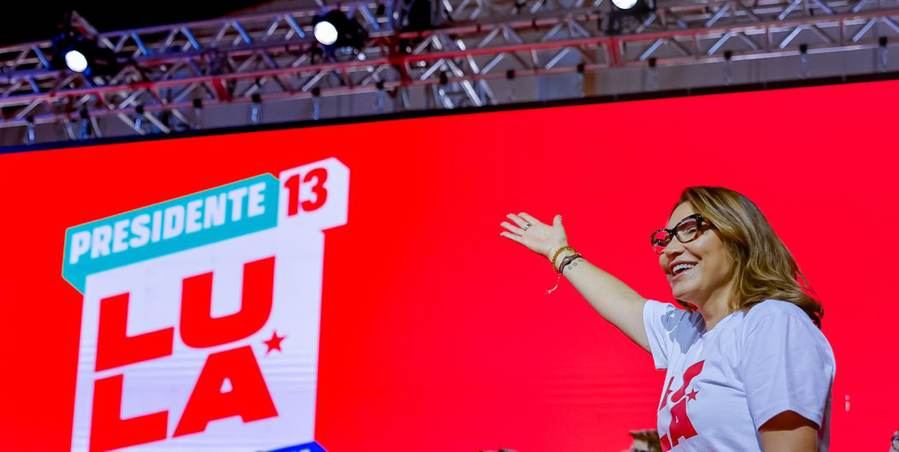
BRASÍLIA — Five days before Brazilians vote in the Brazil election 2026 first round, the contest to run Latin America's largest democracy has narrowed to something close to a coin flip. Incumbent Luiz Inácio Lula da Silva leads every first-round poll, but the simulated runoff against Senator Flávio Bolsonaro — the eldest son of imprisoned former president Jair Bolsonaro — is statistically tied, with the challenger edging ahead by a tenth of a point in the freshest survey.
That is the picture from three polls published within the last week, all pointing the same direction: Lula enters October 4 with a first-round advantage and a structural problem. He is the known quantity in a race where the decisive votes belong to Brazilians who intend to vote for someone else first — and then choose between the two frontrunners on October 25. The AtlasIntel/Bloomberg poll released Tuesday puts the runoff at Flávio Bolsonaro 47.7 percent to Lula's 47.6. A tenth of a point. Within the margin of error. Effectively, nothing separates them.
This is not just another close election. It is the sequel to the most polarizing contest in modern Brazilian history — the 2022 runoff Lula won 50.9 to 49.1 over Jair Bolsonaro — now restaged with the father's name on the ballot but the father's body in a prison cell. What follows is what the polls actually say, why the numbers matter far beyond Brazil, and the three ways the next month can end.
The polls, decoded
Brazil presidential election polls: three pollsters, three snapshots
Start with the raw material. Three reputable pollsters have published Brazil presidential election polls in the last seven days, and while their exact numbers differ — they always do — their storylines converge. Lula leads the first round everywhere. The runoff is a tie everywhere. And the challenger has been gaining for weeks.
The surveys differ in method and timing, which is exactly why reading all three together beats fixating on any one. AtlasIntel surveyed 5,005 people between September 23 and 28 — the largest sample of the three, released Tuesday via Bloomberg. BTG Pactual/Nexus surveyed 2,000 people September 25–27, published Monday, with a stated margin of error of 2 percentage points. Datafolha, Brazil's most established pollster, surveyed 2,002 people September 22–23, published September 24, also with a 2-point margin of error.
AtlasIntel Brazil poll September 2026: the 0.1-point runoff
The AtlasIntel numbers are the headline-grabbers. In the first round, Lula takes 45.3 percent to Flávio Bolsonaro's 42.2 — a 3.1-point gap, with Renan Santos at 5.2 and Augusto Cury at 2.0 trailing far behind. But the simulated second round is where the election will actually be decided, and there the poll shows Flávio Bolsonaro at 47.7 percent against Lula's 47.6. The challenger leads by one-tenth of a percentage point — a margin so thin it is best understood as no lead at all.
Compare with AtlasIntel's previous survey on September 23: then the runoff stood at Lula 47.7, Flávio 47.4, and the first round at Lula 45.8, Flávio 43.4. The direction of travel is unmistakable. In six days, the challenger has erased a 0.3-point deficit and opened a 0.1-point advantage. Note the contrast with the first-round measure, where Lula's lead actually widened slightly — from 2.4 points (45.8 vs. 43.4) to 3.1 points (45.3 vs. 42.2). That divergence is itself informative, and we will come back to it.
Datafolha Brazil election poll and BTG/Nexus: Lula's narrow runoff edge
The other two pollsters tell a marginally friendlier story for the incumbent — but only marginally. Datafolha's September 24 poll puts the runoff at Lula 47, Flávio 45, within the 2-point margin of error; its first round reads Lula 40, Flávio 36, Cury 5, Ronaldo Caiado 4, Renan Santos 3. The previous Datafolha had the runoff at 46–44, so the gap is essentially unchanged.
BTG Pactual/Nexus, published Monday, has the runoff at Lula 46, Flávio 44 — again within the 2-point margin — with a first round of Lula 42, Flávio 37, Cury 5, Caiado 5, Santos 4. Its September 21 predecessor showed 46–45. So across the two pollsters that still show Lula ahead in the runoff, his lead is 2 points in both — exactly the size of the margin of error, and down from the trend in both cases.
What a statistical tie actually means
"Statistical tie" is one of the most abused phrases in political journalism, so let us be precise. A poll is a sample, not a census. When AtlasIntel reports 47.7 versus 47.6, it is estimating the true state of the electorate from 5,005 interviews; the true value could easily be a point or two in either direction. When Datafolha reports 47–45 with a 2-point margin of error, the honest reading is that the race could be 49–43 or 45–47 with roughly the same plausibility. All three polls are therefore consistent with a single underlying reality: an electorate split almost exactly in half, with neither candidate holding a durable, outside-the-noise advantage.
There is a second, subtler point. Polls measure vote intention at a moment in time; they do not measure certainty, turnout, or late movement. In a race this close, the polls' real message is not "Flávio leads" or "Lula leads" — it is that the outcome sits within the range where ground game, late deciders, and the final week's news cycle can determine the presidency.
The trend line: Flavio Bolsonaro poll numbers are closing
If the levels are a tie, the slope favors the challenger. Track the runoff series: AtlasIntel went from Lula +0.3 (Sept 23) to Flávio +0.1 (Sept 29). BTG/Nexus went from Lula +1 (Sept 21) to Lula +2 (Sept 28) — a slight widening, the one counter-datapoint. Datafolha went from Lula +2 to Lula +2 — flat. Two of three show the race tightening toward the challenger; none shows it moving toward the incumbent.
Now revisit that AtlasIntel divergence: Lula's first-round figure ticked down slightly (45.8 to 45.3) while Flávio's fell further (43.4 to 42.2), so the first-round gap widened in Lula's favor even as the runoff flipped to Flávio. How? Because runoff simulations reallocate the votes of eliminated candidates, and the composition of the "neither" vote shifted. This is a hint about the election's real mechanics — which we will unpack below — and a warning against reading first-round leads as runoff predictions. They are different elections with different electorates.
Why this matters
Lula vs Flavio Bolsonaro: a sequel four years in the making
The 2022 election was decided by 1.8 percentage points — Lula 50.9, Jair Bolsonaro 49.1 — the narrowest margin in Brazil's democratic history. It ended with the defeated incumbent's supporters storming the seats of government in Brasília on January 8, 2023, and with Jair Bolsonaro eventually convicted for attempting to overturn the result. The 2026 race is that conflict's second act: same political divide, new standard-bearer, and a former president who is now a convicted prisoner rather than a candidate.
The symmetry is almost literary. In 2022, Lula was the challenger returning from political exile — he had himself been imprisoned on corruption charges later annulled — facing an incumbent. In 2026, Lula is the incumbent and the Bolsonaro camp carries the weight of a prison sentence. Brazilian politics has a habit of rhyming, and this rhyme is deafening.
Latin America's largest democracy at a hinge moment
Brazil is not just another country having an election. It is Latin America's largest economy by a wide margin, the steward of most of the Amazon, and a founding member of the BRICS bloc. Its presidency shapes commodity markets, climate negotiations, and the ideological balance of an entire continent. A change of government in Brasília reverberates from Buenos Aires to Bogotá to Washington.
The closeness of the race is itself the story for markets and diplomats. A decisive result — either way — would let investors, trading partners, and regional governments plan. A 0.1-point race guarantees the opposite: weeks of uncertainty, a runoff campaign fought at maximum intensity, and a winner who takes office with roughly half the country having voted against him.
The Bolsonaro family succession and the imprisoned father
Flávio Bolsonaro is not a generic right-wing candidate who happens to share a surname. He is the eldest son of Jair Bolsonaro, a sitting senator, and the vehicle through which the former president's political movement is contesting power while its founder serves a 27-year prison sentence for attempting to overturn the 2022 result. That makes this election a live experiment in a question democracies rarely test cleanly: how much of a political movement belongs to the leader, and how much to the brand?
If Flávio wins, the Bolsonaro movement will have demonstrated something remarkable — that it can transfer power dynastically past its founder's imprisonment, a feat few personalist movements manage. If he loses narrowly, the movement survives as the country's largest opposition with a young standard-bearer. Either way, October 2026 is not the end of Bolsonarismo; it is a measurement of its durability without Bolsonaro himself on the ballot.
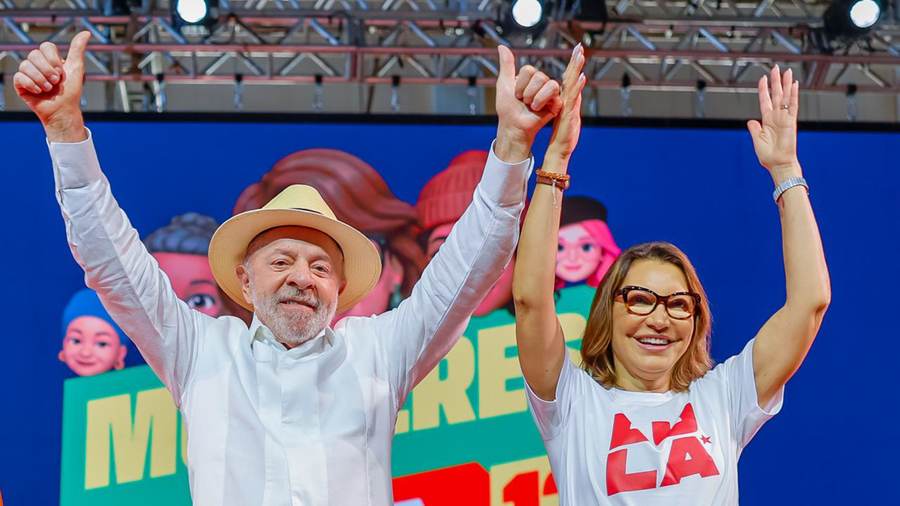
Background: how we got here
2022: 50.9 to 49.1, and everything after
To understand 2026, rewind to October 30, 2022. Lula defeated Jair Bolsonaro 50.9 percent to 49.1 — a margin of about 2.1 million votes in an electorate of over 120 million. It was the first defeat of an incumbent president seeking re-election in Brazil's modern democratic era, and the loser did not concede in the traditional sense. What followed — the January 8, 2023 storming of government buildings in Brasília by Bolsonaro supporters, the investigations, and ultimately the former president's conviction — is the direct prologue to this campaign.
The closeness of 2022 matters mechanically for 2026: it proved Brazil's electorate is split into two blocs of nearly equal size, and that the "third way" — a centrist alternative to both Lula and Bolsonaro — could not break double digits. The 2026 first-round polls show the same structure. The smaller candidates are polling in the low single digits; the election is a two-man contest wearing a twelve-candidate costume.
Jair Bolsonaro 27-year sentence: the campaign's absent center
Jair Bolsonaro is serving a 27-year prison sentence for attempting to overturn his 2022 defeat. That single fact shapes the entire 2026 race. It removed the most obvious opposition candidate from the field, forced the Brazilian right to anoint a successor, and gave the Lula campaign its most potent argument: that the other side represents a threat to democracy itself, as adjudicated by the courts.
It also gives the Bolsonaro campaign its most potent counter-argument: that the sentence is political persecution, and that a vote for Flávio is a vote to vindicate the father. Both narratives cannot be true, but both can be electorally effective — they mobilize different halves of an evenly divided country. The 27-year sentence is the campaign's absent center of gravity: the one fact every other fact orbits.
Twelve tickets on the ballot, two that matter
The Superior Electoral Court (TSE) has registered 12 presidential tickets for October 4. In a system with a 50-percent threshold for first-round victory, a crowded field normally fragments the vote and forces a runoff. Here the field is crowded but the vote is not fragmented: the polls show Lula and Flávio Bolsonaro combining for roughly 80 to 87 percent of first-round intention, depending on the pollster, with Renan Santos, Augusto Cury, and Ronaldo Caiado dividing most of the remainder.
The minor candidacies are not irrelevant, though — they are the runoff's raw material. Every point currently parked with Santos, Cury, or Caiado must go somewhere on October 25, or stay home. In a race separated by a tenth of a point, the transfer behavior of five to ten percent of the electorate is the whole ballgame.
Who benefits, who loses
Markets want a winner, not a coin flip
Start with the money. Brazil's markets — the real, the Bovespa, sovereign debt — have learned to live with both Lula and the Bolsonaro movement; what they cannot price is a protracted, contested, half-and-half outcome. A clear Lula victory means continuity: the incumbent's economic team, its fiscal framework, its industrial policy. A clear Flávio victory means a pivot: deregulation, privatization rhetoric, closer alignment with Washington's right. Both are plannable. A 47.7–47.6 runoff with a month of trench warfare in between is not.
The specific risk markets will watch is not the winner but the margin. A runoff decided by a point or less invites challenges, recount demands, and street mobilization — Brazil's institutions held in 2022–23, but the January 8 precedent means nobody assumes calm. Expect volatility in Brazilian assets through October 25, and a relief rally once the result is accepted.
The smaller candidates hold the runoff keys
Renan Santos, Augusto Cury, and Ronaldo Caiado are polling a combined 9 to 14 percent across the three surveys. None will be president. All three are kingmakers. The question the Lula and Flávio campaigns are privately modeling is not whether these voters turn out for the runoff — it is how they split, and whether they turn out at all.
The historical pattern in Brazil favors the challenger in this position: voters who rejected the incumbent in the first round usually prefer "anyone but" in the second. But 2026 inverts the usual incumbency logic, because the challenger is the dynastic heir of a convicted former president — for some anti-Lula voters, Flávio is an acceptable vehicle; for others, abstention is the likely destination. The AtlasIntel divergence noted earlier — first-round gap widening for Lula while the runoff flips to Flávio — suggests the "neither" vote is already sorting in the challenger's favor. That is the single most ominous datapoint in the polling set for the incumbent's campaign.
The regional left and right are watching Brasília
Beyond Brazil's borders, the election is a bellwether for Latin America's ideological pendulum. A Lula victory would consolidate the region's left — in power or competitive from Mexico City to Bogotá to Santiago — and validate the thesis that the pink tide has durable roots. A Flávio victory would mark the most significant right-wing restoration in the region since Javier Milei's 2023 win in Argentina, and would pair the continent's two largest economies' right wings in an axis neither has seen before.
Washington is watching too, though quietly. The Trump administration's posture toward a Lula Brazil versus a Bolsonaro-family Brazil would differ sharply on trade, on Venezuela, and on the BRICS de-dollarization agenda. None of that is on the ballot in so many words — but all of it is downstream of October 25.

What the numbers imply
Brazil first round October 4: the arithmetic of 50 percent
Brazil's system requires more than 50 percent of valid votes to win outright in the first round. Neither frontrunner is close. Lula's best first-round number across the three polls is 45.3 (AtlasIntel); his worst is 40 (Datafolha). Flávio's range is 36 to 42.2. Even the most favorable poll for either candidate leaves a five-point gap to the threshold — and the remaining vote is scattered across minor candidates, not concentrated in a bloc either frontrunner can easily absorb in six days.
Barring a polling catastrophe — a systematic error of five points or more in the same direction across three independent pollsters — the October 25 runoff is a near-certainty. Both campaigns know it; both are already campaigning for the second round. The first round on October 4 will therefore function less as a decision than as a primary: a measurement of each camp's mobilization capacity and a signal of where the minor-candidate votes sit.
Where the smaller-candidate votes go: the decisive unknown
Here is the math that should keep both war rooms awake. Take AtlasIntel: Lula 45.3 + Flávio 42.2 = 87.5 percent. That leaves 12.5 percent for Santos, Cury, others, and the undecided. In the runoff simulation, both candidates land at roughly 47.6–47.7 — meaning each needs to convert about two-thirds of the available remainder, or win the remainder while holding their base and turning it out.
What do we actually know about transfer behavior? Less than the confident punditry suggests. Runoff simulations ask voters a hypothetical, and hypotheticals overstate decisiveness; some respondents will not vote at all. The honest analytical position is that the transfer market is genuinely up for grabs, that the challenger appears to be winning it at the margin right now, and that the campaigns' ground games over the next four weeks matter more than any poll published today.
Scenarios for October 25
What follows is analysis, not prediction — three distinct paths through the next month, each plausible, each with different consequences.
Scenario 1 — Lula holds (analysis)
The incumbent's path is the traditional one: consolidate the first-round lead, make the runoff a referendum on democratic stability, and let the Bolsonaro-surname ceiling do the rest. In this scenario, the minor-candidate voters who rejected Lula in round one prove unwilling to vote for the son of a convicted coup-plotter in round two — they abstain or hold their noses for the incumbent. Lula's party machine and the advantages of incumbency grind out a narrow win, perhaps by one to two points. Markets exhale; Brazil gets four more years of continuity and a permanent question about what happens when Lula, now in his eighties, finally leaves the stage.
Scenario 2 — the Flávio upset (analysis)
The challenger's path is the momentum play: the trend line is already his, the "change" voters are already sorting his way in the simulations, and the final week's news cycle belongs to whoever dominates it. In this scenario, Flávio consolidates the anti-Lula vote while Lula's coalition shows the soft turnout of a campaign defending a lead that never felt safe. A narrow Flávio victory would be the dynastic transfer the Bolsonaro movement has been building toward since the father's conviction: proof that the brand outlives the man. The regional consequences would be immediate — a right-wing axis with Milei's Argentina, a recalibrated Brasília–Washington relationship, and a Brazilian left forced into its first genuine succession debate in two decades.
Scenario 3 — a contested aftermath (analysis)
The scenario nobody wants and everyone must plan for: a runoff decided by less than a point, with the loser refusing to concede cleanly. Brazil's electoral institutions — the TSE, the electronic voting system, the courts — proved resilient in 2022–23, but they were tested by a sitting president with the machinery of the state behind him. A defeated challenger commanding nearly half the electorate, animated by the narrative of a persecuted father, could stress-test those institutions again. In this scenario the story of October 2026 is not who won but whether the result sticks — and the January 8, 2023 precedent means the question is not theoretical.
What we know, and what we don't
What we know: the first round is October 4; the runoff, if needed, is October 25; three independent polls agree the first round favors Lula and the runoff is a dead heat; the trend favors the challenger; neither candidate is near 50 percent; twelve tickets are registered; and the former president whose name defines this election is serving a 27-year sentence. Those are facts, traceable to Reuters' reporting on the polls and the public record.
What we don't know: how the minor-candidate vote transfers; whether the polls are systematically missing either camp's voters; what the final week's events will do to a tied electorate; and whether the loser will accept the result. Five days is an eternity in a campaign this close. The only safe prediction about the Brazil election 2026 is that October will be decided by the voters the polls can barely see — the ones who haven't decided yet.
Sources
- Reuters — Brazil's Lula, Flavio Bolsonaro still tied in presidential runoff scenario, Atlas poll shows (Sep 29, 2026)
- Reuters — Brazil's Lula widens first-round lead, runoff with Bolsonaro stays tight, BTG/Nexus says (Sep 28, 2026)
- Reuters — Lula holds lead over Flavio Bolsonaro ahead of Brazil election, Datafolha poll shows (Sep 24, 2026)
Reporting basis: Fixed September 29, 2026 snapshot of Reuters poll reporting (AtlasIntel, BTG Pactual/Nexus, Datafolha). Scenario projections are analysis, not predictions. The photographs show Lula at a campaign event in Belo Horizonte on August 29, 2026 and a portrait of Senator Flávio Bolsonaro; they do not depict polling or voting.