War / Iran — Iran has “substantially increased” its efforts to target American personnel, and some of its lethal plots have reached “advanced stages” in the Middle East and in other countries, the US director of national intelligence warned Secretary of State Marco Rubio in a one-page unclassified memo dated October 23 — a warning that surfaced on Friday as the State Department accelerated the departure of diplomats and families from posts across the region for the second time this year.
Track it live: Follow the Iran war, strikes and diplomacy on the Signal Post News live Iran war tracker.
WASHINGTON — The warning is short, and it is blunt. In an unclassified memo dated October 23, Director of National Intelligence Jay Clayton told Secretary of State Marco Rubio that US intelligence has found Iran has “substantially increased efforts to target US personnel,” and that the plotting “have reached advanced stages in both the Middle East and certain other countries,” Axios reported first, in a story by Barak Ravid that was later confirmed to other outlets by a US official. The memo, copied to CIA Director John Ratcliffe, does not name the targets, the countries outside the Middle East, or the nature of the plots, according to the reports. Clayton wrote that the information is relevant to more personnel than are currently cleared to see it, and offered to downgrade the underlying intelligence as far as possible so Rubio can share it more widely with State Department staff; the intelligence had already been shared with senior department officials, Axios reported.
The memo did not arrive in a vacuum. A US official told CNN that “the threat of Houthi attacks and of Iranian terror plots targeting US officials are informing our decisions on staffing adjustments for embassies on RO Status in the region” — RO meaning restricted operations, the posture most US missions in the region have held since the war with Iran began in February. And the Jerusalem Post reported that a US official confirmed the intelligence warning to the paper as evacuations accelerated. Iran had not publicly responded to the memo in any of the reporting checked for this article, and Tehran has not commented on the specific claim that its plots have reached advanced stages.
What the evacuations actually are — and what Washington says they are not
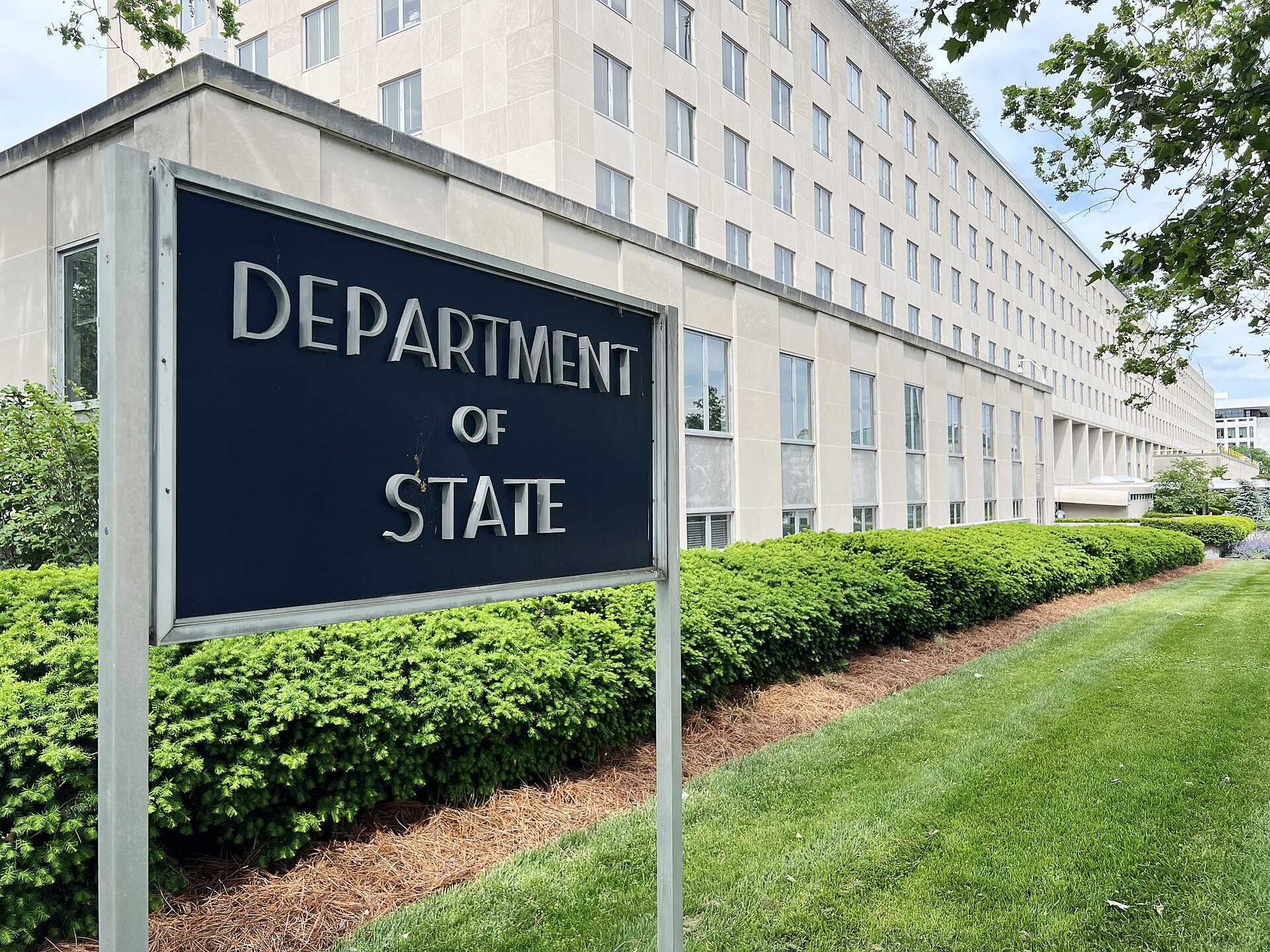
The personnel moves come in two distinct layers, and the distinction matters because the State Department itself is insisting on it. The first layer is formal: earlier this week the department issued an ordered departure for non-emergency US government employees and their family members in Saudi Arabia only — the embassy in Riyadh and the consulates in Jeddah and Dhahran — citing attacks by the Iran-aligned Houthis in Yemen on civilian airports and other critical infrastructure, as Signal Post News reported in its coverage of the Saudi departure order. State Department spokesperson Tommy Pigott restated that position on X on Friday: reports of ordered departures across multiple Gulf embassies are, in his word, “inaccurate”; the ordered departure covers Saudi Arabia only.

The second layer is quieter, and it widened on Friday. CNN reported, citing multiple sources familiar with the matter, that the department has been discreetly adjusting staffing caps at embassies in Jordan, Bahrain, Kuwait, Qatar, the United Arab Emirates and Lebanon. A State Department official confirmed to CNN that four of those — Lebanon, the United Arab Emirates, Qatar and Jordan — “will see temporary changes to staffing levels under restricted operations,” while saying there are no changes to personnel in Kuwait or Bahrain, which suggests those posts are not over their staffing caps. A US official cited by Axios said the intelligence in the Clayton memo is one reason the agency is reducing embassy personnel in the UAE, Lebanon, Qatar and Jordan. None of those four embassies has changed status; they remain on restricted operations, under which, the official said, “staffing levels are constantly evaluated and adjusted.” The accurate summary is therefore narrower than the loudest headline version: one formal ordered departure, in Saudi Arabia, plus confirmed temporary reductions at four more embassies, driven — on the department’s own account — by two threats at once, Houthi attacks and the Iranian plots described in the memo.
‘Groundhog Day’: the families caught in the second evacuation
For the diplomats and families involved, Friday’s moves are a repetition many had only just finished undoing. Families across the region were evacuated in the early weeks of the Iran war, scrambled for housing and schools in the United States, and in recent months had been allowed back — most posts readmitted spouses, though not all readmitted children, CNN reported. Now some are being told to leave again, and this time, sources told CNN, the financial support on offer does not cover the full cost of moving a family, because posts that stay on restricted-operations status do not trigger the same allowances as a formal ordered departure. “To say it has been chaotic is an understatement,” one US diplomat told CNN. A source in Amman described “a very Groundhog Day vibe.” Another source familiar with the departures called the coordination from headquarters “just as much of a shit show” as the evacuation at the start of the war, and said some staff were learning of the moves “through the news instead of their leadership at post.”
The American Foreign Service Association, the foreign service union, said in a statement on Thursday that families outside Saudi Arabia “are being directed to leave without confirmed housing assistance or per diem,” and called it “bureaucratic ping-pong.” “Families deserve to know how they will pay for a place to live before they board a plane,” AFSA spokesperson Nikki Gamer told CNN. Late on Friday, a State Department official told CNN that all US direct-hire personnel and their families “are getting per diem allowances and support for lodging and schools, with per diem allowances consistent with government rates,” and said the department is “committed to using every tool available to help families navigate this difficult time.” Both accounts are on the record; which one matches the experience of any given family in Amman, Abu Dhabi, Doha or Beirut is not something either statement, on its own, settles.

Why this matters
The Clayton memo changes the stated threat, not just the staffing chart. Until this week, Washington’s public case for pulling people out of the Gulf rested on a battlefield logic: the Houthis were shooting at Saudi airports, Iranian and proxy forces had struck US facilities, and diplomats were exposed by geography. An assassination-plot warning is a different category of danger. It describes a state-directed, clandestine effort aimed at named categories of American officials, extending — on the memo’s own wording — beyond the Middle East to “certain other countries.” If the intelligence holds, the risk to US personnel does not end at the embassy gate or at the region’s edge, and protecting officials becomes a global counterintelligence problem rather than a regional air-defence problem. That is also why the memo’s silences matter: it names no targets, no countries and no methods, so neither Congress, nor the families being moved, nor the public can yet judge how specific the threat is. The history here cuts both ways. US prosecutors and intelligence agencies have for years accused Iran of plotting against current and former American officials, and some of those cases have produced indictments and convictions; at the same time, threat warnings issued in the run-up to possible US military action have, in past crises, also served to prepare the public ground for that action — a dual use that readers should hold in mind without treating it as proof either way in this case.
The timing sharpens the question. On the same Friday the memo became public, President Donald Trump told a campaign rally in Fort Myers, Florida, that the United States might launch “another little Epic Fury” — a reference to the US operation against Iran — if Tehran does not agree to US terms, even though he had said earlier this month that Washington would not attack before the November 3 midterm elections. CNN reported that Israel has lobbied, so far unsuccessfully, for more immediate action, and that the staffing adjustments come as Trump has suggested he could relaunch strikes after the midterms. Turkey’s foreign minister, Hakan Fidan, warned on Friday, after hosting counterparts from the Regional Four and the E3 in Istanbul, that a renewed attack on Iran would expand the war and that diplomacy is the only way out. An embassy drawdown fits either story: it is what a government does when it fears retaliation for something an adversary is planning, and it is also what a government does before it acts itself, to reduce the hostages-to-fortune its own strike would create. The documents released so far do not distinguish between those two readings, and officials quoted on Friday supported elements of both.
Background: a mission that has already been hit
The fear for the Riyadh embassy is not abstract. The chancery was damaged and set on fire by two Iranian drones during Tehran’s retaliatory attacks in March 2026, early in the war that began with US and Israeli strikes on Iran on February 28; Saudi authorities described a limited fire and minor damage at the time, while later press research described substantial internal damage, and the embassy closed for a period. Washington returned personnel to the region only gradually over the following months. This week’s Saudi ordered departure — and the October 21 reporting that preceded it, in which Reuters cited officials expecting family departures at other Gulf missions — was the first formal reversal of that return; Friday’s four-country adjustments, now publicly tied by a US official to the assassination-plot intelligence, make it a regional one. Separately on Friday, Reuters reported that Iran has drawn up detailed plans to attack undersea communications cables in the Gulf if the United States and Israel strike again — one more indication, covered in Signal Post News’s reporting on Iran’s cable plans, that both sides are preparing retaliation menus in advance rather than improvising them.
What happens next
Three tests will show what Friday’s warning really was. The first is disclosure: Clayton offered to downgrade the intelligence so it can be shared more widely inside the State Department; whether any of it is shared publicly — targets, countries, methods, or an Iranian response — will determine whether this remains an assertion or becomes an examinable claim. The second is behaviour: if the four-country reductions stay temporary and the Saudi ordered departure is lifted after the midterms, the episode reads as precaution; if staffing falls further, or missions change status formally, it reads as preparation. The third is November 3 itself. Trump has paired the threat of renewed strikes with the claim that the war could be ended quickly or left to “wither” — the choice he laid out on the South Lawn on Friday, covered in Signal Post News’s report on those remarks. For the families boarding planes out of Amman, Abu Dhabi, Doha and Beirut this weekend, that strategic ambiguity is not abstract. It is a lease broken twice in one year, a school place surrendered twice, and a per diem argument with their own government about what the second time should cost.
Sources
- CNN — US discreetly moves diplomats and families from multiple Middle Eastern countries as escalation fears grow (Oct. 23, updated Friday)
- Newsmax / AP — Iran Assassination Plots at ‘Advanced Stages’: US Intel (Oct. 23)
- Jerusalem Post via JBizNews — US intel warns of Iranian assassination plots, prompting accelerated diplomat evacuations; official confirms warning to the Post (Oct. 24)
- IANS via AsiaPost — US intelligence chief warns of advanced Iranian plots against American officials; US official confirms the memo (Oct. 24)
- Anadolu via EuropeSays — Iran intensifies plots against US officials in Mideast, Axios report and US official comment (Oct. 24)
- Reuters — Trump says US may do another military operation against Iran (Oct. 23)
- Reuters — Iran has detailed plans to hit Gulf undersea cables if war resumes, officials say (Oct. 23)