U.S. / Las Vegas — The United flight 1681 hijack text scare began with a glance over a passenger’s shoulder on a Saturday-night departure out of Las Vegas. Minutes after takeoff for Newark, a flight attendant saw a man texting that he was going to hijack the aircraft, quietly alerted the cockpit, and the Boeing 737 went into lockdown and turned back — while, by the pilot’s own account to air traffic control, the passenger never knew anything was happening. He was arrested when the jet landed back at Harry Reid International Airport, and the Federal Aviation Administration says it will investigate.
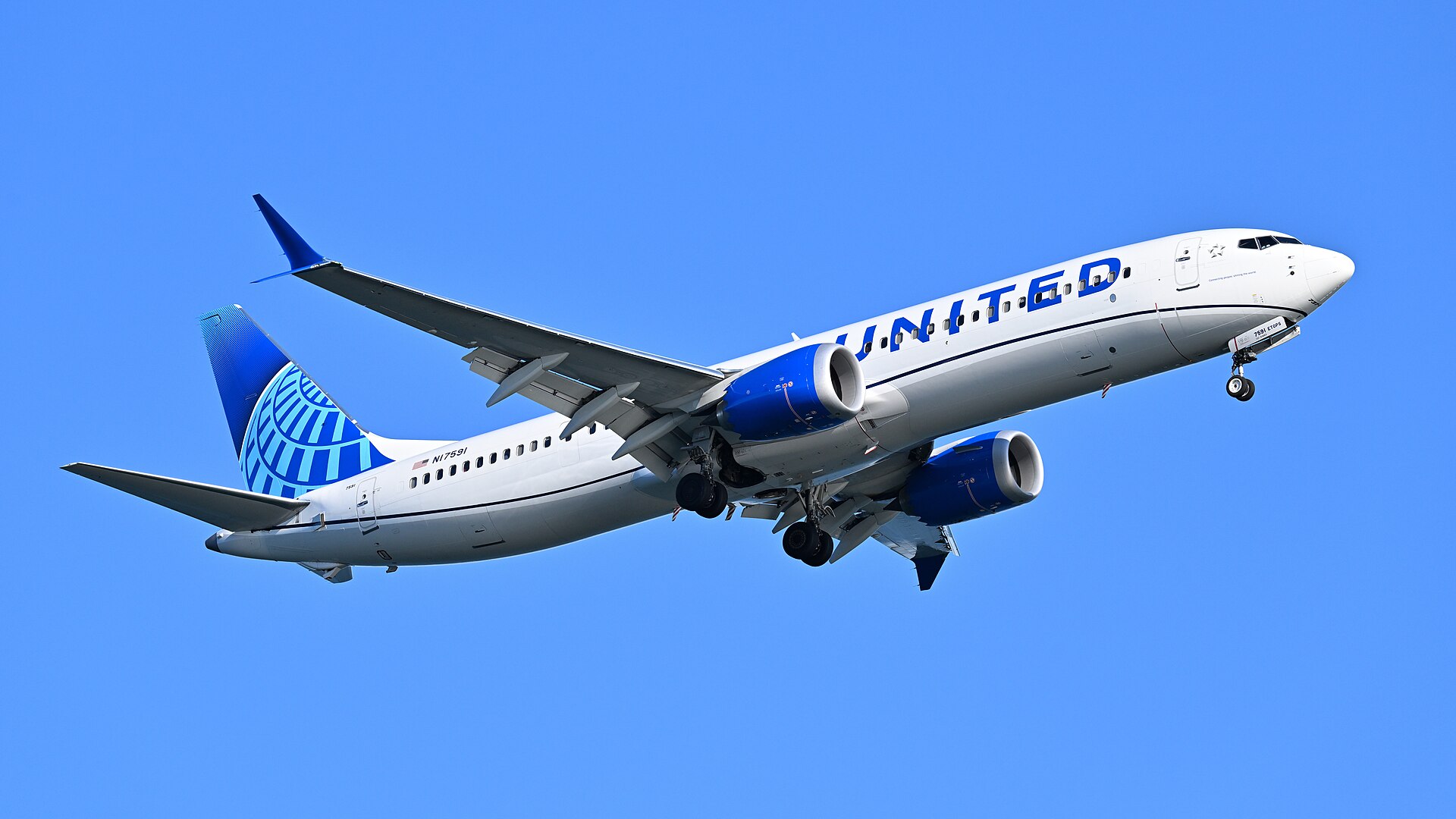
The United flight 1681 hijack text incident unfolded on Saturday night, October 24, 2026, aboard a United Airlines Boeing 737 that had just departed Harry Reid International Airport in Las Vegas with 150 passengers and six crew members, bound for Newark Liberty International Airport in New Jersey. Shortly after takeoff, according to cockpit audio reported by CBS News and shared via ATC.com, a flight attendant saw a passenger sending a message saying he was going to hijack the aircraft. She did not confront him. Instead, she alerted the flight deck — and set in motion a full security response that ended with the jet back on the ground in Las Vegas, the cabin emptied, the aircraft inspected and one man in handcuffs. Investigators have not established that any real hijack plan existed, the passenger’s intent remains unknown, and the charge against him is an allegation: like every defendant, he is presumed innocent unless prosecutors prove otherwise.
What happened on Flight 1681: the flight attendant spots hijack text
The sequence, as the crew described it in real time, was fast and deliberately quiet. The flight attendant spots hijack text on the passenger’s phone as she moved through the cabin shortly after departure, and rather than engage the man she passed the information to the cockpit. In the cockpit audio reported by CBS News and ATC.com, the pilot can be heard explaining the situation to air traffic control in strikingly calm terms: “The flight attendant saw him texting that he was going to hijack the aircraft. They called me, we went into lockdown, and we returned to Vegas.”
Lockdown, in this context, means the reinforced cockpit door stays shut and secured, no one enters or leaves the flight deck, and the crew works the problem without alerting the cabin. The reason for the silence becomes clear in the next exchange. Asked by the controller whether the passenger was compliant or restrained, the pilot answered that the man “does not know anything is going on,” that he was compliant precisely because he was unaware, and that no restraint was needed. The crew’s judgment was that the safest course was to keep the flight looking and feeling normal while the aircraft quietly reversed course — a United flight Las Vegas to Newark diverted back to its own departure airport before most of the 150 people on board understood anything was wrong.
A criminal complaint reportedly describes more messages
What exactly the messages said, and to whom they were sent, remains only partly clear. A criminal complaint in the case reportedly described messages threatening to hijack the aircraft and to target a particular row of passengers. That detail is reported, not established: investigators have not publicly laid out the full circumstances of the messages, who the intended recipient was, or whether the texts were a genuine plan, a threat meant to frighten someone, a reckless joke, or something else entirely. The distinction matters enormously for what happens in court, and it is the central question investigators now have to answer.
The return: fuel loops, an 11:05 p.m. landing and an FAA passenger disturbance investigation
Turning a fully loaded transcontinental jet around minutes after takeoff creates an immediate technical problem: weight. The 737 had been fuelled for a cross-country flight to Newark, and a Boeing 737 cannot dump fuel — unlike larger wide-body jets, it has no fuel-jettison system. Reporting on the flight says the crew flew loops to burn fuel before landing, bringing the aircraft down toward a safer landing weight rather than putting a heavy jet straight back onto the runway. The Federal Aviation Administration’s statement fixed the official timeline: “United Airlines Flight 1681 returned safely to Harry Reid International Airport in Las Vegas around 11:05 p.m. local time on Saturday, Oct. 24, after the crew reported a passenger disturbance.” The FAA said it will investigate, as it does after crew-reported disturbances of this kind.
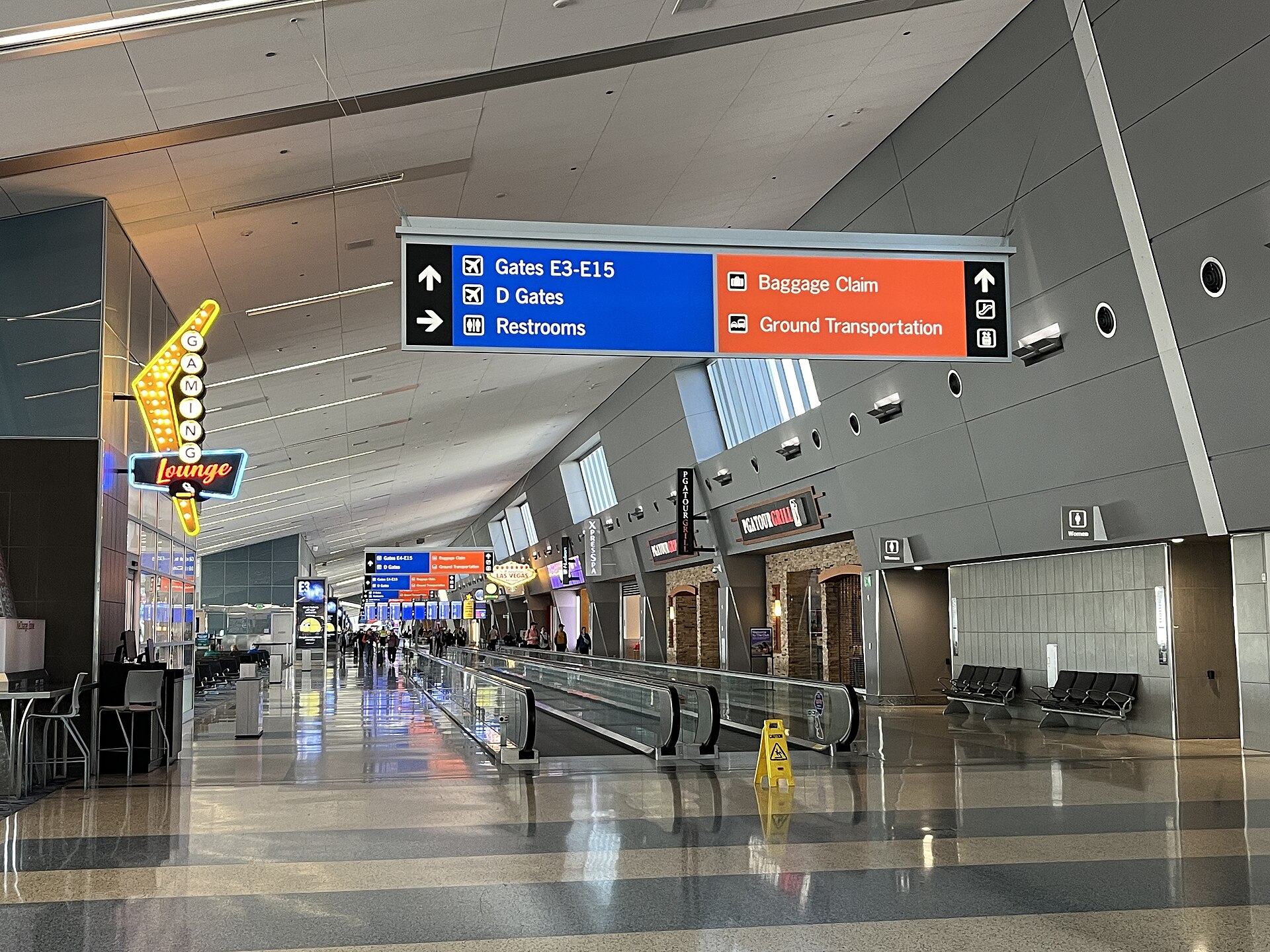
United’s own statement was equally spare: “United flight 1681 from Las Vegas to Newark on Saturday, Oct. 24, safely returned to Las Vegas to address a potential security concern.” Once the aircraft was on the ground, passengers were taken off and the jet was inspected before it could fly again — the standard sequence when a specific threat has been reported against a specific aircraft, because the crew cannot certify the cabin is clear from the flight deck. No injuries were reported at any point.
For the 150 passengers, the night was still not over. Even with the aircraft inspected and cleared, the flight could not simply leave again: the crew had reached the legal limit of their duty day, a hard regulatory ceiling known as a crew timeout, designed to keep fatigued pilots out of the cockpit. So a United Airlines flight returns to Las Vegas story became an overnight stay. The flight was delayed overnight due to the crew timeout and departed for Newark on Sunday morning, October 25.
The arrest: a 25-year-old man, a $10,000 bail and an October 27 court date
On the ground, the Harry Reid airport security concern became a police matter. The Las Vegas Metropolitan Police Department said, in reporting carried by KLAS/Nexstar and the Associated Press, that a 25-year-old man was arrested on landing and charged with making a threat or conveying false information regarding an act of terrorism. Bail was set at $10,000; he posted it, was released, and is scheduled to appear in court on October 27. Reporting by AP and KLAS did not release his name, and Signal Post News is not naming him: the charge is an allegation, no court has tested the evidence, and the question of what the messages meant — the heart of the case — is unresolved.
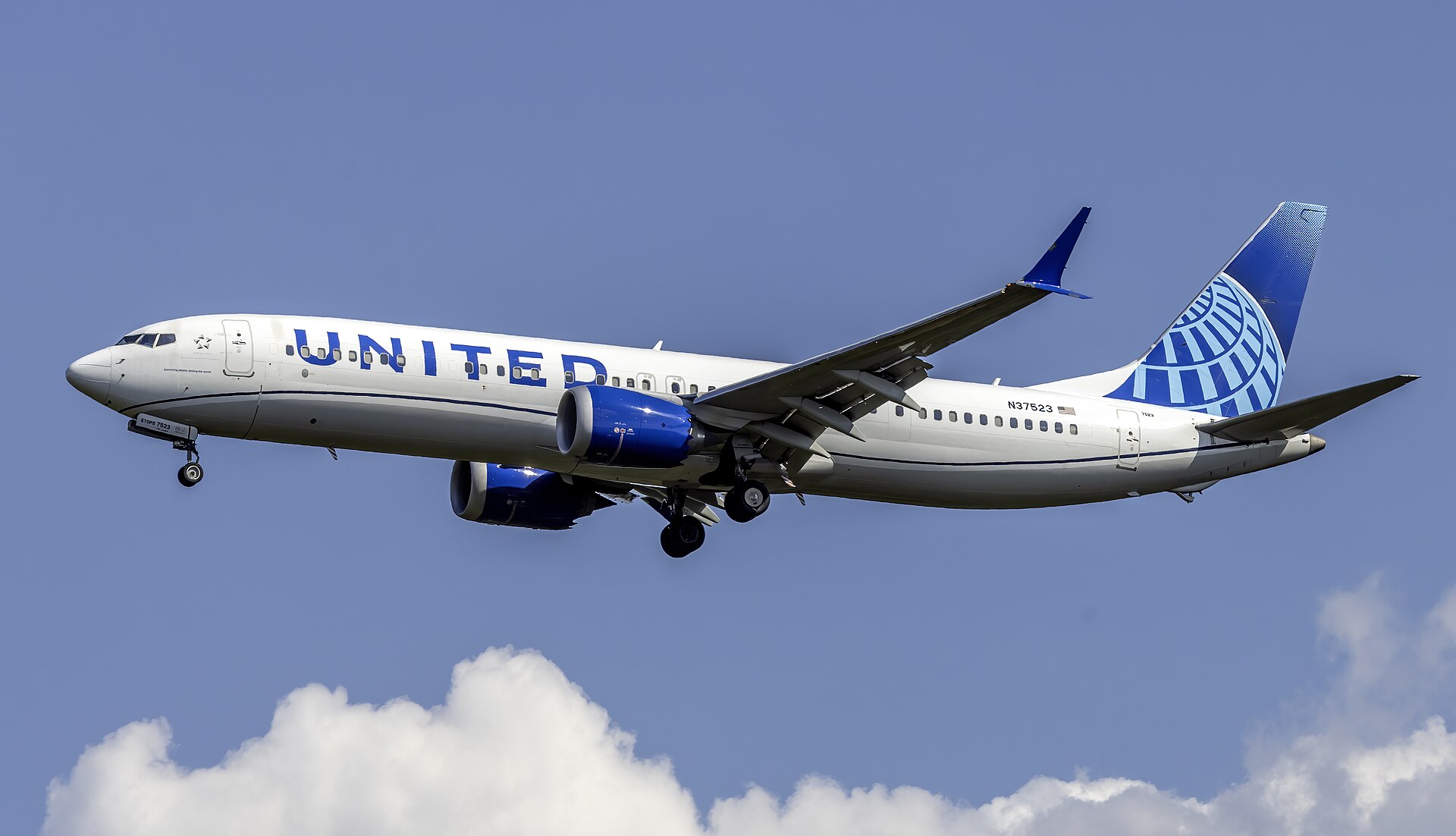
The passenger arrested over terroristic threats on a flight now faces a legal process with two separate tracks. The criminal case in Nevada will test whether prosecutors can prove the messages were his, what they said, and what he intended by them. In parallel, the FAA passenger disturbance investigation will examine the event from the aviation side — crew reports, the disturbance classification and whether federal enforcement action, which can include substantial civil penalties, is warranted. The two processes run independently, and neither has announced conclusions.
Why this matters
Flight 1681 is a case study in how modern aviation security actually works: a single text message, seen by chance over a passenger’s shoulder, is enough to turn a 150-seat jet around, empty and inspect it, arrest a man and strand a planeload of travellers overnight. That is not an overreaction built into the system by accident. It is the system working exactly as it was designed after September 11, 2001 — on the principle that a crew in flight has no way, and no time, to judge whether a threat is real.
The legal exposure for a threat message — even a “joke”
The second reason this matters is the legal trap the case illustrates for anyone tempted to treat a hijack message as humour. Federal law treats false or threatening statements about attacking an aircraft with complete seriousness; under U.S. Department of Justice guidance, conveying false information about an attempt to damage or destroy an aircraft, when done maliciously or with reckless disregard for the safety of human life, carries up to five years in prison, alongside fines and the state charges a passenger can face where the plane lands. “I was joking” is not a shield written into that framework, because from the crew’s seat there is no reliable way to tell a joke from a plan until it is too late. The Nevada charge the arrested man faces — making a threat or conveying false information regarding an act of terrorism — reflects the same logic at state level. He is nonetheless entitled to the presumption of innocence, and whether the government can prove intent is precisely what his court appearances will decide.
The cost of a turnback
There is also a bill, and it is not small. A turnback like this one burns thousands of pounds of fuel on the climb-out and the fuel-burn loops, takes an aircraft and a crew out of the network for a night, triggers an inspection, and delays 150 passengers by roughly half a day each — missed connections, lost work, hotel and rebooking costs spread across the airline and its customers. Multiply one passenger’s phone messages by those consequences and the arithmetic of why airlines and regulators respond at full scale becomes clearer: the cost of the response is large, but it is bounded and known, while the cost of waving off a real threat is not.
Context: lockdowns, reinforced doors and the pattern of disturbance diversions
Almost everything the Flight 1681 crew did traces back to the security architecture built after 9/11. Cockpit doors were hardened and reinforced, procedures were rewritten so the flight deck stays locked down during any cabin security event, and cabin crew were trained to report threats up the chain rather than confront passengers themselves — exactly the sequence heard on the cockpit audio, when the attendant passed what she saw to the pilots and the door stayed shut. The doctrine underneath it is simple and unforgiving: intent cannot be judged in the cabin. A flight attendant cannot interview a passenger about whether his hijack text was sincere, and a captain cannot gamble 156 lives on the answer, so every reported threat is treated as credible until people with badges and time can sort it out on the ground.
Flight 1681 also fits a recent pattern. U.S. airlines have dealt with a steady run of passenger-disturbance diversions in recent years — flights turned around or diverted for unruly behaviour, threats, and security scares, each one pulling in local police and an FAA investigation. The FAA investigates crew-reported disturbances as a matter of course, and its enforcement data has become one of the running measures of how strained behaviour in the cabin remains. What made Saturday’s case unusual was not the machinery of the response but its trigger: not a disturbance anyone could hear, but a silent phone screen, and a passenger who, in the pilot’s words, did not know anything was going on.
“No safe alternative” — and the critics who ask questions anyway
The response has its defenders and its questioners, and both deserve a hearing. Security professionals argue there is no safe alternative to what the crew did: once a specific threat against a specific aircraft is reported, the only defensible options are to land, clear the aircraft and let investigators work, because the downside of being wrong is catastrophic and irreversible. Critics of the full-scale response ask a narrower question: whether a text glimpsed over a shoulder — with no weapon, no accomplice, no attempt on the cockpit door and a passenger who sat quietly unaware — should automatically command the maximum response, and what that means for privacy and proportionality when the evidence is, at first sight, a few words on a screen. The honest answer from inside the industry is that the system is deliberately built to deny crews that discretion at altitude. The place where proportionality gets weighed is not the cockpit at 24,000 feet; it is the courtroom, where prosecutors must prove what the messages were and what they meant, and where the accused man’s side of the story will be heard.
Each perspective in the story sees a different piece of it. The passengers saw an unexplained return and a lost night, and most learned why only later. The crew saw a textbook procedure executed the way they train it. United saw a “potential security concern” handled with no injuries and a flight completed the next morning. Police and the FAA see an open investigation. And the accused — unnamed in the reporting, out on $10,000 bail — sees the start of a case in which the state must prove that words on a phone were a crime, not merely a terrible idea.
What happens next
The immediate date is Tuesday, October 27, when the arrested man is scheduled to appear in court in Las Vegas. That appearance will begin the process of testing the charge — making a threat or conveying false information regarding an act of terrorism — and it is there, not in the first night’s reporting, that the central facts will be established: what the messages actually said, who they were sent to, and whether investigators can show they reflected a genuine plan, a deliberate threat, or reckless words with no plan behind them. The FAA’s investigation runs on its own track and timetable; the agency does not announce findings on a schedule, and its conclusions could range from no further action to enforcement measures separate from the criminal case. For the other 149 passengers and six crew of Flight 1681, the story ended on Sunday morning, when their flight finally left Las Vegas for Newark. Why did United flight 1681 turn around? Until the court and the FAA finish their work, the complete answer rests on what investigators can prove about a few lines of text — and on a crew that decided, correctly or not, that they could not afford to wait and find out at altitude.
More from Signal Post News: the Flydubai FZ1073 cockpit attack and terror probe · American Airlines Flight 41’s blown tire and evacuation at O’Hare · Typhoon Champi shuts down Taiwan and cancels flights across the region
Sources
- KLAS / Nexstar, via Louisiana First News, October 26, 2026: “Concerning ‘hijack’ text prompts United flight to turn back, cockpit audio indicates” — the Las Vegas return, the cockpit audio, United’s statement and the Las Vegas Metropolitan Police Department arrest account — louisianafirstnews.com.
- CBS News reporting of the cockpit audio (ATC.com recording), as carried by the New York Post, October 26, 2026: the pilot’s “we went into lockdown, and we returned to Vegas” account and the passenger’s unaware, unrestrained status — nypost.com.
- Federal Aviation Administration statement, as reported by the New York Post, October 26, 2026: Flight 1681 “returned safely to Harry Reid International Airport in Las Vegas around 11:05 p.m. local time on Saturday, Oct. 24, after the crew reported a passenger disturbance”; the FAA will investigate — nypost.com.
- Associated Press reporting, via TravelTalk, October 26, 2026: the arrest of a 25-year-old man on a charge of making a threat or conveying false information regarding an act of terrorism, and the criminal complaint’s reported description of the messages — traveltalkmedia.com.au.
- Simple Flying, October 26, 2026: departure timing, the fuel-burn return and United’s statement on the overnight crew-timeout delay — simpleflying.com.