Flydubai FZ1073 cockpit stabbing
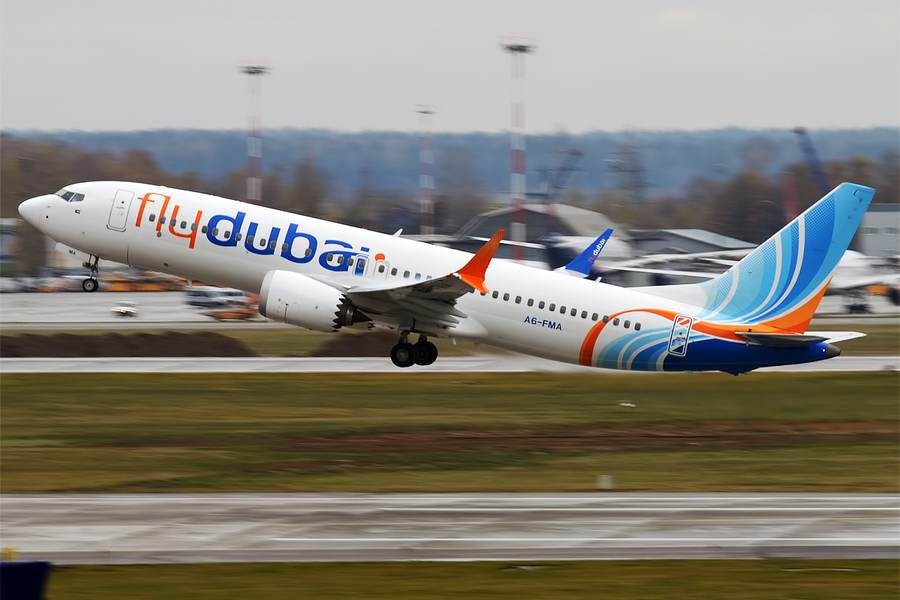
TABUK, Saudi Arabia — The Flydubai FZ1073 cockpit stabbing was no longer merely an unexplained diversion by Wednesday evening. Israeli officials said the co-pilot stabbed Captain Smit Machchhar at 34,000 feet and tried to bring down the Dubai-to-Tel Aviv jet. Machchhar, seriously wounded, fought long enough to release the cockpit door. Cabin crew and passengers forced their way in, overpowered the attacker and summoned two relief pilots traveling aboard. They stabilized the Boeing 737 MAX 8 and landed at Tabuk with roughly 174 people safe.
The official investigation is still open, and the language matters. Flydubai has called what happened an “incident,” said the aircraft was secured by crew traveling on the flight and urged against premature speculation. Prime Minister Benjamin Netanyahu said the co-pilot apparently tried to crash the plane but stopped short of formally declaring terrorism. Three Israeli officials told Reuters that their current assessment was an attempted terror attack rather than a mental-health episode. The alleged attacker, described by an Israeli official as an Omani national and reported to have worked for Flydubai for less than a year, was expected to be questioned by Saudi authorities.
Those distinctions should not be flattened for drama. Motive has not been established publicly, and neither Flydubai nor Saudi investigators have released a full cockpit reconstruction. But the physical facts already reveal a failure at the most protected point in commercial aviation and an extraordinary chain of human intervention. This was not one hero. It was a relay: an injured captain opened the door, passengers and crew subdued the threat, Yaniv Hayoun helped arrest the dive, and qualified pilots brought the jet to the ground.
Why this matters
Post-9/11 aviation security is designed around keeping attackers out of the flight deck. FZ1073 presents the harder problem: what happens when the alleged attacker is already trusted to sit inside it. Hardened doors, screened passengers and armed responses address intrusion. They are less useful against an insider with authorized access and direct command of the controls.
That is why the FZ1073 terror attack investigation cannot end with a motive label. If the attack was ideological, vetting systems must explain what they missed. If it arose from another cause, medical monitoring, peer reporting and cockpit staffing deserve the same scrutiny. The immediate political language will be loud because most passengers were Israelis and the flight occurred days before a closely watched Israeli election. The aviation lesson must be quieter and more exact: security systems fail when they are built to recognize only the last threat.
The diplomacy is nearly as striking. A mass group of Israelis landed unexpectedly in Saudi Arabia, a state with no diplomatic relations with Israel. Saudi Arabia opened its airspace to Israel-bound flights in 2022 under a U.S.-brokered normalization push. On Wednesday, that arrangement became an emergency-rescue corridor. Israel scrambled fighters after the alert, Netanyahu convened a security consultation, and Saudi controllers and emergency teams received the wounded aircraft. Coordination existed where formal relations did not.
How the disaster was averted — the 90 seconds that saved 174 lives
Around 7 a.m., Dubai: FZ1073 departed for Tel Aviv with a mostly Israeli passenger load. The 737 MAX 8 climbed to 34,000 feet. For roughly two and a half hours, it looked like an ordinary scheduled flight.
At cruise altitude: Israeli officials say the co-pilot attacked Machchhar inside the locked cockpit. The aircraft pitched into a violent descent. CNN, citing flight-tracking data, reported a 17,400-foot loss — from 34,000 feet to about 16,600 feet — in just over two minutes. Other tracking accounts measured an even sharper 14,000-foot segment in under 30 seconds. These figures describe different windows of the same unstable episode, not necessarily competing events.
The decisive window: Machchhar, bleeding heavily, reached the door-release control. That act converted a sealed cockpit from a trap into a route for rescue. Passengers and cabin crew entered, pulled the alleged attacker away from the instruments and restrained him. Netanyahu later called the Indian captain a hero for resisting despite his wounds. He called passenger Yaniv Hayoun a hero too. President Donald Trump, recounting what Netanyahu told him, said Hayoun — a plumber by trade — took hold of the controls and helped level the aircraft before a qualified pilot relieved him. Trump explicitly cautioned that he was relaying the account he had heard.
The signals: The transponder sequence moved from squawk 7700, the international code for a general emergency, to 7500, denoting unlawful interference, then back to 7700. Flightradar24 logged 7700 at 05:28:48 UTC and 7500 at 05:35 UTC before the return to a general emergency on approach. The change told controllers that this was more than a mechanical diversion and then that the immediate interference had apparently been contained.
The recovery: Two Flydubai pilots traveling on the aircraft took command. Passengers described them as European relief pilots, one reportedly British. They arrested the descent, managed a damaged and chaotic cockpit and diverted west to Prince Sultan bin Abdulaziz International Airport in Tabuk. The airport said it received a distress call at 8:44 a.m. local time; the aircraft landed at about 9:44–9:45 a.m. Both cockpit pilots went to hospital. Every passenger was accounted for.
The headline says “90 seconds” because that was the human interval that mattered: the span between an uncontrolled aircraft becoming unrecoverable and enough people doing the next necessary thing. Exact second-by-second control inputs await flight-recorder evidence. What is already clear is that no single intervention would have been sufficient. Courage opened the door; force removed the threat; training landed the plane.
Background: cockpit security and the insider threat
After September 11, airlines hardened cockpit doors and rewrote access procedures. Many carriers or regulators adopted a two-person principle under which another authorized crew member enters when a pilot leaves, though policies vary and some jurisdictions later reconsidered blanket mandates. The underlying idea is sound: no lone person should have unobserved control of an aircraft for an extended period. FZ1073 asks a more uncomfortable question because two pilots were present and the danger allegedly came from one of them.
Germanwings Flight 9525 in 2015 remains the modern reference point. Investigators concluded that a co-pilot deliberately flew an Airbus A320 into the French Alps, killing all 150 aboard, after locking the captain out. EgyptAir Flight 990 in 1999, which killed 217, remains officially disputed between U.S. and Egyptian authorities, but it likewise placed cockpit intent and crew oversight at the center of the inquiry. Neither case is a template for FZ1073. They are precedents for the institutional problem: pilot access is necessarily powerful, and screening cannot guarantee that risk remains static after hiring.
Pilot vetting generally layers identity and criminal-background checks, licensing records, medical certification, training evaluations, recurrent simulator checks and internal performance reporting. Airlines may add security screening tailored to routes and national requirements. Yet systems are fragmented across employers and states, privacy law constrains medical disclosure, and behavioral warning signs are often ambiguous until viewed in hindsight. An employee with less than a year at an airline should not automatically be treated as suspect; the relevant question is what the hiring file, training record, security checks and recent conduct actually showed.
Israel has already signaled a policy response. A spokesperson for Netanyahu’s office told Reuters that authorities would intensify checks on pilots operating flights into Israel, including crews working for foreign carriers. That may be defensible for high-risk routes, but it must be designed as more than nationality screening. A serious insider-threat program follows conduct, access, stressors and reporting channels while preserving due process. Profiling is easy to announce and poor at identifying the person who does not fit the profile.
Who benefits, who loses, what critics say
The clearest beneficiaries are future passengers if the investigation produces usable reforms rather than a political slogan. The rare presence of two relief pilots aboard FZ1073 created redundancy beyond the minimum cockpit crew. No regulator can assume that luck on every flight, but carriers can examine when deadheading or positioning crews provide an emergency resource and how cabin staff should identify qualified passengers without creating confusion.
Flydubai and the UAE General Civil Aviation Authority face the hardest questions. Critics will ask how an Omani first officer reportedly employed for less than a year was hired, assessed and monitored; whether any warning was documented; what items entered the cockpit; and whether the crew pairing exposed a known conflict. The airline is right to resist a verdict before evidence. It cannot use caution as a substitute for disclosure once investigators establish the facts.
Saudi Arabia and Israel gain evidence that operational coordination can work. Controllers, airport responders and security officials handled a uniquely sensitive arrival without a diplomatic relationship. But the episode also creates political risk. Netanyahu’s supporters can point to decisive crisis management and Israeli resilience days before an election; opponents can ask whether an unfinished investigation is being folded too quickly into a campaign narrative. Aviation security should not become an electoral prop.
The passengers and off-duty crew emerge as the last line of defense — and that is both inspiring and alarming. Hayoun, fellow passengers, cabin crew, the relief pilots and the wounded captain deserve recognition. A safety system should still be judged by why untrained passengers had to fight for the cockpit and why qualified replacements happened to be in the cabin. Heroism is a rescue, not a policy.
What the numbers say
The most important number is the descent rate. Losing 17,400 feet in a little over two minutes implies an average near 8,000 feet per minute, with sharper bursts inside that window. A routine airliner descent is commonly around 1,500 to 3,000 feet per minute; a controlled emergency descent after depressurization can be much steeper. FZ1073’s oscillations, speed changes and abrupt recovery were not the smooth profile of either. They reflected an aircraft whose command was being contested.
The code sequence is equally revealing. Squawk 7700 buys priority handling for any grave emergency. Squawk 7500 quietly tells controllers there is unlawful interference. Returning to 7700 near Tabuk was consistent with a threat that had been contained but an aircraft that still required urgent assistance. Transponder codes are not a courtroom finding, yet they preserve the crew’s real-time assessment before public relations language begins.
The aircraft type requires context without opportunism. The 737 MAX was grounded worldwide after the Lion Air and Ethiopian Airlines crashes killed 346 people in 2018 and 2019, leading to extensive changes in flight-control software, training and oversight. There is no public evidence that the MAX’s design or its corrected systems caused this episode. Conflating a cockpit attack with the MAX’s earlier certification failures would obscure both investigations. The relevant question here is how the aircraft responded to extreme manual inputs and what the flight-data recorder shows.
There is no clean global statistic for “cockpit insider attacks.” Databases divide events among unlawful interference, pilot suicide, crew assault, security breach and accident categories; some cases remain disputed. That scarcity is evidence of rarity, not proof of impossibility. The correct denominator is millions of safe flights — and the correct response to an outlier is to study it closely because standard frequency models are least useful for high-consequence events.
What happens next
The first track is criminal. Saudi authorities control the scene, the detained suspect, hospital access and initial witness statements. They will need cockpit-voice and flight-data recorders, medical evidence, the alleged weapon, crew scheduling records and passenger video. Because the flight involved a UAE carrier and was bound for Israel, evidence-sharing will test legal cooperation among governments that do not all have formal relations.
The second track is regulatory. Flydubai and the GCAA will review hiring, recurrent checks, cockpit access, crew pairing and onboard security response. Israel has already promised tighter pilot checks for inbound flights. The best reform would be reciprocal and risk-based: better cross-border verification of licenses and disciplinary histories, protected channels for reporting behavioral concerns, and rapid notification when a pilot’s risk profile changes. A nationality filter would be cruder, less fair and less effective.
The third track is financial. Insurers will examine damage to the aircraft, medical costs, passenger claims, delay and repatriation expenses, and whether any exclusion tied to deliberate acts applies. Liability may turn on where the event is legally deemed to have occurred, the carrier’s duty of care and what the employer reasonably could have known. Those questions will move slowly even if the criminal account becomes clear.
The final track is political. Netanyahu will cite Machchhar and Hayoun as proof that individual resolve stopped catastrophe. That is true as far as it goes. Election fallout will depend on whether the investigation validates the terror assessment, reveals ignored warnings, or instead points to a motive that resists campaign framing. Saudi Arabia, meanwhile, can present the landing as professional humanitarian action without changing its diplomatic position on Israel.
The most likely near-term outcome is a Saudi-led factual inquiry followed by parallel UAE aviation and Israeli security reviews, with tighter identity checks announced before the deeper causes are known. The more important test comes later: whether regulators turn cockpit evidence into precise reforms after public attention moves on. FZ1073 survived because a captain spent his remaining strength opening a door and strangers acted before institutions could. The next measure of success is making sure another crew never has to depend on the same improbable sequence.
Sources and reporting notes
- Reuters — Israeli officials’ terror assessment, alleged attacker’s nationality, passenger safety and early official responses.
- Reuters eyewitness follow-up — passengers’ accounts, the captain’s door release and the struggle inside the cockpit.
- Reuters aviation-security analysis — proposed Israeli checks and pilot-vetting questions.
- CNN — the 17,400-foot descent, Israeli fighter response, security consultation and Saudi-Israeli aviation context.
- USA Today — cockpit-security procedures, official cautions and U.S. aviation precedent.
- New York Post — passenger accounts identifying the two relief pilots and the reported 34,000-foot attack timeline.
- New York Post follow-up — Hayoun’s account and Trump’s description of the plumber’s intervention.
- Flightradar24 — ADS-B timeline, altitude changes and the 7700→7500→7700 transponder sequence.
- Associated Press via CompuServe — the emergency response, fighter scramble, passenger accounts and Mideast developments.
- Flydubai, UAE GCAA and Tabuk Airport statements via Gulf Business — safe landing, both pilots hospitalized, formal investigation and the airline’s warning against premature speculation.
Published as a September 30, 2026 snapshot. The alleged attacker’s motive, precise employment history and second-by-second cockpit sequence remain subject to Saudi and UAE investigation. Where official accounts diverge, this article identifies the attribution rather than treating an allegation as a final finding.