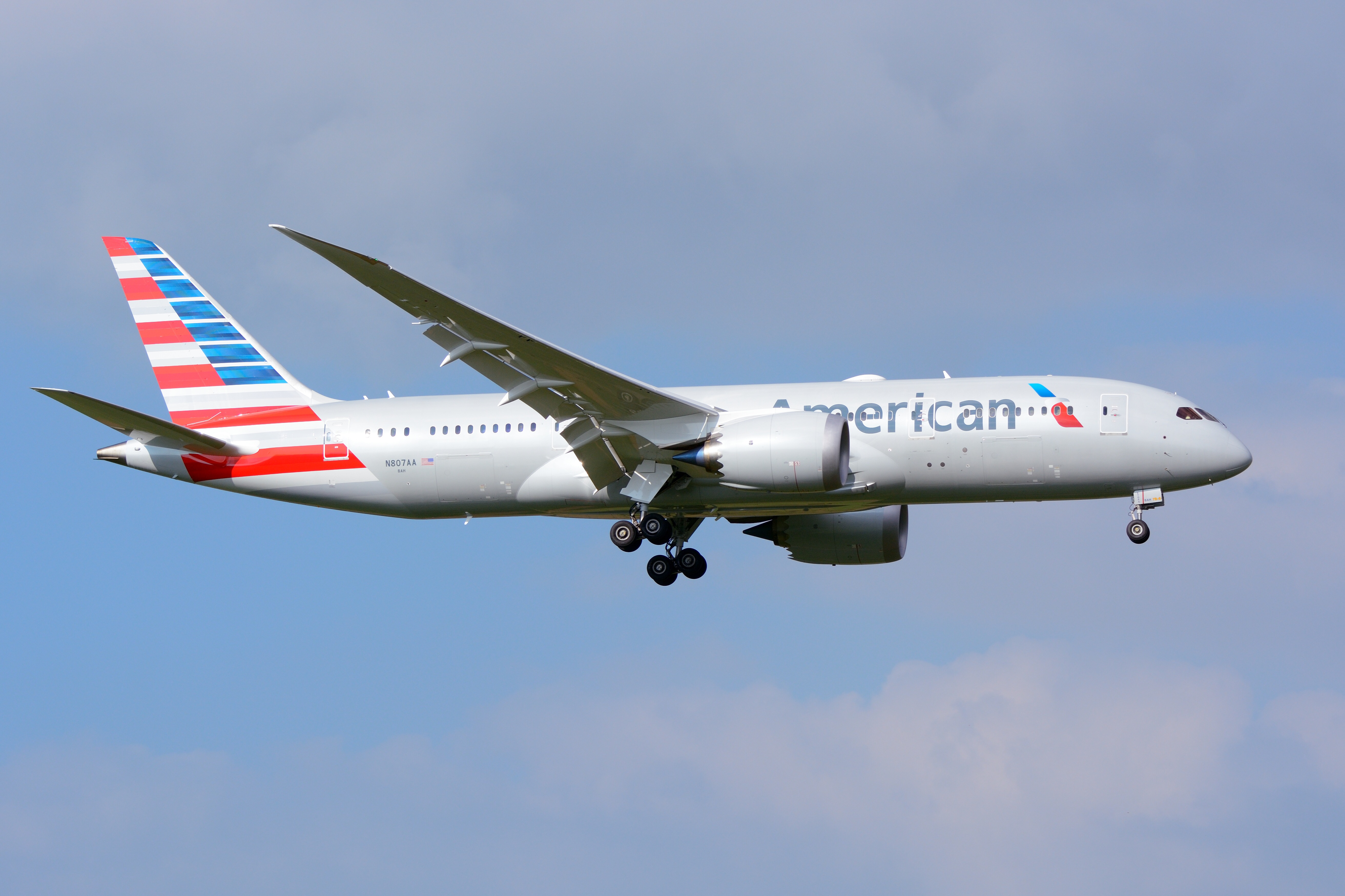
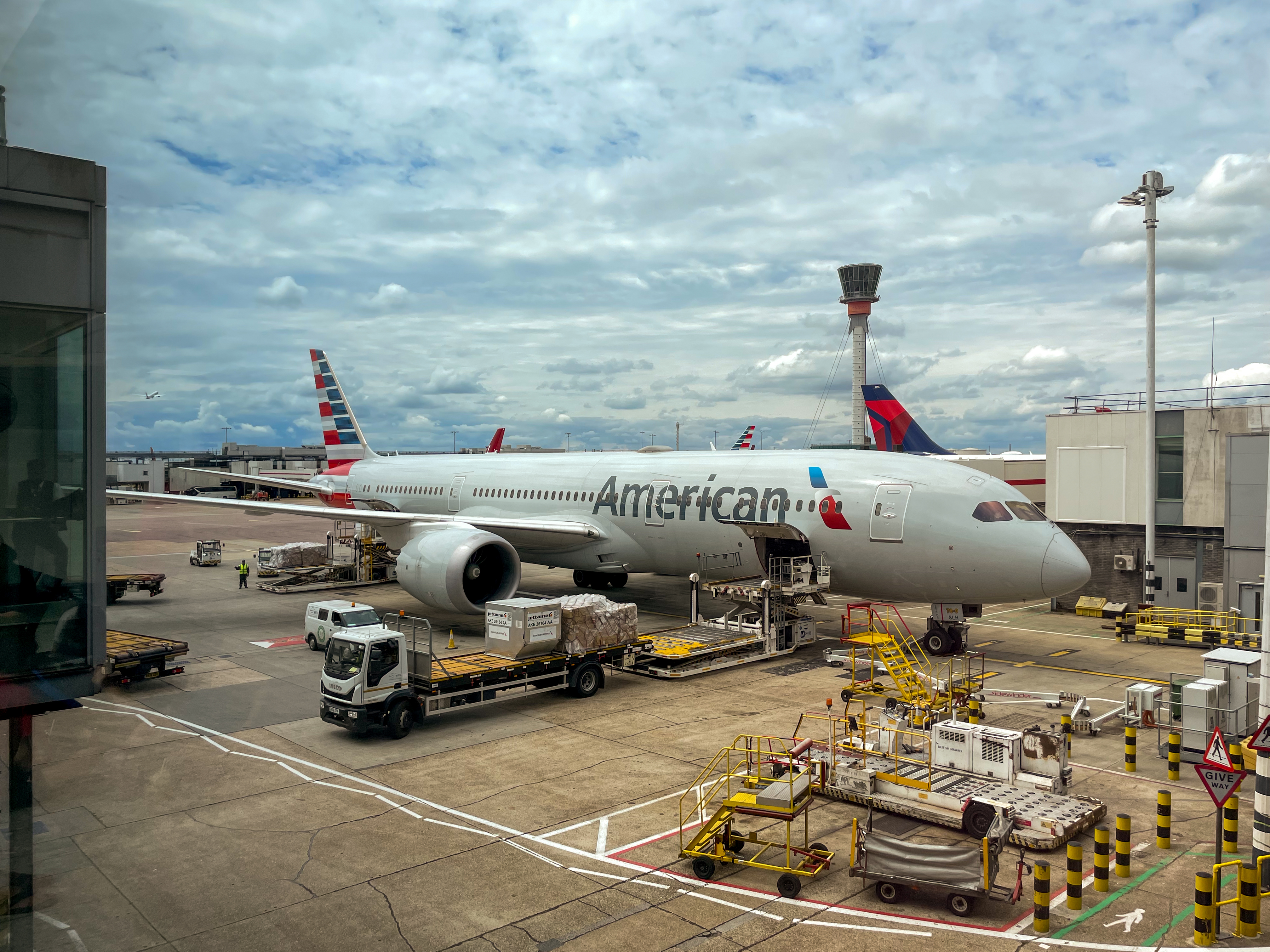
An American Airlines O’Hare blown tire turned a routine transatlantic arrival into a tarmac evacuation on Tuesday afternoon, after Flight 41 from Barcelona reported a brake problem on landing, blew a tire, and left 245 people to walk down mobile stairs while fire crews surrounded the Boeing 787 on the ground at Chicago O’Hare International Airport.
United States / Aviation — the Barcelona Dreamliner landed safely, but what happened in the last seconds of the rollout is now an FAA investigation
What happened on the runway
The sequence, as the FAA described it to reporters, was short and mechanical. Flight 41 completed the roughly nine-hour crossing from Barcelona and touched down at O’Hare at about 2:30 p.m. Central time. The crew reported a brake issue, and then a blown tire after landing. The jet stopped on the airport surface, emergency vehicles moved in around it, and the normal end of an international flight — a jet bridge, a terminal, a baggage claim — was replaced by mobile stairs, buses, and fire trucks.
The Chicago Fire Department, which reached the aircraft on the tarmac, initially reported that two tires were flat when its crews arrived. CBS Chicago reported that the pilots suspected the brakes had locked up, causing the tires to blow. American Airlines gave a more cautious version: the aircraft experienced a tire issue, first responders met it “out of an abundance of caution,” and customers were transported safely to the terminal by bus. There were 234 customers and 11 crew members aboard — 245 people in total.
On the one point where the early accounts differ, both versions are on the record here. The fire department said one person was taken to a local hospital in good condition; ABC7 Chicago said it was still working to determine whether that person was injured during the landing itself. American’s initial statement did not report injuries. What is not in dispute is the outcome that matters most: the airplane landed, everyone got off it under their own power down the stairs, and no one was seriously hurt.
Why this matters
A blown tire on landing sounds minor, and on Tuesday it was — which is precisely why it deserves a closer look. Landing is the phase of flight where an airliner carries the most concentrated energy into the smallest margin for error: a widebody arriving from a transatlantic sector is heavy, fast, and committed. The brakes on a Boeing 787 are carbon-composite units built to absorb enormous heat in seconds. When a brake problem and a tire failure arrive together in the rollout, investigators do not treat it as bad luck. They treat it as a chain — brake, heat, tire, in that order or another — and chains are exactly what aviation safety exists to break before they repeat.
That is why the FAA’s three-word commitment — it “will investigate” — is the real news inside a story with a happy ending. The question the investigation has to answer is narrow and consequential: was this a one-off component failure on one airplane on one afternoon, or an early signal about brake behavior on a fleet American uses for its longest routes? The airline has removed the jet from service for its own maintenance inspection in parallel, which is the correct and standard move, but only the federal review can say whether other 787 operators need to hear about it.
There is a second, quieter reason this matters, and it is about O’Hare itself. The airport handled about 80 million passengers in 2024 and remains one of American’s largest hubs. Local coverage noted that Tuesday’s landing follows several recent tire and landing-gear problems at O’Hare that have already drawn scrutiny. One incident is an incident. A pattern at a single airport invites a different set of questions — about runway condition, about fleet age and maintenance cycles, about how much schedule pressure a hub absorbs before small mechanical margins get thinner. None of those questions has an answer yet. All of them are now legitimately askable.
The numbers, in context
Start with the load: 245 people on a 787-8 that had just flown an ocean. Landing weight after a long-haul sector is the central physical fact of this story — the brakes had to convert the kinetic energy of a heavy widebody at touchdown speed into heat, on demand, in under a minute. Carbon brakes are chosen for exactly that job, and they are also known to punish any malfunction thermally: heat that cannot be shed goes into the wheels and tires beside them. The reported order of events — brake issue first, tire failure second — is consistent with that physics, which is why CBS Chicago’s account of the pilots suspecting locked brakes matters. A locked wheel does not roll; it drags, flat-spots, overheats, and can fail a tire outright.
Set the human number against the machine number. One person hospitalized in good condition out of 245 aboard is a 0.4 percent injury-adjacent outcome on a flight that ended surrounded by fire trucks — a reminder that the safety system’s redundancy is not theoretical. The stairs, the buses, the decision to keep passengers on the tarmac side rather than taxi a damaged jet to a gate: each is a small, practiced choice that kept a mechanical failure from becoming a medical one.
Who gains, who loses, and what critics will say
No one gains from a tire failure, but the responses will be judged differently. American gets credit for a clean deplaning and a prompt removal of the aircraft from service; it loses if the FAA review or its own inspection finds a maintenance interval, a deferred item, or a known brake quirk that should have been caught on the ground in Barcelona or Chicago. Boeing, which is not a party to Tuesday’s operation, nonetheless watches every 787 landing-gear event land on its reputation at a moment when the manufacturer’s quality record is already a standing public argument — a debate this site has covered in its reporting on Boeing software and certification problems. Critics of the industry will make a broader point: that hub-and-spoke intensity at airports like O’Hare leaves little slack when an arrival goes sideways. Defenders will answer, correctly on Tuesday’s evidence, that the slack is built into the response, not the schedule — and the response worked.
For passengers booked on American’s transatlantic network this week, the practical stakes are modest but real: one widebody out of service means one airframe’s worth of rotations to re-cover, and any fleet-wide inspection finding would multiply that. Travelers who have lived through a diversion will recognize the genre from stories like Delta’s smoke-in-cabin diversion to Porto — a frightening hour that ends, as these events are designed to end, with everyone standing in an airport wondering what happens to their connection.
What happens next
Three tracks now run at once. The FAA investigation will reconstruct the landing from flight-data and cockpit records, the brake and tire hardware, and the crew’s reports; its early product is usually silence, and its useful product — a factual finding on cause — takes weeks to months. American’s maintenance inspection of the aircraft runs faster and decides when, or whether, that specific jet returns to the line. And the Chicago Fire Department’s hospital transport will resolve the one open factual thread: whether the single person taken to hospital was hurt in the landing, in the deplaning, or for an unrelated medical reason, each of which carries a different meaning for the final report.
The scenarios branch on cause. If investigators find a discrete component failure — a single brake unit, a single tire with a defect — this story closes as a well-handled incident, and its legacy is a data point. If they find heat management, anti-skid logic, or inspection practice implicated, expect airworthiness guidance that reaches beyond American to every 787 operator, and expect Tuesday’s minor headline to be cited as the first visible symptom. Either way, the standard this incident will be measured against is the one it has already met: 245 people boarded in Barcelona, and 245 people walked off in Chicago.
Sources
Federal Aviation Administration statement on American Airlines Flight 41 (brake issue and blown tire after landing at O’Hare at about 2:30 p.m., passengers deplaned via stairs and bused to the terminal, FAA to investigate), as reported by Fox News and ABC7 Chicago. Chicago Fire Department account (two tires flat on arrival; one person transported to hospital in good condition) and passenger deplaning video, via ABC7 Chicago reporting syndicated at Internewscast. American Airlines statement (234 customers and 11 crew; aircraft removed from service for maintenance inspection; apology to customers), via Fox News and PEOPLE. CBS Chicago reporting on the pilots’ locked-brake account, via PEOPLE and Chicago News Post. ABC World News Tonight, Oct. 20, 2026 broadcast summary (passengers forced to deplane on the tarmac after tires blew on landing at O’Hare, at least one injured).