World — Almost all of Taiwan shut down on Friday, October 23, 2026, as Typhoon Champi — at one point a super typhoon and one of the strongest storms in the Pacific this year — bore down on the island’s northeast coast with gusts of 191 kph, killing one person and injuring 527 people by the time it swept past on Saturday, after forcing 2,639 people from mountain homes and cancelling nearly 1,000 flights on Friday, even as forecasters warned a wobble could still bring it ashore.
Track it live: Hurricanes and typhoons, live — Signal Post News tracker
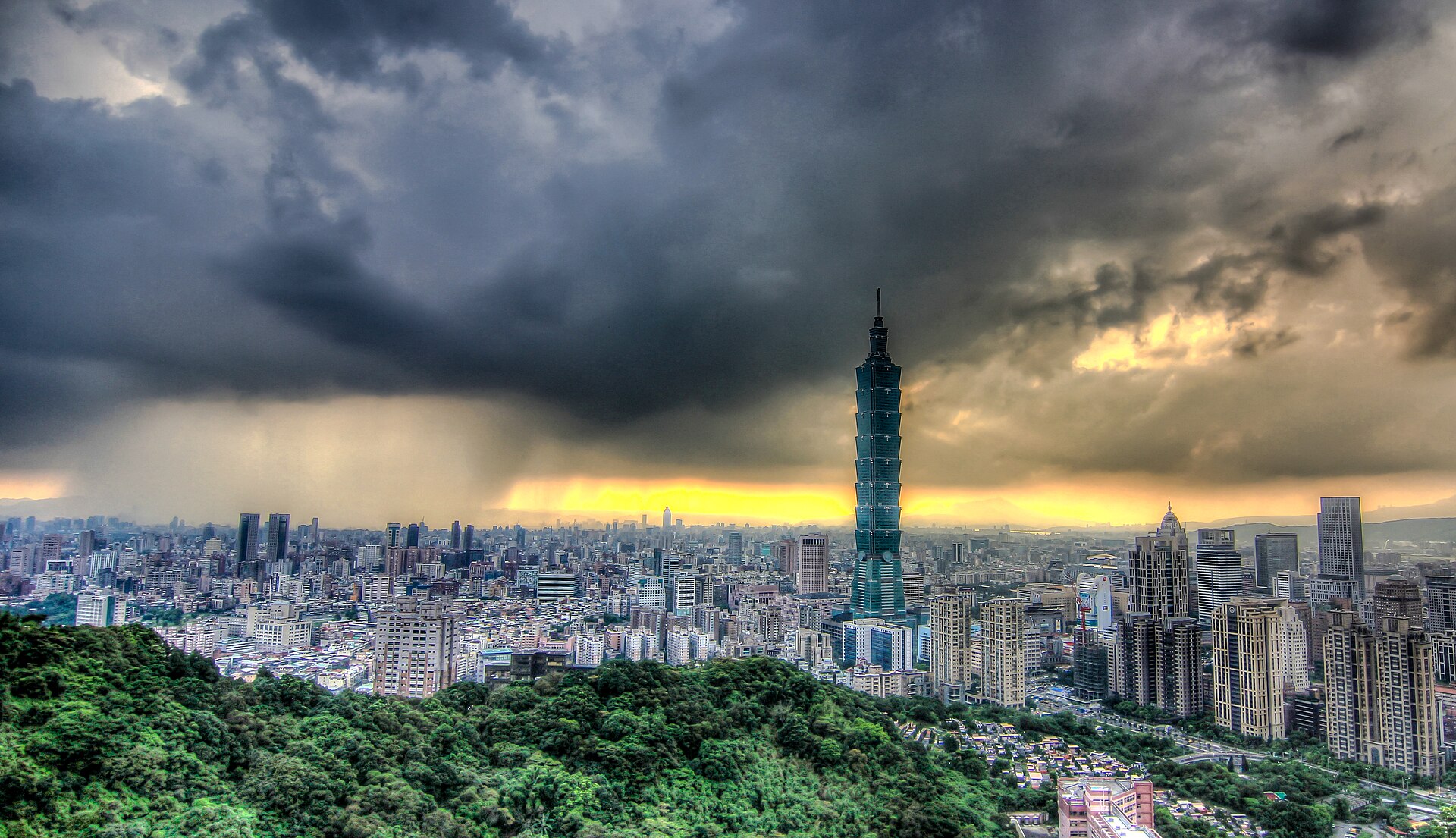
Taiwan effectively pressed pause on Friday. Schools and offices closed across the island — only the Kinmen islands, sitting off the Chinese coast, opened as normal — financial markets shut for the day, department stores including Taipei 101’s mall went dark, and the transport system wound down as Typhoon Champi closed in from the Philippine Sea, Reuters reported from Yilan and Keelung. The human cost rose through the day: one person was killed and, in the government’s Friday update, 171 people were injured, up from 94 in an earlier tally, while evacuations from mountainous areas climbed to 2,639 people. More than 77,000 homes lost power, Taipower said, though electricity had already been restored to most.
The death was on the coast the warnings were about. The disaster response centre said a man was swept into the sea off a beach in Liuqiu Township, Pingtung County, on the island’s southern fringe — far from Champi’s centre, but not from its surf. Coastal towns had spent Thursday receiving mobile-phone alerts warning of waves exceeding six metres (20 feet) and gusts above 150 kph, urging residents to seek shelter immediately. Officials said road accidents accounted for the largest share of the injuries, a pattern Taiwan knows well: in a typhoon, the journey is often more dangerous than the storm itself.
Update — Saturday: the toll rises to 527 injured as Champi sweeps past
Update, Saturday, October 24: Taiwan’s fire department said the death toll from Typhoon Champi remained at one — the man swept away by waves from the island of Liuqiu — while the injury count rose to 527, Reuters reported on Saturday. Champi glanced Taiwan’s northeast coast in the early hours of Saturday and swept past; the Central Weather Administration put the weakening storm about 150 km (93 miles) east of Taiwan, with gusts around 126 kph (78 mph) near its centre, on a track turning north toward the Chinese coast and eventually southern Japan. Taipower said more than 167,000 homes had lost electricity at the peak, though most had been reconnected. A swathe of northern and central Taiwan, including Taipei — where residents saw downed trees and on-off squally rain showers — declared a second day of office and school closures on Saturday. The transport ministry said 242 flights were cancelled on Saturday, an improvement from Friday, when almost 1,000 were cancelled. The report below is Friday’s, as reported on the day.
A very large storm, arriving slowly
Champi’s defining feature is not only its strength but its size. At its peak it was a super typhoon, with gusts reported near 300 kph earlier in its life; by Friday it had weakened, but it was still packing gusts of around 191 kph (119 mph) near its centre, according to Taiwan’s Central Weather Administration (CWA), and its wind radius reached about 320 km (200 miles) — large enough, forecasters noted, to cover most of Taiwan at once. “The storm’s wind radius is quite large, among the bigger ones in recent years,” CWA forecaster Liu Pei-teng told Reuters. “If the storm slows down, the strong winds will affect Taiwan for longer.”
That size is why a storm that may never technically “make landfall” can still shut down an island of 23 million people. On Friday the centre sat about 220 km east of Taiwan, on a forecast track passing just off the northeastern coast before turning north toward the Chinese coast and eventually southern Japan, crossing first over Yonaguni, Japan’s westernmost inhabited island in Okinawa Prefecture. But Liu was careful not to close the landfall question: it could not be ruled out, he said, if the storm “stalls, loops, or wobbles from side to side” on approach. Nearly a metre (3 feet) of rain was forecast for the northern mountain areas, including the hills around Taipei, through Saturday — the kind of total that turns a wind event into a flood and landslide event after the headlines move on.
Yilan and Keelung: sandbags, boats and amphibious vehicles
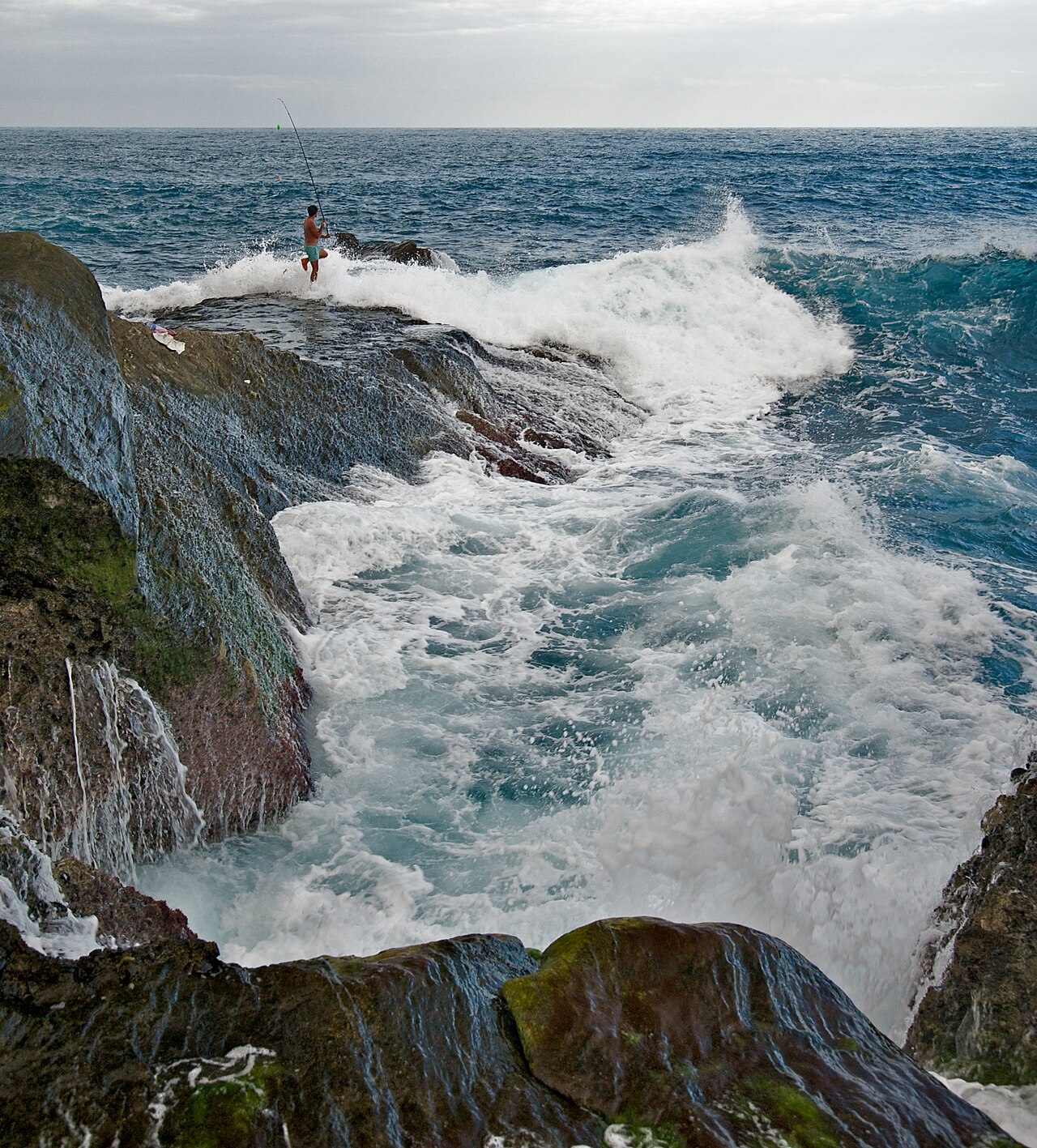
In the northeastern county of Yilan, where the typhoon was forecast to pass closest later on Friday, authorities distributed sandbags and put amphibious vehicles and inflatable rescue boats on standby as winds and showers intensified. “When necessary, the military will come in to help people, including using amphibious vehicles for evacuations or disaster relief,” said Lee Ming-chen, head of the port town of Suao, which has flooded badly in previous typhoons. More than 23,000 military personnel were on standby island-wide, AFP reported. In the northern port city of Keelung, boat owners hurried to secure their vessels — the unglamorous, essential work that decides whether a harbour survives a storm with its fleet intact.
Nearly 1,000 flights gone, ferries tied up
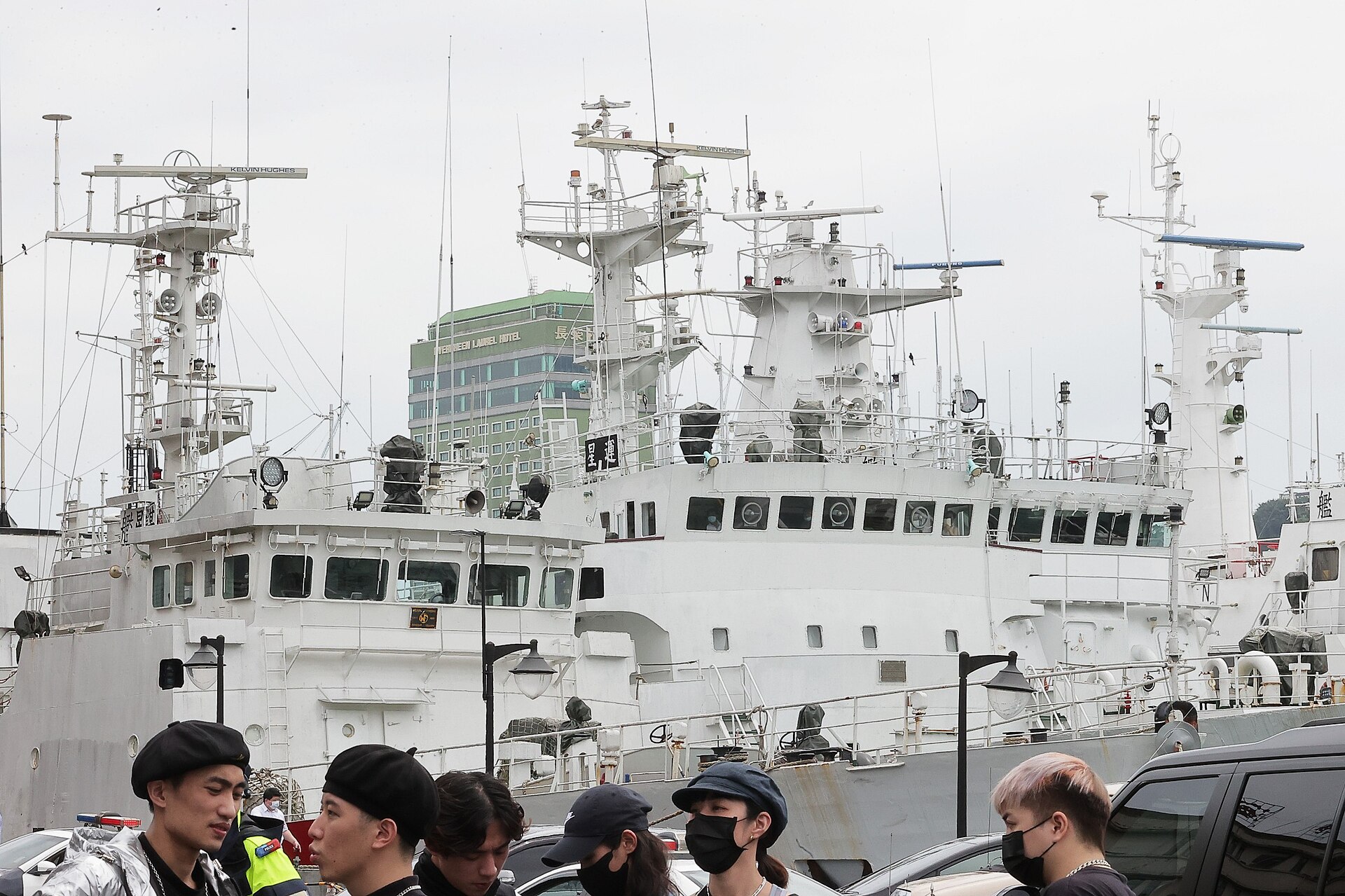
The travel shutdown was near-total in the air. Taiwan’s Civil Aeronautics Administration tally, reported Friday, counted 262 domestic flights and 715 international and cross-strait services cancelled — 977 in all — while the Maritime and Port Bureau suspended 10 ferry routes and 96 sailings. The north–south high-speed rail kept operating, and in Taipei the subway ran with reduced service through squally showers. The disruption rippled beyond Taiwan: on Thursday, the approaching storm had already forced changes to a major U.S.–Japan military exercise in the region, Reuters reported, a reminder that a 320-km-wide storm rearranges the plans of everyone in its quadrant, civilian or military.
Why this matters
Champi is a test of the proposition Taiwan has built its disaster policy on: that a rich, well-drilled island can meet even a super typhoon with preparation instead of catastrophe. The early evidence mostly supports it. One death and, on Friday’s count, 171 injuries from a storm of this size is a toll that would have been unthinkable a generation ago, and it reflects a system — island-wide closure authority, phone alerts, pre-positioned amphibious vehicles, mountain evacuations begun before the rain — that treats the forecast as an order, not a suggestion. Compare the arithmetic: Typhoon Morakot in 2009 killed more than 600 people in Taiwan, most in a single buried village. Champi, a comparable meteorological event in scale, arrived to find an island that had already gone home, tied down its boats and moved its most exposed residents. Preparedness is not a slogan; measured in lives, it is the whole story.
There is a second, quieter significance: the chips did not stop. TSMC, the world’s largest contract chipmaker and the single most important factory in the global technology supply chain, said operations remained normal with no significant impact. Taiwan’s typhoon days are watched in boardrooms from Cupertino to Amsterdam precisely because so much of the world’s advanced semiconductor capacity sits on this one storm-prone island — a concentration risk we examined in Taiwan’s tightening grip on its chip exports. A direct landfall near the northern science parks remains the scenario supply-chain planners model and hope never to file about. Champi, passing offshore, was the rehearsal, not the event.
The third significance is the season itself. Champi is, as AFP noted, the latest in a busy Pacific storm season turbo-charged by El Niño, the Pacific warming pattern that loads the dice toward stronger cyclones — the same pattern behind the super El Niño emergency preparations in California. And Champi comes barely a month after Typhoon Dujuan’s flooding in Japan. For insurers, farmers and coastal planners across East Asia, 2026 is becoming the year the “strongest storm of the season” headline had to be written more than once.
Who bears the cost, and the honest caveats
A shutdown day is not free. An island-wide closure idles factories, offices, schools and markets; 977 cancelled flights strand tens of thousands of travellers and cut the air-cargo arteries Taiwan’s exporters depend on; 77,000 homes in the dark is a real, if temporary, hardship. Critics of Taiwan’s closure system periodically argue that local leaders call typhoon days too readily, trading a day of output for political safety. The counter-argument was visible on the Liuqiu coast on Friday: the sea killed a man hundreds of kilometres from the storm’s centre, in a place the alerts had specifically warned about. Against that, a lost day of commerce is the cheapest insurance on offer. It should also be said plainly that Champi weakened before arrival — the super typhoon of midweek was not the storm that reached Taiwan — and the island’s system was tested by a glancing blow, not a direct hit on Taipei. The full verdict on Taiwan’s defences awaits the storm that does not turn.
What happens next
Three things to watch through the weekend. The rain after the wind: with up to 900 mm forecast over the northern mountains from Thursday to Saturday, the landslide and flood risk peaks after the centre passes — evacuated residents should expect to stay out until slopes are inspected, and the injury tally, already revised sharply upward once on Friday, may move again. The turn north: Champi’s track takes it over Yonaguni and toward the seas off China’s coast and southern Japan, where Okinawa’s island communities, with fewer resources than Taiwan, face their own warnings. The restart: markets, schools and flights are expected to resume as the CWA lifts its land warning, likely from Saturday afternoon as conditions ease — but airlines will need a day or more to unwind 977 cancellations, and travellers should expect the disruption to outlast the weather. President Lai Ching-te’s advice, given before the storm arrived, remains the operative line for the island tonight: avoid the mountains and the coast. “A little more preparation,” he wrote, “means less risk.”
Sources
Reuters, October 23, 2026 — Taiwan shuts down ahead of Typhoon Champi (Yimou Lee, Angie Teo and Fabian Hamacher, reporting from Yilan/Keelung: 1 killed, 171 injured in the latest government update, 2,639 evacuated, Taipower 77,000+ homes without power, TSMC operations normal, CWA forecaster Liu Pei-teng on landfall risk and wind radius, Suao’s Lee Ming-chen, Keelung boat owners, markets closed, Kinmen only exception). Reuters, October 22, 2026 — land warning issued, storm radius 320 km, gusts above 227 kph, waves above 6 metres, nearly a metre of rain forecast, U.S.–Japan exercise changes, Yonaguni track. Agence France-Presse, October 22–23, 2026, via Balitang Marino — Joint Typhoon Warning Center sustained winds, El Niño season context, 23,000+ military on standby, CWA forecaster Jason Cheng. Taiwan disaster response centre and Civil Aeronautics Administration figures as reported October 23 (Liuqiu Township death; 262 domestic + 715 international/cross-strait cancellations; 10 ferry routes and 96 sailings suspended; closures in all counties except Kinmen), via Dimsum Daily and Euronews. Central Weather Administration (CWA) warnings as reported by Reuters and AFP. Reuters, October 24, 2026 — “Typhoon Champi sweeps past Taiwan, one dead and 500 injured” (Ben Blanchard and Ann Wang, reporting from Taipei): the fire department held the death toll at one (Liuqiu) and put injuries at 527; Taipower peak outages above 167,000 homes; transport ministry counted 242 Saturday flight cancellations; a second day of closures across northern and central Taiwan including Taipei.