Russia winter energy strike plan
Russia winter energy strike plan: What Ukraine knows
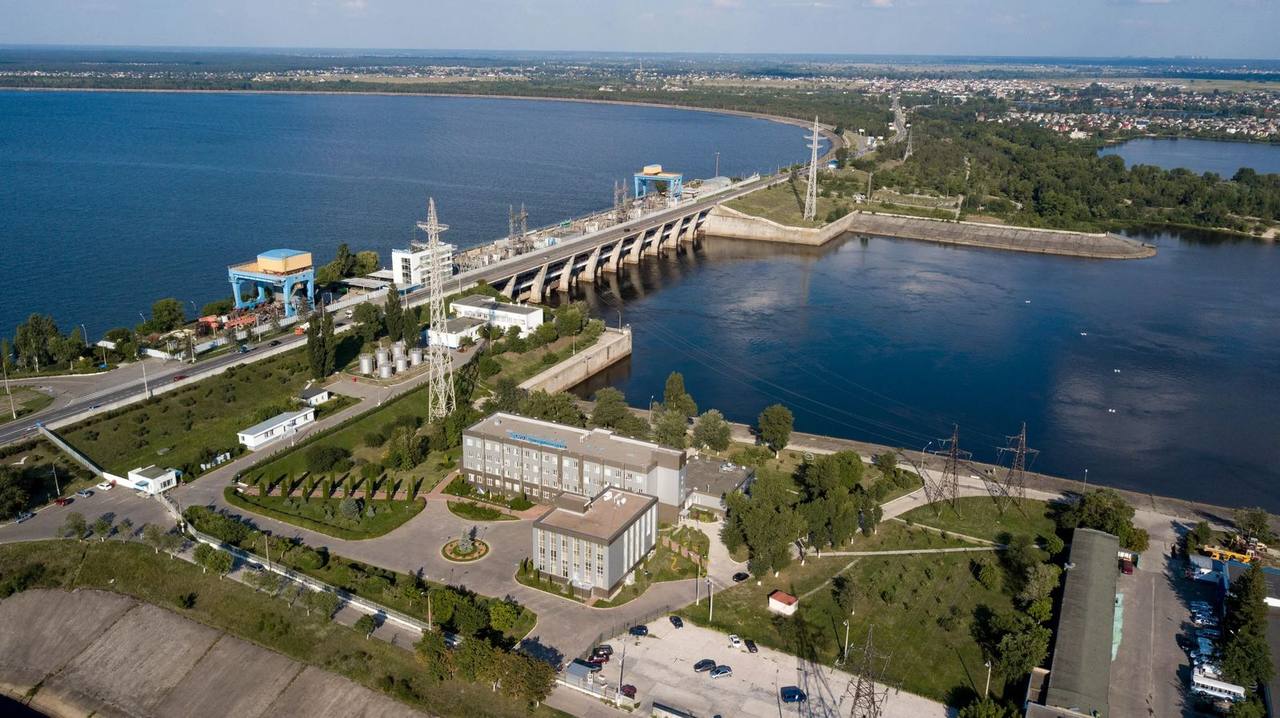
The Russia winter energy strike plan, as described by Ukraine's energy minister, is unusually specific. In a Shmyhal energy minister interview released as Ukraine prepares for another cold season at war, Denys Shmyhal said Ukraine intelligence obtained Russian plans in two documents containing facility-by-facility tables. Those tables allegedly match categories of targets with the weapons Moscow would need to damage them: ballistic missiles, conventional attack drones and faster jet-powered drones. The reported target set extends beyond electricity generation to heating plants, water supply, wastewater systems and other energy facilities whose failure can make a city unlivable even when homes remain standing.
A target matrix, not a general warning
Governments regularly issue seasonal warnings about Russia winter attacks power grid operations. Shmyhal's account goes further. He says the two documents enumerate facilities and attach weapon requirements to them. That would amount to a target matrix: a planning tool that links an intended effect—loss of generation, heat, pumping capacity or sewage treatment—to the type and quantity of missiles or drones judged necessary to produce it.
The difference matters. A broad warning tells defenders that the energy sector is at risk. A matrix can tell them which substations, plants, pumping stations and district-heating nodes an adversary considers decisive, which sites may face saturation attacks, and which weapon mix Ukraine must design against. Ballistic missiles stress high-end air defence; slow one-way drones stress mobile fire groups and electronic warfare; jet-powered drones compress warning time and complicate interception. A plan that distinguishes among those tools can reveal both Russian priorities and assumptions about Ukraine's weak points.
What is verified—and what is not
The documents are attributed to Shmyhal and Ukrainian intelligence. Signal Post News has not seen them and cannot independently verify their authenticity, completeness or current operational status. Russia has not publicly authenticated the material. It is also possible that a genuine document reflects contingency planning rather than a final order, or that Moscow changed its plan after learning it was compromised.
Shmyhal has a political incentive to project preparedness: Ukrainians need confidence that the government has learned from four previous wartime winters, while foreign partners need a concrete reason to accelerate air-defence missiles, transformers and emergency-generation support. That does not make his account false. It does mean the prudent formulation is that he says the documents exist—not that the alleged plan has been independently proven.
Why possessing an adversary's plan matters
Intelligence value for Ukraine and European donors
If authentic and current, the files could turn scarce Ukraine energy infrastructure protection resources into a prioritized schedule. Engineers can pre-position transformers and switching equipment near likely impact zones, route backup water and heating supplies around listed nodes, disperse repair crews, and rehearse black-start procedures. Air-defence commanders can adjust coverage for the weapons assigned to each target rather than treating every site as equally exposed.
The intelligence is useful beyond Ukraine. European governments donating generators, transformers, high-voltage equipment and interceptor missiles often face a sequencing problem: which components are needed first, and where can one shipment prevent the greatest civilian harm? A credible target list can guide that answer without publishing sensitive coordinates. It can also make procurement more efficient by converting Kyiv's general requests into equipment packages tied to specific recovery scenarios.
The psychological-warfare value cuts both ways
Publicly revealing that Ukraine has a Russian plan imposes costs on Moscow even before a shot is fired. Russian planners must assume the listed sites are reinforced, the assigned approach routes are watched and the named weapon ratios may no longer achieve the expected result. Revising the package consumes staff time, reconnaissance effort and scarce munitions; proceeding unchanged increases the risk of failure.
But disclosure also serves psychological warfare. Kyiv can reassure its public and signal to partners that help will be targeted rather than wasted. Moscow, in turn, may try to exploit the announcement by varying targets or striking outside the matrix to restore uncertainty. The danger is that both sides become more willing to escalate against infrastructure in order to prove that the other side's intelligence or deterrence has failed.
Ukraine energy infrastructure protection: stronger, not comprehensive
More than 200 protective structures versus thousands of targets
Shmyhal said Ukraine has built more than 200 protective structures at priority energy facilities and assembled partner-supported equipment reserves. Hardened covers, barriers and compartmentalization can limit blast and fragment damage to transformers and control equipment. Redundant spares can shorten recovery from weeks to days. He assessed that the coming winter “will certainly not be easy, but it should not be harder than last winter.”
The scale comparison tempers that reassurance. More than 200 hardened structures are significant, but Ukraine's electricity, heating, water and wastewater networks contain thousands of potentially consequential targets. A substation may be protected while the transmission lines feeding it remain exposed; a power plant may retain generation while a pumping station loses electricity. Hardening works best as one layer among air defence, dispersion, redundancy, repair stockpiles and demand management—not as a promise that outages will not happen.
Energy Ramstein initiative and the donor stockpile
Shmyhal said the Energy Ramstein initiative now brings together more than 40 countries around a $2.1 billion fund. He cited $545 million mobilized in 2026, €305 million confirmed, and more than 33,000 tonnes of equipment delivered. The Energy Support Fund Ukraine mechanism matters because energy hardware is not interchangeable: a transformer of the wrong voltage or a turbine without compatible controls may be useless at the damaged site.
Those figures measure inputs, not resilience. The operational test is whether equipment reaches the right region, can be connected under wartime conditions and has crews and spare parts to keep it running. The alleged Russian target matrix could improve that matching process. It could also help donors avoid concentrating aid in a few conspicuous depots that become targets themselves.
Ukraine distributed energy generation: what 2.8 GW can and cannot do
The capacity math
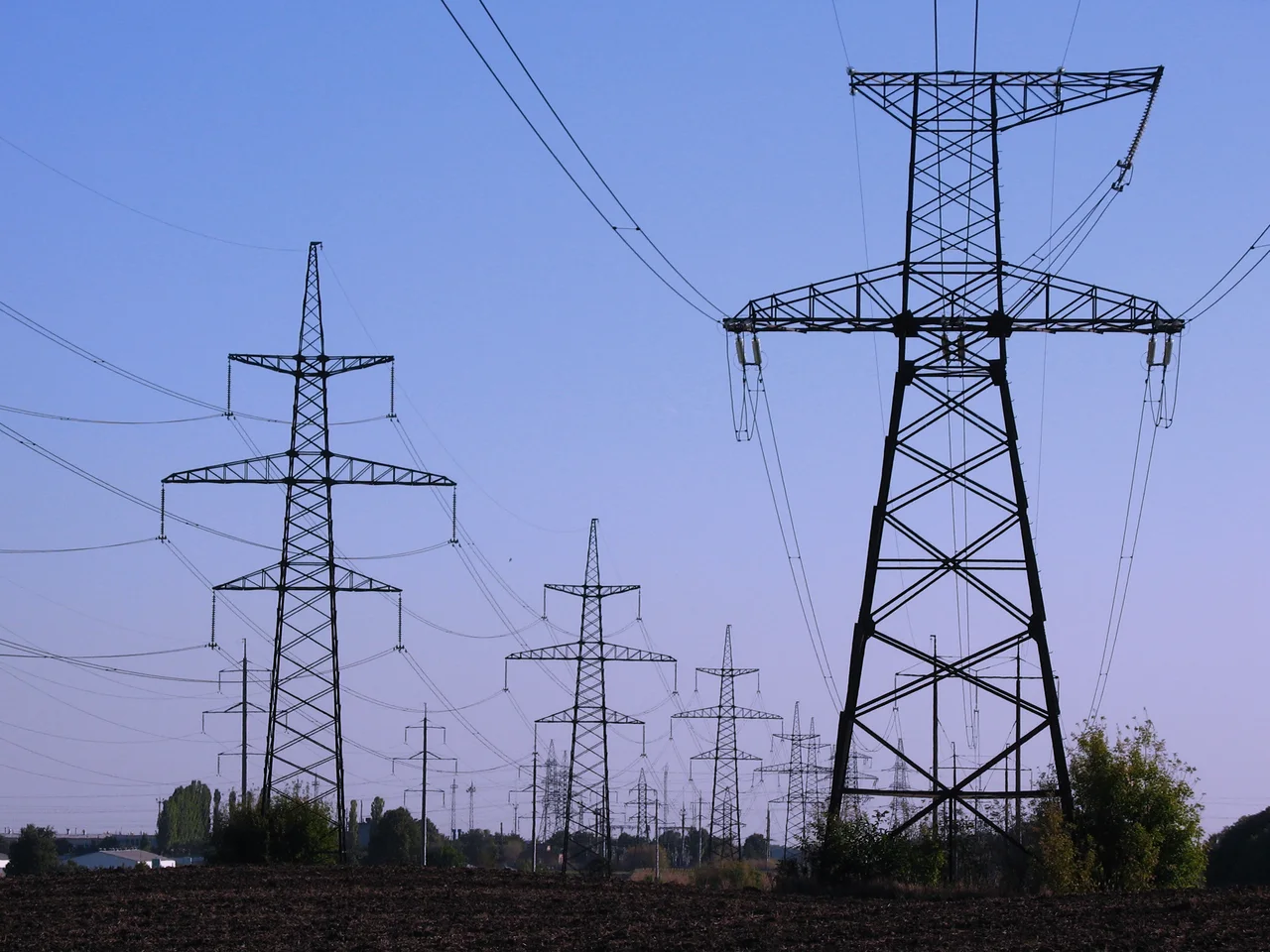
CEPA reported that 1.8 gigawatts of distributed gas generation and 1 GW of storage are operating, with another 800 megawatts across 280 facilities expected by year-end. That is 2.8 GW of operating distributed capacity today—about 15.6 percent of an approximately 18 GW mid-winter demand level. If the additional 800 MW arrives on time, the headline figure would rise to 3.6 GW, or 20 percent of that demand.
Those percentages do not mean distributed assets can simply replace one-fifth of the national system. Gas generators can run for extended periods only if fuel and maintenance are available. Batteries provide power for a limited duration; a 1 GW storage fleet can deliver 1 GW at an instant, but the energy it supplies depends on how many gigawatt-hours are stored. Without a published duration profile, 1 GW of storage should not be treated as 1 GW of all-night generation. Location and grid connectivity matter as much as nameplate capacity.
Why decentralization still changes the contest
Ukraine distributed energy generation is valuable precisely because it complicates a centralized target list. Hundreds of smaller units near hospitals, district-heating systems, water pumps and local grids are harder to disable in one coordinated salvo than a few large plants. They can keep critical services alive through the first hours of a blackout and create islands of power while the wider grid is repaired.
The civilian stakes are not abstract. CEPA reported that thousands of Kyiv homes, schools and hospitals lost heat during the previous winter. Kyiv winter heating blackouts can quickly become a public-health crisis as pipes freeze, elevators stop, water pressure falls and hospital backup systems consume fuel. A distributed generator at a boiler house or pumping station may not change the national balance, but it can prevent a neighborhood emergency.
The reciprocal energy war Ukraine and Russia are fighting
Kyiv's refinery campaign: supporters and critics
Ukraine has paired defensive preparations with strikes on Russia's oil-processing system. Shmyhal said 27 of Russia's 32 large refineries had been damaged this year. That is his claim; the underlying list and a consistent measure of “damaged” were not provided for independent verification. Our reporting on Ukraine's strikes on the Perm refinery and Ulyanovsk's Iskra plant shows how repeated attacks can force repairs far beyond the front.
Supporters argue that refineries convert crude into the diesel, jet fuel and other products that sustain Russia's military and generate state revenue, making them legitimate military-economic pressure points. They also argue that forcing Moscow to defend distant industrial sites dilutes air defence available elsewhere. Critics warn that refinery attacks can raise civilian fuel prices, tighten global product markets, cause fires and pollution, and invite retaliation against Ukraine's power and heating systems. They question whether economic disruption changes Kremlin decisions quickly enough to justify the escalation risk.
Russia says its strikes are directed at military and military-supporting infrastructure and denies deliberately targeting civilians. Yet attacks on power, heating and water systems foreseeably expose civilians to harm regardless of the stated target. The same standard of consequence applies to Ukraine's attacks: strategic purpose does not erase civilian risk.
Air defence, diplomacy and escalation
Protection cannot be separated from interceptor supply. Ukraine's ability to stop ballistic missiles and faster drones depends on scarce systems, which is why Zelenskyy's claim of a U.S. decision on Patriot production matters to the winter calculation. Diplomatically, Moscow's posture also matters; Putin's statement that peace proposals remain on the table came with a warning of retaliation, leaving de-escalation and coercion in the same message.
Four wartime winters explain the urgency
Ukraine has already passed through four winters since Russia's full-scale invasion began in February 2022. The first tested emergency response after the invasion. The second brought a systematic campaign against generation and transmission. The third exposed how repeated damage accumulates even when engineers restore service. The fourth combined large salvos with a narrower margin of spare capacity and exhausted repair networks. Each winter taught a different lesson: restoration speed matters, central assets remain vulnerable, stockpiles get depleted, and the public cost is measured in heat and water as well as electricity.
The coming season is therefore not a replay. Ukraine enters it with more hardened sites, more distributed generation and better knowledge of Russian strike patterns, but also with infrastructure that has absorbed years of damage. Russia enters it with a larger and more varied drone arsenal, including systems designed to move faster than the Shahed-type weapons that shaped earlier campaigns. The winter energy war Ukraine faces is now a contest between adaptation cycles: dispersal and repair on one side, reconnaissance and changing weapon mixes on the other.
Three scenarios for the winter
1. Russia follows the documented plan
If Moscow largely follows the alleged target matrix, Ukraine gains its clearest defensive advantage. Air defence can be concentrated, repair kits pre-positioned and donors given a precise procurement list. Russia may still overwhelm some sites through volume, but a compromised plan raises the number of weapons needed for the same effect. Watch for repeated combinations of ballistic missiles, Shahed-type drones and jet-powered drones against generation, district heating, water and wastewater nodes.
2. Mass drone attacks shift toward cities
Russia could abandon or vary the documented sequence and use mass Shahed and jet-drone waves to pressure cities directly. Jet-powered drones energy strikes are especially dangerous because speed shortens the time between detection and impact. A city-focused campaign would force Ukraine to choose between protecting population centers and keeping scarce interceptors over grid infrastructure—exactly the kind of resource dilemma a strategic bombing campaign seeks to create.
3. A limited grain-and-energy ceasefire channel opens
A narrower diplomatic path remains possible through Secretary of State Marco Rubio's reported grain-and-energy ceasefire channel. A reciprocal pause covering power, heating, ports and food exports would not end the wider war, but it could reduce civilian harm and create a testable confidence-building measure. Verification would be difficult: both sides would need agreed definitions of protected infrastructure, a mechanism to investigate incidents and consequences for violations. The alternative is a reciprocal cycle in which each refinery or grid strike becomes the stated justification for the next.
What to watch next
The first indicator is whether Ukraine publishes redacted evidence from the documents or partners independently confirm their substance. The second is movement in air-defence and energy hardware: interceptor deliveries, high-voltage transformers, mobile boilers, gas generators and batteries. The third is the timing and composition of Russian salvos as temperatures fall. A shift toward jet-powered drones or coordinated attacks on water and heating nodes would lend weight to Shmyhal's warning.
Shmyhal's central reassurance—that this winter should not be harder than the last—is plausible only if intelligence, hardening, distributed capacity and donor logistics work together. None is sufficient alone. The documents, if genuine, give Ukraine a map of danger. They do not remove the danger, and their greatest value will be measured not by what Kyiv says it knows, but by how many homes keep heat, water and light when the attacks begin.
Reporting basis: Shmyhal's account and figures are presented as attributed claims from the September 2026 interview and briefing material. Signal Post News has not independently reviewed the two alleged Russian documents. Capacity comparisons use the CEPA figures supplied with the reporting brief and distinguish instantaneous storage output from storage duration.