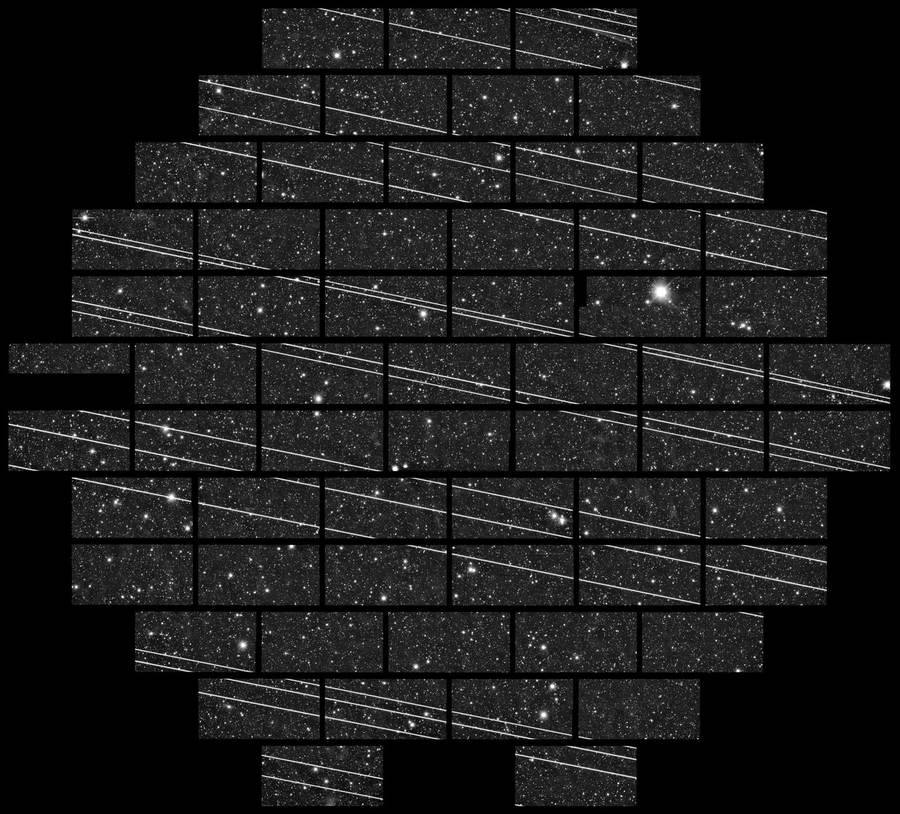
Ukraine is taking its sanctions campaign into orbit. Kyiv's top diplomat in Washington said on Wednesday that Ukraine will present the Trump administration and Congress with a formal "wish list" of Russian companies, vessels and individuals it wants hit with American sanctions — and that the number-one priority on that list is the cluster of Russian firms building the components for Rassvet, Moscow's homegrown rival to SpaceX's Starlink.
Denys Sienik, the deputy chief of mission and chargé d'affaires at Ukraine's embassy in Washington, told reporters that Russia is racing to complete the Rassvet constellation and that the window to stop it is closing. "If they launch Rassvet by the end of 2026, they will be able to target to hit Ukrainian targets real time on our territory," Sienik said. "If these entities are not sanctioned, it will actually make this program possible for Russia and that will be a game-changer."
The push comes with a hard calendar attached. Under the Lindsey O. Graham Sanctioning Russia and Iran Act, which President Trump signed into law on September 18, the administration faces an October 18 deadline to decide which Russian entities, if any, it will sanction. Kyiv intends to make sure its list is on the desk well before that date.
What Kyiv is asking for
The request, as described by Sienik in separate briefings reported by Reuters and the Associated Press, has four distinct parts. First and most urgent: sanctions on the Russian companies manufacturing components for the Rassvet satellite network. The main firm building the network is already under U.S. sanctions, Sienik noted — but the suppliers feeding it parts are not, and Kyiv believes cutting off that supply chain is the last realistic chance to slow the program.
Second: tougher measures against ships believed to belong to Russia's "ghost fleet" — the shadow tankers Moscow uses to move oil around Western price caps and sanctions. Third: a public condemnation, by the administration and by American industry, of Russian attacks on American companies' operations on Ukrainian soil — an ask aimed at turning corporate America into a lobbying ally for harder sanctions. And fourth, Ukraine plans to impose its own national sanctions on the entities linked to Rassvet regardless of what Washington decides.
Sienik also used the briefing to press a parallel demand: expanded Starlink coverage for Ukraine, including access to Starlink services inside Russia itself, so Kyiv can strike Russian ballistic missile launchers on their own territory. That message, Reuters noted, was backed last week by Finnish President Alexander Stubb.

What Rassvet is — and why Kyiv fears it
Rassvet — Russian for "dawn" — is Moscow's answer to a problem the Kremlin has felt acutely since 2022: its forces fight a war in which the other side has better connectivity. Starlink terminals, rushed to Ukraine in the first weeks of the invasion, gave Ukrainian units resilient battlefield communications and real-time drone feeds. Russia, which bans Starlink outright and fines anyone caught using its equipment, has been building a domestic alternative.
The program is run by Iks Holding, whose CEO Alexei Shelobkov said in June that operations are planned to begin in 2027. The company launched its first 16 low-orbit satellites in March and plans to scale to roughly 900 over several years — a fraction of SpaceX's 10,000-plus satellites, but enough, in Kyiv's assessment, to change the targeting picture over Ukraine.
Sienik's warning is specific and worth taking seriously: a functioning Russian low-orbit constellation would give Moscow persistent, real-time surveillance and communications over the battlefield — the ability to spot Ukrainian targets and strike them without the delays and blind spots of Russia's current, thinner satellite coverage. In a war where drones already compress the time between detection and destruction to minutes, that is the "game-changer" he described. And with winter approaching — when fighting historically intensifies around energy infrastructure — Kyiv wants the constellation strangled before it can contribute to the cold-weather campaign.
Why this matters
This story matters because it marks the moment sanctions policy officially entered the orbital age as a battlefield weapon rather than a background pressure campaign. Western sanctions have targeted Russia's space sector before — export controls on satellite components date back to 2022 — but those were about degrading Russian capability in the abstract. This is different: Kyiv is asking Washington to sanction a specific, named, still-incomplete weapons-enabling system, on a specific deadline, for a specific operational reason. It is sanctions as a precision strike.
There is a second, subtler significance. For most of the war, the space story has been about what Ukraine has — Starlink — and the recurring anxiety about what happens if it is degraded, throttled, or switched off. The Rassvet push inverts the frame: it is about what Russia is about to have, and whether the West can act fast enough to deny it. The side that spent the war dependent on an American billionaire's goodwill for its battlefield internet is now lobbying to make sure Moscow never gets its own equivalent. That is a striking admission of how decisive Kyiv believes orbital connectivity has been.
And there is a third layer that reaches beyond Ukraine. If the U.S. designates Rassvet's component-makers under the Graham Act, it will be one of the first major uses of the new law — a test case for whether the legislation Trump signed on September 18 has teeth or is mostly signaling. Other governments, and other satellite programs in other capitals, will be watching what Washington does by October 18.
The sanctions machinery: a new law and a ticking clock
The Lindsey O. Graham Sanctioning Russia and Iran Act is the legal engine behind all of this, and its timeline is unusually compressed. Signed September 18, it requires the administration to decide by October 18 which Russian entities to sanction — barely a month for interagency review, intelligence vetting, and the diplomatic choreography these designations require. Kyiv's wish list is designed to land in the middle of that process, giving the administration a pre-vetted menu of targets with a Ukrainian intelligence narrative attached.
The component-maker focus is the clever part of the ask. Sanctioning the prime contractor — already done — is the easy, symbolic move; primes can often re-source. Going after the second and third tiers of the supply chain is where sanctions actually bite, because specialized satellite components (radiation-hardened electronics, phased-array antennas, propulsion units) have few alternative suppliers and long lead times. Western officials have acknowledged that "gaps remain" in the existing space-sector sanctions, which is diplomatic language for: Moscow has been working around them. Kyiv is essentially offering to map the gaps.
The ghost-fleet ask belongs to the same logic. The shadow tankers are the revenue engine that funds everything else, including Rassvet. Squeezing the fleet and the satellite supply chain at the same time is an attempt to hit both the money and the machine in a single sanctions round.
The numbers: 10,000 versus 16
The raw figures tell you how asymmetric this race is — and why Kyiv is in a hurry. SpaceX operates more than 10,000 Starlink satellites; Rassvet has 16 in orbit, with plans for 900 over several years. On paper, that is not a contest. But constellations do not need parity to be militarily useful: a few dozen satellites in the right orbits can provide meaningful revisit rates over a single theater the size of Ukraine. Russia does not need to match Starlink globally; it needs enough coverage over the Donbas and the Black Sea to tighten its kill chain.
The timeline is the other number that matters. Shelobkov's stated goal is operations in 2027; Sienik warns of a possible end-of-2026 initial capability. The October 18 U.S. decision deadline sits squarely in front of both dates — which is exactly why Kyiv chose this week to go public. Miss the window, and sanctions land on a constellation that is already flying.
Who gains, who loses
If Washington acts on the wish list, the immediate winners are obvious: Ukrainian forces, who would face a slower, poorer Russian satellite capability, and SpaceX, whose Starlink keeps its decisive connectivity advantage in the theater. The losers would be Iks Holding's suppliers — many of them obscure firms that have operated below the sanctions radar — and, indirectly, any third-country middlemen currently moving components into Russia.
But the ledger has a second column. Sanctioning satellite component-makers is also a signal to China, which operates its own growing constellations and watches every Western space-sanctions precedent for hints about its own exposure. And there is a risk Kyiv surely weighed: pushing too hard on space sanctions could accelerate exactly what it fears — driving Russia to finish Rassvet faster through crash domestic production, or to deepen space cooperation with partners the West cannot easily sanction. Sanctions have a long record of working slowly and leaking; Kyiv is betting that this time, with a named target and a deadline, the record will be different.
There is also the awkward fact that this entire campaign is an appeal to an administration whose relationship with both Kyiv and Elon Musk has been, to put it mildly, complicated. Ukraine is simultaneously asking Washington to sanction Russia's Starlink rival and asking for more Starlink access — including inside Russia. Whether the White House sees those as complementary asks or as competing ones may determine how much of the wish list survives to October 18.
What happens next
Three scenarios, in rough order of likelihood:
1. A partial designation round. The likeliest outcome: the administration sanctions a handful of Rassvet component-makers by October 18 — enough to show the Graham Act has teeth and to reward Kyiv's lobbying, without a maximalist move that complicates other diplomatic tracks. The ghost-fleet designations, which have broader international buy-in, probably travel with them.
2. A maximalist round. If the administration wants to make the Graham Act's debut a statement, it could designate the full supplier network plus a wave of ghost-fleet tankers. That would be the strongest signal yet that space systems are now first-tier sanctions targets — and it would invite retaliation, quite possibly in the cyber or counterspace domain.
3. A quiet punt. The administration could decide little or nothing by October 18, citing ongoing review. That would be read in Kyiv — and in Moscow — as the Graham Act being decorative. It would also leave Rassvet's supply chain untouched through the winter fighting season, which is precisely the outcome Sienik's briefing was designed to prevent.
Whichever way it goes, the deeper trend is now visible: the war's next arms race is not only about drones and missiles but about who owns the sky above the battlefield. Kyiv fired its first shot in that race this week — with a wish list.
Related coverage
Sources
- Reuters — Ukraine urges US to sanction entities supporting Russia's Starlink rival
- Associated Press — Ukraine to present 'wish list' for new Russia sanctions under Graham law