North Korean POWs sent South Korea
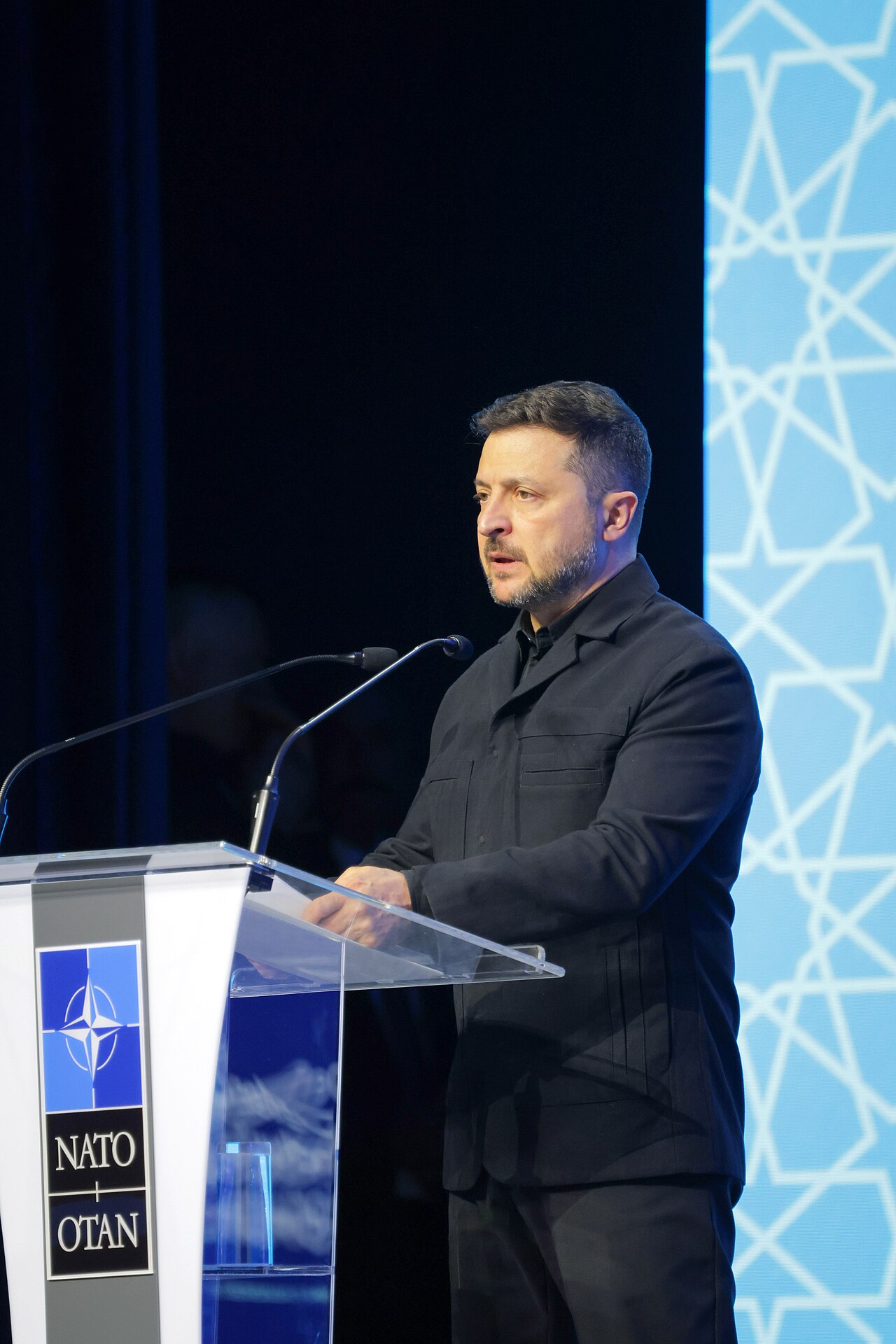
NEW YORK — North Korean POWs sent South Korea after being captured by Ukrainian forces have become an unusual human and strategic link between the war in Europe and the security divide on the Korean Peninsula. Ukrainian President Volodymyr Zelenskyy told the U.N. General Assembly’s 81st session on Wednesday, September 23, that Kyiv had transferred two North Korean prisoners of war to the Republic of Korea.
“Recently, we sent two North Korean prisoners of war to the Republic of Korea,” Zelenskyy said. He described the difficulty of taking the troops alive and added: “These guys are not easy to capture alive. One of them, when he realized he was going to be taken prisoner, tried to kill himself. And he was shocked that fate didn't let him die. This is how they raise people in the North.”
South Korea’s Foreign Ministry did not directly confirm the transfer. It said Seoul had consulted Kyiv and other parties on resolving the soldiers’ case in accordance with their free will, international law and humanitarian principles. The ministry declined to disclose their disposition, timing or route, citing the safety of the soldiers and their families. That caution leaves an important gap between Zelenskyy’s public statement and Seoul’s official position.
Opposition lawmaker Rep. Yu Yong-weon offered a more detailed account on Thursday. He said the men left Ukraine last weekend, traveled through a third country, arrived in South Korea three or four days ago and were placed under the protection of the National Intelligence Service. His account aligns with Zelenskyy’s announcement but has not been independently confirmed by the South Korean government.
The soldiers were captured in Russia’s Kursk region in January 2025, the first North Korean combatants known to have been taken alive since Pyongyang entered the war in 2024. Their transfer, reported by Reuters and The Associated Press via Military.com, is therefore more than a relocation. It is a test of prisoner protections, personal choice, alliance politics and the price North Korea is paying—and receiving—for supporting Russia.
Why this matters
This is the first reported transfer of North Korean combatants captured in the Ukraine war to South Korea. It creates a precedent with no simple template. The men were prisoners held by Ukraine after capture in a war fought on Russian territory, but Seoul regards North Koreans as eligible for South Korean citizenship and protection. Their stated wishes, the rules governing prisoners of war and the risks of return all intersect.
A legal and diplomatic precedent
The safest way to understand the Ukraine South Korea POW transfer is as a carefully managed exception, not yet a settled general rule. Prisoners of war are protected from coercion and public exploitation. They also cannot simply be sent somewhere they face a substantial risk of persecution or punishment. Human-rights groups urged Kyiv to send the men to South Korea rather than North Korea, citing the danger they could be punished as traitors if returned. South Korean media reported that the soldiers wanted to defect.
Those reported preferences matter, but Seoul’s refusal to confirm the men’s location shows why private verification is as important as public diplomacy. The soldiers may have relatives in North Korea who are vulnerable to retaliation. Their route could reveal the governments that facilitated the move. Public detail could also complicate any later legal determination about status, resettlement or testimony.
Intelligence from the world’s most secretive army
For South Korea, the intelligence value is immediate. The men can describe how North Korean units are recruited, briefed, equipped, disciplined and integrated with Russian forces. They may offer first-hand evidence about morale, battlefield tactics, communications, casualty handling and what soldiers are told about Ukraine. Even ordinary details—food, pay, command relationships and access to maps—can help analysts distinguish propaganda from actual doctrine.
The value is not unlimited. Two soldiers cannot represent an entire force, and interrogators must account for trauma, incomplete knowledge and the incentive to say what a new host wants to hear. Still, first-hand accounts from deployed North Korean combatants are exceptionally rare. Their testimony can be checked against captured equipment, documents, communications and battlefield reporting.
A public embarrassment for Kim Jong Un
Pyongyang has built military loyalty around secrecy, sacrifice and political control. Two living soldiers outside that system can challenge all three. If they choose to remain in South Korea and speak publicly, North Korean audiences abroad and the families of deployed troops may hear accounts that the state cannot fully control. That is why the case carries symbolic weight far beyond the number two.
In the same speech, Zelenskyy asked: “Why should Koreans give their lives in a war against Ukraine? Kim Jong Un uses them like currency. And he gets something in return.” The language was advocacy by a wartime president, not a neutral description of motive. But it identified the transaction at the center of the deployment: North Korea supplies manpower and weapons to Russia, while Seoul and Washington worry that Moscow may return military technology, expertise or other strategic support.
Background: from a military pact to the Kursk front
North Korea–Russia military cooperation expanded after Moscow’s full-scale invasion of Ukraine created a sustained demand for ammunition and manpower. The two governments deepened their security relationship through a military pact, and North Korea began sending troops in 2024. Ukrainian, South Korean and independent estimates cited in the reporting place the deployment at roughly 14,000 to 15,000 soldiers.
Most of the North Korean troops in Kursk were used to help Russian forces repel Ukraine’s incursion into the border region. That geography matters: the troops were not initially described as fighting deep inside Ukraine, allowing Moscow and Pyongyang to frame their role as support on Russian soil. For the soldiers themselves, however, the practical difference was small. They entered a high-intensity battlefield shaped by drones, artillery, minefields and rapid casualty evacuation.
Ukraine captured the two men alive in January 2025. Zelenskyy initially offered to hand them to Kim Jong Un in exchange for Ukrainian prisoners held by Russia. That proposal treated the soldiers as leverage in a broader wartime exchange. Human-rights groups pushed back, arguing that repatriation to North Korea could expose them to severe punishment. Reports that the men preferred South Korea shifted the issue from barter toward protection and consent.
In June 2026, Seoul said it would accept all North Korean prisoners of war who had fought for Russia and opposed repatriating them to either Russia or North Korea. The policy established a destination before a transfer occurred. It also signaled that Seoul saw the issue through both humanitarian and constitutional lenses: North Korean soldiers who reject return would not be treated simply as foreign enemy personnel.
The case also connects to Zelenskyy’s broader U.N. diplomacy. Our coverage of his General Assembly demand that governments “don’t stay silent” explains the political frame around the announcement. His separate warning about artificial intelligence and the battlefield shows how Kyiv used the same speech to connect Ukraine’s war to wider security risks.
Who benefits—and who loses
Ukraine gains diplomatic leverage and an intelligence pipeline
Kyiv can present the transfer as evidence that North Korea’s deployment has international consequences beyond the front line. It also strengthens a practical intelligence relationship with Seoul. Ukraine has direct battlefield access to North Korean personnel and equipment; South Korea has linguistic, institutional and technical expertise. Sharing what each side knows can produce a clearer picture than either could assemble alone.
South Korea gains first-hand evidence and a domestic policy win
Seoul receives rare witnesses to North Korean doctrine, equipment and morale. The arrival, if formally confirmed later, would also demonstrate that its June acceptance policy has operational meaning. Domestically, supporters can frame the case as protection for North Koreans who exercise free choice. Critics may ask how consent was established, what legal status the men receive and whether intelligence value influenced a humanitarian decision.
The soldiers may escape punishment, but not danger
If the men freely chose South Korea, the transfer removes the immediate risk of forced return to a state that may view surrender or defection as betrayal. It does not erase danger. Public identification could expose relatives. Debriefing can be lengthy and psychologically difficult. Resettlement in a society they know mainly through state propaganda would bring its own isolation and scrutiny.
Kim Jong Un and Russia absorb new pressure
For Kim, living defectors from a foreign battlefield create a fear of precedent. If more troops believe capture can lead to safety in South Korea, commanders may tighten controls or alter deployment practices. Pyongyang is likely to deny the account, challenge the soldiers’ free will or allege coercion if the case becomes public. None of those responses had been officially reported at publication.
Russia loses control over another part of the narrative around its foreign military support. Moscow had not publicly responded to the transfer in the reporting available for this article. Its silence does not prove acceptance or indifference; it may reflect a preference to avoid amplifying a case that highlights dependence on North Korean manpower and ammunition.
What the numbers imply
Estimates of 14,000 to 15,000 deployed troops place the two prisoners in perspective. Two is roughly one living captive for every 7,000 to 7,500 personnel estimated to have been sent. That is not a valid capture rate because the denominator includes troops with different roles, deployment periods and levels of exposure. It does show how exceptionally rare confirmed live captures have been.
Several explanations can coexist. North Korean units may have operated under orders and political conditioning that discourage surrender. Russian forces may have deployed them in formations or circumstances where capture was unlikely. The chaos of high-intensity combat also means wounded soldiers may be evacuated, killed or left inaccessible before an opposing force can take custody. With only two cases, firm conclusions about an entire army would be unsound.
The manpower figure is only one side of Russia–North Korea weapons supply for the Ukraine war. North Korea has also provided millions of artillery and mortar rounds, ballistic missiles, long-range artillery and multiple-launch rocket systems, according to Ukrainian and South Korean assessments and independent estimates cited by Reuters and AP. The combination matters: shells sustain daily fire, missiles extend reach, artillery adds capacity and troops fill battlefield roles. It is an integrated contribution, not a symbolic detachment.
That scale also explains the intelligence interest. A single soldier may know little about high-level agreements, but many small details can reveal whether the deployment is temporary, rotational or becoming institutionalized. Equipment markings, training cycles, translation arrangements and command structures can indicate how durable the partnership has become.
What happens next
Seoul’s open-acceptance policy faces its first test
If the men are in South Korea, authorities will need to reconcile intelligence debriefing with humanitarian protection and a credible process for confirming free choice. Seoul’s caution suggests it is prioritizing safety over immediate political credit. A later acknowledgment could still come after identities, families and legal status are protected.
The precedent may influence future prisoners. Ukrainian forces now know there is a stated South Korean destination for North Korean troops who oppose repatriation. North Korean commanders know it too. That could make surrender more conceivable for some soldiers and more tightly policed by their units. It could also complicate future prisoner exchanges if Moscow or Pyongyang insists that captured North Koreans remain part of negotiations.
Kyiv–Seoul intelligence cooperation could deepen
The most immediate practical outcome may occur away from public view. Ukrainian investigators can supply battlefield context; South Korean specialists can evaluate language, ranks, units, training and equipment. The men’s accounts can then be compared with evidence surrounding North Korean ballistic missiles and military supply to Russia.
A larger question is what Russia gives Pyongyang in return. South Korean and U.S. officials have expressed concern about possible transfers of missile, satellite, air-defense or other military technology. Concern is not proof that a specific transfer occurred. Evidence to watch includes changes in North Korean systems, Russian technical personnel in North Korea, new test performance or official agreements that disclose cooperation.
Will Pyongyang change frontline roles?
North Korea could pull troops back from exposed frontline assignments, rotate them more frequently, reinforce political supervision or continue the deployment while denying that two prisoners establish a broader problem. Russia could also adjust where North Korean units operate. Any change should be judged from verified deployment evidence, not assumed from the publicity surrounding two men.
For future exchanges, the core question will be whether a North Korean captive is treated primarily as a prisoner of war, a potential defector or both. A durable policy must protect voluntary choice without turning prisoners into political exhibits or bargaining tokens. The two men’s case will be cited by every side, which makes the integrity of the process as important as the destination.
The bottom line
The transfer is consequential precisely because it is small. Two men cannot define a deployment of 14,000 to 15,000 troops or prove the terms of the Moscow–Pyongyang bargain. But their survival, reported preference and movement to South Korea expose a human pathway out of a military relationship built on secrecy.
Zelenskyy has publicly declared that the transfer occurred; a South Korean lawmaker has supplied a route and timeline; Seoul has confirmed consultations but withheld direct confirmation. Those are the facts that can be stated with confidence. Everything beyond them—the men’s eventual status, what they disclose, how Pyongyang responds and whether other soldiers follow—remains unresolved.
The next evidence will not necessarily arrive in a dramatic announcement. It may appear in a carefully worded South Korean briefing, a change in North Korean deployment patterns, corroborated intelligence about Russian technology transfers or a new prisoner case handled under Seoul’s June policy. Until then, the significance is clear but the record remains incomplete: a war in Kursk has delivered two North Korean soldiers into the custody of the South, and three governments now have strong reasons to reveal as little—or as much—as serves them.
Sources
- Reuters: Ukraine sent two captured North Korean soldiers to South Korea, Zelenskyy says, September 23, 2026.
- Associated Press via Military.com: Zelenskyy says Ukraine sent two North Korean prisoners of war to South Korea, September 24, 2026.
Reporting limits: South Korea’s Foreign Ministry did not directly confirm the transfer, timing or route. The estimate of 14,000 to 15,000 troops and the weapons-supply figures come from Ukrainian, South Korean and independent assessments cited in Reuters and AP reporting. Analysis of likely intelligence value, incentives and future responses is Signal Post News analysis.