What happened
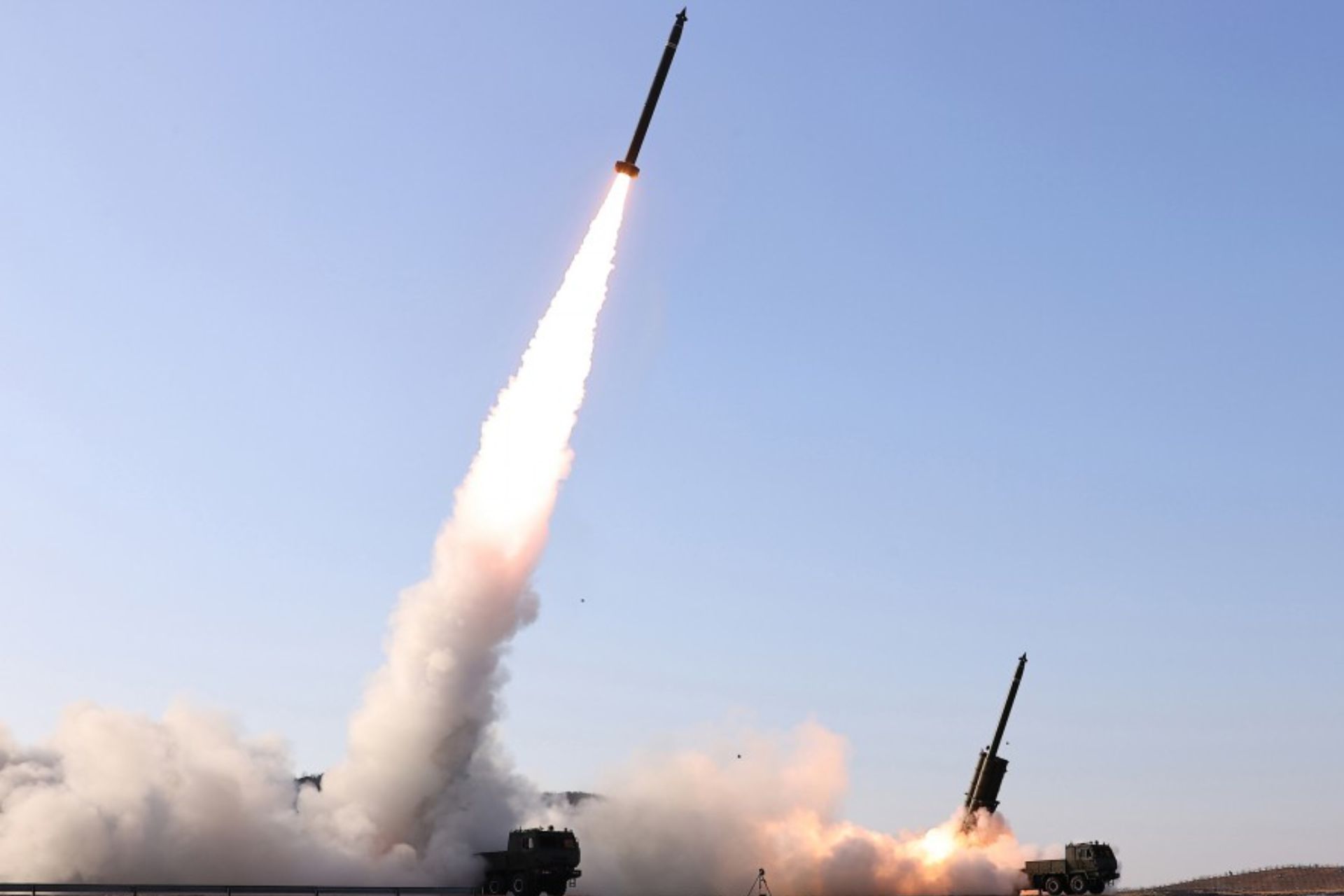
South Korea's Joint Chiefs of Staff said it detected the first launch from the Wonsan area at around 3 p.m. local time on Sunday, September 20, identifying the weapon as a ballistic missile. Nearly three hours later, at about 5:50 p.m., North Korea fired a second short-range missile from the same area. If the second launch is confirmed as ballistic, it marks two consecutive ballistic missile tests within a three-hour window — a tempo that suggests practice at rapid, repeated firing rather than a single demonstration.
Japan's defense ministry also assessed the projectiles as ballistic missiles. Japanese public broadcaster NHK reported that they came down outside Japan's exclusive economic zone, and the government said notices to nearby aircraft and ships produced no damage reports. The first projectile flew approximately 450 kilometers (280 miles) and is presumed by South Korea's military to belong to the Hwasong-11 series; the second flew more than 600 kilometers (373 miles).
"South Korean and US intelligence authorities have been tracking and sharing related developments from the initial stage of the launch, and have also shared information regarding the 'North Korean ballistic missile' with Japan," the Joint Chiefs said.
Immediate reactions
South Korea's National Security Council condemned the launches, urged Pyongyang to immediately cease missile activity, and warned that the tests directly violated UN Security Council resolutions — the standing legal framework that prohibits North Korean ballistic missile activity of any range.
In Tokyo, Prime Minister Sanae Takaichi issued the same three instructions after each launch: gather and analyze information and brief the public, confirm the safety of aircraft and ships, and maintain a full readiness posture. The government stood up its Cabinet crisis cell on North Korea. Defense Minister Shinjiro Koizumi told reporters that Japan had protested the firings as violations of UN resolutions, with the protest delivered through diplomatic channels in Beijing — Japan has no embassy in Pyongyang, so China remains the conduit. A Nikkei report confirmed the protest went through embassy channels in the Chinese capital.
How we got here
Sunday's launches were the second set of tests in roughly a week, following a test on September 12. Days earlier, Pyongyang had accused the United States of driving tensions on the Korean Peninsula through a series of military drills — the familiar rhetorical prelude to North Korean weapons tests, in which US-South Korean exercises are framed as rehearsals for invasion and missile launches as the defensive answer.
The pattern is well established. North Korea uses short-range ballistic missile tests as a calibrated signaling tool: frequent enough to demonstrate capability and resolve, short-ranged enough to avoid the international crisis that an intercontinental launch would trigger. The Hwasong-11 series — solid-fueled, road-mobile, and quick to launch — is the workhorse of this signaling. Unlike older liquid-fueled systems that require lengthy preparation visible to satellites, solid-fuel missiles can be fired with minimal warning, which is precisely what makes them valuable both as weapons and as messages.
Why this matters
The three-hour gap between launches is the most analytically significant detail of the day. A single missile test demonstrates that a system works; two launches in rapid succession from the same area demonstrates something closer to operational proficiency — the ability to reload, re-target and fire again. That is the difference between owning a weapon and being able to use it in a conflict, and it is the capability South Korean and American planners lose sleep over.
The ranges matter too. A 450-kilometer missile fired from Wonsan can reach every major South Korean population center and US military installation in the South, including Pyeongtaek and Osan. A 600-kilometer missile extends the threat ring to Japan's western approaches and the Tsushima Strait. Neither range is new — North Korea has demonstrated both many times — but each successful test validates the reliability of the arsenal, and reliability is what converts a theoretical threat into a planning factor.
There is also a diplomatic timing dimension. Missile tests clustered around periods of US-South Korean exercises, and ahead of any potential engagement, serve as Pyongyang's way of setting the price of talks: every test is a reminder of the capability that negotiations would need to address, and a warning that the capability grows while diplomacy stalls.
Competing narratives
Pyongyang's narrative, such as it is, frames the launches as a sovereign response to hostile military activity — US-led drills that it describes as driving up tensions. North Korea rarely explains individual tests in detail, preferring to let the launches speak through state media summaries that emphasize the leadership's guidance and the military's readiness.
Seoul and Tokyo frame the same events as straightforward violations of international law. South Korea's emphasis on real-time intelligence sharing with Washington and Tokyo is itself a message: the alliance's detection and tracking architecture is intact, and North Korea's tests are being watched from ignition to splashdown. Japan's decision to route its protest through Beijing is a quieter signal — a reminder to China that its role as North Korea's principal economic lifeline comes with expectations.
Washington has not yet issued its own separate statement on this round, but the US position is structurally embedded in the South Korean response: the intelligence-sharing, the condemnation language referencing UN resolutions, and the extended deterrence commitments that underpin both allies' security postures.
What the numbers tell us
Two missiles in three hours. Ranges of roughly 450 and 600-plus kilometers. Those are the hard figures, and they describe a mature, practiced short-range missile force rather than an experimental program. For comparison, the September 12 test — the previous data point — drew a similar condemnation cycle, suggesting a testing tempo of roughly one event per week through September.
What the numbers do not tell us is intent. A 600-kilometer missile that lands in the sea is, in material terms, a very expensive splash. Its value is entirely in the signal: to domestic audiences, evidence of military strength; to Seoul and Tokyo, evidence of vulnerability; to Washington, evidence that the problem is not going away. The gap between the physical event and its political meaning is where all North Korea analysis lives, and it is worth being explicit about that uncertainty rather than filling it with confident predictions.
What happens next
The near-term trajectory is predictable because it has repeated so often. Expect a US-South Korean military response in the form of scheduled or hastily arranged exercises — possibly including strategic asset deployments — which Pyongyang will cite as justification for further tests. The United Nations Security Council may discuss the launches, but substantive new sanctions are unlikely given the Council's current divisions.
The more interesting question is whether this testing tempo is building toward something larger: a new system unveiling, a test timed to a political event, or simply the steady accumulation of operational credibility. North Korea's calendar often features demonstrations around major anniversaries and party events. Analysts will also watch for any Chinese response beyond the routine — Beijing's tolerance for Pyongyang's testing has limits, particularly when tests complicate China's own diplomatic calendar.
For now, the peninsula has returned to its familiar equilibrium: North Korea tests, the allies condemn and monitor, and the underlying strategic reality — a nuclear-armed state with a growing, increasingly reliable missile arsenal facing two US-allied neighbors — remains unchanged, only slightly more sharply defined than it was on Saturday.
Sources
CNN, "North Korea fires two ballistic missiles off east coast in three hours," September 20, 2026: Read the report
Reuters via SpillrPHL, "North Korea Fires Two Ballistic Missiles Off East Coast in Three Hours," September 21, 2026: Read the report
Defcon Level, "North Korea Fires Two East-Coast Ballistic Missiles Into the Sea of Japan," September 20, 2026: Read the report