Track it live: Live wars tracker · Oil price forecast tracker
What happened
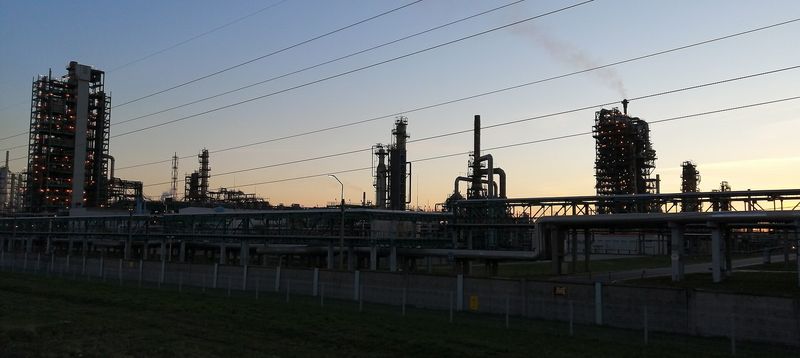
According to the two industry sources who spoke to Reuters, the attacks have disrupted or halted operations at 15 of Russia’s 35 major refineries — a count that has risen quickly, from nine plants in the middle of last week. The affected sites named by the sources include the refineries at Ryazan, Yaroslavl and Kirishi, together with plants across the Volga region, the industrial corridor that carries a large share of Russia’s refining and product distribution. The combined nominal capacity of the affected refineries is about 500,000 metric tons a day, which the sources put at roughly 54% of Russia’s total primary refining capacity of about 930,000 tons a day.
Nominal capacity and actual throughput are different things, and the gap between them is where the 45% figure lives. A refinery can be “disrupted” in several ways — a crude distillation unit shut for inspection after a nearby strike, a secondary unit damaged, a precautionary halt while fires are extinguished or debris cleared — and each state removes a different share of its nameplate capacity from production. What the Reuters sources are describing is the aggregate result across the system: a processing rate that has fallen from above 700,000 tons a day at the end of October to around 400,000 tons a day now. The strikes behind that fall have been near-daily for about twenty days, and this week Ukraine also hit a strategic bridge and further refinery targets in what Russian defence ministry data, as reported by Reuters, showed on Monday was the biggest overnight drone attack on Russia since 2022.
The individual strikes behind the aggregate have been reported one night at a time. Signal Post News has covered the campaign plant by plant, including the strike on the NORSI refinery at Kstovo and the attacks that set fires at Saratov and hit targets around Oryol. Wednesday’s Reuters estimate is the first attempt by industry sources to price the whole campaign at once — to convert a list of fires into a single number for what Russia’s refining system is actually producing. Russia’s energy ministry did not respond to Reuters’ request for comment, and no official Russian throughput figures have been published against which the estimate can be checked.
The numbers: how a 45% cut and a 5–10% monthly fall can both be true
The same Reuters report carries its own caveat, and it is the key to reading the headline honestly. Because the reduction in processing was gradual — plants dropping out one by one across three weeks, not all at once — the average level of processing across November as a whole remains above 500,000 tons a day. Measured that way, against monthly averages, November’s refining is running only about 5–10% below September and October levels. Both numbers come from the same sources and the same report; they answer different questions.
The 45% figure is a snapshot of the present: the rate at which Russian refineries are processing crude today compared with the rate at the end of October. The 5–10% figure is an average over a month that began at full pace — early-November days at or near 700,000 tons a day pull the monthly mean up even as the current rate sits near 400,000. Neither figure is a contradiction of the other, and neither, on its own, describes the trajectory. If the current rate holds through the rest of November and into December, the monthly averages will fall toward the current rate with a lag; if damaged units return quickly, the current rate will climb back toward the averages. Which of those happens is a question about repair times, spare parts and whether the strikes continue — not about arithmetic.
There is a second distinction the sources’ numbers force. The affected plants’ combined nominal capacity — about 500,000 tons a day, or 54% of the national total — is not the same as capacity destroyed. It is the nameplate of every plant whose operations have been disrupted or halted to any degree. A plant running at half rate after losing one unit counts toward that 54% in full. The honest summary of the Reuters estimate is therefore three-layered: plants representing over half of Russia’s nominal refining capacity have been touched; the system’s actual current output is down 45% from its late-October rate; and the month’s average output, so far, is down only modestly. All three statements are in the same report, and any account that keeps only one of them is incomplete.

Why this matters: refining as the war economy’s pressure point
Refining occupies a particular place in Russia’s war economy, and it is not the place crude production occupies. Russia can pump crude it cannot refine and sell much of it abroad; crude exports have proved adaptable under sanctions. Refined products are different. Petrol, diesel and jet fuel made in Russian refineries supply the domestic market — civilian motorists, agriculture, rail and road logistics, and the military’s own fuel chain — and they cannot be replaced by imports at scale quickly or cheaply. A sustained fall in refining therefore shows up where a fall in crude output does not: at filling stations, in regional fuel availability, and in the price and allocation decisions of a state that must choose which consumers get scarce product.
Reuters noted that Russia was already facing domestic fuel shortages in some regions before this latest estimate, and that strikes on ports have restricted its export capacity — squeezing the system from both ends, since product that cannot be exported must be stored, and crude that cannot be refined or shipped must eventually slow at the wellhead or in the pipeline. The refinery campaign also has a repair dimension that crude facilities do not share to the same degree: modern refining units depend on specialised equipment, catalysts and control systems, some of it historically imported, and repeated strikes on the same sites can turn a two-week repair into a standing maintenance backlog. None of that makes the system’s position irrecoverable — refineries are repaired, units are restarted, and throughput figures move in both directions — but it explains why Kyiv has treated refining, rather than crude production, as the target set worth a twenty-day, near-daily campaign.
Context: a campaign resumed after the October ceasefire collapsed
The timing is part of the story. President Trump announced an energy ceasefire on October 11, under which strikes on energy infrastructure were to pause. The war has since intensified rather than paused, and Ukraine’s refinery campaign resumed at scale on October 30 — the start of the roughly twenty-day run of near-daily strikes that produced the figures Reuters reported on Wednesday. In parallel, Russia has conducted its own strikes on Ukrainian energy infrastructure, and Kyiv has paired its refinery attacks with warnings of further action: as Signal Post News reported, President Zelenskyy has warned Russia of new strikes on bridges and energy targets while the refinery campaign continues. The energy war, in other words, is being fought by both sides at once, and the October 11 announcement now reads as a marker of how quickly the battlefield overtook it.
Corroboration — and competing estimates, kept separate
The Reuters estimate does not stand alone, but the other figures in circulation measure different things, come from different sources, and should not be blended into it. President Zelenskyy said on November 15 that Ukraine had disabled more than 55% of Russia’s refining capacity — a claim by the Ukrainian president about capacity disabled, reported by NewsBase and IntelliNews, and distinct from Reuters’ industry-source estimate of a 45% fall in the current processing rate. The two numbers are close enough to be frequently confused and different enough in construction that treating them as the same measurement would be an error: one is a wartime leader’s claim about capacity, the other is unnamed industry sources’ estimate of throughput.
Earlier estimates ran lower, and they were earlier. Reporting by the Financial Times, carried by Seoul Economic Daily on November 11, put up to 35% of refining capacity offline; the Centre for Research on Energy and Clean Air (CREA) has estimated 20–35% of capacity idle; and fuel rationing had been reported in at least four Russian regions since November 7. Read in sequence, the estimates describe an escalation that the strike tempo supports: a campaign that had idled perhaps a fifth to a third of capacity by mid-November, on think-tank and press estimates, is now described by industry sources as having cut the current processing rate nearly in half. Each figure keeps its own attribution in this article, because the differences between them are information, not noise.
Multiple angles
Kyiv: leverage built out of throughput
From Kyiv’s side, the campaign’s value is measured in the pressure it creates ahead of diplomacy. The trilateral talks expected in Shenzhen this week will be held against a battlefield picture in which Ukraine can demonstrate a capability that imposes continuing economic cost deep inside Russia — and can, in principle, modulate it. A refinery campaign is, among other things, a negotiable instrument: strikes can be paused, resumed or intensified, and their effects are visible to the other side’s motorists as well as its ministries. Ukrainian officials have framed the attacks as a response to Russian strikes on Ukraine’s own energy system; whatever the framing, the Reuters figures give Kyiv a quantified claim to carry into the talks — and give its partners a reason the claim cannot simply be waved away, since it rests on industry estimates rather than Ukrainian assertions alone.
Moscow: shortages, repairs and the allocation problem
From Moscow’s side, the immediate problems are practical. Fuel shortages were already reported in some regions before the latest strikes; rationing had been reported in at least four regions since November 7, on the FT/CREA reporting cited above. Each additional disrupted plant lengthens the repair queue and widens the set of regions drawing on a shrinking product pool, while strikes on ports restrict the export valve that would otherwise relieve storage pressure. The Kremlin also faces a defensive geometry problem it has faced all campaign: refineries are large, fixed and spread across an enormous territory, and the air defence that protects one plant is not available to protect another. Russian officials have not commented on the Reuters estimates — the energy ministry did not respond to the agency’s request — so Moscow’s position on the figures themselves is, on the record, silence.
Markets: a domestic shock with an export edge
For oil markets, the direct exposure is narrower than the headline suggests, and it runs through products and export logistics rather than crude supply. Russia’s crude exports move by pipeline and tanker and are not what the refinery figures measure; what a sustained refining outage changes is the balance between crude and products — more crude seeking export or storage, less diesel and petrol available to the domestic market and to the product-export channels that remain open, with port strikes further restricting that capacity. Traders will watch the same indicators as everyone else: whether the current processing rate recovers as units restart, whether product exports are formally curtailed to protect domestic supply, and whether the strike tempo that produced a 45% fall in twenty days is sustained into December. A one-month dip in Russian refining is a regional fuel story; a winter-long one becomes a pricing story.
What happens next
The evidence to watch is unglamorous and specific. Refinery restarts — announced or visible in satellite imagery and regional fuel availability — will show whether the 400,000-ton current rate is a floor or a waypoint. Russian government measures will show how Moscow is managing the allocation problem: any formal restriction on product exports, any expansion of rationing beyond the regions already reported, and any official comment at all from the energy ministry would each mark a change from the current posture of silence. And the strike tempo itself remains the independent variable: the Reuters estimate is the product of twenty near-daily strike days, and a pause — whether from the Shenzhen diplomacy, from weather, or from a renewed energy-ceasefire arrangement picking up where October 11 left off — would let repairs run ahead of damage for the first time since October 30.
What is established, on the sourcing available on November 18, is narrower than the headline and still substantial: two industry sources estimate that Ukrainian drone attacks have cut Russia’s current crude processing rate by 45% since late October, disrupting or halting operations at 15 of 35 major refineries; the same sources put November’s average decline at only 5–10%, because the fall was gradual; Ukraine’s president claims a larger share of capacity disabled; independent estimates from earlier in the month ran lower; and Russia’s energy ministry has said nothing. The distance between those statements is exactly where the story will move next.
Reporting based on Reuters (Nov. 18, 2026). Zelenskyy’s November 15 statement is reported via NewsBase/IntelliNews; the November 11 capacity and rationing figures are Financial Times reporting carried by Seoul Economic Daily and estimates by the Centre for Research on Energy and Clean Air (CREA). Throughput figures are industry-source estimates attributed throughout; no official Russian processing data has been published, and Russia’s energy ministry did not respond to Reuters’ request for comment.
Sources
Sources: Reuters, “Drone attacks nearly halve Russia’s November oil refining, sources say” (Nov. 18, 2026); NewsBase / IntelliNews (Nov. 15, 2026, Zelenskyy statement); Financial Times via Seoul Economic Daily (Nov. 11, 2026); Centre for Research on Energy and Clean Air (CREA) estimates.