War · Ukraine
A Saratov oil refinery attack reported by open-source monitors, a second strike in under three weeks on the Proton-Electrotex missile-parts plant in Oryol, and a Russian claim of 411 drones intercepted — one night that mapped the two-way infrastructure war, and a careful account of what is confirmed, what is claimed and what is not yet proven.
Track it live: Live war tracker · Live Ukraine war map
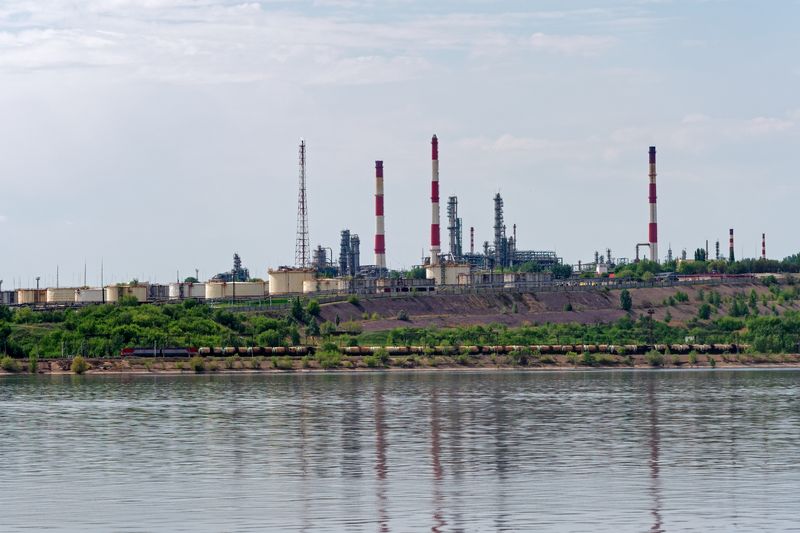
KYIV, November 7, 2026 — Ukraine struck two of the most sensitive kinds of target in Russia’s war economy in a single night. In Oryol, Ukraine’s General Staff said on Saturday that Navy Neptune coastal missile systems hit JSC Proton-Electrotex, a missile-components plant Kyiv had already struck once, recording a hit with fire and explosions on the premises. In Saratov, some 700 kilometres to the south-east, a Saratov oil refinery attack was reported by the OSINT outlet ASTRA and the monitoring channels Exilenova+ and Supernova+, which said fire broke out at Rosneft’s refinery after a night of more than 40 explosions across Saratov and Engels; the region’s governor confirmed a drone attack, damage to civilian infrastructure and residential buildings, and preliminary reports of injuries, but no deaths — and Russian authorities have not officially confirmed that the refinery itself burned. Russia’s Defence Ministry said its air defences intercepted or destroyed 411 Ukrainian fixed-wing drones overnight. The two strikes landed on the same night Russia launched one of its heaviest ballistic barrages of the autumn on Kyiv, and they need to be read with unusual care: one is claimed by Ukraine’s military, the other, so far, is not.
Oryol: a second strike on the Proton plant
The Oryol strike is the firmer of the two stories, because both sides have spoken about it, even if their accounts do not fully match. Ukraine’s General Staff said Neptune coastal missile systems of the Ukrainian Navy struck JSC Proton-Electrotex in Oryol overnight on November 6–7, that a hit was recorded, and that fire and explosions followed on the plant’s premises, with the extent of the damage still being clarified. Oryol Region Governor Andrey Klychkov, a Russian official, described a massive missile attack on the region and said production facilities at an enterprise in Oryol’s Sovietskyi District were partially damaged. Klychkov did not name the enterprise. ASTRA and local residents reported a fire at the Proton plant and about seven blasts after a missile-danger alert was issued in the city. No casualties have been reported for the November 7 Oryol strike, and none should be assumed.
What the plant makes explains why Kyiv keeps returning to it. According to the General Staff, Proton-Electrotex produces optoelectronic modules for the Kh-71/S-71 “Kover” cruise missiles, switch-inverters for the 9M723 Iskander-M ballistic missile, and participates in production of the Pantsir-S1 air-defence system. Those are not bulk commodities. Optoelectronics and power-switching components sit inside the guidance and control chains of precision weapons; a plant that supplies them is, in targeting terms, a node in the production network rather than a warehouse of finished missiles. Ukraine’s claim, in other words, is not that it destroyed a stockpile, but that it hit a supplier whose output feeds several weapons programmes at once.
This was the second strike on the plant in under three weeks. The first, on October 23, was reported by Signal Post News on October 24 in our report on Ukraine’s first strike on the Oryol Proton plant, which killed three: the General Staff said then that the main production building was hit and a microchip workshop destroyed, and Governor Klychkov reported three people killed. A repeat strike on a site whose microchip workshop was already said to be destroyed points to a deliberate logic — hitting repair, restoration and whatever replacement capacity has been moved in since — though that reading is analysis, not a Ukrainian statement, and the true state of the plant cannot be established from competing communiqués.
The weapon dispute: Neptune, or something else?
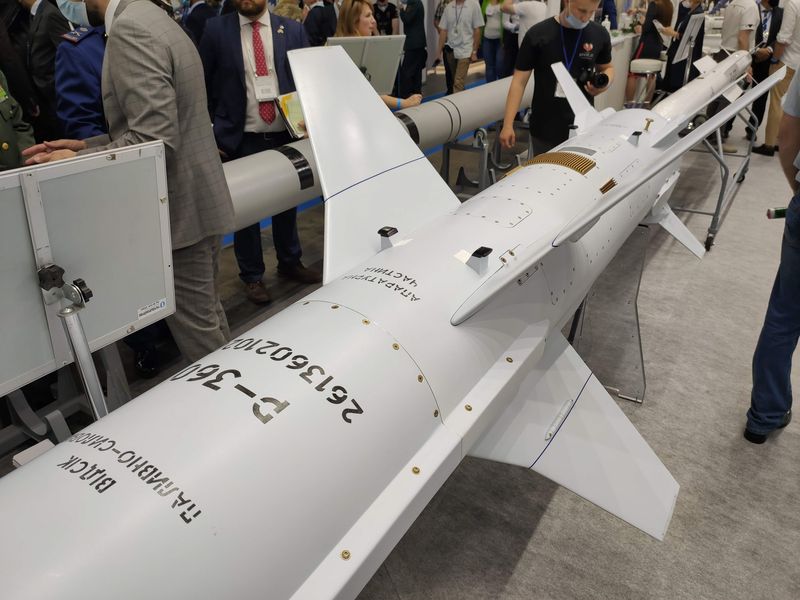
One element of the Oryol story is actively disputed, and it should be stated plainly rather than smoothed over. The General Staff says the strike was carried out by Neptune systems. Some OSINT and video-based claims circulating after the attack say the weapon was the FP-5 Flamingo, Ukraine’s newer long-range cruise missile. That Flamingo claim is unproven: no official Ukrainian statement in the November 7 reporting attributes this strike to the Flamingo, and video fragments alone cannot settle which missile was used. The distinction matters because the two weapons imply different ranges, production lines and escalation signals — but on the evidence published so far, the only attributable claim is the General Staff’s: Neptune. Anything beyond that is speculation wearing the clothes of analysis.
Saratov: injuries confirmed by the governor, a refinery fire reported by monitors
The Saratov half of the night rests on a different evidentiary footing, and the difference is the story. Saratov Region Governor Roman Busargin said a Ukrainian drone attack on Saratov and Engels damaged civilian infrastructure and several residential buildings, with preliminary reports of injuries and no deaths. A drone alert was issued at 3:41 a.m. Moscow time, and residents counted more than 40 explosions across the two cities, according to ASTRA. Separately, ASTRA, which geolocated eyewitness video, and the monitoring channels Exilenova+ and Supernova+ reported a fire at Rosneft’s Saratov Oil Refinery.
The caveat belongs in the body of the story, not in a footnote. Russian authorities have not officially confirmed a fire at the refinery. Ukraine’s General Staff, in its morning statement, claimed only the Oryol strike and did not claim Saratov. The Kyiv Independent, reporting the overnight attacks on November 7, said the Saratov details could not immediately be verified. The refinery fire should therefore be read exactly as it is sourced here: reported by OSINT and monitoring channels with geolocated video, plausible in the context of a confirmed drone attack on the city, but not officially confirmed by either government. With the same caveat, monitoring channels also reported a fire in the area of the Almaz military plant near Rostov-on-Don the same night; that report, too, remains unconfirmed by officials.
The refinery itself is a significant but not giant node in Russia’s fuel system. Founded in 1934 and part of Rosneft since 2013, the Saratov plant processed about 5.8 million tonnes of crude in 2024 — roughly 2.2 percent of Russia’s total refining throughput — against a design capacity of near 7 million tonnes a year. The General Staff says Ukraine struck the plant in March, May, August and September 2026, and that it supplies fuel and lubricants to the Russian army. A single night’s fire, even if confirmed, does not by itself decide how much capacity is lost: refinery damage turns on which unit burned, for how long, and what can be bypassed or repaired, none of which can be known from overnight video. What repeated strikes do establish is intent and persistence — Saratov is not an opportunistic target but a standing entry on Kyiv’s list.
411 drones: what Moscow’s number does and does not show
Russia’s Defence Ministry said 411 Ukrainian fixed-wing drones were intercepted or destroyed overnight, over ten regions plus Crimea and the waters of the Azov and Black Seas. That figure, if taken at face value, describes one of the largest Ukrainian drone waves of the war — and it sits in the same night’s record alongside a governor confirming damage and injuries in Saratov, a governor confirming a missile attack in Oryol, and monitors reporting fires at two strategic sites. Both things can be true at once: a very large raid can be mostly intercepted and still leak enough weapons to hit valuable targets. Neither side’s numbers are independently verified. Ukraine does not publish a matching launch total for the night in the reporting available on Saturday, and Russia’s interception claims, like Ukraine’s damage claims, are belligerents’ accounts, to be weighed rather than simply repeated.
The same night, in the other direction
None of this happened in isolation. The same night, Russia launched its heaviest Kyiv barrage of the autumn — 36 ballistic missiles and 172 drones, by President Volodymyr Zelenskyy’s count — closing the Northern Bridge, wrecking a kindergarten and blacking out Chernihiv, as Signal Post News reported in our report on Russia’s ballistic missile attack on Kyiv. Read together, the two operations are the clearest available picture of the war’s current grammar: Russia targets Ukraine’s power, bridges and cities; Ukraine answers at the component plants that build Russia’s precision weapons and the refineries that fuel its army. Each side describes its own campaign as retaliation for the other’s. The symmetry is real but incomplete — the targets differ in kind, and so do the verification trails: Kyiv’s damage on November 7 was documented by Ukraine’s emergency services, while the Saratov fire, at the time of writing, rests on monitors and geolocation.
Why this matters
Analysis. The Oryol repeat strike is the analytically important event of the night, precisely because it is less spectacular than a refinery fire. A first strike on a component plant tests whether a target can be reached; a second strike, less than three weeks later, on a plant whose microchip workshop was already reported destroyed, suggests Kyiv is targeting recovery itself — the repair crews, replacement tooling and restarted lines that determine whether the first strike’s damage becomes a pause or a permanent loss. Component-level targeting works slowly and invisibly compared with a burning refinery. If inverters for the Iskander-M and optics for cruise missiles genuinely bottleneck, the effect appears months later, in production rates no satellite can photograph, rather than in a fireball every phone in Saratov can film. That makes this campaign easy to underrate in the news cycle and hard to falsify in either direction: Ukraine cannot easily prove a bottleneck, and Russia will not announce one.
The Saratov attack matters on the opposite timescale. Refining is Russia’s most repeatedly struck industrial system this year, and the General Staff’s own list — March, May, August, September, and now a reported November fire at the same plant — shows a campaign of attrition against throughput rather than a single decisive blow. The honest data frame is the plant’s scale: about 2.2 percent of national refining in 2024. No single refinery strike breaks an economy of Russia’s size; the cumulative question is whether repair capacity, spare parts and air defence can keep pace with the strike tempo across dozens of sites at once. Russia’s claim of 411 interceptions is part of that same equation — a very large defensive effort expended in one night, against a raid whose most valuable targets were, on the reported evidence, still reached.
Who gains and who loses is therefore less obvious than the overnight headlines suggest. Ukraine gains if the Proton strike slows precision-weapons output and if the Saratov fire, once assessed, idles real refining capacity; it loses if the strikes prove shallow and the 411-drone effort is read in Moscow as a manageable cost. Russia gains a defensive narrative — hundreds of drones downed — but loses if the pattern Kyiv is building, repeat hits on the same strategic nodes, outruns its ability to repair and protect them. Saratov’s residents, who counted the explosions and, on the governor’s account, included the night’s injured, gain nothing at all; nor do Kyiv’s, who spent the same night under a ballistic barrage. That, too, belongs in the ledger.
What happens next
Four markers will decide how this night is ultimately recorded. First, satellite damage assessment of Proton-Electrotex: commercial imagery over the coming days should show whether the second strike hit the same complex the first one damaged, and how severely. Second, confirmation, or its absence, on Saratov: whether Russian officials, Rosneft or subsequent Ukrainian statements ever acknowledge a refinery fire, and whether the plant’s operations visibly slow. Third, production evidence from Oryol: any sign, in procurement, reporting or strike patterns of the weapons Proton feeds, that component supply has tightened. Fourth, tempo: whether Ukraine returns to either site within weeks, as it did at Oryol, which would confirm the recovery-targeting logic, or whether Russia’s answer escalates the other half of the exchange against Ukrainian power and cities. Until the imagery and the assessments arrive, the accurate summary of November 7 is a narrow one: a claimed and partially corroborated hit on a missile-parts plant, a reported and unconfirmed refinery fire, injuries in Saratov, no reported deaths in either city — and two infrastructure campaigns, running in opposite directions, that show no sign of pausing for winter.
Should a reported but unconfirmed strike be weighed the same as an officially claimed one — or does the distinction decide what the night actually proved? Follow Signal Post News for continuing coverage of the war in Ukraine, and share your view in the comments.
Sources
Kyiv Independent, November 7, 2026 (overnight strikes on Oryol and Saratov; Saratov details could not immediately be verified). ERR (Estonian public broadcaster), November 7, 2026. Ukraine General Staff statement, November 7, 2026, via Ukrainian outlets including 112.ua/UATV and en.h.ua (Neptune strike on JSC Proton-Electrotex; hit recorded, fire and explosions, damage being clarified; plant’s products; prior Saratov strikes in March, May, August and September 2026). ASTRA OSINT reporting, November 7, 2026 (fire reported at the Proton plant and about seven blasts in Oryol; geolocated eyewitness video and more than 40 explosions in Saratov/Engels; fire at the Saratov refinery also reported by monitoring channels Exilenova+ and Supernova+, and a reported fire near the Almaz plant by Rostov-on-Don). Statements of Oryol Governor Andrey Klychkov (massive missile attack; production facilities in the Sovietskyi District partially damaged; enterprise not named) and Saratov Region Governor Roman Busargin (drone attack on Saratov/Engels; civilian infrastructure and residential buildings damaged; preliminary injuries, no deaths; alert at 3:41 a.m. Moscow time). Russia Defence Ministry statement (411 Ukrainian fixed-wing drones intercepted or destroyed over ten regions, Crimea and the Azov/Black Sea). Signal Post News, October 24, 2026 (first Proton-Electrotex strike, October 23) and November 7, 2026 (Kyiv ballistic barrage). Photos: Wikimedia Commons, as credited in the captions; the Saratov refinery photograph is a file photo and does not depict the reported fire.