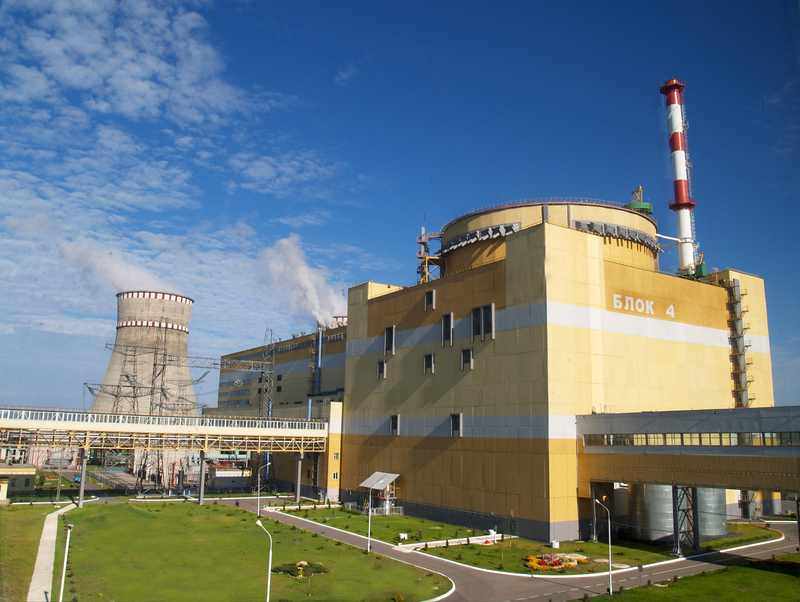
KYIV — The Russia winter blitz Ukraine nuclear plants warning is not a claim that Moscow plans to strike reactor vessels. It is a reported blueprint for something more methodical: cut the electrical connections that allow Ukraine's operating nuclear stations to feed the grid, while attacking the import substations, hydroelectric plants, thermal plants, boiler houses and water systems that could keep cities functioning when other parts fail.
The New York Times reported on October 2 that it had obtained a copy of the Russian-language document. Ukrainian Energy Minister Denys Shmyhal had shown it to European partners in Paris two weeks earlier, according to people familiar with that briefing. The paper described a campaign of up to roughly 1,000 missiles, drones and guided bombs, sequenced to remove the grid's alternatives one layer at a time.
The caveat is central, not incidental: The New York Times said it had no way to independently authenticate the August-dated document, and The Times in Britain repeated that limitation. Signal Post News has not authenticated it either. What follows separates what the outlets say the paper contains, what has already happened on the ground, and what remains analysis.
Putin “no rules” order: Ukraine expands its winter warning
In a Financial Times interview published October 2, President Volodymyr Zelenskyy spoke from inside the bomb shelter of a Kyiv school hit the previous day by a jet-powered Russian drone. The verified event is the strike and the survival of those inside: the school director said 104 students and 60 teachers reached the shelter shortly before impact, while Ukrainian authorities said the drone carried a 50-kilogram warhead that pierced the building but did not detonate. The impact damaged the school and started a fire; no casualties were reported. Those details were also reported by Dagens, citing Kyiv Post.
Zelenskyy told the FT that Ukrainian intelligence had intercepted communications among Kremlin officials showing that President Vladimir Putin removed earlier constraints on the air campaign in September. “He said that now there are no rules,” Zelenskyy said. This is an attributed Ukrainian intelligence claim: the underlying communications have not been released publicly or independently authenticated, and the separate intercepted planning document discussed elsewhere in this article also remains unauthenticated.
“We know from intelligence and people around Putin that at the start of September Putin said, ‘No rules now.’ The Russians couldn’t occupy us. So now they are doing massive attacks and massive killings. They want to go after our bridges and, from what we understand, after our data centres, internet, cell network, hospitals, kindergartens, schools, universities — everything. They want people to run away from cities, and we need to do everything to save our people and cities.”
Volodymyr Zelenskyy, quoted on X and reproduced by The Sun
Ukrainian and European officials identified Kyiv, Kharkiv, Odesa and Lviv as the main winter targets in the assessment shared with the FT. Lviv is a major logistics hub close to Poland. The officials’ stated interpretation is that sustained strikes would try to isolate the four cities from the rest of Ukraine as winter sets in. “They want Ukrainians to leave the capital … and show that if you don’t have the capital you don’t have the country,” Zelenskyy told reporters, according to NV reporting carried by Korol Danylo.
The same officials said Moscow may target power infrastructure supplying nuclear facilities to disconnect them from the national grid, with the claimed aim of forcing Ukraine to accept Russian terms at the beginning of 2027. That assessment is consistent with the switchyard sequence in the intercepted document already described here, but consistency is not independent proof. The Times of London reported that the plan calls for strikes on switchyards linking Ukraine’s three operating nuclear plants to the grid rather than direct attacks on reactor buildings.
Officials also described forced migration as part of the alleged strategy: severe urban disruption could generate a new refugee wave into European Union countries and strain governments already managing wartime displacement. Zelenskyy specifically cited Poland, where he said attacks on Ukrainians have risen this year. That claim about motive is an assessment by Kyiv, not a demonstrated Russian policy document.
The battlefield context helps explain why officials see the air campaign as a substitute for a breakthrough on land. After four and a half years of war, the front line is largely static and Russia has not captured the full Donbas, according to the New York Post’s account of the FT interview. The Kremlin rejects the central accusation. Spokesman Dmitry Peskov said Russian forces do not strike schools or hospitals and denied that Russia deliberately targets civilian infrastructure. That denial and Kyiv’s allegations are presented here as competing claims; the observable record establishes that civilian sites have been hit, but it does not by itself authenticate the alleged September order.
Why this matters: a Ukraine energy grid winter attack is a systems threat
The strategic danger is not any single destroyed power plant. It is the possibility that a coordinated sequence removes several ways of compensating for damage. A grid can survive the loss of one generator if imports, hydropower, nuclear output and transmission routes remain available. It becomes much harder to stabilize when the import path is hit first, flexible hydroelectric generation second and nuclear output is then disconnected at the switchyard.
That is why the reported order of attack matters. It describes not a list of targets but an attempt to collapse the system's redundancy. Electricity runs pumps, wastewater treatment, heat circulation, hospitals, communications and rail logistics. A power outage that also interrupts water and sewage is qualitatively different from a rotating blackout: the same strike campaign starts producing public-health and displacement pressure.
The human stakes were visible last winter. One January attack left more than one million people without electricity and more than 4,000 apartment buildings without heat, according to the reports reviewed for this article. Some Kyiv residents endured outages lasting 12 hours or more. The past four months have also been among the deadliest for Ukrainian civilians since 2022, raising the likelihood that another infrastructure campaign would arrive during an already intensified air war.
How the reported Russian winter energy campaign would unfold
Stage one: isolate the western electricity lifeline
The document reportedly puts substations near Ukraine's western borders first. Those facilities receive electricity imported from European neighbors. Damaging them would not merely reduce current supply; it would narrow the emergency route Ukraine could use after later attacks elsewhere. The logic is sequential: prevent outside power from filling the gap before creating a larger one.
Stage two: remove flexible hydroelectric generation
Hydroelectric plants can respond quickly when demand changes or another generator trips offline. The reported second stage would target that balancing role. Thermal plants and boiler houses also appear in the target list, extending the pressure from national electricity supply to municipal heat.
Stage three: disconnect the nuclear backbone
The final reported stage would seek to force Ukraine's three operating nuclear plants offline by striking electrical switchyards less than a mile from the reactors. Zaporizhzhia, captured by Russia early in the war, is not operating. The distinction is crucial: the reported objective is to sever grid connections, not to hit reactor cores. But proximity raises the consequence of error, debris and emergency shutdowns, even when the intended target is outside the nuclear island.
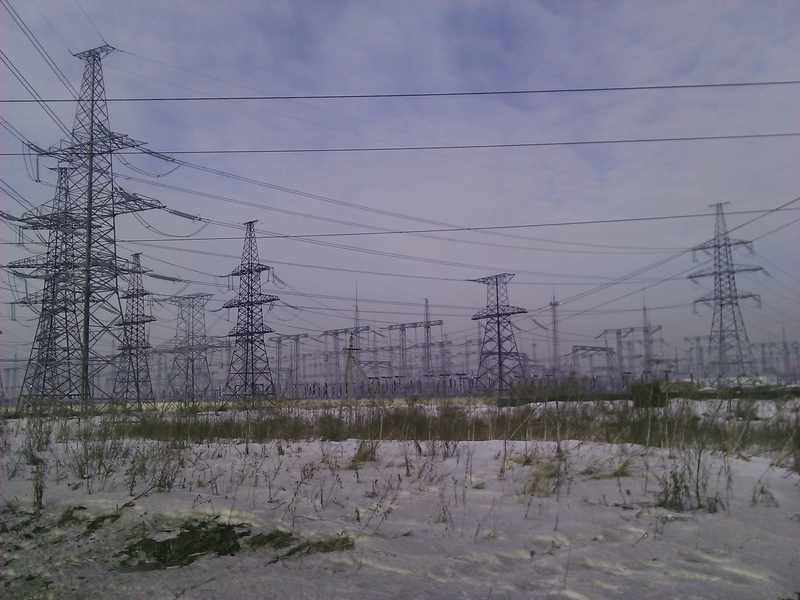
Ukraine nuclear power switchyards are the high-consequence node
A nuclear station cannot simply continue producing at full output when its external grid connection is damaged. Reactors need stable electrical networks for safe operation, and operators can shut units down when transmission equipment is compromised. That makes the switchyard a choke point: it sits outside the reactor building yet determines whether the plant's output reaches homes and factories.
The reported less-than-a-mile separation also compresses the margin for miscalculation. A strike may be aimed at transmission equipment, but air-defense interception, inaccurate weapons or secondary explosions can scatter debris. None of the reporting establishes that Russia intends a radiological release. It does establish that the document places high-explosive attacks near operating nuclear sites, a fact that raises both energy-security and nuclear-safety concerns.
For Moscow, if the document is genuine, this approach would offer a way to suppress nuclear generation while claiming the reactors themselves were not attacked. For Kyiv, that distinction would be of little comfort if power output disappears during freezing weather. For outside governments, it creates a hard question: whether the danger should be assessed by the intended aim point or by the potential consequences of striking so close to reactors.
From 2022 to now: how this plan differs from earlier winter campaigns
Russia has attacked Ukrainian energy infrastructure every winter since the full-scale invasion began in 2022. The recurring pattern has paired waves of missiles and drones with Ukraine's cycle of repairs, rerouting and emergency blackouts. Each season has become a contest between strike capacity and the speed at which engineers can restore transformers, generation and transmission.
The reported 2026 plan differs in three ways. First, it is explicitly staged around system dependencies rather than presented as a broad target set. Second, it reaches into water and wastewater infrastructure with dozens of ballistic missiles and guided bombs, a scale the New York Times report said Russia had not used against those systems before. Third, it focuses on nuclear switchyards as a way to remove the backbone of generation without describing direct reactor strikes.
Ukraine has responded by repairing major facilities, reinforcing parts of the network and adding smaller distributed generation that is harder to destroy in one blow. That investment changes the problem but does not erase it. Distribution equipment and local generators can keep essential services alive, yet they cannot instantly replace several gigawatts from a disconnected nuclear station or destroyed hydroelectric plant.
The warning also lands one day after Russia's heaviest energy-grid barrage since spring, which forced emergency outages. That strike does not authenticate the intercepted document, but it shows that the broad threat — renewed attacks on energy infrastructure — is already real.
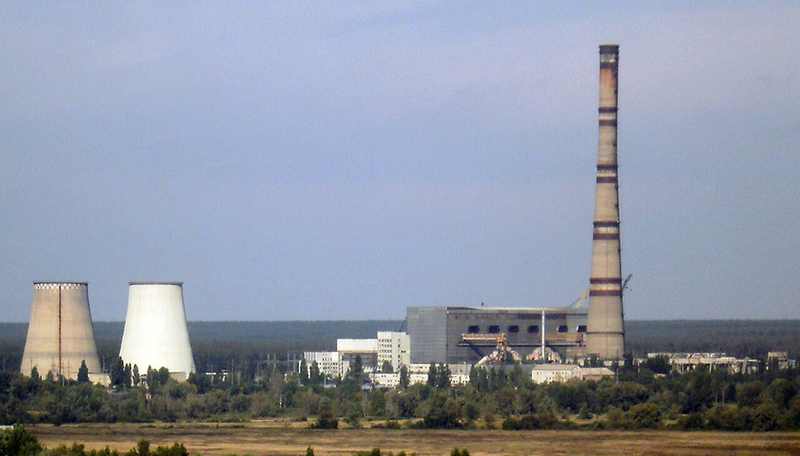
What 15 gigawatts Ukraine power really means
The document's stated objective is to eliminate nearly 15 gigawatts of generating capacity. That is not a random large number. Shmyhal told parliament in August that Ukraine had about 15 gigawatts available at the end of summer. The Irish Times' reproduction of the New York Times report said he expected capacity to exceed 21 gigawatts by year-end, while last winter's peak demand reached about 18 gigawatts.
Those figures make the stakes clearer. Fifteen gigawatts is roughly equal to the country's available end-of-summer capacity and about five-sixths of last winter's peak demand. It does not follow that every listed strike would succeed or that every lost megawatt would disappear simultaneously. Nameplate capacity, actual output and the grid's ability to move electricity are different measures. But a plan targeting 15 gigawatts is aimed at the scale of the national system, not a regional shortage.
There is also a repair paradox. Ukraine reportedly restored about five gigawatts in recent months, but an energy analyst cited in the New York Times report warned that a small number of major strikes could erase much of that recovery. Restoring capacity creates supply; it also recreates valuable fixed targets. Distributed generation reduces that concentration, though it is slower and more expensive to assemble at national scale.
Ukraine Patriot interceptor shortage versus Russia's stockpile math
Andrii Sybiha says Kyiv needs at least 300 Patriot interceptor missiles for minimal winter protection. Ukrainian intelligence estimates Russia has stockpiled roughly 600 ballistic missiles and can produce another 120 to 140 per month. On a deliberately simplified one-interceptor-per-missile comparison, the requested 300 interceptors equal half the estimated stockpile and a little more than two months of current production.
Real air-defense arithmetic is harsher than that simplification. Commanders may fire more than one interceptor at a high-value threat, some ballistic missiles may be reserved for other targets, and the reported campaign also includes drones and guided bombs that different systems may engage. The 300 figure should therefore be read as Kyiv's minimum protection request, not as a claim that 300 rounds can neutralize 300 incoming weapons or cover an entire 1,000-weapon campaign.
This is the allocation problem behind the Ukraine air defense winter 2026 debate. Patriot interceptors are scarce, expensive and also demanded by other theaters. Ukraine must prioritize the most dangerous ballistic threats, while cheaper defenses and electronic warfare handle drones where possible. Readers can follow the diplomatic side in our report on Zelenskyy's claim of a U.S. decision on Patriot production.
Who benefits, who loses — and where leverage shifts
Russia would benefit if the campaign creates cascading failures rather than isolated outages. The military value is not only less electricity for industry and transport. Prolonged cold, darkness and water disruption could increase pressure on Ukraine's government and force scarce air defenses away from the front. That is the strategic logic attributed to Moscow in the reports; it is not proof the strategy will work.
Ukraine's civilians and grid workers face the clearest losses. Households experience the consequences first through heating, elevators, refrigeration, water pumps and medical equipment. Repair crews face repeated strikes and must work around unexploded ordnance and damaged high-voltage systems. Cities carry the economic cost when businesses close and transport slows.
European suppliers and air-defense manufacturers gain influence, not necessarily advantage. Western governments decide whether imports, replacement transformers and interceptor stocks arrive fast enough to alter the outcome. Firms that produce grid equipment and missiles may receive orders, but manufacturing lead times mean political promises do not immediately become winter inventory.
Moscow loses if the warning accelerates defenses without producing collapse. Public disclosure can help Ukraine disperse equipment, harden nodes and pre-position repair crews. A costly strike package that creates only short outages would consume weapons and reinforce the case for more Western aid.
Critics and skeptics: the intercepted Russian energy plan is unverified
The strongest skeptical argument is straightforward: outsiders have not authenticated the document. It was presented by a government seeking urgent air-defense support, and its most alarming figures — nearly 1,000 weapons, 15 gigawatts and dozens of ballistic missiles against water systems — would naturally strengthen Kyiv's case for more interceptors and grid aid.
That creates a possible information-warfare dimension. Ukrainian officials have an incentive to publicize worst-case planning to move slow procurement decisions in Washington and Europe. Russia, for its part, has an incentive to let fear of infrastructure collapse spread even if its actual target list or weapon availability differs. Disclosure can serve both deterrence and psychological pressure.
Possible strategic use does not make the document false. Its reported target categories fit Russia's established winter campaign, and Russian strikes on energy infrastructure are observable. The disciplined conclusion is narrower: the campaign described is plausible and highly consequential, but the document's provenance, final approval and execution timetable remain unproven.
Kyiv winter blackouts 2026 meet a widening air campaign
Separately, Reuters reported Friday that a senior Ukrainian official attributed recent attacks on bridges, data centers and power infrastructure to a Putin order last month lifting constraints on Russia's air campaign. The Financial Times first reported the alleged order, and President Volodymyr Zelenskyy later wrote on X, “No rules now.” Russia's exact orders have not been publicly established.
Kyiv's Southern Bridge over the Dnipro closed Friday after a Russian drone strike on its support structures. Mayor Vitali Klitschko called the city's situation “critical” as traffic gridlock spread. The bridge attack matters because it widens the infrastructure problem beyond electricity: transport bottlenecks can slow emergency response and grid repairs. Our earlier report explains what the Southern Bridge strike means for Kyiv's logistics.
Ukraine water infrastructure attacks could turn outages into a health crisis
The water component is what makes the reported plan more than another electricity campaign. Pumping stations require power to move drinking water through high-rise cities. Wastewater plants need electricity to prevent sewage backups and untreated discharge. Boiler houses connect electricity, fuel and district heating. Striking all three systems can turn a temporary grid failure into a sanitation emergency.
The document reportedly assigns dozens of ballistic missiles and guided bombs to water targets. Even if only part of that allocation were used, the effects would depend on location, repair access, spare pumps and whether backup power functions. Kyiv, Kharkiv and Odesa are named in the reporting as priority cities. Urban density magnifies both the number of people affected and the complexity of restoring service.
What happens next: three winter scenarios
Scenario one: defenses and dispersion prevent cascading failure. Ukraine intercepts the most dangerous ballistic missiles, Europe keeps import routes functioning and smaller generators sustain critical services. Outages remain severe but local and repairable. In this path, the reported plan fails because the grid retains enough alternatives after each wave.
Scenario two: rolling regional crises without national collapse. Several major nodes are damaged, producing long blackouts and water interruptions in Kyiv, Kharkiv or Odesa while other regions remain connected. This is the most difficult scenario politically: there is no single moment of collapse, only repeated emergencies that exhaust repair crews and public tolerance.
Scenario three: the sequence succeeds. Western import substations are disabled, hydropower is constrained and one or more nuclear stations disconnect. Available generation falls below winter demand while transmission damage prevents power from reaching where it is needed. Emergency imports, rationing and distributed generation would limit the damage, but heat and water failures could persist.
The indicators to watch are concrete: confirmed strikes on western interconnectors; repeated attacks on the same substations after repairs; emergency shutdowns at operating nuclear plants; damage to pumping and wastewater facilities; Patriot deliveries; and whether Russia's monthly ballistic-missile use begins to match or exceed the reported production range. Evidence of sequencing would make the document more credible. A different target pattern would weaken it.
Bottom line
The intercepted plan, if genuine, describes a campaign designed to remove Ukraine's backup options in order: imported electricity, flexible hydropower, nuclear generation and water services. Its 15-gigawatt objective is approximately the scale of the country's available generation at the end of summer, while Kyiv's 300-interceptor request is small beside the reported Russian stockpile and production pipeline.
But the document is not authenticated, and worst-case planning is not the same as an approved operational order. The responsible conclusion is neither dismissal nor certainty. Russia has repeatedly attacked Ukraine's energy system since 2022 and is already intensifying infrastructure strikes; the reported blueprint offers a plausible account of how a more systematic winter campaign could work. Whether it becomes the campaign itself will be tested by the target sequence in the weeks ahead.
Sources
- Financial Times — Zelenskyy interview on the alleged September “no rules” order and expanded winter target assessment
- New York Post — FT interview details, four-city strategy, nuclear-grid pressure and Kremlin denial
- The Sun — Zelenskyy’s full public quote and reported city-isolation strategy
- NV via Korol Danylo — Lviv, Kyiv, Kharkiv and Odesa assessment, nuclear-grid risk and refugee pressure
- Dagens via Kyiv Post — school-shelter interview, 50-kilogram warhead and 164 survivors
- The Times — intercepted-plan details, nuclear switchyards, Kyiv bridge disruption and 15-gigawatt goal
- The Irish Times / New York Times report — available capacity, winter peak demand and authentication caveat
- Dagens.com via United24 Media — reported three-stage sequence and water-infrastructure targets
- National Security Journal — Reuters context, Patriot request and Russian missile-stockpile estimates
- Reuters via Q1019 — Southern Bridge closure and Kyiv infrastructure attacks
Verification note: The New York Times and The Times said the document could not be independently authenticated. Signal Post News has not authenticated it. References to its contents are therefore attributed claims, not established Russian orders.