Ukraine refinery strikes
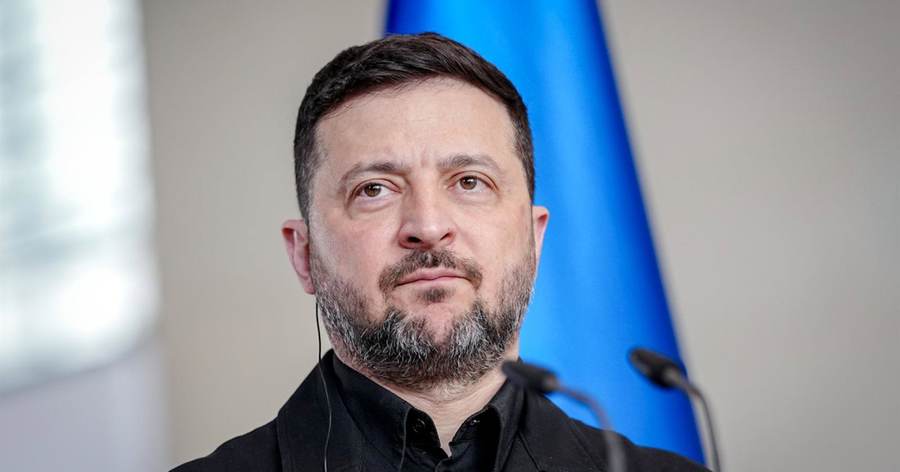
KYIV — Ukraine refinery strikes are set to intensify after President Volodymyr Zelenskyy said Kyiv would answer Russia’s expanded campaign against urban infrastructure by targeting the oil-processing network that helps fund Moscow’s war. Speaking at a Kyiv press briefing on October 3, Zelenskyy described the decision as retaliation against what Ukrainian intelligence calls a new Russian “doctrine” of attacks designed to “force people to abandon Kyiv” and other cities.
“With their attacks on our energy, we have to respond on their energy,” Zelenskyy said, according to Reuters. “First of all, oil refiners: what gives money to them for this war.” He then made an explicit distinction: “But we will not respond, of course, just like them, on any civilian objects.”
That distinction is central to Kyiv’s argument but does not settle the legal or humanitarian questions around long-range attacks. Refineries can support military operations and state revenue, yet they are also industrial sites whose disruption can affect civilian fuel supplies, workers and nearby communities. Each strike remains subject to the laws of armed conflict, including distinction, proportionality and precautions against foreseeable civilian harm.
Why this matters: energy retaliation moves to the center of the war
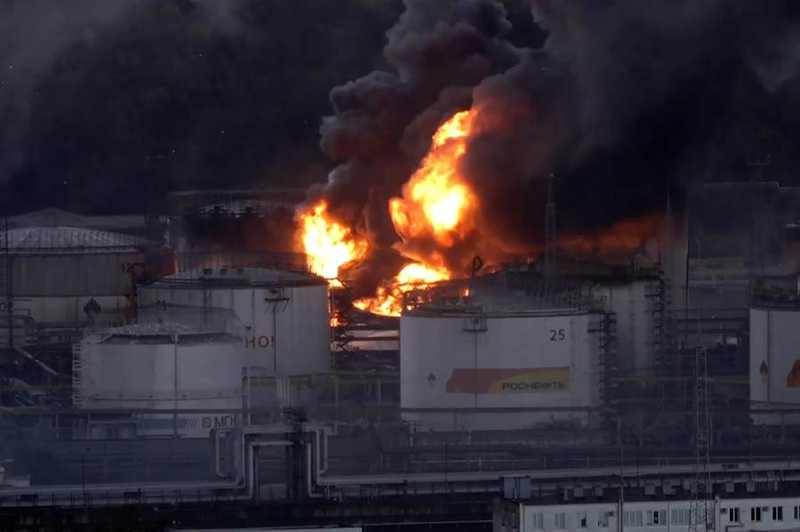
The announcement turns an existing pressure campaign into an openly declared response doctrine. Ukraine has attacked Russian refining and oil infrastructure repeatedly since summer, seeking to reduce fuel output, raise repair costs and squeeze the revenue stream behind Moscow’s military. Russia, meanwhile, has expanded strikes on Ukrainian power, transport, telecommunications and water systems as winter approaches.
In the past week alone, Russian attacks have hit Kyiv energy and telecom facilities, roads, railways and bridges across the Dnipro. A Russian drone struck a Kyiv school on Thursday while more than 100 pupils sheltered; no injuries were reported. On Saturday, the Northern Bridge was struck during a fourth consecutive day in a bridge campaign. Our report on the Kyiv Northern Bridge strike explains why transport links now sit beside the grid in Russia’s winter target set.
Russia’s Foreign Ministry said the same day that Moscow would continue what it called “targeted retaliatory strikes” on Kyiv and other cities and urged foreign nationals and diplomats to leave Ukraine. The parallel statements show how quickly retaliation can become a self-reinforcing ladder: each government describes its own strikes as a necessary answer to the other side.
The alleged ‘new doctrine’ remains a Ukrainian intelligence claim
Zelenskyy said Ukrainian intelligence obtained documents showing President Vladimir Putin had ordered a wider target set covering infrastructure, logistics, roads, schools and hospitals. He argued that the purpose was to pressure residents to leave major cities and that the change reflected Putin’s desire to project strength while Russian forces suffered heavier losses and lost ground in a key frontline area.
The Financial Times previously reported Zelenskyy’s account that Ukrainian intelligence learned of the order through intercepted correspondence with Kremlin officials. The underlying documents have not been published, and the Kremlin had not commented on the specific allegation at the time of the reports. The claim therefore matters as the basis for Kyiv’s policy, but it should not be presented as independently established fact. Our earlier analysis of the reported Russian winter-blitz plan examines the same verification gap.
Operation Vivaldi and the 140-square-kilometer claim
Zelenskyy also said Ukraine’s Operation Vivaldi counteroffensive had recaptured about 140 square kilometers — 54 square miles — in Donbas. That figure came from Ukraine’s president and had not been independently verified in the reporting available at publication. If sustained, the gain would strengthen his argument that Moscow is widening pressure on cities partly to offset battlefield setbacks.
The political value of the number is as important as the map value. Kyiv is asking partners to fund a difficult winter defense while demonstrating that Ukrainian forces can still alter the front. Moscow has its own incentive to dispute or minimize the claim. Changes on active fronts are often hard to verify in real time because neither side provides complete operational data.
Refineries, revenue and the diesel-price argument
Russian refineries convert crude into diesel, gasoline, jet fuel and other products used by both the military and civilian economy. Government draft forecasts cited in reporting point to Russian refinery output falling to a 17-year low. That would suggest the cumulative campaign is biting, though a forecast is not the same as audited final production and outages can reflect maintenance, sanctions, logistics and market conditions as well as attacks.
Ukraine’s potential gain is strategic leverage: damaged processing units can be slow and expensive to replace, especially under sanctions, while lower product exports can reduce revenue and complicate military fuel distribution. Russia’s potential loss extends beyond cash to refinery capacity and domestic supply stability.
Consumers outside the war zone can also lose. President Donald Trump urged Ukraine last month to stop hitting Russian oil installations, arguing that the campaign was driving up global diesel prices. U.S. diesel has moved above $6 a gallon in the current energy shock, according to reporting cited in the briefing, making fuel costs a political as well as strategic constraint. A refinery campaign can hurt Russia and still impose costs on truckers, farmers and households elsewhere; both outcomes can be true.
Zelenskyy’s reply is a legitimacy argument: Russia targets systems civilians depend on, he says, while Ukraine will target the energy income sustaining the invasion and avoid civilian objects. Critics will test that promise against the location, timing and effects of each operation rather than against the stated policy alone.
FP-9 missile timeline raises the long-range stakes
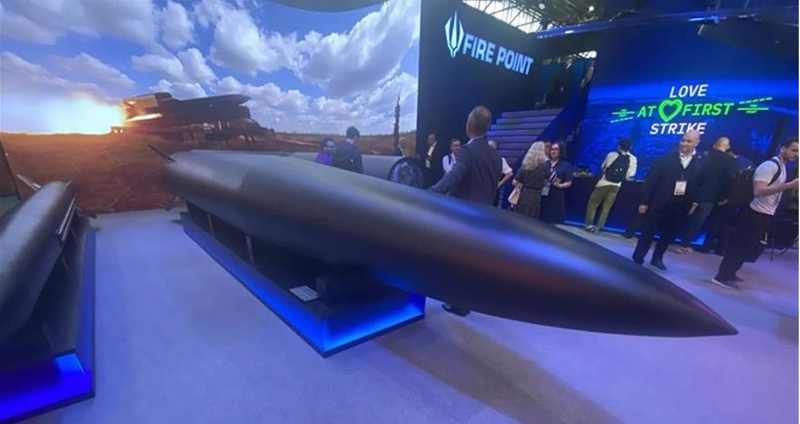
Zelenskyy said the longer-range FP-9 ballistic missile would be ready this autumn. Manufacturer Fire Point has said the system could reach Moscow, making its transition from exhibition hardware to operational weapon a potentially significant shift. “We need the FP-9. And the FP-9 will be ready this autumn, I’m sure,” he said.
The shorter-range FP-7 had its first reported combat use this week. Read our technical explainer on Ukraine’s FP-7 first-combat-use claim. A domestic ballistic-missile family would give Kyiv options less dependent on foreign permission, but production scale, accuracy, survivability and verified combat performance will matter more than a public timetable.
Air defense: fighters carry the load as ammunition runs short
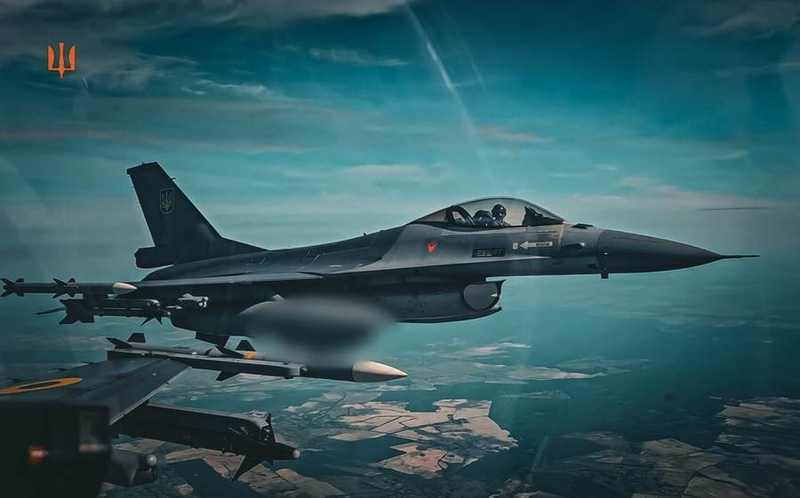
Zelenskyy said Ukraine is using F-16s and MiGs to destroy about 60% of the newer jet-powered Shahed drones but is running low on 20mm ammunition. He added that interceptor drones are achieving roughly a 30% success rate while production scales. These are Ukrainian government figures, not independently audited performance data.
The first shipment of smaller, cheaper air-defense missiles is expected in the second half of October, he said. That timing is critical because Russia has stockpiled hundreds of ballistic missiles for winter, according to Kyiv. Using scarce fighter ammunition against mass-produced drones is an expensive exchange; lower-cost interceptors could improve the economics if they arrive in volume and perform as promised.
Washington, UAE talks and the risk of normalizing before peace
The refinery dispute is now inseparable from diplomacy. Trump has invited Putin to the Group of 20 summit in Miami in December. Zelenskyy warned Washington not to normalize relations with Moscow before a peace settlement: “Because peace is more important than any kind of economy.”
The United States has proposed restarting trilateral talks with Ukraine and Russia in the United Arab Emirates in the coming weeks, though no date or location has been fixed. Economic deals are already brushing against the negotiation track; our report on the Lukoil asset sale and Ukraine talks shows how oil interests could shape leverage at the table.
Kyiv also faces a $27 billion defense-budget hole. Its plan depends in part on a €90 billion European Union loan, while Europe has funded drone orders stretching into 2027. That mismatch — urgent winter needs against longer procurement cycles — helps explain why Ukraine is emphasizing domestic missiles and attacks intended to impose costs now.
Claims, casualties and what the numbers do not prove
Ukraine has reported 1,538,950 Russian personnel losses since the full-scale invasion began. That is a Ukrainian military claim, not a verified death toll; the figure commonly combines categories and cannot be independently confirmed from the battlefield. It should be read as part of Kyiv’s assessment of Russian attrition, not as an audited count.
The same caution applies across this story. The 140-square-kilometer gain, interception rates and intelligence documents all come from Ukrainian officials. Russia’s description of its own campaign as “targeted” and “retaliatory” is likewise a state claim. Independent evidence for the effects of individual strikes, civilian harm and territorial control remains essential.
What happens next
First, refinery attacks are likely to continue. Zelenskyy has publicly linked them to Russia’s urban-infrastructure campaign, which means de-escalation on one side may now be politically tied to restraint on the other. Watch for changes in Russian refining runs, repair times, domestic fuel prices and product-export restrictions.
Second, Russia’s winter onslaught may test whether Ukraine’s air-defense transition is fast enough. A mid-October missile delivery could ease pressure, but the decisive questions are quantity, engagement range and reliability. Fighter crews cannot indefinitely absorb a mass-drone campaign with a tightening 20mm ammunition supply.
Third, FP-9 readiness will be measured in launches, not promises. An autumn deployment would expand Kyiv’s domestic strike reach and could prompt Russia to disperse defenses around refineries, command nodes and Moscow. Delays or limited production would leave the announcement largely symbolic.
Finally, diplomacy has a narrow window. UAE trilateral talks could establish a channel before the Miami G20 summit, but refinery strikes, Russian urban attacks and energy-price pressure all create reasons for each side to harden its position first. The contest is no longer only over territory. It is over whose economy, infrastructure and coalition can withstand winter longer.