War · Diplomacy · APEC Shenzhen
Ninety minutes behind closed doors at Kylin Villa made history of one kind — the first meeting of its kind — and produced nothing else that any government was willing to announce: no Ukraine deal, no nuclear agreement, no joint appearance before reporters, and a presidential departure for the airport before dawn in Washington.
Track it live: Wars tracker
SHENZHEN, November 19, 2026 — The first Trump Xi Putin trilateral summit in history ended on Thursday the way it had begun — as an event whose significance lay in its existence rather than its results. Presidents Donald Trump of the United States, Xi Jinping of China and Vladimir Putin of Russia met for about 90 minutes behind closed doors at the Kylin Villa state guesthouse in Shenzhen, on the sidelines of the APEC summit, in the first three-way meeting ever held by sitting American, Chinese and Russian leaders. When it was over, there was no breakthrough and no announced agreement on the war in Ukraine, on Iran or on nuclear arms, USA Today, Fox News and CBS News all reported. The leaders offered no joint or separate statements to reporters afterwards, CBS News reported, and Trump left at around 5 a.m. Eastern Time and headed straight for the airport to fly home to Washington, not expected to deliver public remarks before departing, according to Fox News and CBS News. A meeting billed as a possible turning point for two wars and the world’s nuclear balance thus closed with the most eloquent fact of the day: silence, followed by wheels up.
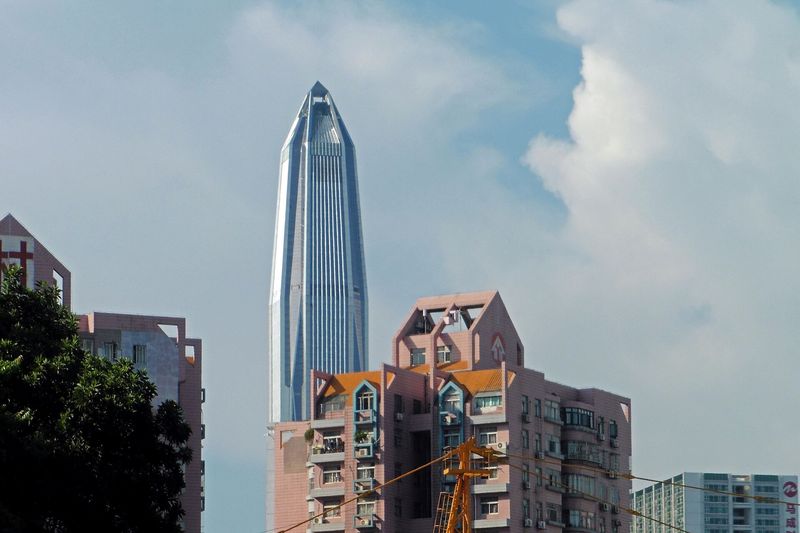
That ending needs to be stated plainly, because the run-up to Shenzhen had encouraged larger expectations. As Signal Post News reported as the meeting opened in our coverage of the first-ever trilateral summit’s opening, the three leaders arrived with nuclear arms at the center of the advertised agenda, the Ukraine war unresolved, and a format — three nuclear powers, one room, no allies present — with no precedent in the postwar order. What Thursday delivered instead was a demonstration of the distance between convening power and deciding power: Trump could bring Xi and Putin to one table, Xi could host and chair them, and Putin could attend as an equal despite his war and his isolation from the West — and none of it, in 90 minutes, could be converted into a ceasefire, an arms-control framework or even a shared public account of what had been discussed. The Shenzhen summit results are best read not as a failed negotiation, but as a measurement of how far apart the three governments remain, taken at the moment of their closest personal contact.
What happened in the room
The day ran late from the start. The leaders sat down just after 3 a.m. Eastern Time, roughly two hours behind schedule, Fox News reported, after a morning consumed by the bilaterals that preceded the trilateral. All three made brief opening statements before the doors closed, setting out three different theories of the meeting. Xi, hosting and chairing, framed cooperation as obligation: positive interaction among major powers, he said, “is not a matter of choice, but a mandatory requirement,” as USA Today rendered it — Fox News carried the same thought as “not optional, but a must” — and he called the gathering a “groundbreaking move.” Ahead of the trilateral, Xinhua had quoted Xi describing nuclear weapons as a “sword of Damocles hanging over humanity” and repeating that “a nuclear war cannot be won and must never be fought.” Trump declared that “we are really making history,” argued that “too often, past leaders avoided talking” and that “no problems were ever solved under the old school refusing to talk about them,” and insisted of Iran that “we [are] not going to let Iran have a nuclear weapon.” On nuclear weapons he was blunt: “once you have the nuclear weapons, it’s very hard to not have them.” Putin said the three countries have “numerous shared interests in the settlement of regional conflicts, including, obviously, the conflict in Ukraine.” Then the doors closed, and for about an hour and a half — 90 minutes by the USA Today and CBS accounts — the three governments talked without press witnesses.
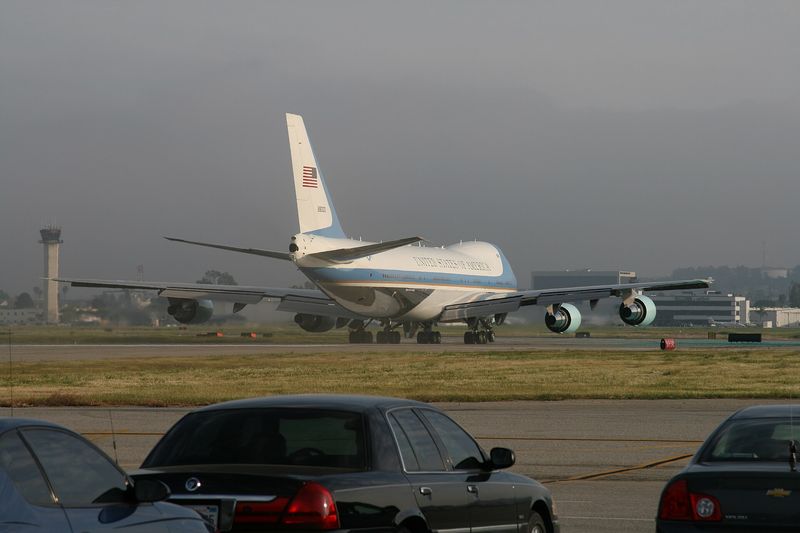
What emerged, when the doors reopened, was movement rather than news. Trump left at around 5 a.m. Eastern and went directly to the airport for the flight back to Washington; Fox News reported he was not expected to deliver public remarks before flying home, and CBS News reported that he immediately left for the airport to return home. No leader took questions or summarized the session for the cameras. For a president who ordinarily narrates his diplomacy in real time, the quiet departure was itself a data point: whatever had happened inside Kylin Villa, the White House did not judge it ready — or advantageous — to describe.
What did not happen
The clearest way to record the Shenzhen summit results is as a list of absences. There was no breakthrough on Ukraine: no ceasefire, no framework, no announced next round of talks, despite the war having been a central subject of both the trilateral and the Trump–Putin bilateral. There was no agreement on nuclear arms: the leaders discussed nuclear arms reductions, Fox News reported, without announcing a major breakthrough, and nothing suggested progress toward a successor to the expiring U.S.–Russian arms-control architecture or toward bringing China’s growing arsenal into any negotiated limit. There was no announced agreement on Iran, even though Trump had restated the shared interest, as he put it before the trilateral, in “ensuring that energy flows through the Strait of Hormuz, and that Iran cannot have a nuclear weapon.” And there was no new trade deal — and no new truce extension: none was announced in the verified reporting from Shenzhen, and the existing U.S.–China tariff truce continues to run, as previously agreed, to January 10, 2027. Summits are often judged by their communiqués; this one will be judged by the completeness of its empty column.
The statement question
One apparent contradiction in Thursday’s reporting deserves careful handling. USA Today reported that a written joint statement was released as the talks concluded — limited to pledges and aspirations on trade, technology innovation and economic growth, and amounting to no breakthrough on Ukraine or nuclear arms. CBS News, separately, reported that the leaders did not offer joint or separate statements to reporters after the sit-down. Those facts are not in conflict: a written statement is not a press statement, and only USA Today reported the written text. Signal Post News presents the joint statement on USA Today’s attribution alone; it has not been independently confirmed by a second outlet at publication, and Fox News’ account — no substantial breakthroughs immediately announced — is consistent with a document confined to economic generalities.
The passage USA Today quoted is the closest thing to a deliverable the summit produced: “We recognize the importance of respecting intellectual property rights in the development of digital and emerging technologies... We will continue our cooperation on facilitating the flow of data across borders, strengthening business and consumer trust in digital transactions, and ensuring data protection and privacy.” As summit language goes, it is boilerplate — the vocabulary of a trade working group, not of a historic settlement. USA Today characterized the passage as appearing to obliquely reference the Nvidia and Jensen Huang scandal that has shadowed the summit — a characterization Signal Post News attributes to USA Today, not established evidence of the drafters’ intent. What can be said on the verified record is narrower: at a summit convened to discuss war and nuclear weapons, the only written product USA Today could point to concerned intellectual property and data flows. The gap between the agenda and the output is the story.
The bilaterals: warmth with Putin, steadiness with Xi
If the trilateral produced atmosphere without agreement, the bilaterals that preceded it produced something similar in miniature. Trump’s meeting with Putin lasted about 40 minutes. Ukraine was the main topic, according to Russia’s TASS news agency, and Putin confirmed afterwards that Ukraine had been a focus of the bilateral at Trump’s initiative. Putin left in “an excellent mood,” TASS reported via CBS News’ account. The cameras that captured Trump, Secretary of State Marco Rubio and Treasury Secretary Scott Bessent entering the room also caught the moment that will define the bilateral in the public memory: Russian media footage showed Trump gesturing toward Putin and asking, “Who is he?” — then, laughing, “He’s my friend.” CBS News carried a near-identical exchange — “Who is that?” followed by the same punchline. The two men had been photographed together earlier, in the encounter Signal Post News covered in our report on the Trump–Putin handshake, with Xi looking on — the first time the three leaders had been together in one frame. None of the warmth came with a Ukrainian deliverable attached: no ceasefire terms, no prisoner announcement, no follow-up date were reported out of the 40 minutes.
The Trump–Xi bilateral ran longer — more than an hour, Fox News reported; about an hour in CBS News’ account — and produced the day’s most conventional diplomatic language. Xi described U.S.–China relations as “stable and improved.” Trump told reporters he had spoken with Xi for two hours on Wednesday, with trade and tariffs the main topics, and that he would ask China to “do some more” for American farmers, citing China’s “insatiable appetite” for farm goods. Trump also used his APEC platform to talk up artificial intelligence and what he called “superintelligence.” Read together, the bilaterals suggest where Shenzhen was genuinely productive: relationship maintenance. Putin got his mood, his photograph and his parity; Xi got his stability formula and his host’s chair; Trump got his history-making tableau. What none of them got, on the record available Thursday, was a concession from either of the others.
The Huang shadow
No account of Shenzhen is complete without the scandal that kept intruding on its margins. Fox News, citing the White House pool report, reported that a Bloomberg reporter was barred by Chinese officials from attending the trilateral after asking Trump at an earlier bilateral: “President Trump, has Jensen Huang been disloyal to the United States?” The question — about the Nvidia chief executive at the center of an alleged affair-and-espionage storm — was not answered, and the exclusion became a small diplomatic incident inside the larger one. Signal Post News has covered the Huang affair in our reporting on Jensen Huang’s statement and return, and the precision rules matter here as much as anywhere: the claims about Huang remain allegations. Beijing has dismissed the related Alice Huang spy claims as “groundless speculation,” CBS News reported, and Megaspeed — the company under U.S. Justice Department investigation in connection with the affair’s widening fallout — denies wrongdoing. Nothing in the verified Shenzhen reporting establishes any of the allegations, and the only summit document said to touch the affair at all is the USA Today-reported joint statement’s intellectual-property passage, whose connection to the scandal is, again, USA Today’s characterization. What the episode does establish is atmospheric but real: a question about a chip executive’s loyalty was sensitive enough, in the host country’s handling, to cost a journalist her seat at the most exclusive meeting of the year.
Why this matters
It would be easy, and wrong, to file Thursday under “nothing happened.” Three structural facts survived the summit intact. First, the format now exists. The United States, China and Russia have met as a threesome at head-of-government level, on Chinese soil, with the American president travelling to attend; formats, once created, develop their own momentum, and the question for the next crisis is no longer whether such a meeting is conceivable, but whether it is convened. Second, the meeting normalized a geometry that excludes almost everyone else. Ukraine was discussed by the three powers most able to end its war and by none of its defenders in Europe; nuclear arms were discussed by the three largest arsenals without the other nuclear states; Iran was discussed without Iran. Third, the summit demonstrated the current ceiling of personal diplomacy. Trump’s method — gather the principals, apply pressure and charm in person, announce history — met problems whose obstacles are not personal. Ukraine’s war turns on territory and security guarantees; nuclear arms control turns on verification regimes and arsenal asymmetries that cannot be charmed away in 90 minutes; the U.S.–China contest turns on technology controls both capitals treat as existential. Shenzhen did not fail because the leaders lacked rapport. It produced nothing because rapport was never the binding constraint.
The distribution of benefits reflects that reading. Putin arguably gained most per minute invested: he attended as a co-equal arbiter of the world’s future, was greeted as a friend by the American president, and conceded nothing on the war he started — an excellent mood, as TASS had it, is easier to sustain when the bill never arrives. Xi gained the host’s dividends: the chair, the venue, the “stable and improved” formula, and a narrative in which China convenes the world’s powers rather than being summoned by them. Trump gained the tableau and the precedent — “we are really making history” is, as a statement about the meeting’s existence, simply true — but he left without the deliverable his diplomacy is usually staged to produce, and his silent departure suggests he knew it. The clearest losers were those not in the room: Ukraine, whose fate was a “main topic” in discussions it did not attend, and America’s European allies, watching a format that routes around them.
“Yalta 2, 3, 4” versus “more than symbolic”
The argument about what Shenzhen meant began before it ended, and its two poles were staked out by a president who was absent and an analyst who was watching. Ukraine’s President Volodymyr Zelenskyy had warned in October, in remarks that hung over the entire summit: “We really don’t want this to turn into ‘Yalta 2, 3, 4,’ with a redistribution of influence.” The reference is to the 1945 Yalta conference, where the leaders of the United States, Britain and the Soviet Union settled the postwar map of Europe over the heads of the nations being mapped. Zelenskyy’s fear, which Signal Post News examined in our coverage of his argument that the war could end in a single meeting of the principals, is that a Trump–Xi–Putin format institutionalizes exactly that: three powers, one table, and the rest of the world waiting outside for the readout. Thursday’s outcome cuts both ways for that fear. No redistribution of influence was announced — no spheres were carved on paper. But the format Zelenskyy warned against now exists, and formats have a way of eventually producing the bargains they were built for.
The defence came from Henry Huiyao Wang, president of the Center for China and Globalization, who argued that “the summit is more than symbolic” and that “face-to-face dialogue of this kind can help calm down a lot of the world’s conflicts.” It is the strongest available case for Shenzhen, and it is not nothing: channels that exist can be used in a crisis, and the alternative to an inconclusive summit is not a conclusive one but no channel at all. Kirill Dmitriev, the Russian sovereign-wealth chief, made a version of the same argument to Fox News Digital, calling the dialogue “crucial both to resolving the conflict in Ukraine and to advancing relations between Russia and the United States, including economic cooperation,” while complaining of “forces in Europe and elsewhere seeking to derail this process.” Both defences share a premise worth naming: that the meeting’s value lies in the process it starts rather than the product it shipped. That may prove right — but process arguments are unfalsifiable in the short run, and the short run is where wars are fought. Wang’s case is a promissory note; Zelenskyy’s warning is a standing risk; Thursday’s empty outcome column gives neither side a victory it can bank.
The numbers in context
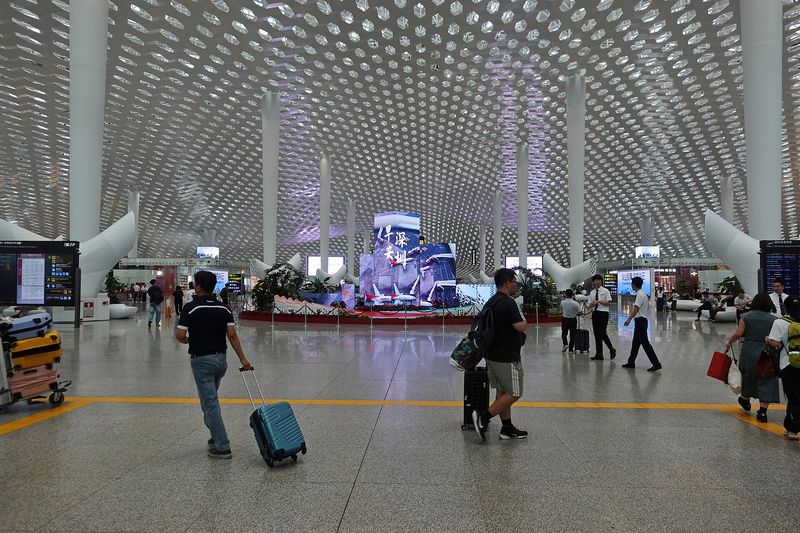
Strip the summit to its figures and its shape sharpens. Ninety minutes: the full length of the first trilateral in history, for an agenda spanning a major war, a nuclear standoff and the world economy. Two hours: the delay before it started. Forty minutes for Trump–Putin; about an hour for Trump–Xi; two hours, on Trump’s own account, for his Wednesday conversation with Xi — the preparatory bilaterals consumed several times the attention of the main event. The arsenals in the room explain why the nuclear session mattered despite its emptiness: the United States and Russia remain by far the world’s largest nuclear holders, while China fields roughly 600 nuclear weapons, CBS News noted — large enough to make any future arms-control architecture meaningless without Beijing, and still small enough, beside the American and Russian stockpiles, to make Beijing ask why it should cap a buildup that has only just given it a seat at this table. Xi’s “sword of Damocles” language, via Xinhua, and Trump’s observation that nuclear weapons, once possessed, are “very hard to not have,” describe the same trap from opposite ends. And on the trade clock, the operative date is January 10, 2027, when the existing tariff truce expires: Shenzhen produced no extension and no replacement, so the deadline approaching before the summit is the deadline still approaching after it.
What happens next
The first test of Shenzhen is documentary. Official readouts from Washington, Beijing and Moscow were still to come at publication, and their wording — what each capital emphasizes, omits or contradicts — will be the earliest evidence of whether the closed session contained more than the public record shows; Signal Post News will update this story as those texts appear. The second test is calendrical. Trump and Xi are expected to meet again in December at the G20 summit in Doral, Florida, which gives the truce clock and the farmers’ ask a natural next venue. Whether Putin is part of that December geometry, and whether the trilateral format is repeated, will say more about Shenzhen’s significance than anything said on Thursday. The third test is the war itself: Putin left in an excellent mood and under no new pressure that any government announced, and Ukraine will measure the summit by whether Russian operations change at all in the weeks ahead. On the evidence of Thursday — 90 minutes, no breakthrough, no statements, and an early flight home — the first Trump Xi Putin trilateral summit will be remembered as the day the three most powerful men in the world proved they could meet, and had not yet decided what meeting is for.
Sources: Reporting for this article is based on coverage read in full on November 19, 2026. USA Today, November 19, 2026 — the 90-minute duration and absence of immediate breakthroughs; the written joint statement limited to trade, technology and economic pledges, including the intellectual-property and data-flow passage quoted above, and USA Today’s characterization of that passage as appearing to obliquely reference the Nvidia/Jensen Huang scandal; Xi’s “mandatory requirement” line; Henry Huiyao Wang’s “more than symbolic” defence and Zelenskyy’s “Yalta 2, 3, 4” warning. Fox News, November 19, 2026 — the roughly two-hour late start (just after 3 a.m. ET), discussion of nuclear arms reductions, Ukraine and global security without a major breakthrough announced, Trump’s departure around 5 a.m. ET with no public remarks expected, the bilateral timings, the Bloomberg reporter’s barring per the White House pool report, Kirill Dmitriev’s comments to Fox News Digital, and Trump’s Hormuz and Iran remarks. CBS News, via AmeriLedger, November 19, 2026 — the absence of joint or separate statements to reporters after the sit-down, Trump’s immediate departure for the airport, TASS on Ukraine as the Trump–Putin bilateral’s main topic and Putin’s “excellent mood,” Xi’s “stable and improved,” Trump’s Wednesday two-hour conversation with Xi and the farmers’ ask, Xinhua’s “sword of Damocles” quotation, the tariff truce’s January 10 expiry, China’s roughly 600 nuclear weapons, Beijing’s dismissal of the Alice Huang spy claims as groundless speculation, and Megaspeed’s denial of wrongdoing. Photographs: the Ping An Finance Centre, Shenzhen, by Chris (CC BY-SA 2.0); Air Force One on a runway by John Murphy (CC BY-SA 2.0); Shenzhen Bao’an International Airport Terminal 3 by 颐园居 (CC BY-SA 4.0) — all via Wikimedia Commons, all file photographs, and credited in the captions.