War · Diplomacy · APEC Shenzhen
For about an hour on Thursday, the leaders of the United States, China and Russia sat in one room at the Kylin Villa state guesthouse in Shenzhen and talked — on camera first — about nuclear weapons, two wars and the order of the world. No agreement was announced, and none had been expected. The meeting itself was the event.
Track it live: Wars tracker
SHENZHEN, November 19, 2026 — The first Trump Xi Putin trilateral summit in history took place on Thursday at the Kylin Villa state guesthouse in Shenzhen, where Presidents Donald Trump of the United States, Xi Jinping of China and Vladimir Putin of Russia met for about an hour on the sidelines of the APEC summit — the first time sitting leaders of the three countries have ever held a three-way meeting. Xi hosted and chaired, and walked in at the centre of the three in the opening photograph. The meeting had been scheduled for 14:30 local time and started about two hours late, the New York Post reported. What the cameras were allowed to hear was a set of opening speeches that laid out, in sequence, three different theories of what the meeting was for. What happened after the cameras left is, as of Thursday evening in Shenzhen, still unknown: no agreement, no joint statement and no readout of the closed session had been issued. A senior US official had pre-briefed that no agreement was expected, and Kremlin aide Yuri Ushakov had said the three sides were consulting intensively on a draft joint statement — a draft that, by Thursday evening, had not appeared.
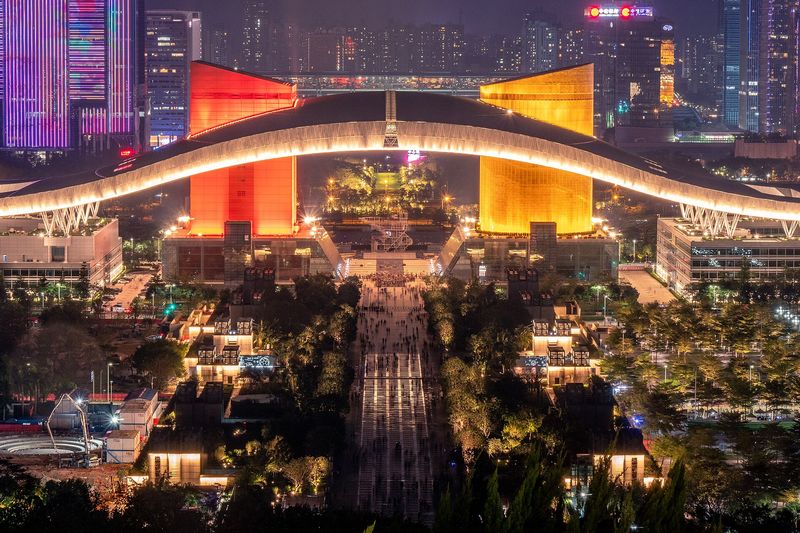
Xi first: “Nuclear war cannot be won and must not be fought”
Xi spoke first, as host. His theme, as carried by Xinhua, was cooperation among the three as a condition of global order: the three countries working together to “meet global challenges” and “uphold world peace and stability.” He warned that the world would be in chaos if major countries fought one another — a line that framed the meeting itself as the alternative to confrontation — and he repeated the formula all three governments have previously endorsed: “Nuclear war cannot be won and must not be fought.” Per Xinhua’s account only, Xi also told Trump that the United States should do the “right thing” on Taiwan; that remark is reported here on Xinhua’s attribution, and no American readout confirming it had been issued by Thursday evening. Read together, Xi’s remarks did the work a host’s remarks are meant to do: they set a ceiling of principle (no nuclear war, no great-power war) without committing anyone to a mechanism, and they placed China in the chair — literally and diplomatically — of the first meeting of its kind.
Putin next: Ukraine, international law and the victors of 1945
Putin spoke second, and he used his opening to raise the Ukraine war directly, The Times reported — the conflict his invasion began, discussed in a room from which Ukraine itself was absent. “We hold joint responsibility for maintaining international peace,” Putin said, calling for the system of international law to be preserved and strengthened. His framing reached back to the Second World War: the three countries in the room as victors of 1945, with a victor’s claim to a say in the order that followed. That framing is doing double duty. It is historically true that the United States, China and the Soviet Union were on the winning side in 1945; it is also the framing most convenient to a Russian president who wants his war discussed as a matter for great powers to settle among themselves, under the language of international law, rather than as a breach of it to be answered for. Which of those readings the closed session rewarded is not yet known.
Trump last: nuclear arms at the center
Trump spoke last, and he put nuclear weapons — not Ukraine, not trade — at the center of his remarks. “As the world’s three largest nuclear powers by far, the United States, Russia, and China are uniquely positioned to discuss how to reduce the number of nuclear weapons on Earth, and also to lessen the risk that those weapons will ever be used,” he said. He defended the meeting itself against its critics in the plainest terms: “No problems were ever solved under the old school refusing to talk about them,” and “No peace was ever forged by declining opportunities for engagement and speech.” He called the occasion historic — “We are really making history” — and reached for scale to describe the arsenals in the room: “The power is unbelievable, unthinkable.” And then, in the most candid line of the afternoon, he named the obstacle to the very reductions he was proposing: “Once you have the nuclear weapons it’s very hard to not have them… It’s hard to give them up,” as The Times reported. Trump also floated ending the Ukraine and Iran wars, and acting against what he called “rogue globalist organizations” such as the International Criminal Court to protect sovereignty — a reminder that his agenda for the format runs well beyond arms control, even if arms control was Thursday’s headline.
Before the three sat down together: two bilaterals
The trilateral was the third meeting of Trump’s Thursday, not the first. Earlier in the day he met Putin bilaterally for about 40 minutes; Russian media footage of Trump entering that meeting caught him gesturing at Putin and exclaiming, “Who is he? He’s my friend!” — a piece of tape Moscow’s outlets were happy to circulate. Trump also met Xi bilaterally, their third substantial meeting this year, in a session that ranged across trade and energy: per The Sun’s reporting of the Chinese account, the two discussed energy flows through the Strait of Hormuz, and Trump restated that “Iran cannot have a nuclear weapon.” The sequencing mattered. By the time the three men sat down together, each pair in the room had already had its own conversation — which is one reason officials on all sides had spent the week lowering expectations for the three-way session itself: in summitry, the bilaterals are usually where anything concrete is traded, and the trilateral is where it is announced. On Thursday, nothing was announced. In a single colour line from a long day, the New York Post reported that Chinese officials barred a Bloomberg pool reporter from the trilateral after she had shouted a question about ousted Nvidia CEO Jensen Huang at the Trump–Xi bilateral.
Why this matters
The case for taking Thursday seriously does not rest on anything the three men agreed — they agreed nothing that has been made public — but on the calendar. In February 2026, the New START treaty expired, leaving the American and Russian arsenals formally uncapped for the first time in more than half a century. China was never a party to New START at all. So the three largest nuclear arsenals on Earth now sit outside any common limit, any common verification regime and any common counting rule — and Thursday was the first time the three leaders responsible for them have sat in one room to discuss the fact. That is the core difficulty of a three-way cap, and it is structural, not personal: Washington and Moscow spent five decades building bilateral treaties around rough parity, while Beijing built a smaller force outside the system and has historically refused to cap it while it remains smaller. A negotiation that asks China to freeze at a fraction of the others’ totals, or asks the United States and Russia to cut toward China’s level, runs into arithmetic before it runs into politics. Henry Huiyao Wang, founder of the Center for China and Globalization, made the case for the meeting to USA Today: “The summit is more than symbolic… Face-to-face dialogue of this kind can help calm down a lot of the world’s conflicts.” The counter-case is just as old: summits that produce process without text can calm nothing, and can instead launder the status quo — two ongoing wars and three growing or modernising arsenals — in the language of peace. Thursday’s evidence supports both readings, which is precisely why the readouts, when they come, matter more than the photographs already have.
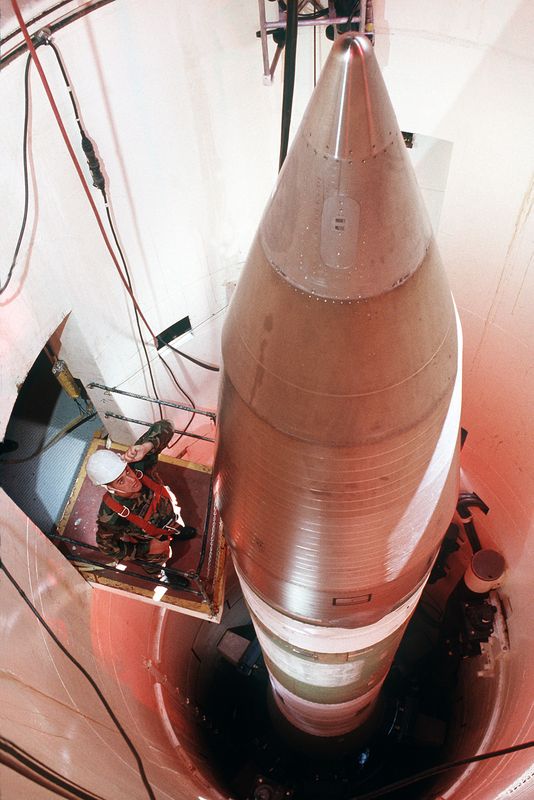
The numbers, in Trump’s own words — and in context
Trump arrived in Shenzhen having already put his version of the arithmetic on the record. In a Fox News interview on Thursday morning, he said the three countries “only need about 10” nuclear bombs, and gave his own figures: “We have 4,000 nuclear weapons. Russia has 3,800 nuclear weapons. China now has 400 or 500 [but is] going hot and heavy on building nuclear weapons — I’d love them not to do it.” Those numbers are Trump’s, stated by Trump, and Signal Post News attributes them to him every time they appear: they are a president’s negotiating shorthand, not a verified inventory, and independent estimates of all three arsenals differ in method and detail. But even as shorthand, Trump’s figures explain both his proposal and its problem. On his own numbers, the United States and Russia hold roughly comparable totals in the high thousands, while China holds a tenth as many and is, in his words, building fast. A three-way cap written at today’s levels would lock in that imbalance, which Beijing has no reason to accept; a cap written at equal levels would require either enormous American and Russian cuts or an enormous Chinese build-up first, which Washington has no reason to accept. Trump’s “about 10” line points at the only version of the deal that escapes the trap — radical reduction by everyone — and his own afternoon admission that the weapons are “hard to give them up” is the most honest available summary of why no such deal was ever going to be signed in an hour in Shenzhen.
Context: the road to Shenzhen, and the Yalta argument
Thursday’s meeting assembled quickly by diplomatic standards. The White House confirmed on November 13 that the three leaders would meet; China’s foreign ministry confirmed the format on November 16, in the announcement covered by Signal Post News as China confirms the Xi–Trump–Putin meeting at APEC in Shenzhen. Trump and Putin last met in person in Alaska in August 2025. On Wednesday evening in Shenzhen, the three were pictured together for the first time when Trump and Putin shook hands in Shenzhen as Xi looked on — a red-carpet moment that served as the trilateral’s trailer. Hovering over all of it is an argument about 1945. In October, President Volodymyr Zelenskyy warned against exactly this format deciding the fate of countries not in the room: “We really don’t want this to turn into ‘Yalta 2, 3, 4,’ with a redistribution of influence.” Signal Post News examined that warning in Zelenskyy’s Yalta warning over a Trump–Europe–Russia security deal. Putin’s own opening remarks in Shenzhen — victors of 1945, joint responsibility for peace — can be heard, from Kyiv’s side of the argument, as the Yalta framing stated approvingly. The analogy is contested and imperfect; Shenzhen produced no map and no settlement. But the procedural point underneath it is not contested at all: Ukraine was discussed on Thursday by three men, none of whom was Ukrainian, in a war whose terms will bind Ukraine first.
Who benefits, who loses
Start with the man for whom attendance itself was the prize. For years after the full-scale invasion of Ukraine, Putin was a pariah in Western capitals — indicted, sanctioned and uninvited. On Thursday he sat at the top table between the American and Chinese presidents, in a meeting his own aide briefed as a drafting exercise among equals; as USA Today noted, the summit marks Putin’s welcome back to the top table. He conceded nothing visible to get there. Xi’s gain is authorship: the meeting happened in his city, in his guesthouse, under his chairmanship, with his framing — great powers talking beats great powers fighting — as its stated premise. A China that hosts the world’s hardest conversation is a China auditioning, again, for the role of broker that Washington has traditionally claimed. Trump’s gain is doctrinal: the meeting is his engagement argument made flesh, the claim that talking to adversaries is itself a policy and that refusing to talk is the true naivety. His two “old school” lines were aimed at domestic critics as much as at the room. The losers’ ledger is headed by absence. Ukraine was not in the room while its war was raised in the second speech of the day. Smaller states watching three nuclear powers discuss the world’s order over their heads heard the Yalta echo Zelenskyy warned about, whatever the participants intended. And process itself may be a loser: if the summit’s only durable product is the photograph, it will have spent the format’s novelty — the first trilateral can only happen once — on symbolism.
What happens next
Four things will decide whether Thursday was a beginning or a photograph. First, the readouts: as of Thursday evening in Shenzhen, none of the three governments had issued an account of the closed session, and the gap between the three eventual versions — what each capital chooses to claim was discussed — will be the first real text of the summit. Second, the draft joint statement Ushakov described: if a common text emerges in the coming days, even a thin one, the meeting acquires a paper trail; if it quietly dies, that is also information. Third, the APEC leaders’ statement, which will show whether the trilateral’s language on peace and stability migrates into the summit’s collective document or stays in the guesthouse. Fourth, the calendar: Trump and Xi are expected to meet again in December at the G20 summit at Doral, Florida, the Associated Press reported — a near-term rematch at which a Shenzhen process, if one exists, would have to show a second step, and at which Putin’s presence or absence will itself be a headline. The scenarios branch from there. In the optimistic one, Shenzhen becomes a channel: working-level talks on nuclear risk reduction, a successor framework to New START widened to three parties, and a standing three-way line on Ukraine and Iran. In the base case, it becomes a precedent without a process — cited by all three capitals, convened again only when another photograph is needed. In the darkest, it becomes what Kyiv feared: a habit of deciding other countries’ futures in rooms they are not in. Nothing issued by Thursday evening rules any of the three in or out, and this article will be updated as the readouts appear.
Related coverage
Zelenskyy’s Yalta Warning: Kyiv Fears a Security Deal Decided Without Ukraine
China Confirms the Xi–Trump–Putin Meeting at APEC in Shenzhen
More war coverage: Signal Post News — War
Sources
Sources: USA Today, November 19, 2026 — the first-ever trilateral at APEC Shenzhen, the hour-long meeting, the Ukraine, Iran, nuclear, trade and AI flashpoints, the “He’s my friend” bilateral footage, the Yalta comparisons and Zelenskyy’s October warning, Putin’s return to the top table, and Henry Huiyao Wang of the Center for China and Globalization. New York Post, November 19, 2026 (pool reporting travelling with the president) — the opening remarks, including Trump’s nuclear passage and “old school” lines and his Thursday-morning Fox News figures; Putin’s “joint responsibility” line; the roughly two-hour late start against the scheduled 14:30; and, on the Post’s reporting alone, the barring of a Bloomberg pool reporter from the trilateral. The Times, November 19, 2026 — Putin raising the Ukraine war in his opening, Trump’s “hard to give them up” line, and the Kylin Villa walk-in with Xi at the centre. Reuters, November 19, 2026 — summit-day reporting from Shenzhen. Xinhua via The Sun — Xi’s “meet global challenges,” “uphold world peace and stability,” chaos-if-major-powers-fight warning and “Nuclear war cannot be won and must not be fought” lines; Xi’s Taiwan “right thing” remark, attributed to Xinhua only; and the Trump–Xi bilateral’s Hormuz energy flows and “Iran cannot have a nuclear weapon” line. Yonhap and Associated Press reporting — the absence of any readout or joint statement as of Thursday evening in Shenzhen, Ushakov’s draft-statement consultations, and the expected December Trump–Xi meeting at the G20 at Doral, Florida. Photographs: Shenzhen Civic Center at night by Sparktour (CC BY-SA 4.0); a Minuteman III missile in its silo, 1989, U.S. Air Force (public domain); the Futian skyline at night by Vikarna (CC BY-SA 4.0) — all via Wikimedia Commons, all file photographs, and credited in the captions.