Business · Technology · Nvidia
For five days, the loudest voice in the Nvidia story was everyone except Jensen Huang. The board spoke through anonymous sources. The president spoke from the White House driveway. A petition spoke in six figures of signatures. On Tuesday, Huang finally spoke for himself, in a written statement posted to his X account and quoted in full by USA Today and the Daily Caller — and what he said was carefully, deliberately conditional. He did not demand his job back. He did not criticise the board that is investigating him. He apologised, again and without qualification, for “serious mistakes in my personal life,” promised complete cooperation with the board’s independent investigation — and then, in a single sentence, opened the door he had walked out of less than a week ago: if the board decides his return serves shareholders, employees, the company “and America,” he “would be honored to answer these calls and return as CEO.” The board’s answer, delivered a day earlier, was no. This article keeps those two facts in their proper order, because the distance between them is the story.
SANTA CLARA, November 17, 2026 — Jensen Huang broke his silence on Tuesday, posting his first public comments since his resignation as Nvidia’s chief executive less than a week ago — and using them to say, in terms, that he would come back if asked. “Since my departure, I’ve seen an outpouring of calls from Nvidia’s employees, investors, business partners, and customers for me to return as CEO,” Huang wrote in a post on X, quoted in full by USA Today and the Daily Caller News Foundation. “If the Board of Directors decides that my return is in the best interest of our shareholders, our employees, the company, and America, I would be honored to answer these calls and return as CEO.” Every word of that sentence is load-bearing. The decision is assigned to the board. The conditions are the board’s to judge. The offer is framed as service — to shareholders, employees, the company, “and America” — rather than entitlement. It is a statement written by a man who knows the board has already answered, and who is speaking over its head to the constituencies he names.
The same post carried the apology, and it did not hedge. “I did not live up to the standards expected of everyone at NVIDIA, and I have made serious mistakes in my personal life. I created problems for the Board that I deeply regret. I own my mistakes completely, and I am committed to cooperating with the Board’s independent investigation.” Read together, the two halves of the statement are a single strategy: concede everything about the past, contest nothing about the process, and leave exactly one question open — the future. Huang did not say the board was wrong. He did not say the investigation was unfair. He said the decision is the board’s, that he will cooperate with its inquiry, and that if it changes its mind, he is ready. On Monday, as we reported, the board, through people familiar with the matter, said it is not considering bringing him back and is focused on its investigation and the search for a successor, with finance chief Colette Kress serving as interim chief executive. Nothing in Huang’s statement changes that position, and this article does not report a return as agreed, likely or decided — because on the record as it stands, it is none of those things.
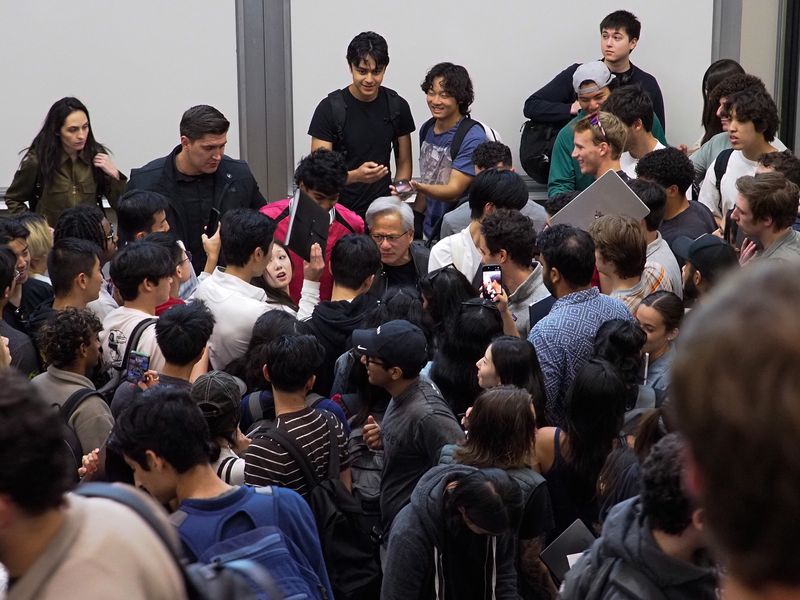
What the statement says — and what it pointedly does not
Precision matters here, because this story has accumulated four separate threads in a week and Tuesday added a fifth. The threads, kept separate as they must be: Huang’s own admission of personal misconduct, which he repeated and owned again on Tuesday. The board’s independent investigation, which continues and with which he pledged cooperation. The Reuters-reported allegation of a further affair — an allegation, reported as such, not a finding. And President Trump’s earlier suggestion naming Tim Cook in connection with Nvidia’s future — a suggestion, never an appointment or a board action. Huang’s statement is a distinct, fifth development: the founder himself, publicly and conditionally, declaring his availability. Conflating any of these — treating the allegation as established, the suggestion as a decision, or the conditional statement as a comeback — misreports the record.
What the statement does not contain is equally deliberate. There is no criticism of the board, no complaint about the investigation, no timeline, no condition of his own — no demand for exoneration first, no insistence on terms. There is no announcement of any legal or public-relations campaign. And there is no claim that anyone has asked him to return: the calls he cites are from “employees, investors, business partners, and customers,” the petitioning public — not from the directors who alone can make the decision. A statement can be read as a door opening or as a door being politely held shut by the man standing outside it; Huang’s text supports the narrower reading, and the narrower reading is the accurate one. He has made himself available. Availability is not appointment.
The petition: 194,000 signatures and counting
The “outpouring of calls” Huang cited has a number, and the number grew again on Tuesday. The Stand With Jensen campaign stood at more than 194,000 signatures at the Daily Caller’s reporting on Tuesday, including roughly 9,700 self-identified Nvidia employees — up from the more than 180,200 signatures Reuters counted on Monday, the figure in our earlier coverage. The growth matters less as arithmetic than as trajectory: the campaign is still accelerating five days after the resignation, and its named supporters include Elon Musk and Epic Games founder Tim Sweeney, who signed the support letter. As with Monday’s figures, the employee count is the campaign’s own tally of self-identified signatories and has not been independently verified; a petition measures intensity, not majorities. But intensity is a political fact even when it is not a governance one, and a board does not get to un-know that nearly ten thousand people describing themselves as its own employees have publicly asked for the founder back.
Huang’s statement is, among other things, an acknowledgment of that campaign — the first time he has publicly recognised it. That recognition cuts both ways. It thanks the signatories in the only currency available to him, attention. And it hands the decision back to the board in front of them, which subtly reframes the board’s “no” from a private deliberation into a public refusal that must now be sustained in public. Boards are built to withstand pressure; they are not built to enjoy it. The statement does not create that pressure — the petition did — but by answering it, Huang ensured the question will be asked of the board at every public moment from now until the investigation ends, starting with the company’s earnings call under Kress.
Trump’s backing, and the politics around the board
The president’s position, restated Monday and part of the backdrop to Tuesday’s statement, is that he would back a return. “I would certainly not mind seeing that… having Jensen go back… that certainly isn’t a bad idea,” Trump said, in USA Today’s account — while also doubting the claim, circulating in the wider scandal, that Alice Huang was a Chinese spy. A president’s preference does not appoint a chief executive, and no one in this story claims otherwise. But Nvidia is not an ordinary company in an ordinary market: it is the central supplier of the AI build-out, the subject of export controls its government writes, and a company whose products are now an instrument of statecraft. When the head of that government says, on the record, that he would not mind the founder’s return, the board’s cost-benefit analysis acquires a line it did not have last week — the regulatory and political weather that a restored Huang, publicly blessed by the president, might enjoy, weighed against the governance weather of restoring a chief executive mid-investigation.
That is the multiple-angle reality of the week: the same statement reads differently from every seat. To the petition’s signatories, it is their champion answering the call. To the board, it is a disciplined, non-combative text that nonetheless raises the public cost of its position. To institutional investors, it is a new variable in a succession they had begun to price as settled. To the administration, it is a founder aligning his return with “America” in the sentence’s final position — a word choice aimed at an audience of one as surely as any in the post. And to Kress, the interim chief executive who must run the company through its earnings and whatever follows, it is the sound of the man whose chair she is keeping warm, announcing from outside the building that he would be honoured to sit in it again. None of those readings changes the only one with legal force: the board’s, which as of Monday was no.
Why this matters
Why this matters goes beyond one company’s succession, because Nvidia’s succession is not only Nvidia’s. The company sits at the choke point of the global AI build-out — the data-center numbers it reported Tuesday night, $107.6 billion in a single quarter, describe an infrastructure program on the scale of a national project — and its leadership question is now entangled with export policy, congressional oversight and a presidential preference, all while its board runs an independent investigation into its founder. Founder-returns are a known genre in corporate history, and they usually follow a script: time passes, results falter or nostalgia compounds, and the board reaches back. What is unusual here is the compression — a resignation, a refusal and a conditional offer to return inside six days — and the fact that the “campaign” phase has run ahead of the “investigation” phase, so that the board must now complete a sober, private process inside a loud, public one. How a board holds that line — or doesn’t — will be studied in governance courses long after the quarter is forgotten.
It matters for a simpler reason too: statements like Tuesday’s are how corporate outcomes are negotiated in public before they are decided in private. Huang has now placed his position on the record at zero cost to himself and at rising cost to any director who wishes to end the matter quietly. If the investigation clears the ground, the sentence is there waiting to be acted on. If it does not, the sentence costs him nothing he had not already lost. That asymmetry — maximum optionality for the speaker, maximum pressure on the deciders — is not an accident of drafting. It is the drafting.
Congress: December 1, and the subpoena that preceded it
Running on a separate track from the boardroom — and one Huang’s statement did not address — is Congress. Huang is scheduled to testify before House committees on December 1, an appearance that followed a threat of subpoena; the Daily Caller reported that general counsel Tim Teter is also expected, and put the hearings across December 1–2, before the House Intelligence Committee, the House Foreign Affairs Committee and the House Select Committee on the Chinese Communist Party, whose chairs’ joint statement demands answers on PRC access to advanced chips. The congressional track is about export controls and national security, not about the succession — but the two tracks share a witness, a calendar and a news cycle. A founder testifying under that spotlight on December 1, three weeks after conditionally offering to return, will be performing for several audiences at once, and every answer about chips will be heard against the unanswered question about the chief executive’s office.
The investigation track likewise continues on its own clock. The board’s independent investigation — the one Huang pledged to cooperate with, and the subject of our earlier report on the board’s investigation — is the process the board itself has pointed to as its focus. Its findings, when they come, are the single document most likely to move this story: they will either build the factual record on which a permanent succession proceeds, or complicate it. Until then, every other actor in the drama — president, petitioners, the founder himself — is speaking into a room whose door the investigators have closed.
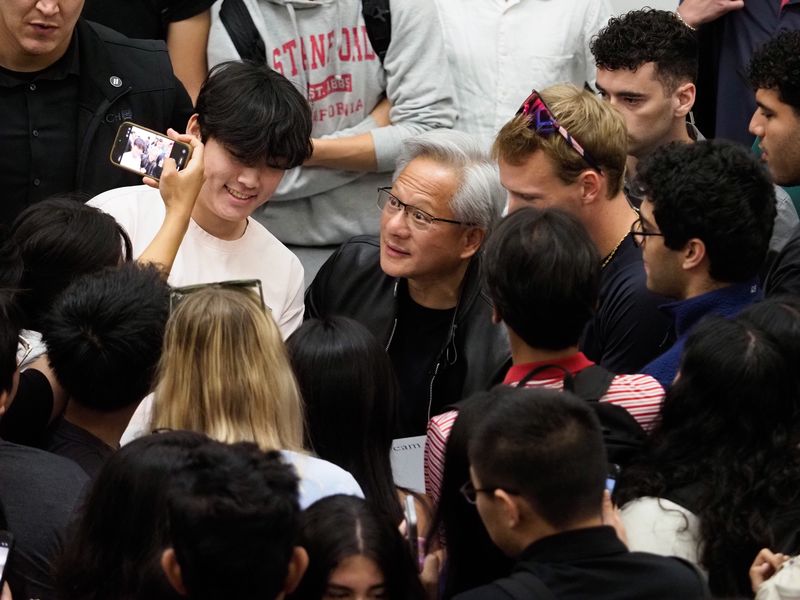
The context: how a week rearranged Nvidia
The speed of this story is part of its substance. Huang resigned last Thursday. By the weekend, the board had an interim chief executive in Kress, a veteran finance chief whose steadiness is the company’s public argument that the institution is bigger than the founder. By Monday, the board’s refusal to consider a return was on the record via Reuters’ sources, the petition had passed 180,200, the president had blessed a comeback and Taipei 101 had lit up for the island-born founder. On Tuesday the petition passed 194,000, Huang spoke, and after the close the company reported the strongest quarter in its history — revenue of $115.8 billion, up 103% year over year, with a $130 billion guide — under its interim chief executive. The juxtaposition is the context every actor now works inside: the company, operationally, has not missed a beat; the company, governmentally, is in open suspense. Both are true, and the tension between them is what the next month resolves.
For employees — roughly 9,700 of whom the campaign counts as signatories — the statement lands in a workplace being asked to execute a record quarter while its founder campaigns, however politely, from outside. For customers building data centers on Nvidia’s roadmap, the question is continuity of strategy, which Kress’s quarter supports and which a contested succession, prolonged, would tax. And for the board, the context is the one it created on Monday: a “no” delivered through sources, which can be revised through sources, at the price of looking managed by events. Formal positions can be defended; sourced positions can only be repeated or abandoned.
What happens next
Four dates and one document govern what happens next. The document is the independent investigation’s conclusion, unscheduled and decisive. The dates: the market’s verdict on the Kress quarter through this week’s trading; Huang’s December 1 testimony on Capitol Hill; the Federal Reserve’s December meeting, which will move the stock for reasons that have nothing to do with the succession and everything to do with the multiple; and whatever timetable the board sets for a permanent appointment. The scenarios, stated as scenarios: the board holds, completes its search, and appoints a successor who is not Huang, converting Monday’s sourced refusal into settled fact — the outcome its Monday position describes. The board waits, lets the investigation conclude, and only then revisits the question with the factual record in hand — the outcome Huang’s cooperation pledge is built to survive. Or the pressure — petition, presidency, performance — compounds until a board that said “not considering” finds language for considering, which is the outcome Tuesday’s statement exists to make possible.
What would settle it fastest is a sentence from the board in its own name — the one thing it has withheld all week. Until that sentence exists, the accurate summary of the Jensen Huang return question is the one his own statement supplies: the founder would be honored to return; the board has said it is not considering it; the investigation continues; Kress is chief executive. Everything else — 194,000 signatures, a president’s blessing, a tower lit in Taipei — is pressure arranged around those four facts. Pressure, in corporate life, is sometimes how facts change. It is not, yet, a fact itself.
Sources
USA Today, November 17, 2026 (Fernando Cervantes Jr.; Reuters contributed), “Jensen Huang breaks silence, says he would return as Nvidia CEO”: Huang’s X statement quoted, including “If the Board of Directors decides that my return is in the best interest of our shareholders, our employees, the company, and America, I would be honored to answer these calls and return as CEO” and “I did not live up to the standards expected of everyone at NVIDIA, and I have made serious mistakes in my personal life… I own my mistakes completely, and I am committed to cooperating with the Board’s independent investigation”; Colette Kress as interim chief executive; Huang’s December 1 House testimony; President Trump’s Monday remarks backing a return (“I would certainly not mind seeing that… that certainly isn’t a bad idea”) and doubting the Alice Huang spy claim. Daily Caller News Foundation, November 17, 2026: full text of Huang’s X post (@JensenHuang, November 17, 2026); Stand With Jensen petition at more than 194,000 signatures including roughly 9,700 Nvidia employees (the campaign’s self-identified tally, not independently verified), with Elon Musk and Tim Sweeney among the support letter’s signatories; board source: the board is focused on its internal investigation and is not seeking to bring Huang back; general counsel Tim Teter expected alongside Huang; hearings described across December 1–2 before the House Intelligence, Foreign Affairs and Select Committee on the CCP panels, following a subpoena threat. The primary source for the statement is Huang’s own post on X. PRECISION: the board ruled out reinstatement on November 16 (Signal Post News, November 16, 2026) and no return is reported here as agreed or decided; Huang’s statement is conditional. The affair admission, the board investigation, the Reuters third-affair allegation and President Trump’s Tim Cook suggestion are separate threads and are treated as such. The November 16 article’s petition figure of 180,200 is superseded for this story by the Daily Caller’s November 17 count of 194,000+. Photographs are file photos via Wikimedia Commons; the statement was a written post and no photograph depicts it.