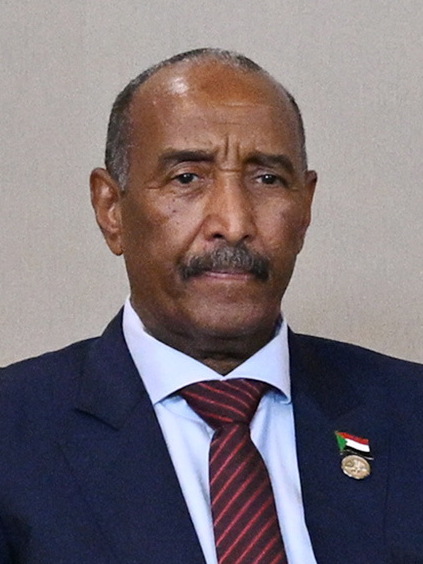
The State Department’s Sudan policy acquired a harder edge on Tuesday, September 22. In a statement connected to the administration’s broader Trump Sudan peace plan, spokesman Tommy Pigott said neither of Sudan’s warring forces nor their leaders could claim legitimate constitutional authority. The statement placed army chief Abdel Fattah al-Burhan and Rapid Support Forces commander Mohamed Hamdan Dagalo, known as Hemedti, on the same political footing: both rule through force, Washington said, and the conduct of each makes him ineligible to govern Sudan.
Pigott said President Donald Trump was committed to ending what he called “the world’s worst humanitarian crisis” and accused both the Sudanese Armed Forces and the RSF of failing to make serious commitments to an immediate truce while intensifying combat operations and drone strikes that kill civilians. He added that Washington “will seek to raise the cost of continued conflict on all belligerents and the networks which fuel the conflict.”
The change is not simply harsher language. For roughly three and a half years, U.S. diplomacy pressed the two armed camps toward negotiations while avoiding a definitive judgment that both commanders were personally disqualified from governing. Now that judgment has been made publicly, as Reuters reports that Washington is also withholding Burhan’s U.N. General Assembly visa in connection with acceptance of a 90-day ceasefire plan. Persuasion is being supplemented by coercive pressure.
That pressure has limits that should not be hidden. Pigott did not say whether “raise the cost” means sanctions, visa measures, diplomatic isolation, action against financial and supply networks, or some combination. No enforcement schedule, target list or trigger was announced. The threat is therefore politically significant but operationally unspecified.
Why the Trump Sudan peace plan matters now
The strongest part of the statement is its rejection of both sides’ legitimacy claims. Burhan’s SAF-led administration presents itself as Sudan’s state authority and constitutional military institution. Hemedti’s RSF has sought political standing through territorial control and a parallel administration. Washington’s position denies both arguments at once and says that governing authority must return to civilians.
That matters because U.S. policy had previously left more room for asymmetry. In May 2026, Senior Advisor for Arab and African Affairs Massad Boulos publicly described the SAF-led administration as the “existing government” and the army as a “constitutional institution.” The September 22 language reverses that framing: the army may retain institutions, territory and diplomatic representation, but those assets no longer translate into an American endorsement of its leader’s right to govern. Hemedti, whose forces control much of Darfur, is explicitly denied the same claim.
The timing also gives Trump an UNGA-week peacemaker argument. His administration can say it is no longer tolerating an open-ended war and is willing to pressure both armed camps. But branding and leverage are not the same as results. Sudan has absorbed previous ultimatums without a durable ceasefire, and both forces have repeatedly treated battlefield advantage as more valuable than negotiated restraint.
Sudan humanitarian truce 2026: from proposal to pressure
The immediate diplomatic vehicle is the Sudan 90-day ceasefire plan associated with Boulos. The proposal calls for a three-month humanitarian truce before a longer political process. The SAF voiced reservations in July, while the RSF has said it accepted a truce proposal. Public acceptance, however, is not proof of operational compliance; both sides’ conduct would have to be monitored on the ground.
Reuters reported on September 22 that the United States was withholding a visa for Burhan’s U.N. General Assembly appearance and tying issuance to the ceasefire plan, according to sources. The detailed mechanics and the distinction between sourced reporting and official confirmation are examined in Signal Post News’s report on the Burhan visa and truce dispute. The Burhan UN visa withheld Reuters account gives the statement practical weight: Washington is not only criticizing the war’s leaders but is reportedly using access to the week’s most visible diplomatic platform as leverage.
Boulos also committed $375 million to Sudan humanitarian efforts last week. That pledge and the threat of added costs create a two-track policy: resources for civilians and pressure on belligerents. The test for the Massad Boulos Sudan truce is whether those tracks reinforce each other or whether armed actors accept aid rhetoric while ignoring political conditions.
Burhan and Hemedti declared ineligible to govern
Pigott’s statement said: “Neither the Sudanese Armed Forces, the Rapid Support Forces, nor their respective leaders, represent legitimate, constitutional governance for Sudan – they rule through force of arms alone.” He added that each faction leader’s conduct renders him ineligible to govern. The formulation is categorical in a way earlier U.S. statements were not.
The phrase Burhan Hemedti ineligible to govern has three consequences. First, it blocks the army’s attempt to convert control of state institutions into international political legitimacy. Second, it tells Hemedti that military gains cannot create a recognized national mandate. Third, it makes a Sudan civilian government transition the stated destination of U.S. policy rather than a secondary aspiration after a military bargain.
For civilians, that is an important promise but not yet a transfer of power. Civilian coalitions remain fragmented, their leaders have faced repression and displacement, and any transition would have to answer difficult questions about security-sector command, accountability and representation. Declaring the generals ineligible removes one ambiguity; it does not design the government that follows them.
El Fasher’s toll raises the moral stakes
The statement arrives after the fall of El Fasher in October 2025 transformed the Darfur battlefield. A U.N. Fact-Finding Mission said the RSF killed at least 60,000 people and found “hallmarks of genocide.” Those are the Mission’s findings; the RSF has denied accusations that it deliberately targets civilians. Signal Post News’s El Fasher analysis explains how the city’s loss altered the balance of territorial control and civilian-protection risks.
Fighting has since concentrated in Kordofan. West of El Obeid, the SAF is conducting what has been described as its largest ground operation since July, while drone attacks and counterattacks continue to expose civilians. That geography matters: a ceasefire negotiated in diplomatic language must restrain dispersed formations, supply routes and external support networks across several fronts, not merely stop two commanders from issuing public threats.
The numbers explain the urgency but not the solution: roughly three and a half years of war, at least 60,000 people killed in the El Fasher findings alone, a 90-day humanitarian truce on the table and a $375 million U.S. aid commitment. Each number measures a different part of the crisis. None should be treated as evidence that the parties are ready to stop.
Who gains—and who loses
Trump gains a forceful UNGA-week message: the United States is demanding an end to the conflict and refusing to recognize either armed leader as Sudan’s legitimate future. Boulos’s plan gains a threat behind its timetable, which may increase its negotiating value after months of reservations and delay. Sudanese civilians gain an explicit American commitment that political authority should return to them, though they receive no immediate protection merely from the statement.
Burhan loses twice: his visa is reportedly blocked, and his claim to constitutional leadership is explicitly rejected. Hemedti loses the argument that territorial control can mature into recognized national rule. The army as an institution loses the legitimacy bid Washington appeared more open to in May. External backers lose some diplomatic cover because Pigott’s warning reaches the networks that fuel the conflict, not only combatants inside Sudan.
The potential winners are conditional. Trump’s political benefit depends on movement toward a truce. Boulos benefits only if the threat produces bargaining rather than nationalist defiance. Civilians benefit only if humanitarian access, protection and political participation follow. If fighting continues, the statement risks becoming another deadline the belligerents learn they can ignore.
US raise cost Sudan conflict warning remains undefined
The phrase US raise cost Sudan conflict signals a willingness to escalate pressure, but its ambiguity is the central weakness. Targeted sanctions could restrict travel or assets; diplomatic measures could narrow recognition and representation; financial enforcement could reach companies, intermediaries or logistics networks that sustain combat. Pigott named none of these options.
That uncertainty may be deliberate, preserving flexibility and forcing every belligerent and sponsor to calculate its exposure. It may also reduce credibility. Past pressure efforts have often been blunted by enforcement gaps, competing regional interests and the armed parties’ access to alternative finance and matériel. A threat without a disclosed mechanism can deter—but only if intended targets believe follow-through is likely.
The administration must also explain how pressure will avoid worsening civilian harm. Measures that disrupt fuel, trade or financial flows can raise costs for fighters but also for families and aid operations. A credible policy would distinguish networks supplying combat from channels needed for food, medicine and humanitarian access.
Sudanese and U.N. responses
Sudan’s government expressed “deep regret” over the visa move. Its objection is both practical and institutional: preventing Burhan from reaching New York would deny the SAF-led authorities their highest-profile opportunity to present their case to member states. Khartoum also argues that host-country access to U.N. proceedings should not be turned into political leverage.
U.N. spokesman Stéphane Dujarric said Secretary-General António Guterres was “deeply concerned” and that the Secretariat was engaging U.S. authorities. The U.N. response does not endorse Burhan’s governing claim or reject the truce plan. It addresses access to the General Assembly and the organization’s interest in representation.
These objections complicate the coercive strategy. Washington can argue that extraordinary pressure is justified by the world’s worst humanitarian crisis Sudan has become. The Sudanese government can argue that a visa decision politicizes U.N. access. The U.N. can press for access without validating either military camp. All three positions can coexist, which is why the dispute is more than a simple choice between supporting a ceasefire and supporting Burhan.
What happens next in Sudan war diplomacy September 2026
Scenario one: pressure works. Burhan accepts or publicly commits to the humanitarian pause, Washington issues the visa or otherwise eases the immediate pressure, and the RSF is tested on whether its claimed acceptance produces verifiable compliance. Monitors and aid agencies would then need access, reporting rules and consequences for violations.
Scenario two: defiance. Burhan stays home, fighting grinds on in Kordofan, and Washington follows through against belligerents and support networks. That path would clarify what “raise the cost” means, but it could harden positions and encourage both armed camps to seek more help from external partners.
Scenario three: rhetoric fades. The visa dispute is resolved or overtaken by events, no detailed pressure package follows, and both sides conclude that the statement changed language rather than incentives. That would weaken the next U.S. deadline and reinforce critics who say Sudan’s combatants have learned to wait out diplomatic attention.
The decisive evidence will not be another declaration. It will be an accepted truce with monitoring, a measurable reduction in attacks on civilians, humanitarian access and a political process in which armed leaders do not determine Sudan’s next government. Until then, the Trump Sudan peace plan is a sharper negotiating posture—not a peace settlement.
Related coverage and sources
- Reuters, September 22: U.S. visa pressure, the ceasefire plan, Sudanese response and State Department statement
- Signal Post News: Burhan’s U.N. visa and the 90-day ceasefire mechanics
- Signal Post News: El Fasher, Darfur and the civilian-protection stakes
- Signal Post News: full war reporting archive
Reporting cutoff: September 22, 2026. The State Department’s threat to “raise the cost” did not specify sanctions, diplomatic measures or another enforcement tool at publication.