Lead
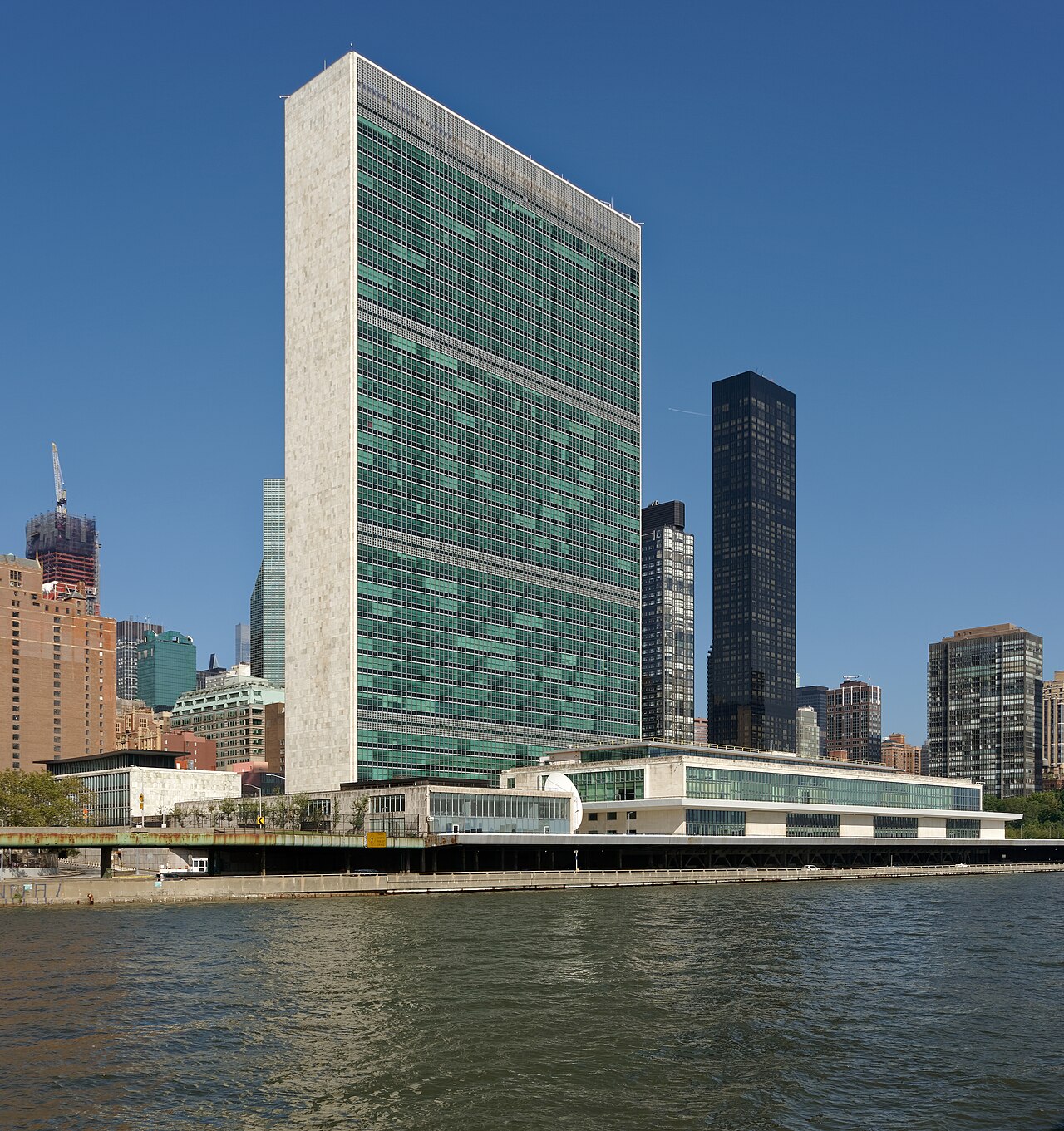
President Donald Trump turned Tuesday at the United Nations General Assembly into a showcase of his second-term foreign policy: signing a landmark security agreement with Denmark and Greenland that vastly expands the U.S. military presence in the Arctic, holding his first meeting with Britain's new prime minister Andy Burnham, and delivering a speech that drove Cuba's delegation from the hall, threatened Latin American drug cartels, and floated a temporary ban on U.S. diesel exports. The day's events on Iran, Ukraine, and European criticism of the White House's diplomacy are covered in our companion reporting.
The Greenland deal
The centerpiece was a security agreement signed Tuesday morning on the sidelines of the General Assembly in New York, with Trump joined by Danish Prime Minister Mette Frederiksen and Greenland Prime Minister Jens-Frederik Nielsen. The agreement ends months of tension over Trump's repeated threats to take control of Greenland — including suggestions of military force — and replaces the prospect of annexation with a greatly expanded American military footprint.
The deal amends the 1951 U.S.-Danish defense agreement that has governed the American presence in Greenland for more than seven decades. According to a text published by the Danish government and reported by Reuters, the United States may establish two new military bases — at Narsarsuaq in southern Greenland, a former World War II air base abandoned in the 1950s, and at Mestersvig on the east coast, currently used by the Danish special forces' Sirius Dogsled Patrol — and may expand Pituffik Space Base in the northwest, its only active base on the island, home to roughly 150 troops. U.S. aircraft and vessels gain flyover, landing, and undersea rights across Greenland, including its territorial waters, and the agreement folds Greenland into the Trump administration's planned "Golden Dome" antimissile shield. The pact has no fixed end date, does not specify troop numbers or timelines, and would continue even if Greenland becomes independent, with the new state required to remain in NATO. Non-NATO members are barred from maintaining an ongoing military presence on the island, a provision aimed at blocking Chinese and Russian influence, and the agreement explicitly reaffirms Danish sovereignty and Greenland's right to self-determination.
"We're going to have a tremendous relationship, a secure relationship. And we look forward to it," Trump said. "This was long in the making." Nielsen stressed Greenland's responsibility for North American and transatlantic security: "Your security is our security, and our security is your security." The Wall Street Journal described the agreement as the first major expansion of U.S. military infrastructure in the region since the breakup of the Soviet Union.
The Burnham meeting
Trump also held his first meeting with Britain's new prime minister, Andy Burnham, who took office in July. The two had never met and had little reason to expect warmth: Trump once called the former Manchester mayor "extremely liberal" and dismissed him as "the mayor of a town," while Burnham in 2021 said any British politician who gave Trump "the time of day should be ashamed."
The meeting, scheduled for 30 minutes, ran longer, and Trump emerged warm. He called Burnham "a natural business person" and said transatlantic relations were "more up than they were with your last prime minister," a reference to Keir Starmer, whom Trump initially courted before falling out with him over Britain's unwillingness to join the U.S.-Israeli war on Iran. Burnham said the two had "established a good connection in our early discussions," and that they discussed the Middle East, trade, and the Falkland Islands. On that last point, Burnham told reporters afterward that Britain "will stand firm in the face of any threats" and would defend the islanders' right to self-determination — a pointed statement after Trump said in August he was reviewing America's neutral position on the archipelago, and after Argentine President Javier Milei sanctioned oil companies drilling in the islands. Chagos Islands sovereignty and Britain's ban on trade with Israeli settlements in the West Bank remain points of friction, according to the AP.
The day's other movements
Trump's address was his most combative yet on the Western Hemisphere. He declared Cuba "an absolutely failed state" that "will fall" and said his administration was seeking "a fundamental change in the situation in Cuba," prompting the Cuban delegation to walk out — an exit confirmed by Reuters and USA Today. He said Secretary of State Marco Rubio was "deep into negotiations with Cuba." The administration has pursued a "maximum pressure" campaign against Havana, limiting oil shipments and causing an energy crisis and frequent blackouts, according to USA Today.
On the energy front, Trump said he supported a temporary ban on U.S. diesel exports, backing a proposal championed by Sen. Dan Sullivan and Michigan Republican Senate nominee Mike Rogers to lower prices at the pump. The average U.S. diesel price reached $6.53 a gallon on Tuesday, a record, according to AAA figures cited by USA Today; Trump acknowledged a ban could affect regular gasoline prices and did not commit to a timeline or mechanism. He also met the leaders of more than a dozen Latin American countries at a "Shield of the Americas" event, offering to take out drug traffickers for them if they could not do it themselves, and touted a 15 percent cut to the U.N. budget and the elimination of 4,000 jobs while attacking the International Criminal Court and a proposed global carbon tax: "There is no global government, and while I am president there will be no global taxes."
Later in the evening, Trump was scheduled to hold a leaders' reception with a planned pull-aside with Venezuela's interim president, Delcy Rodríguez — their first in-person meeting since Washington ousted Nicolás Maduro in January, according to Reuters. Earlier, first lady Melania Trump announced a partnership with seven technology companies — Adobe, Amazon, Google, Intel, N50, Starlink, and Zoom — to expand children's access to education and technology across more than 15 nations through her Fostering the Future Together initiative, first reported by USA Today.
What happens next
The Greenland agreement's long horizon — no expiration date, survival through a hypothetical Greenlandic independence — sets up years of Arctic diplomacy even as Trump left the question of American ownership unresolved, declining to answer reporters who asked whether annexation was fully off the table. Base sites, timelines, and troop numbers remain to be negotiated. On Cuba, Rubio's negotiations and the "maximum pressure" campaign continue alongside a diplomatic calendar that includes Trump's upcoming state visit from Chinese President Xi Jinping. The diesel-export proposal faces Treasury Department scrutiny over refining capacity and feasibility.
Sources and reporting notes
- Reuters, Sept 22, 2026: explainer of the U.S.-Greenland-Denmark security deal — two new bases, Pituffik expansion, flyover/undersea rights, NATO clauses, self-determination provisions.
- USA Today, Sept 22, 2026: signing ceremony with Frederiksen and Nielsen; Trump, Nielsen, and Frederiksen quotes.
- Wall Street Journal, Sept 22, 2026: deal context — reaffirms 1951 treaty rights, Narsarsuaq and Mestersvig sites, Golden Dome inclusion, no hostile-state bases.
- Associated Press (Jill Lawless), Sept 22, 2026: first Trump-Burnham meeting — "natural business person," longer-than-scheduled talks, Starmer comparison, Falklands, Chagos, West Bank trade ban.
- Reuters, Sept 22, 2026: Burnham on standing firm over the Falklands and islanders' self-determination.
- Reuters, Sept 22, 2026: Burnham says "good connection" established; discussed Middle East, Falklands, trade.
- USA Today live blog, Sept 22, 2026: UNGA address details — Cuba walkout, "Shield of the Americas," diesel export proposal ($6.53/gal, AAA), UN budget cuts, Melania Trump tech initiative.
- Reuters, Sept 22, 2026: Cuba walkout during Trump's "freedom will be coming to Cuba" remarks; Rubio negotiations.
- Reuters, Sept 18, 2026: planned Trump-Rodríguez pull-aside at UNGA leaders' reception — first in-person meeting since Maduro's January ouster; U.S.-Venezuela energy agreement context.
Reporting cutoff: September 22, 2026, 4:30 p.m. PDT (7:30 p.m. ET). The Trump-Rodríguez leaders' reception was scheduled for Tuesday evening and may not yet have occurred at this cutoff. This roundup intentionally does not revisit the day's Iran, Zelenskyy, and Estonia-FM developments, which are covered in companion stories.