
Lisa Cook hearing November 5
The president's new “committee of inquiry” will examine mortgage-fraud allegations against the Biden-nominated governor after the Supreme Court blocked his first firing for denying her due process. The date: two days after the midterms.
WASHINGTON — The Lisa Cook hearing November 5 will put a sitting Federal Reserve governor before a White House disciplinary panel in a proceeding without a modern parallel. President Donald Trump's memorandum orders Cook to appear in person, caps the closed hearing at four hours and directs a three-member committee to decide whether the disputed mortgage statements amount to legal “cause” for removal. The immediate case concerns two property purchases in 2021. The larger case concerns who gets to police the boundary between elected power and independent monetary policy.
The committee consists of National Economic Council Director Kevin Hassett, Labor Secretary and acting Office of Government Ethics Director Keith Sonderling, and Equal Employment Opportunity Commission Chair Andrea Lucas. All three are Trump appointees. They are to examine Cook, produce findings of fact and conclusions of law, and recommend whether the president may remove her.
The Oct. 7 memorandum was released Friday on White House channels. Trump wrote: “As president, it is my job to ensure the laws are faithfully executed, including by firing subordinates who cannot be trusted to tell the truth and follow the law.” Cook's attorneys say she denies wrongdoing and welcome a fair chance to clear her name, while questioning whether a president who has repeatedly said he wants her gone can provide a neutral forum.
Why this matters: a new breach in the Fed's political wall
Presidents have pressured central bankers before. Lyndon Johnson famously pushed Federal Reserve Chairman William McChesney Martin over rates; Richard Nixon's relationship with Arthur Burns became a cautionary tale about political pressure and inflation. But jawboning a chair and convening a White House tribunal for an individual governor are different categories of presidential power.
This Trump–Lisa Cook Fed hearing is the first formal White House disciplinary process of its kind in the modern era. Supporters call it overdue accountability: independence, they argue, should not immunize an official from scrutiny over alleged false statements on federal documents. Critics see the closed proceeding as precisely the leverage Congress tried to deny presidents when it gave Fed governors long terms and allowed removal only “for cause.”
Both arguments deserve to be stated plainly. The administration is not claiming the president can fire Cook merely because he dislikes an interest-rate vote; it says alleged dishonesty outside the Fed supplies cause. Cook's side is not claiming governors are beyond investigation; it says disputed allegations are being used as a pretext in a campaign whose policy objective Trump has already advertised.
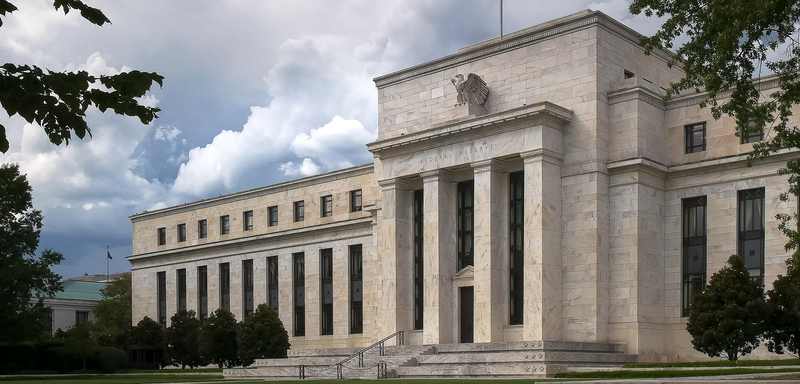
How the fight reached the White House hearing
From Lisa Cook's 2021 mortgage documents to a second removal bid
Cook, an economist nominated by President Joe Biden, joined the Board of Governors after the property transactions now at issue. The administration alleges she made false statements “in connection with one or more mortgage instruments” covering two acquisitions in 2021. Those are allegations, not adjudicated facts. Cook denies committing mortgage fraud, and the public record reviewed for this article does not establish a criminal judgment against her.
Trump first tried to fire Cook in 2025. In June 2026, the Supreme Court blocked that attempt, rejecting the government's “halfhearted contention” that Cook had received due process. At minimum, the court said, she was entitled to an explanation of the evidence, a way to respond and a deadline. A footnote added that the president was not barred from “trying again” with adequate notice. The Supreme Court Lisa Cook due-process ruling therefore closed one route while conspicuously leaving another open.
The administration returned in August with a termination notice and 21 days for Cook to explain. On Aug. 26, she submitted a five-page response with exhibits. The Oct. 7 memorandum now adds a hearing, a transcript and written findings — the architecture of the process the court said had been missing.
The Kevin Hassett Cook committee and a contested referee
Hassett, once considered for Fed chair, leads the panel alongside Sonderling and Lucas. To the White House, their senior roles make them appropriate officials to assess credibility and law. To Cook's team, their appointment by the president seeking her removal creates an obvious structural concern: prosecutor, hearing authority and final decision-maker all sit inside the same executive chain.
Attorneys Abbe Lowell and Norm Eisen said they were evaluating whether the process “has a possibility of being a genuine one and not simply a box checking exercise.” They added that Cook “welcomes the opportunity to present the facts so she can clear her name and demonstrate there is no legal basis to fire her,” but said they had “grave doubts” the hearing would conform to law given Trump's prior statements. Their prediction is that an objective process will find no mortgage fraud and therefore no cause.
Facts, disputes and incentives
What is established
- Trump created a three-person committee and ordered an in-person, closed and transcribed White House hearing for Nov. 5.
- The hearing may last no more than four hours. Cook may file a position statement at least three days beforehand and a post-hearing statement by Nov. 10.
- The allegations concern statements connected to mortgage instruments for two 2021 property purchases.
- Cook answered an August notice with a five-page letter and exhibits on Aug. 26.
- The Supreme Court blocked the first firing attempt on due-process grounds while leaving open a renewed process.
What remains disputed
- Whether the mortgage statements were false, material or knowingly made.
- Whether the allegations legally constitute “cause” to remove a Federal Reserve governor.
- Whether a closed panel of presidential appointees can provide a sufficiently impartial hearing.
- Whether the case is principally about accountability or an indirect route to changing monetary policy.
Who benefits — and who loses
Trump gains a documented process designed to answer the defect the Supreme Court identified. If the committee builds a detailed record, the White House can argue that a second firing is grounded in evidence rather than policy disagreement. Removing Cook would also eliminate one rate skeptic and send a warning to the rest of the board that tenure is not an absolute shield.
Cook's lawyers could benefit from the opposite outcome. If the panel appears predetermined, limits meaningful rebuttal or ignores the exhibits already supplied, that paper trail may strengthen the next lawsuit. In that sense, the White House hearing gives both camps what they need most: the administration gets procedure, while Cook gets a record on which to challenge the procedure.
The likely losers are the Fed's institutional credibility and borrowers who depend on stable long-term rates. Friday's market snapshot showed the 10-year Treasury yield near 5.24%, the 30-year near 5.62% and gold around $4,210 an ounce. Those prices have many causes and cannot be attributed to this hearing alone. Yet when yields are already at multi-decade highs, even a small new political-risk premium matters for mortgages, corporate borrowing and federal debt service.
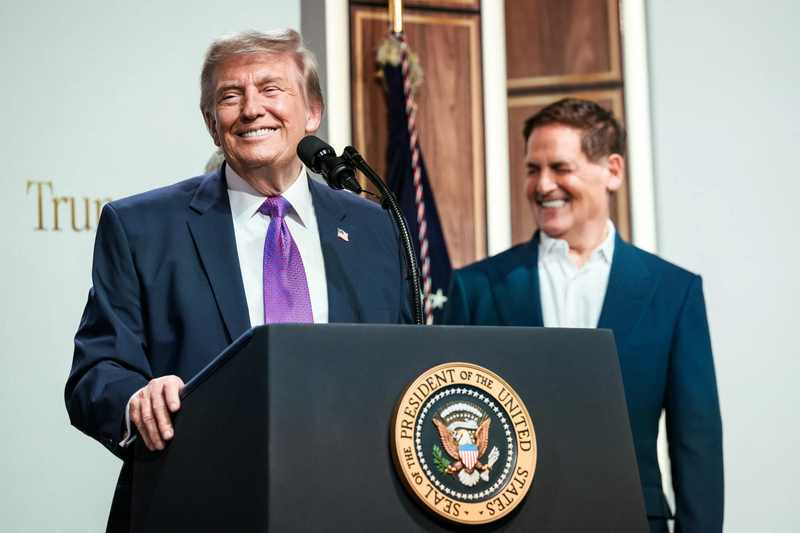
The numbers behind the power struggle
One of 12 votes can matter well beyond one meeting
Cook is one of 12 voting members of the Federal Open Market Committee. In a simple tally, one vote is 8.3% of the total. That rarely decides policy by itself because the Fed generally seeks consensus, but removing one governor changes more than a fraction: it changes the coalition, the internal debate and the signal future nominees receive about the cost of defying a president.
The Sept. 16 decision sharpened that tension. The Fed, led by Chairman Kevin Warsh — Trump's own appointee after Jerome Powell's term ended — unanimously raised its key rate. Trump has so far spared the Kevin Warsh Fed chairman while blaming a “political” Board of Governors. Unanimity means Cook did not cast a lone decisive vote; every voting member supported the increase. That makes the case for immediate policy causation weaker, while making the broader institutional message harder to ignore.
The proportional mismatch is the story's central tension: two sets of 2021 property paperwork are being weighed against a systemic contest over control of U.S. interest rates. That does not make the paperwork trivial. It does mean the legal process should be rigorous enough to separate alleged personal misconduct from the policy war surrounding it.
A four-hour hearing and a five-day clock
The calendar is unusually compressed. The hearing comes Nov. 5, two days after the Nov. 3 midterms, and may last no longer than four hours. A Lisa Cook written statement is due by Nov. 10. That sequence creates a clear runway toward a post-midterms removal decision and makes the transcript, evidentiary rulings and committee findings especially important.
It also places the dispute near the next Fed interest-rate decision in November. Markets will have to price two uncertain paths at once: what officials decide about rates and whether the composition of the body making that decision could soon change.
Three scenarios for what happens next
1. The committee recommends removal
Trump acts, Cook sues, and the courts return to the Supreme Court's footnote. The central question becomes whether the new notice-and-hearing process cured the earlier due-process defect — and whether the evidence satisfies the statutory meaning of cause. A ruling for Trump could substantially expand presidential control over independent agencies; a ruling for Cook could define procedural and substantive limits more sharply.
2. The committee clears Cook
A recommendation against removal would be a striking institutional setback for the White House. It could embolden other governors to resist political pressure and strengthen the argument that formal process works. The administration could accept the finding, contest it or seek another route, but each option would carry a political cost after such a public buildup.
3. The hearing moves markets before it resolves the case
Bond yields can respond to uncertainty before a judge rules or a committee reports. A transcript suggesting a predetermined outcome could raise concern about Fed independence; a careful hearing that tests evidence on both sides could reduce it. Either way, investors will be watching the paper trail the Hassett committee leaves, not merely its final recommendation.
The best test is not whether the process produces the outcome one side wants. It is whether the record shows that evidence was disclosed, Cook had a meaningful chance to answer it, and the panel distinguished provable conduct from political disagreement. Watch the transcript, the Nov. 10 deadline and the committee's treatment of Cook's August exhibits. Those details will tell courts — and markets — whether this was accountability, pretext or something in between.
Related coverage
- Trump's Nobel fallout widens after the 2026 award
- Reuters/Ipsos finds a Trump-voter enthusiasm gap before the midterms
- Markets react after Trump rules out an Iran strike before the midterms
Sources
- The Wall Street Journal — committee, allegations and Federal Reserve context
- The Wall Street Journal live coverage — Nov. 5 hearing schedule
- New York Post — presidential memorandum and committee membership
- CNN — Cook's response and the Fed-independence dispute
- Barron's — hearing terms and market implications
- Associated Press via TMJ4 — Supreme Court history and lawyers' response
Mortgage-fraud claims remain allegations denied by Cook and have not been presented here as adjudicated facts. Market levels are a Friday, October 9 snapshot and may change.
Reporting published October 9, 2026, with allegations clearly separated from established procedural facts and both sides' arguments represented.