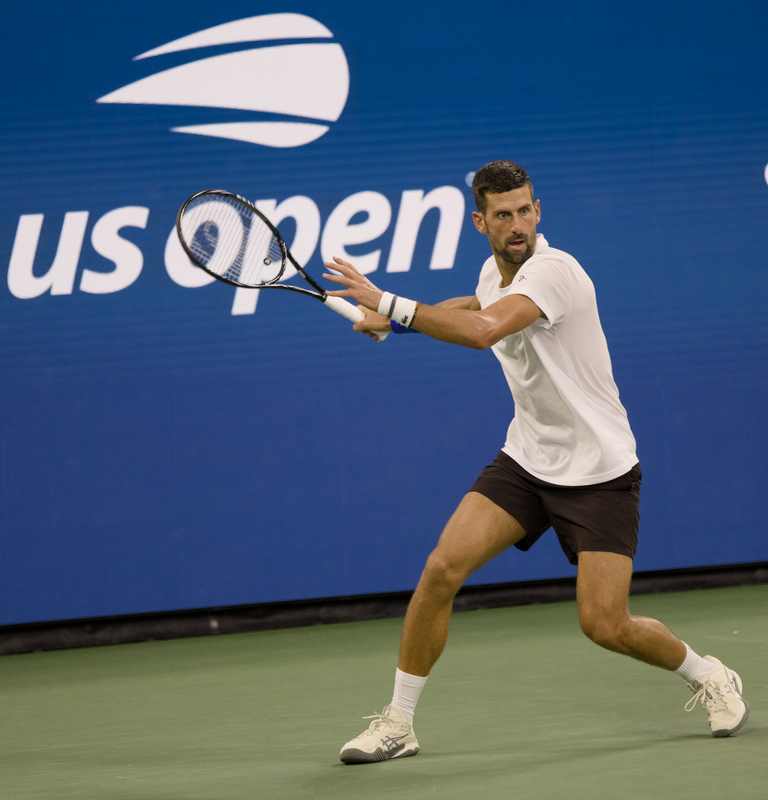
In the Novak Djokovic China Open 2026 final, the scoreboard stopped before the argument did. Djokovic led Alex de Minaur 7-6(3), 0-1 on Tuesday, October 6, when the world No. 9 retired with a left groin or adductor injury. The abbreviated ending delivered a seventh Beijing title and the 102nd tour-level crown of Djokovic's career — one short of Roger Federer's 103 and seven behind Jimmy Connors' Open Era record of 109.
Both players had taken medical timeouts after the first set. De Minaur returned with heavy strapping on his left thigh, held serve to open the second, then conceded that his body could not continue. Djokovic did not celebrate wildly. He understood the strange optics of receiving one of the most consequential trophies of his career after his opponent was forced to stop.
“It's a bit of a strange feeling... I want to celebrate, because I've played one of the best weeks in the last couple of years. At the same time, he retired at the beginning of the second, so it doesn't feel right to jump around and be joyful.”
Novak Djokovic
Why this matters: the Novak Djokovic China Open 2026 title changes the retirement question
At 39, after the most physically punishing season of his career in two decades, Djokovic did not merely add another line to a résumé already beyond ordinary comparison. He answered the question hanging over every painful loss: is he still capable of building a championship week against elite opposition? Beijing supplied a qualified but emphatic yes.
The qualification is obvious. His semifinal and final both ended without him needing a match point. The emphatic part is equally real. He was leading Daniil Medvedev 7-5, 5-3 when Medvedev was defaulted for striking a ball into the stands and hitting a spectator. He had already beaten world No. 2 Alexander Zverev 4-6, 6-4, 6-4 in the quarterfinal, and the run marked the first time in three years that Djokovic defeated three top-10 opponents at one event.
More enduring than the trophy count is the span: Djokovic is now the first man in the Open Era to win at least one tour-level title in 21 consecutive seasons. That is not nostalgia dressed up as a statistic. It is evidence that his competitive relevance has survived several generations of challengers, multiple reinventions of his own game and now the brutal economics of age.
Eleven years away, then an old Beijing certainty returned
Djokovic had not played the China Open since 2015, when he beat Rafael Nadal in the final. He returned to a tournament at which he had never lost and extended that record to 34-0. No player, man or woman, has begun a career at one tournament with a longer unbeaten run. Monica Seles started 33-0 at the Australian Open; Nadal began 31-0 at Roland Garros. Djokovic has now moved beyond both.
That record tells a stylistic story. Beijing's hard courts reward early ball-striking, clean changes of direction and a return game that can put servers under pressure immediately. Those are the qualities that had flickered rather than sustained through much of Djokovic's season. This week, his feet arrived behind the ball more consistently, his backhand held its line under pace and his movement looked organized rather than merely courageous.
The distinction matters at 39. The question is no longer whether Djokovic can produce a great hour. It is whether he can repeat the movement patterns, recovery and precision over several rounds. Beijing was the best evidence in two years that he can still assemble that sequence.
A season of suffering made Beijing feel larger than one trophy
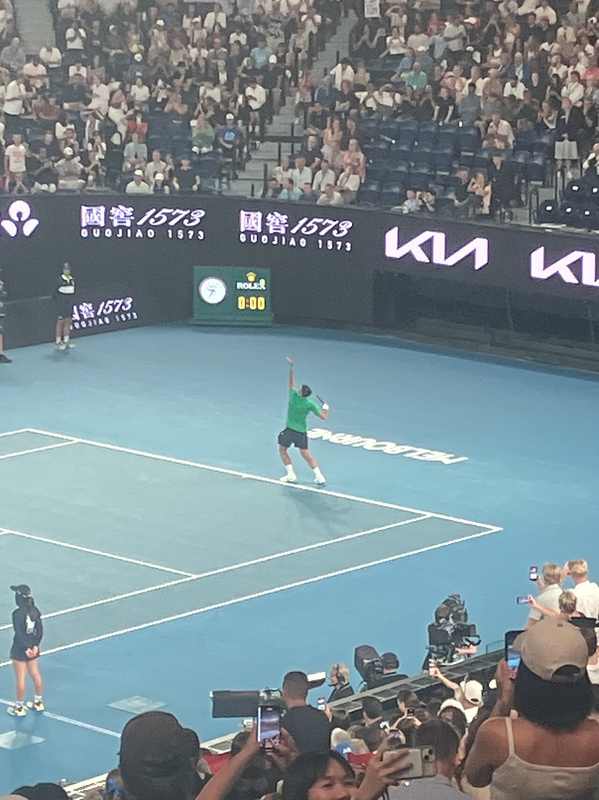
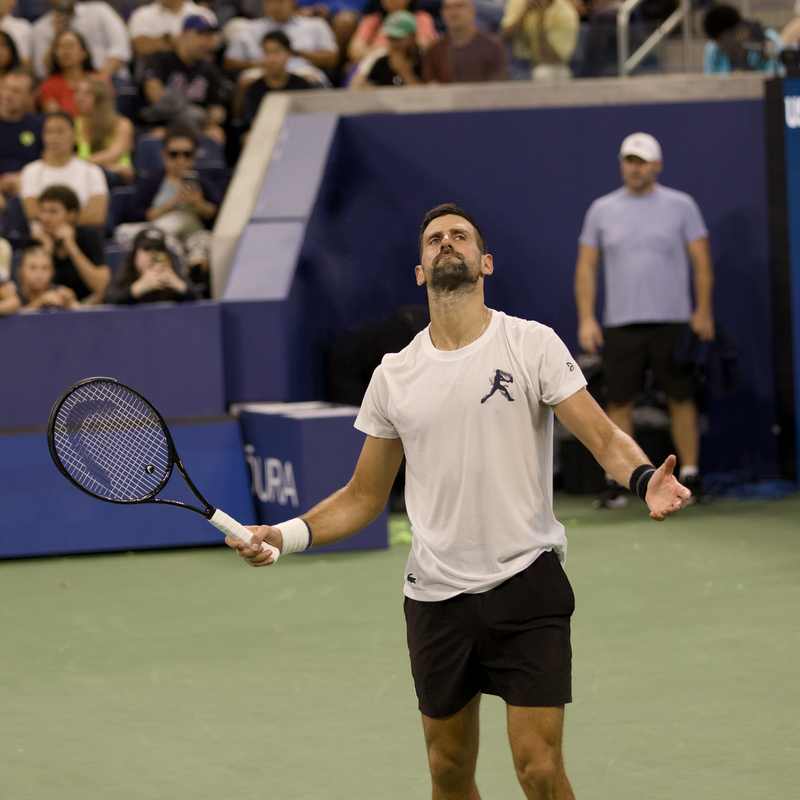
The season began with a run to the Australian Open final and a loss to Carlos Alcaraz. It deteriorated from there. At Roland Garros, Djokovic vomited on court in the heat during a five-set defeat by João Fonseca. At the US Open, he went out in the first round, his first opening-round Grand Slam loss in 20 years. An undisclosed health condition limited him to only eight tournaments.
After New York, the before-and-after contrast was severe. He had no title in 2026, a body that repeatedly failed him in the longest matches and a schedule too thin to build rhythm. After Beijing, he owns a title, three top-10 wins in one week and ninth place in the ATP Race to Turin. The physical questions remain, but the competitive evidence is no longer one-directional.
“This trophy means much more than one trophy, one tournament... This year has been quite challenging for me, lots of ups and downs and physical and health issues.”
Novak Djokovic
His first title since Athens in November 2025 also made him the oldest ATP 500 champion in the category's history. More broadly, he is the oldest ATP singles champion since Ken Rosewall won Hong Kong in 1977 at age 43. That comparison stretches across nearly half a century and makes the longevity debate more concrete: Djokovic is not merely old for this era; he is operating in territory almost no elite men's player has reached.
The asterisk debate: fortunate endings, earned control
The “luckiest athlete alive” line was inevitable online. Medvedev's disqualification and de Minaur's injury meant Djokovic closed a semifinal and final without striking a conventional winning match point. A trophy won through two abnormal endings should be described plainly, not polished into a fairy tale.
But an asterisk can explain a circumstance without erasing the achievement. Djokovic was ahead in both matches when they ended. Against Medvedev, he had won the first set and led by a break deep in the second. Against de Minaur, he had taken a demanding tiebreak before the Australian's body gave way. Luck changed the final act; it did not place Djokovic in front.
Preparedness is part of the counterargument. The veteran managed his own medical issue, survived Zverev in three sets and made opponents keep playing under pressure. It would be dishonest to say the endings did not help him. It would be equally dishonest to treat the title as a gift detached from everything that came before those endings.
Who benefits — and who loses
Djokovic's all-time case gains another layer. His 24 major titles remain the foundation, but winning an ATP 500 at 39 and sustaining a title streak across 21 seasons add breadth to the record. Longevity is not a substitute for peak dominance; here, it reinforces it.
The ATP Finals race gets a heavyweight complication. Djokovic rose to ninth in the race for Turin. Qualification is not guaranteed, but one place outside the eight-man field turns the closing weeks into more than record-chasing exhibitions.
Tennis gains a live intergenerational storyline. A 39-year-old champion forces the sport to rethink what late-career contention looks like. It also gives younger contenders a measuring stick: they are not merely facing a famous name, but a player still capable of winning tournaments.
De Minaur absorbs the cruelest cost. He had played 58 matches without rest and reached the final after Hubert Hurkacz retired from their semifinal while trailing 4-6, 2-3 with a groin injury. Then de Minaur suffered a similar fate himself, one victory from a major statement title.
“I want to say sorry to all the amazing fans who came to watch this match. I didn't want to finish like this, so I'm really sorry.”
Alex de Minaur
Medvedev loses control of his own narrative. His default will be remembered as the opening Djokovic did not need to create. Federer supporters, meanwhile, now watch a once-comfortable place on the all-time titles list shrink to a single trophy.
The numbers behind 102
102, 103, 109. Djokovic now trails Federer by one tour-level title and Connors by seven. One more win would draw him level with Federer; two would move him clear. Seven would tie Connors, while eight would make Djokovic the sole Open Era leader.
34-0. Beijing has become the cleanest perfect record of his career. Passing Seles's 33-0 Australian Open start and Nadal's 31-0 Roland Garros start makes it the longest unbeaten run from a tournament debut in tennis history, across the men's and women's games.
21 seasons. Winning in every season across that span is not simply durability. It means solving different opponents, surfaces, equipment cycles and versions of his own body without a blank year.
1977. Rosewall's Hong Kong title, at 43, was the last time an older man won an ATP singles event. Djokovic's achievement belongs in that rare historical frame, while his ATP 500 age record stands alone.
Three top-10 wins. The Beijing run was his first tournament in three years with three victories over top-10 opponents, puncturing the idea that the title came through a weak draw.
Ninth in Turin. After playing only eight tournaments and leaving the US Open in the first round, Djokovic is now close enough to the ATP Finals field that every remaining result carries immediate consequence.
Can Djokovic catch Federer and Connors?
Federer is now a live target, not a distant statistical curiosity. One title is enough to tie him, and Djokovic does not need another major to do it. A smaller indoor event or an ATP 500 can carry the same number in the record book. The practical obstacle is not opportunity but scheduling: every additional tournament imposes a recovery cost on a 39-year-old body that has already restricted his calendar.
Connors is different. Seven more titles require either a deep, healthy 2027 or a strategic multi-season campaign. If Djokovic remains selective and prioritizes majors, the chase could take time. If the record becomes a primary goal, he could add more favorable 250- and 500-level events — but doing so might reduce the energy available for the tournaments he values most.
The rest of 2026 offers Shanghai, Paris and potentially Turin. Shanghai quickly tests whether he can recover from Beijing; Paris rewards first-strike indoor tennis; Turin would demand repeated matches against the season's best. Each event serves a different purpose in the chase, but none matters more than his ability to arrive healthy.
He has said he intends to play until at least the Los Angeles Olympics in 2028. That horizon makes Connors mathematically plausible, yet the sensible strategy is smaller: protect the body, choose surfaces and conditions carefully, and let the record emerge from competitive weeks rather than chase it at the expense of them.
What happens next
First, the body. Djokovic's season has repeatedly shown that form and health cannot be separated. The medical timeout in the final was another warning. Recovery decisions after Beijing will reveal more than any celebratory promise.
Second, Turin. Ninth in the race is close enough to create pressure but not certainty. If he qualifies, the format offers both danger and opportunity: three guaranteed round-robin matches, elite opposition and the possibility of adding another title without a seven-match draw.
Third, the record hierarchy. Federer could be caught with one strong week. Connors requires sustained planning. The distinction will shape how every entry decision is interpreted from here.
Beijing did not prove that Djokovic has beaten time. No athlete does. It proved something more useful: time has not yet removed his capacity to answer. The next trophy would tie Federer; the seven after that would approach Connors. At 39, the argument is no longer whether the chase exists, but how deliberately he wants to pursue it.
Sources
- Associated Press via ESPN — Djokovic wins seventh China Open title after de Minaur retires
- Reuters — Djokovic wins China Open as de Minaur retires with injury
- CNN — Djokovic's sweet return to the China Open
- The Times — Novak Djokovic wins China Open
- Sports Illustrated — Novak Djokovic stays perfect in Beijing