Trump Says China and Russia Are Not Helping Iran 'At All'
Track it live: Live Iran war tracker
President Donald Trump said late on Monday that he does not believe China and Russia are helping Iran "at all," pushing back against a claim — circulating among his critics and opponents, by his own account — that the two powers are quietly sustaining Tehran's war effort. In a post on Truth Social, reported by Reuters, Trump wrote that he had seen the comments and was not persuaded by them.
"If they are, it's at a very low level, but I don't believe they are at all. They have too much to lose, and we would know about it, and know about it very fast," Trump wrote. The remark is notable less for what it denies than for who it declines to accuse. Both Beijing and Moscow maintain close ties with Tehran, and both have condemned the American and Israeli campaign against Iran. Yet the president, rather than indicting them, publicly absolved them — and in doing so, restated a position he has held, with varying emphasis, since the summer.
The context is a war that has reshaped the Middle East. The United States and Iran have been at war since February 28, when the U.S. and Israel attacked Iran and Tehran responded with strikes on Israel and on Gulf states that host American bases. U.S.-Israeli strikes on Iran and Israeli attacks on Lebanon have since killed thousands and displaced millions, according to Reuters' running account of the conflict. Against that backdrop, the question of whether Iran is fighting alone — or with great-power help — is one of the most consequential open questions of the war.
A line Trump has drawn before
Monday's post was a reprise, not a reversal. In July, Trump said he trusted China and Russia not to help Tehran in the Iran war, while warning that if they did get involved "it would be very bad for them." He has previously described Chinese President Xi Jinping and Russian President Vladimir Putin as "neutral" during the war — a characterisation that sits oddly with both capitals' rhetoric, but one that has consistently served Trump's preference for keeping his channels to both men open.
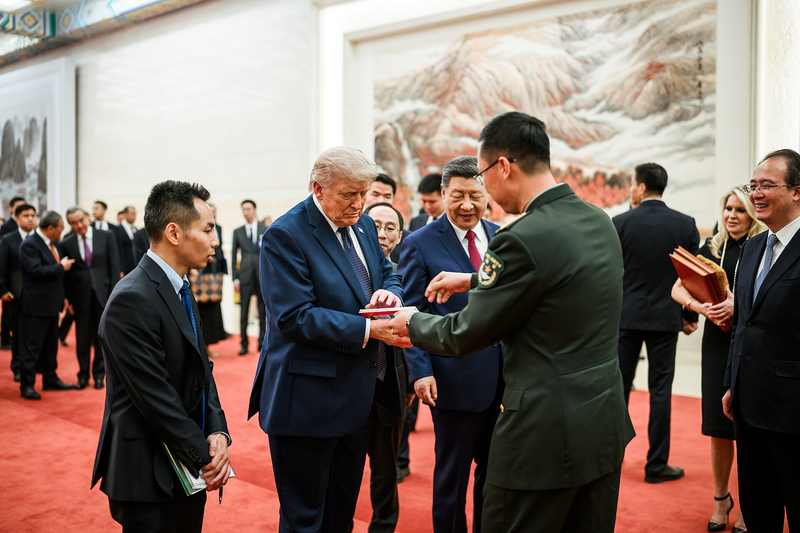
The harder edge of the policy has mostly been delivered by others, and in private. Last month, when Xi visited Washington, Trump warned the Chinese leader against providing support to Iran and received assurances that China would not do so, according to David Perdue, the U.S. ambassador to China. Perdue later described the administration's message in uncompromising terms: "any help that they would give Iran, whether it be direct or indirect, whether it be intelligence or parts or military equipment, was totally unacceptable." The public absolution and the private warning are two halves of the same strategy — praise compliance loudly, police it quietly.
That strategy also intersects with Trump's other diplomatic tracks. He has argued in recent days that Putin wants a deal on Ukraine more than Zelenskyy does, and he told the U.N. General Assembly in September that he expects to make a deal with Iran after the November 3 midterm elections — a prediction he repeated as Iran's president was in New York for the General Assembly, as Signal Post News tracked in its live coverage of Pezeshkian's U.N. visit. A president auditioning himself as the broker of two war-ending deals has little use for a public fight with the two leaders he needs at the table.
The reports his post was pushing against
The claims Trump dismissed are not invented from nothing; they rest on a body of reporting that his own administration has never fully disowned. Reuters has reported that, in the period before Monday's post, China was reported to have supplied Iran with shoulder-fired air-defense missile launchers, and that Tehran had found ways to evade sanctions on its oil sales with Chinese help. In September, Trump brushed aside a separate report that Iran had acquired satellite images of a base in Jordan from Chinese entities before an attack there in July that killed three U.S. troops.
The most detailed version of the case comes from the president's critics. Senator Jeanne Shaheen, a Democrat, argued in a Senate speech on September 23 that Chinese firms were helping Tehran both economically and militarily: roughly 90 percent of Iran's oil exports go to China, she said, providing Tehran with billions of dollars in revenue and a "critical economic lifeline," while Chinese and Hong Kong companies had supplied components used in Iranian ballistic missiles and drones. "If we want to bring this war to an end, we need to cut off the outside support that allows Iran to keep fighting, and that starts with China," Shaheen said, urging the administration to enforce sanctions against Chinese entities and Congress to impose additional consequences if Beijing did not stop.
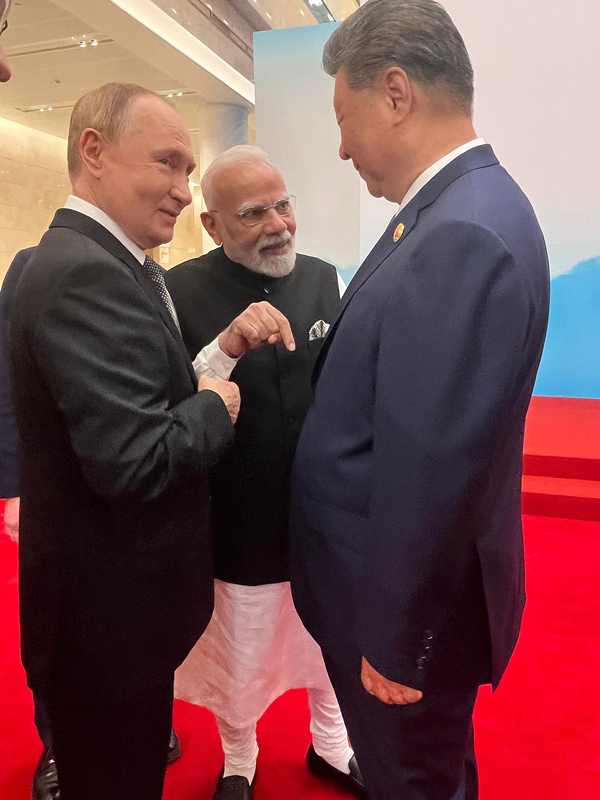
None of this amounts to the kind of open military alliance — Russian divisions or Chinese expeditionary forces — that would transform the war overnight. It describes something murkier: a grey zone of oil purchases, dual-use components, imagery and finance that is hard to switch off and easy to deny. Trump's post speaks to the first category. His critics' evidence mostly concerns the second. Both can be true at once, which is precisely why the argument has run for months without resolution.
What Beijing and Moscow say — and do
For their part, Beijing and Moscow have positioned themselves as critics of the war rather than parties to it. Beijing has condemned Washington's attacks on Tehran as a brazen violation of Iran's sovereignty. Russia has warned that the Iran war could lead to a nuclear arms race in the Middle East. Both governments maintain close ties with Tehran — diplomatic, commercial and, in Russia's case, a partnership deepened by years of military cooperation in other theatres — and neither has recognised any obligation to Washington to sever them.
What neither capital has done, on the available evidence, is intervene openly. There have been no reports of Russian or Chinese forces joining the fighting, no acknowledged state-to-state arms pipeline of the kind that defined Cold War proxy conflicts, and no move by either to confront U.S. forces directly. That restraint is the factual core of Trump's claim. Beijing's help, where reporting has found it, has flowed through companies and cargo rather than commands; Moscow's contribution has been rhetorical and diplomatic rather than operational. "Too much to lose," in Trump's phrasing, is a description of incentives: China depends on stable energy flows and access to global markets, and Russia, already fighting its own war in Ukraine, has limited spare capacity to open a second front against the United States by proxy.
The oil and Hormuz backdrop
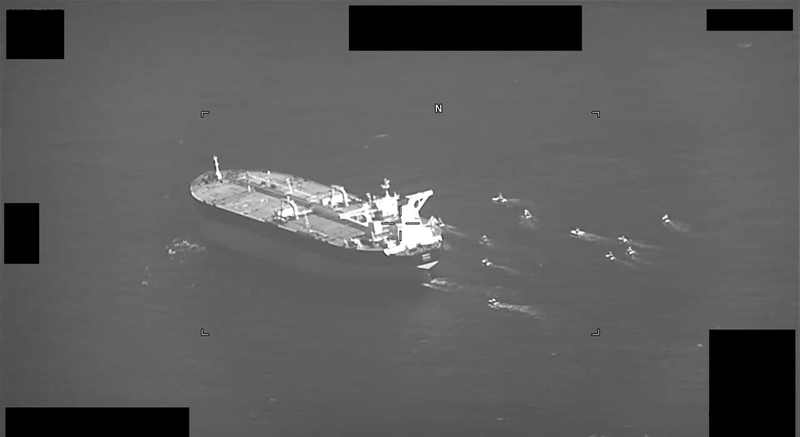
Running underneath the argument is oil. The Strait of Hormuz, the narrow waterway between Iran and the Arabian Peninsula, carries roughly a fifth of the world's petroleum liquids in normal times, according to U.S. Energy Information Administration estimates, and Iran's own exports — the revenue that funds its state and its military — move overwhelmingly toward one customer. If roughly 90 percent of Iranian crude goes to China, as Shaheen and analysts cited in Washington argue, then the single most important external input to Iran's war effort is not a missile shipment. It is a purchase order. That is why the fight over "help" is really a fight over sanctions: how hard Washington is willing to press the Chinese refineries, shippers, insurers and banks that keep the trade moving, and at what cost to the wider U.S.-China relationship.
Trump's answer, so far, has been pressure with an exit ramp. Just last week he mused that "nobody knows who is running Iran," a line aimed at Tehran's leadership rather than its suppliers. The administration's public theory of the war's endgame — a negotiated deal, on Trump's timetable — requires Iran isolated enough to bargain but not so cornered, or so externally supplied, that it can simply wait him out. Whether China and Russia are helping Iran is therefore not a trivia question about cargo manifests. It is the variable that decides whether that endgame exists.
Why this matters
It would be easy to read Monday's post as one more presidential aside. It is better read as a marker in three separate contests: over the facts of the war, over the politics of the war at home, and over the diplomacy that might end it.
A proxy-war narrative, rejected
If China and Russia were meaningfully arming Iran, the war would be a proxy conflict between nuclear powers, with escalation risks of a different order. By denying that premise, Trump keeps the war in the category he prefers: a bilateral contest that American power can settle and American diplomacy can close. His critics invert the same logic — if outside help is what allows Iran to keep fighting, then the war's length is itself evidence of policy failure. The post is Trump's attempt to hold his framing against theirs, eight months in.
The gap between 'not at all' and the grey zone
The weakness of the president's formulation is its absolutism. "Not at all" is a strong claim in a war where the documented flows — sanctioned oil moving to Chinese buyers, components reaching Iranian missile and drone programmes, commercial satellite imagery allegedly reaching Tehran — are precisely the kinds of help that modern wars run on. His own ambassador called any such help "totally unacceptable" weeks ago. If further reporting substantiates those flows, Monday's post will be quoted back at the administration; if the flows dry up under pressure, the post will look like a victory lap taken slightly early. Either way, the measurable test is not rhetoric but enforcement: designations, interdictions and the monthly tallies of Iranian crude reaching Chinese ports.
Two relationships he is protecting
Finally, there is the audience of two. Trump received assurances from Xi in September and gave Putin a conspicuous pass on Monday, at a moment when he is courting both — Xi on trade and a possible Iran bargain, Putin on Ukraine. Publicly accusing either of arming Iran would force a confrontation he does not want and a response he cannot control. "Too much to lose" is thus also a message addressed to its subjects: a reminder of the price of involvement, wrapped in the compliment of presumed innocence.
What happens next
Several things will test the claim in the coming weeks. Watch first for Beijing's and Moscow's responses — silence would suggest both prefer the absolution to any argument; a pointed statement from either capital would signal the message was not received as intended. Second, watch the sanctions ledger: new U.S. designations against Chinese entities tied to Iranian oil or missile components would indicate that, whatever the president says in public, the enforcement machinery is still treating Chinese help as real. Third, watch the oil itself — tanker-tracking data on Iranian exports to China is published monthly and cannot be talked up or down.
And watch the calendar. Trump has tied his Iran endgame to the November 3 midterms and a deal he says will follow them. A deal requires Tehran to believe its external lifelines are closing; it also requires Beijing and Moscow to stay on the sidelines Trump has described. Monday's post was an attempt to will both conditions into being with a single paragraph. The war, and the two capitals it named, will decide whether the paragraph was a description — or a hope.
Sources: Reporting by Reuters (Washington, October 12, 2026) on President Trump's Truth Social post; Reuters background reporting, September 23–25, 2026, on Senator Jeanne Shaheen's Senate remarks and Ambassador David Perdue's account of the Xi warning. Photographs via Wikimedia Commons, credited individually.