Putin wants a deal
Trump Refuses to Condemn Russia's Ceasefire Strikes, Says Putin Wants a Deal More Than Zelenskyy
Track it live: Ukraine war map — live tracker
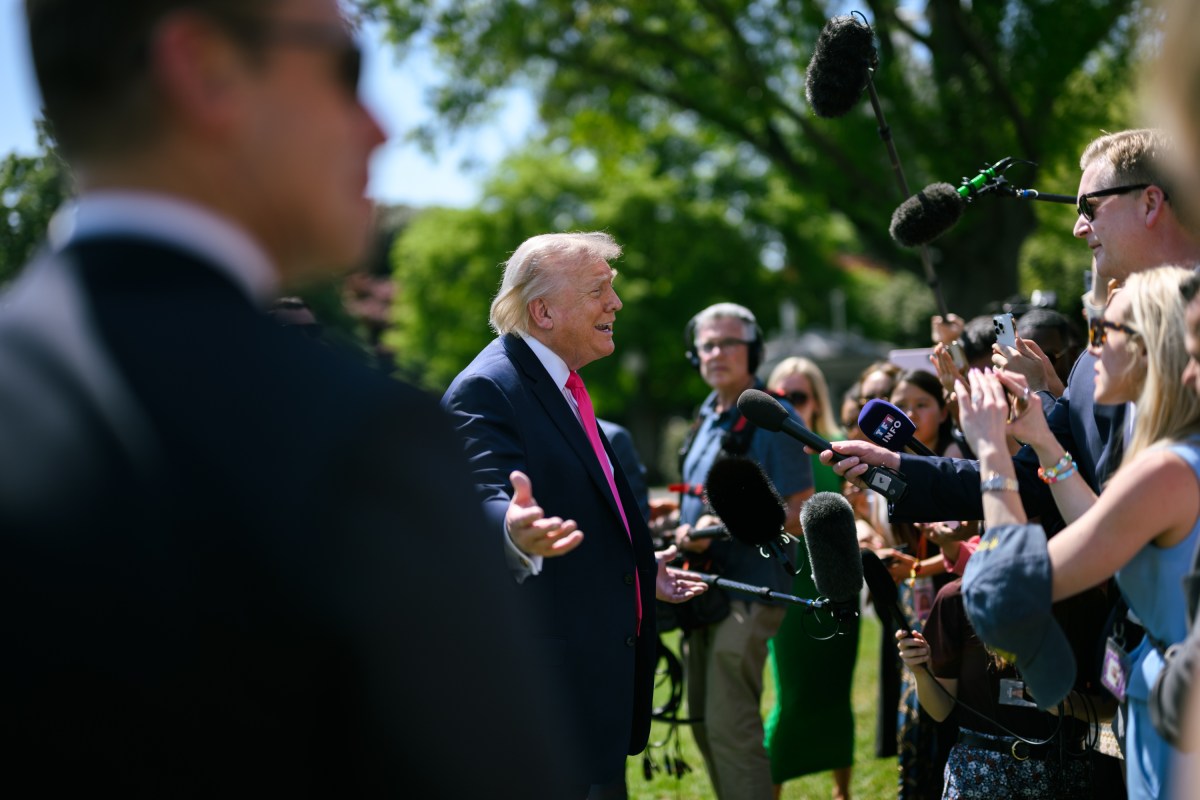
President Donald Trump on Monday refused to condemn Russia for the strikes that followed his own announcement, a day earlier, of an immediate energy ceasefire between Russia and Ukraine. Speaking to reporters as he left the White House for a midterm campaign rally in Ohio, Trump said he was not sure Russia had violated the arrangement, that he would have to look at it, and that there had been violations on both sides. He then went further: in his assessment, Russian President Vladimir Putin wants a deal to end the war more than Ukrainian President Volodymyr Zelenskyy does, and Zelenskyy is the leader who has to be brought to want one.
The remarks were the president's first direct response to a day of accusation and counter-claim. On Sunday, Trump announced on social media that both parties had agreed to stop attacking each other's energy infrastructure, effective immediately. Zelenskyy, who said Kyiv learned of the arrangement from the announcement itself, told the Warsaw Security Forum on Monday that Ukraine had held its fire overnight while Russian drones and missiles struck a gas production facility and at least five other energy targets, wounding 33 people across the country. On Monday, asked about those strikes, Trump declined to assign blame to Moscow and returned repeatedly to a single demand: the two presidents have to get together and end the war. He cited a figure of 32,000 people killed in the war this month — a number he did not source — as the reason the fighting has to stop.
Asked how the ceasefire had come about when neither capital had publicly confirmed agreeing to it, Trump answered that the parties had agreed because he had said they agreed. The exchange, reported by The Times, the New York Post and the AP/dpa wire from the same White House departure, is now the clearest statement yet of how the president intends to run this negotiation: the announcement is the agreement, and public pressure — applied, on Monday's evidence, more heavily to Kyiv than to Moscow — is the enforcement mechanism.
What was happening on the ground while Washington talked
The diplomatic argument unfolded against another day of strikes that neither side's statements slowed. In the Kharkiv region, a Russian strike destroyed power grids and caused blackouts in the city of Izyum, Ukraine's state news agency Ukrinform reported, and energy and railway infrastructure in western Ukraine was also targeted overnight into Monday. The region's main thermal plant, Kharkiv TEC-5, had already been struck at least twice on Sunday, hours after the ceasefire announcement, and a drone attack on the nearby village of Pisochyn killed three people; local authorities later raised the Pisochyn injury toll to 22, including children.
Further south, in the Donetsk region, regional governor Vadym Filashkin said a Russian strike on a house in the Cherkaske area, near Kramatorsk, killed three members of one family — a 13-year-old girl, her 36-year-old mother and her 62-year-old grandmother — and injured four other people. Filashkin said the weapon was cluster munitions, which Donetsk police identified as fired from a Smerch rocket launcher, and accused Russian forces of deliberately seeking maximum civilian casualties. That characterisation is the Ukrainian authorities' allegation; it has not been independently established, and Moscow had not commented on the Cherkaske strike in the reporting available on Monday. Russia's defence ministry, for its part, claimed on Monday that its drones had struck three cargo vessels it said were carrying military cargo toward Odesa and Mykolaiv, plus a logistics centre in the Mykolaiv region — a claim Reuters said it could not independently verify and Kyiv has not confirmed.
Why this matters
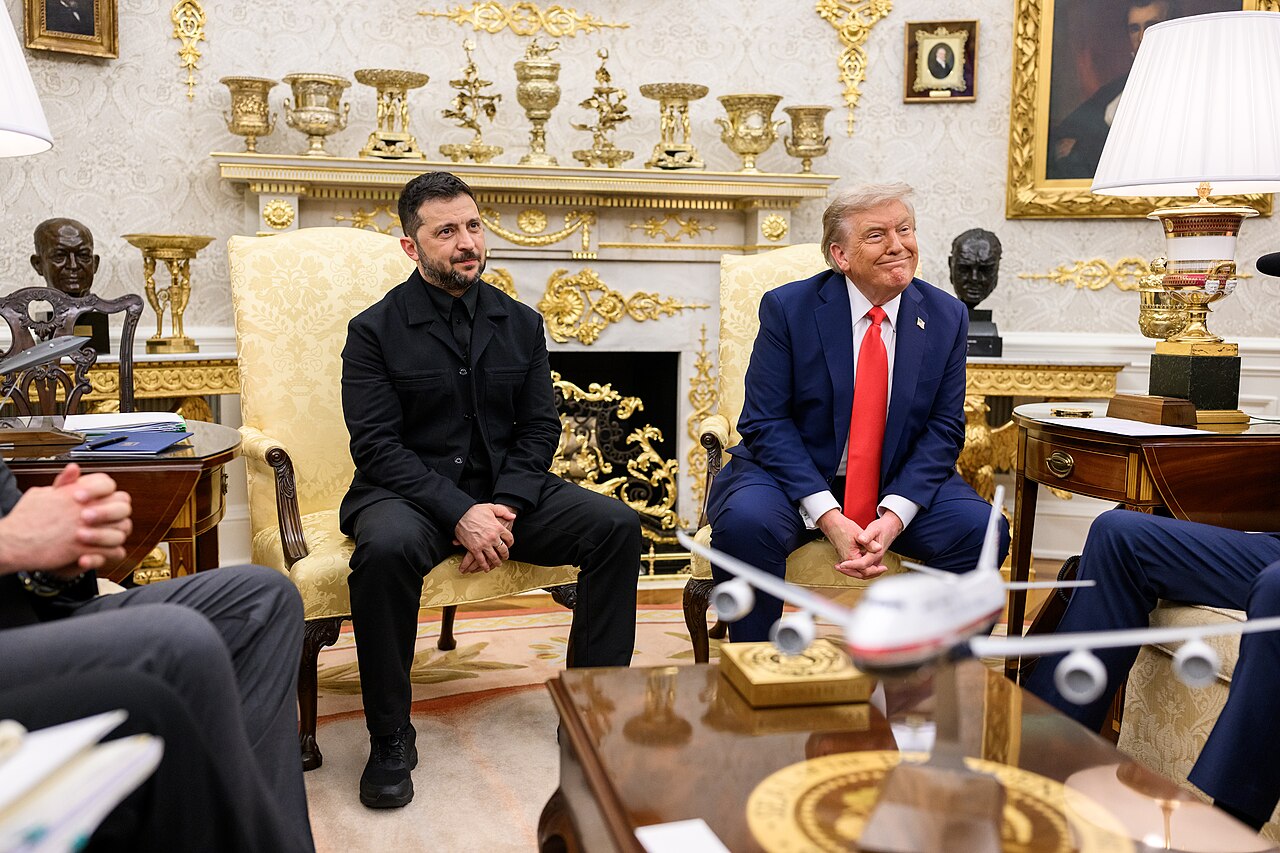
A ceasefire lives or dies on what happens the first time it is broken. Zelenskyy spent Monday trying to force exactly that test: his Warsaw argument was that Ukraine had complied, Russia had not, and the United States — as the announcement's author — now had to decide what a violation costs. Trump's Monday remarks were the answer, and it was not the one Kyiv asked for. By treating the violations as symmetrical and reserving his sharper language for Zelenskyy's willingness to deal, the president signalled that, for now, the ceasefire carries no American penalty for the side Ukraine accuses of breaking it.
That signal has a price in both directions. For Moscow, a truce whose breaches draw no distinction between the parties is cheap to test: each night's strikes probe whether Washington's position moves, and so far it has not. Russian Foreign Minister Sergey Lavrov on Monday dismissed the ceasefire idea altogether, arguing Zelenskyy did not deserve a respite to regroup and rearm. For Kyiv, the risk is the mirror image — that compliance is read in Washington not as good faith but as weakness, while the pressure to concede builds on the Ukrainian side of the table. Zelenskyy's recent criticism of Trump's Russian diesel deal, and Trump's response last week that it was time for Ukraine to get a new president, sit directly behind Monday's exchange.
The numbers, in context
Trump's figure of 32,000 killed this month is unverifiable as stated — neither Washington nor Kyiv publishes a verified monthly toll, and both sides' numbers are contested. For scale, Ukraine's own general staff reporting and Western estimates have for months put combined military casualties in this war at well over a thousand a day at peak intensity, and September was, by Ukraine's count, the deadliest single month of the war for Russian forces. The honest reading of the president's number is not its precision but its function: it is the moral arithmetic he is using, three weeks before the November 3 midterms, to argue that the terms of an ending matter less than the ending itself. Voters hearing that argument are being asked to judge the deal by the dying it stops — a framing that advantages whichever leader can present himself as ready to sign.
Who gains, who loses, and what critics say
Putin gains time and symmetry. A negotiation in which the mediator describes both sides as violators, and one side as the reluctant party, is one in which Russia's stated conditions — including Kyiv ceding the rest of the Donetsk region it still holds — remain on the table without a deadline attached. Zelenskyy loses the enforcement he asked for, at least for now, and faces a Washington conversation increasingly conducted about him rather than with him: on Monday the president of the United States discussed the Ukrainian president's intentions in the third person, as a problem to be managed. Ukraine's European backers, who on Monday approved fresh sanctions on Russia's military-industrial complex, gain little from a transatlantic split in which Washington blames both sides and Brussels blames one.
Critics of the president's approach argue that a ceasefire announced without published terms, monitoring or consequences is not a ceasefire at all, and that declining to condemn the Kharkiv and Izyum strikes teaches Moscow that the announcement costs nothing to ignore. Supporters counter that public condemnation has never stopped a strike, that Trump's refusal to perform outrage keeps a channel to Putin open, and that the only metric that matters is whether the missiles stop — which, they note, is a test that can still be passed in the nights ahead. Both readings agree on one thing: Monday moved the argument from whether a ceasefire exists to who is obstructing it, and on that question the president has now given his answer.
What happens next
Three things will show whether Monday was a negotiating tactic or a settled position. First, the nights: if Russian strikes on energy targets continue at the same tempo, the gap between the announced ceasefire and the observable war becomes the story, and pressure will build in Washington — including from the president's own party — to name a violator. Second, the paperwork: Kyiv is still waiting for the terms Trump says were agreed; if a text, a start time and a monitoring arrangement appear, the ceasefire becomes something that can be kept or broken in public, which serves Zelenskyy's strategy. Third, the calendar: with the midterms on November 3 and a possible Putin-Zelenskyy meeting still the president's stated goal, both capitals are pricing in his deadline. Moscow's incentive is to arrive at that deadline holding its conditions; Kyiv's is to arrive demonstrably compliant and demonstrably attacked. Monday's remarks suggest the president knows it — and has chosen, for now, to spend his pressure where he believes the signature is missing.
Related coverage
Sources
- The Times — Hypocritical Europeans buy Putin's diesel too, says Trump (October 12, 2026)
- New York Post — Trump declares Putin 'wants to make a deal' — as he knocks Ukraine's Zelensky (October 12, 2026)
- NPR / WAMC — Russia hits Ukraine gas facilities after Trump claims 'energy ceasefire' (October 12, 2026)
- Europa Press (via Democrata) — Russian attacks in Ukraine leave five civilians dead (October 12, 2026)
- Reuters — Russia says it struck vessels carrying military cargo to Ukraine's ports (October 12, 2026)
Signal Post News analysis is independent and does not take a political, financial or competitive side.