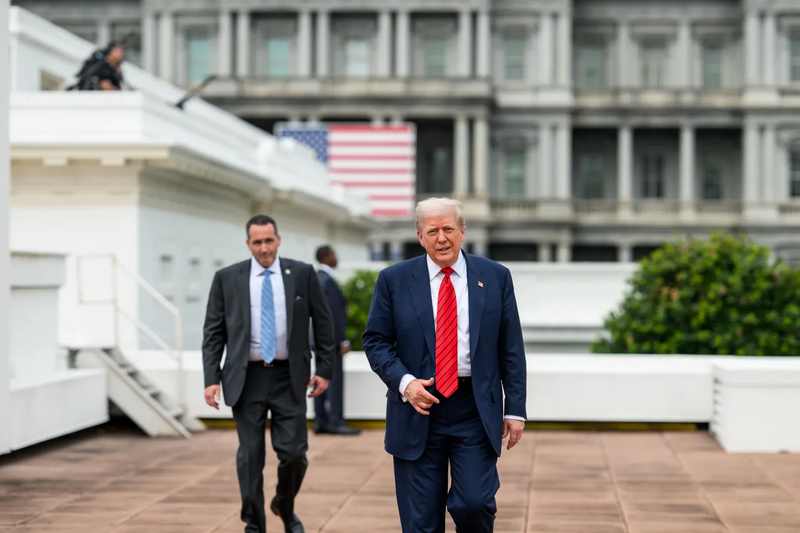
President Donald Trump on Friday publicly backed the Pentagon's plan to execute Fort Hood shooter Nidal Hasan by firing squad — declaring at a White House Columbus Day event that the convicted mass murderer “deserves it” — in his first on-the-record comments since approving the execution earlier this week. But on the most controversial part of the plan, the proposal to livestream the Dec. 3 execution to the public, Trump said nothing at all. The White House declined to answer when asked whether the president supports broadcasting the execution. And in Ohio, Vice President JD Vance went further than silence: he said he doubts the livestream will happen at all — and that he won't watch it if it does.
What Trump actually said
Trump Columbus Day firing squad remarks put the sentence on record
“Death penalty through firing squad, and he deserves it,” Trump said Oct. 9, according to USA Today. “Killed and wounded many, many people. A maniac.” The New York Post recorded a second formulation: “We're giving a man the death penalty who killed 14 soldiers a couple of years ago.” The record is that Hasan killed 13 people and wounded 32 on Nov. 5, 2009 — 17 years ago. Those corrections matter as facts, not as a judgment about the president's support for the sentence.
Trump approved the execution Monday, Oct. 5, at Defense Secretary Pete Hegseth's recommendation, Pentagon spokesperson Sean Parnell told USA Today. Under military law, a death sentence cannot be carried out until the sitting president personally approves it. That sign-off explains why Hasan remained on military death row for more than 12 years after his 2013 court-martial conviction.
The first military execution in 65 years
If carried out, Hasan's death would be the first U.S. military execution since Pvt. John Bennett was hanged on April 13, 1961. The last military firing squad was the Jan. 31, 1945 execution of Pvt. Eddie Slovik for desertion, according to Air Force Times reporting cited by USA Today. The method reaches back to the Second World War; the public-distribution proposal reaches into a digital world with no comparable precedent.
The dodge: no word on the livestream
Hegseth livestream execution deterrence meets presidential silence
Hegseth announced Oct. 8 on Real America's Voice that the execution would be made available for the public to see. “We'll make sure that people are able to watch it, that it's public,” he said. “Because people need to understand that there are serious consequences for these types of things.” His case is deterrence through visibility: punishment, in this telling, must not only occur but be witnessed widely.
Trump was asked about the plan and did not weigh in. The White House did not immediately answer USA Today's question about whether the president supports livestreaming it. That leaves an unmistakable gap between a defense secretary's categorical announcement and the president whose signature authorizes the underlying execution.
A Fort Hood shooter livestream execution would have no global precedent
USA Today reported that no government in the world has ever livestreamed an execution. “We have no record of any execution being livestreamed,” Death Penalty Information Center executive director Robin Maher said. The last documented public execution in the United States was the 1936 hanging of Rainey Bethea in Owensboro, Kentucky, attended by roughly 20,000 people. A global feed would be different in kind as well as scale: permanent, reproducible and impossible to confine to a witness area.
Vance won't watch — and doubts it happens
“Vance won't watch firing squad execution” becomes the administration's first hedge
Vance said in Ohio, “I don't know that that's actually going to happen,” adding, “If it's ultimately livestreamed, I'm not going to be watching it,” according to the Associated Press via Newsmax and the New York Post. Those are not the words of an administration confidently moving toward a settled communications plan. They are the first public signal from its senior ranks that the broadcast may never materialize.
Vance called Hasan's attack “the worst terrorist attack on American soil outside of 9/11” and urged the public not to lose sight of the crimes while debating the method. Hasan was supposed to treat service members as an Army psychiatrist, Vance said; instead, “he took them at their most vulnerable and gunned down these people where they lived.” His position separates support for severe punishment from willingness to consume its images.
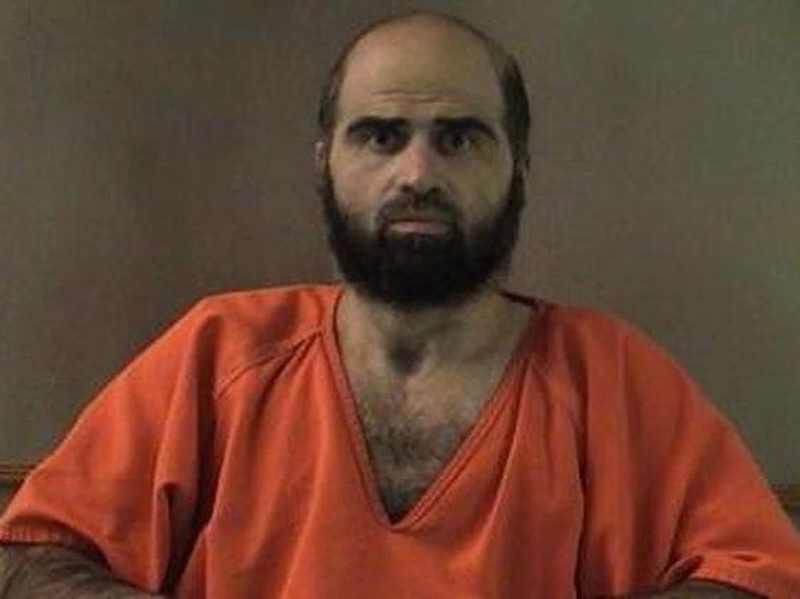
The survivor who wants to look Hasan in the eyes
Fort Hood survivor Alonzo Lunsford rejects execution as entertainment
Former Army Sgt. Alonzo Lunsford, who was shot seven times in the 2009 attack, told BBC Radio 4 that he supports Hasan's execution but questions the livestream. The death penalty is “not something you should view for entertainment purposes,” he said, according to the Washington Examiner. For Lunsford, witnessing is personal accountability, not programming.
He plans to attend in person. “I'm gonna be there [to watch in person] and before they pull the trigger, I want him to look at me in my eyes and I look at him in his eyes and I want him to know: ‘Dude you failed, I'm still here.’” The execution is scheduled for 1 p.m. local time Dec. 3 at Fort Hood, around the same time of day Hasan opened fire on Nov. 5, 2009.
Why this matters
The split inside the administration is the story's real significance. The president endorses the execution but will not touch the livestream; the vice president openly doubts the broadcast will happen. When a vice president publicly hedges on a secretary's flagship announcement, the policy is wobbling. This looks like the administration's first step back from the livestream without the political cost of announcing a reversal.
The larger question is whether punishment in the digital age is something the public should watch on demand. The firing squad is the method; the livestream is the precedent. One is a 1945-era military procedure. The other has no documented government precedent anywhere in the world. Conflating them allows a debate about the scope and permanence of broadcast images to be dismissed as a debate about whether Hasan deserves punishment at all.
How we got here
Fort Hood shooting 2009: Hasan's crimes and conviction
On Nov. 5, 2009, Hasan, then an Army major and psychiatrist, opened fire inside a Fort Hood medical building where soldiers queued for vaccinations and deployment checks. Witnesses said he shouted “Allahu Akbar.” Investigators recovered 146 shell casings inside the building and 68 outside. Hasan later said he acted in retaliation to stop U.S. troops from deploying to Afghanistan.
A military jury convicted him in 2013 on 13 counts of premeditated murder and 32 counts of attempted premeditated murder and sentenced him to death. He then waited more than 12 years for the presidential approval military law requires. The Obama administration initially described the shooting as “workplace violence”; Hegseth has called it a “radical Islamist terror attack.” Those labels reflect sharply different political framings of the same prosecuted acts.
Who benefits, who loses, what critics say
Deterrence, survivor justice and the “Tillis beyond disgusting” backlash
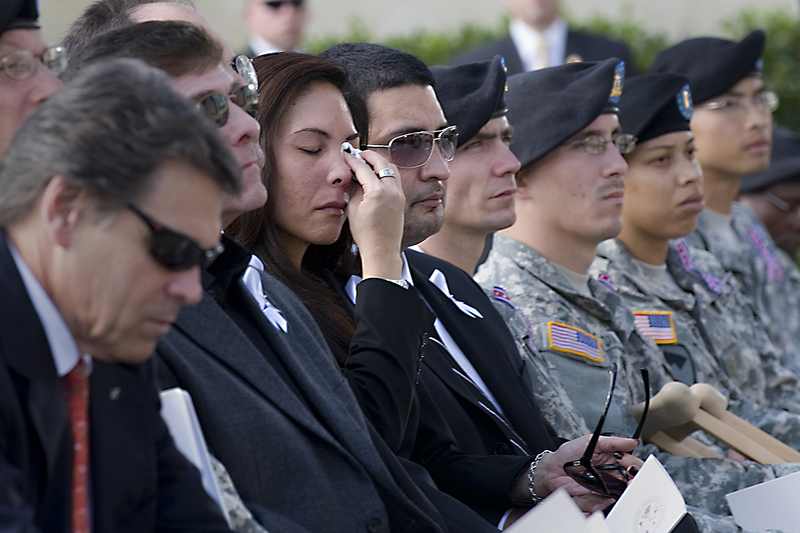
Supporters of a public stream, led by Hegseth, say visible consequences can deter future violence. Lunsford's determination to attend expresses another argument: survivors should be able to witness the justice imposed for a crime that permanently changed their lives. But attendance by survivors does not require an unrestricted public feed.
Sen. Thom Tillis, a North Carolina Republican, wrote: “Hasan should face the death penalty, but making his execution public and streaming it? Beyond disgusting. Public executions are what oppressive dictatorships like Iran and Afghanistan do.” Sen. Chris Murphy, a Connecticut Democrat, called the idea “medieval” and likened it to ISIS executions. The Death Penalty Information Center's historical finding — no government has ever livestreamed an execution — gives their warnings a measurable point of reference.
Victims' families and survivors are not a single bloc. Some want to witness Hasan's death and see the sentence carried out. Others fear that an online spectacle would cheapen the gravity of the crimes, recenter attention on Hasan and allow the footage to be replayed or exploited long after the witnesses have left Fort Hood.
What the numbers actually imply
Hasan death penalty presidential approval was the 12-year bottleneck
Three numbers define the case: 65 years since the last U.S. military execution; more than 80 years since a U.S. service member faced a firing squad; and zero known government executions livestreamed in recorded history. Hasan's more than 12-year wait shows that the bottleneck was not the jury's sentence but the presidential sign-off mechanism.
The deterrence claim remains disputed. Supporters invoke the logic that visible consequences discourage would-be attackers. Criminologists have debated for decades whether capital punishment, or any particular execution method, measurably deters homicide. There is no consensus strong enough to turn Hegseth's claim into an established empirical conclusion, and the novelty of livestreaming means there is no direct evidence base for its effects.
What happens next
Nidal Hasan execution December 3: three possible paths
The livestream quietly dies. Vance's hedge becomes policy, and the execution proceeds Dec. 3 with traditional limited witnesses. Given the bipartisan backlash and the vice president's distance, this currently appears the most plausible path — though the Pentagon has announced no reversal.
The Pentagon holds the line. Hegseth doubles down, while death-penalty and civil-liberties groups seek injunctions and major platforms decide whether they will carry the images. Even if a government feed exists, private distribution systems may refuse to amplify it.
The date slips. Courts or the White House could slow the process, postponing Dec. 3 while leaving the sentence intact. The certainty is narrower than the spectacle suggests: Hasan's execution now has presidential approval, and support for the death sentence crosses party lines. The broadcast — not the sentence — is the policy in doubt.